


Frekvens Portable Music System / IKEA
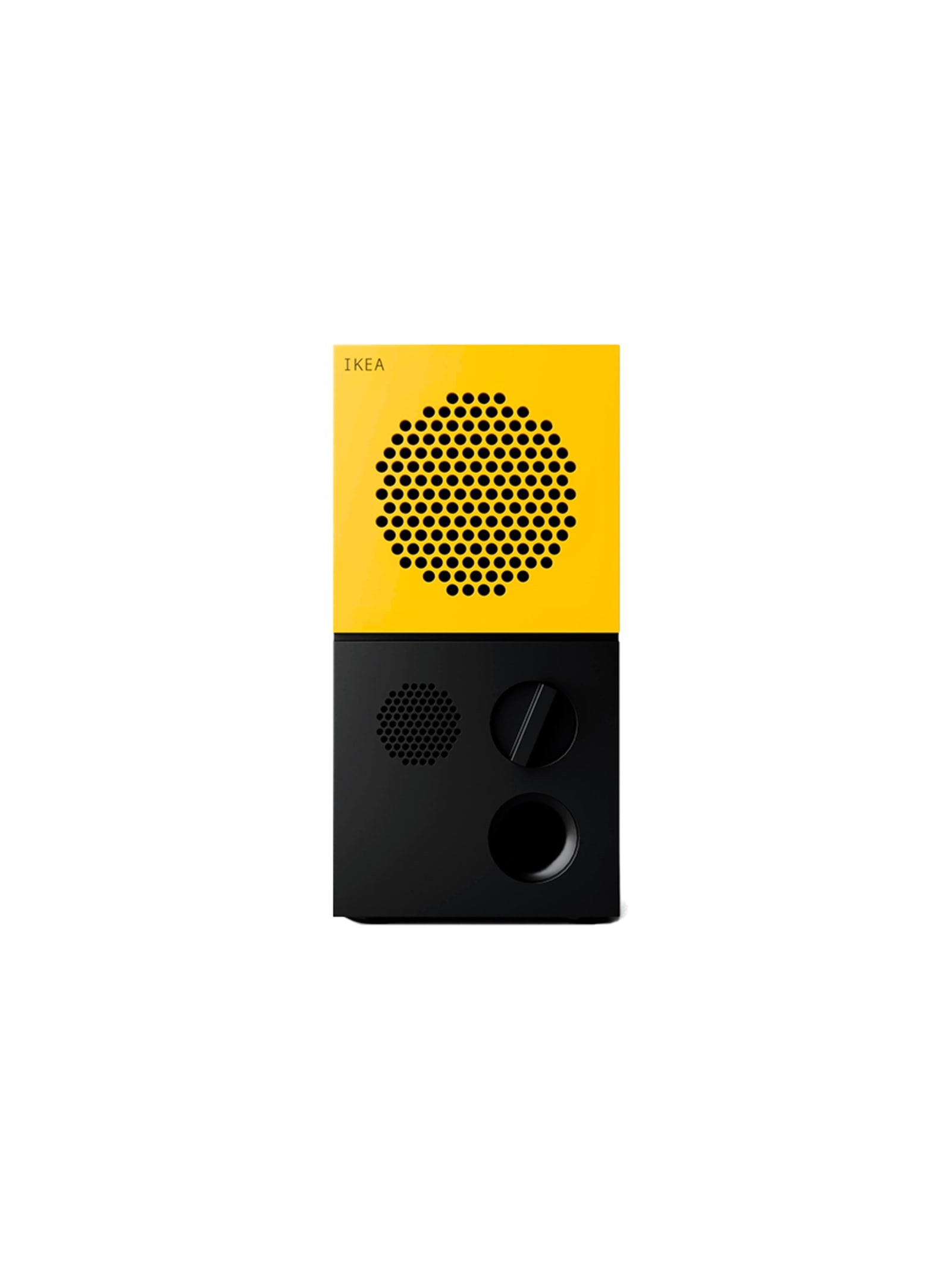
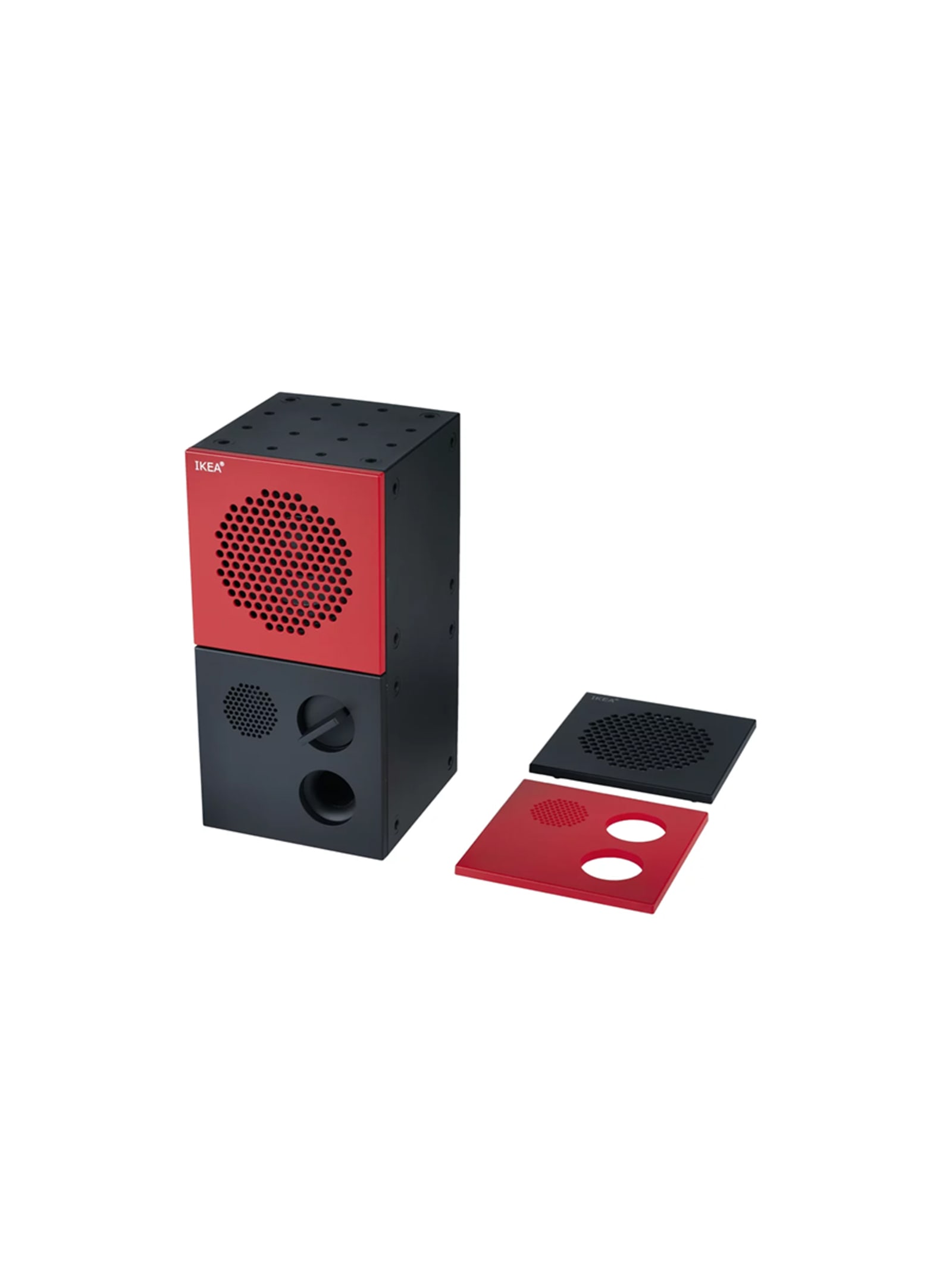
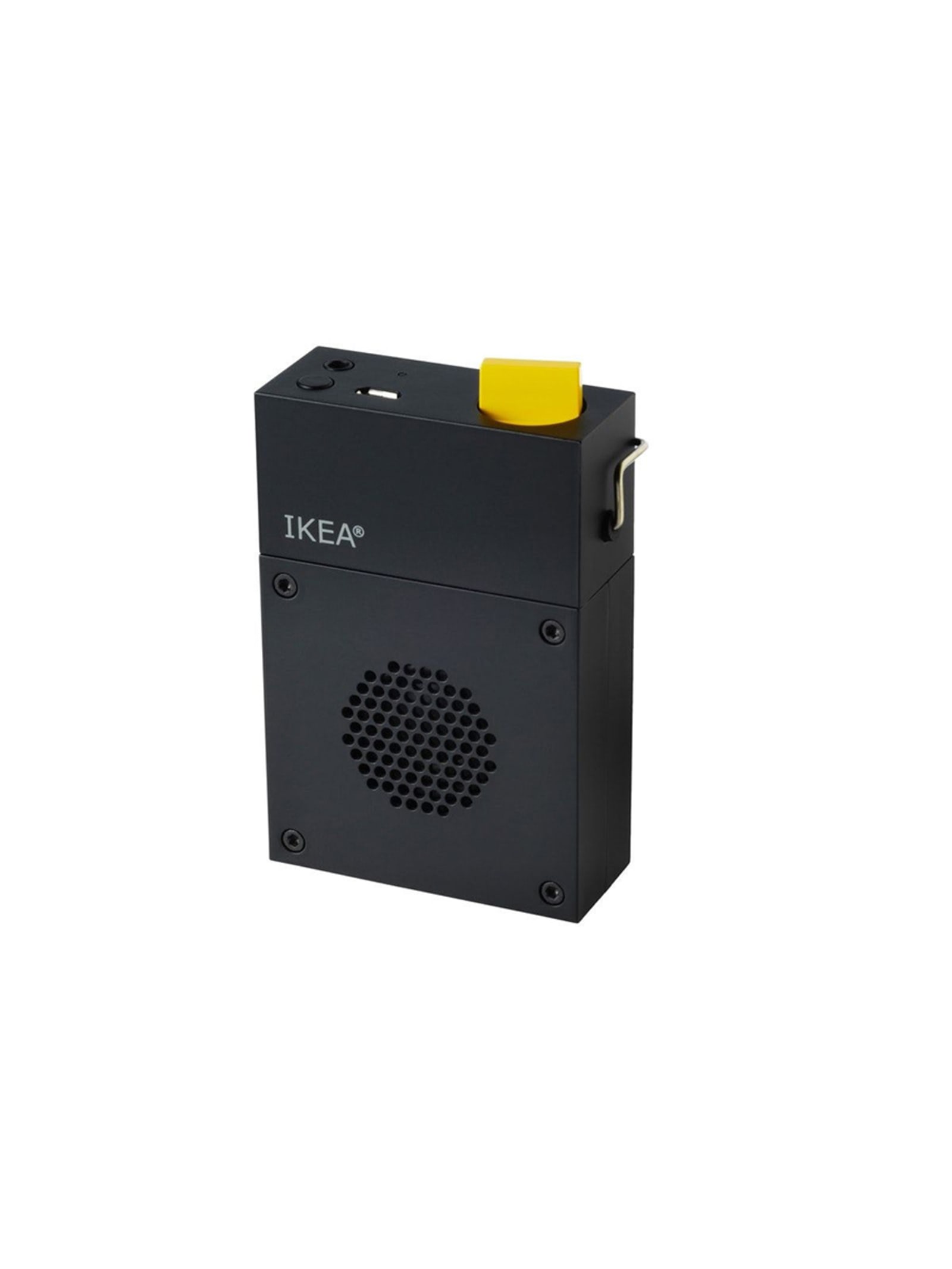
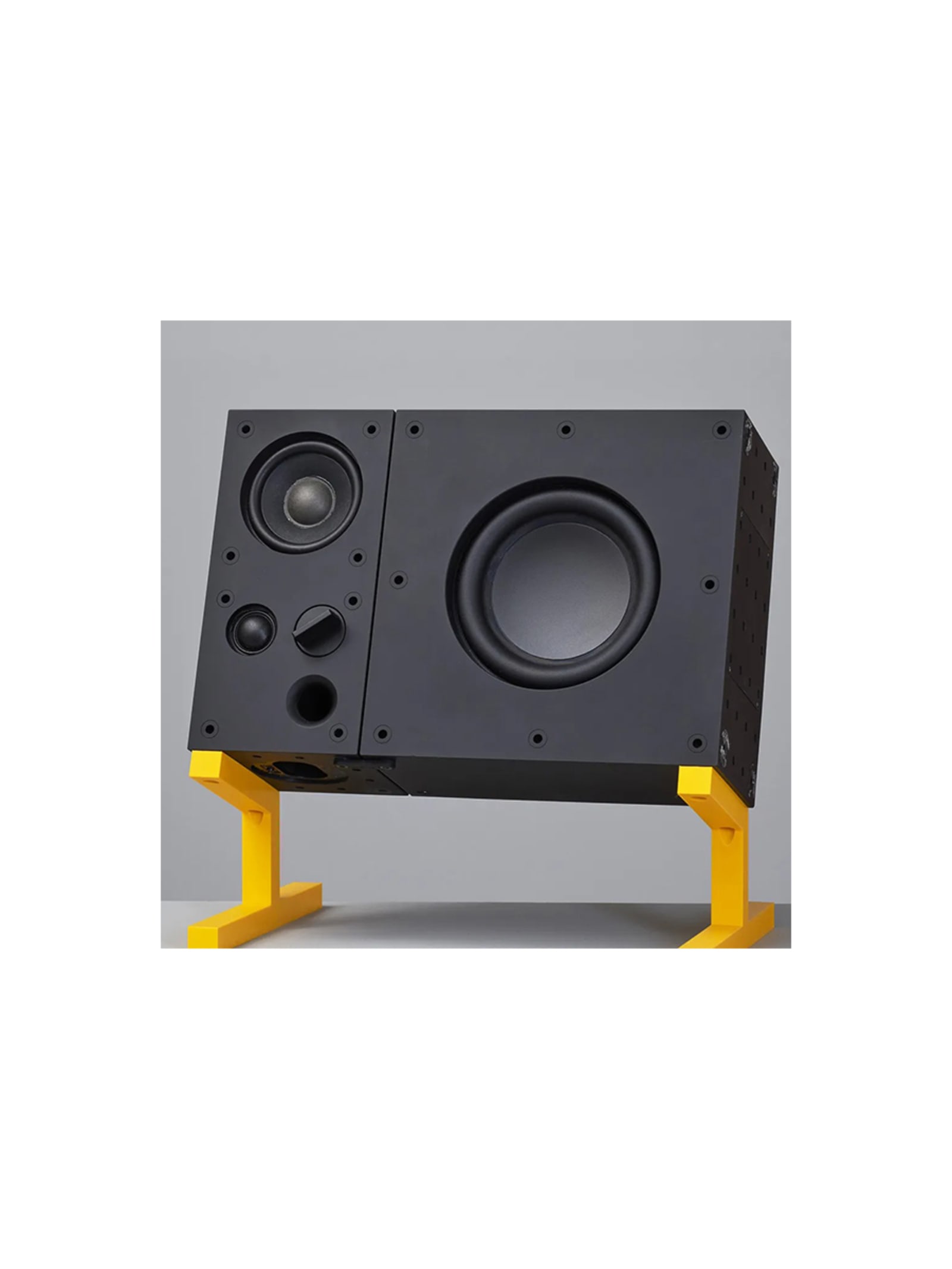
FREKVENS was teenage engineering's 2020 collaboration with IKEA, and this speaker is its core building block. The idea is modularity taken literally: every face of every speaker and light carries the same grid of mounting pins, so the units clip together into stacks of any shape, while AC in and out ports chain a whole assembly to a single plug. The speaker is a square block of high-density matte black plastic with a free-spinning yellow volume knob and primary-colour accents, pairing with up to eight devices over Bluetooth. It is one piece of a wider kit, the subwoofer speaker, a pocket clip speaker, music-reactive LED bulb and panel lights, stands and battery packs, all built to interlock. The premise, in teenage engineering's words, was that speakers are furniture and should not be hidden. Now discontinued, it suits the collector more than the bargain-hunter.
Design intent
- +The defining decision is a single modular grammar: every speaker and light shares the same grid of mounting pins on every face, so the pieces clip together into any configuration and chain through shared AC ports to one power plug, letting the owner build a sound-and-light system rather than buy a finished one.
- +Treating the speaker as an object to be seen rather than hidden drives the form: exposed high-density plastic, one bold volume knob and primary-colour markings around the ports follow teenage engineering's argument that a speaker is furniture in its own right.
FREKVENS was teenage engineering's 2020 collaboration with IKEA, and this speaker is its core building block. The idea is modularity taken literally: every face of every speaker and light carries the same grid of mounting pins, so the units clip together into stacks of any shape, while AC in and out ports chain a whole assembly to a single plug. The speaker is a square block of high-density matte black plastic with a free-spinning yellow volume knob and primary-colour accents, pairing with up to eight devices over Bluetooth. It is one piece of a wider kit, the subwoofer speaker, a pocket clip speaker, music-reactive LED bulb and panel lights, stands and battery packs, all built to interlock. The premise, in teenage engineering's words, was that speakers are furniture and should not be hidden. Now discontinued, it suits the collector more than the bargain-hunter.
Design intent
- +The defining decision is a single modular grammar: every speaker and light shares the same grid of mounting pins on every face, so the pieces clip together into any configuration and chain through shared AC ports to one power plug, letting the owner build a sound-and-light system rather than buy a finished one.
- +Treating the speaker as an object to be seen rather than hidden drives the form: exposed high-density plastic, one bold volume knob and primary-colour markings around the ports follow teenage engineering's argument that a speaker is furniture in its own right.
Trade-offs
- -The accessible, modular build is honest about its price: the body is lightweight plastic with no water or dust rating, scratches easily and will not survive a drop or a journey, so it is a system to assemble at home rather than a rugged portable speaker.
- -Each unit plays in mono and true stereo across paired speakers was never properly supported, so the kit is strong at filling a space and running a light show but falls short of the imaging a conventional stereo pair provides.