

EP-133 K.O II / Teenage Engineering
/ / /
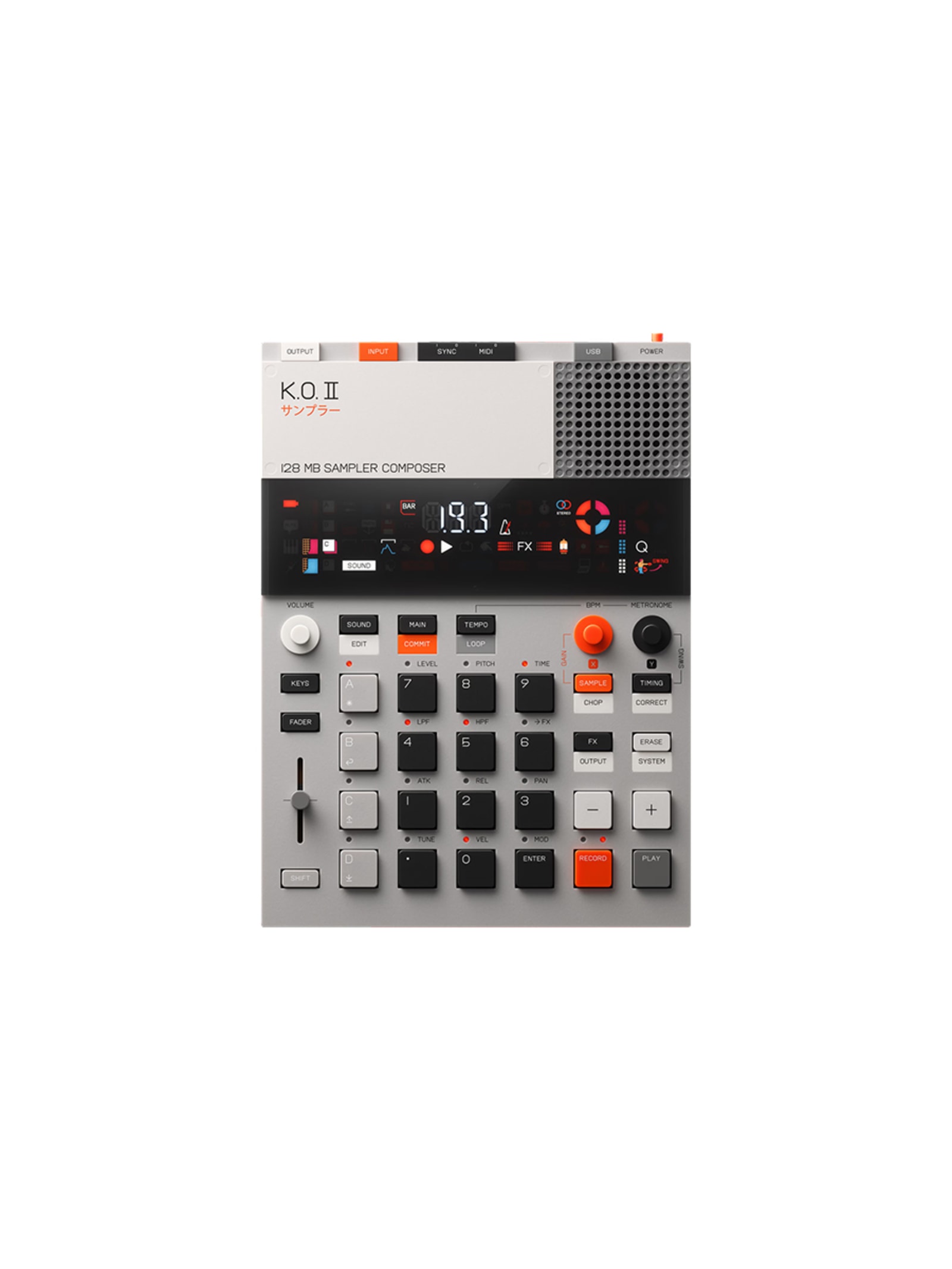
The EP-133 K.O. II is Teenage Engineering's grown-up Pocket Operator: a sampler, sequencer and composer in a body that openly borrows the look of a pocket calculator, down to the clicky keys and backlit numeric display. You sample through a built-in microphone or line-in, chop and pitch the results across pressure- and velocity-sensitive pads, and build tracks by chaining patterns into scenes and songs, with a sliding fader for hands-on control. A built-in speaker lets it work untethered, on four AAA batteries. The design is the point as much as the function: it makes electronic music feel playful and immediate rather than technical. It suits the producer or beatmaker who wants to start ideas quickly away from a screen, and accepts modest memory and specifications in exchange for that workflow.
Design intent
- The calculator-inspired form is a deliberate design argument: clicky numeric keys, a sliding fader and a backlit segment display turn sampling and sequencing into something tactile and playful, lowering the barrier that screen-and-menu music software puts in the way.
- Building in a microphone, speaker and battery power makes it genuinely self-contained, so an idea can be sampled, sequenced and played back anywhere without a computer, an interface or a single cable.
Trade-offs
- The compact, affordable design comes with real limits: 64MB of memory, no on-device resampling and modest specifications mean it is built for sketching ideas quickly rather than producing a finished, layered track to studio standards.
- Its immediacy rewards organic play over precise programming, so anyone wanting deep editing, long sampling time or detailed arrangement will hit the ceiling of what the format intends to do.
- Source
- Year
- Category
- /
- Colour
- Material
- Style
- Indexed
- 19 Mar 2025