
PS 2014 Pendant Lamp / IKEA
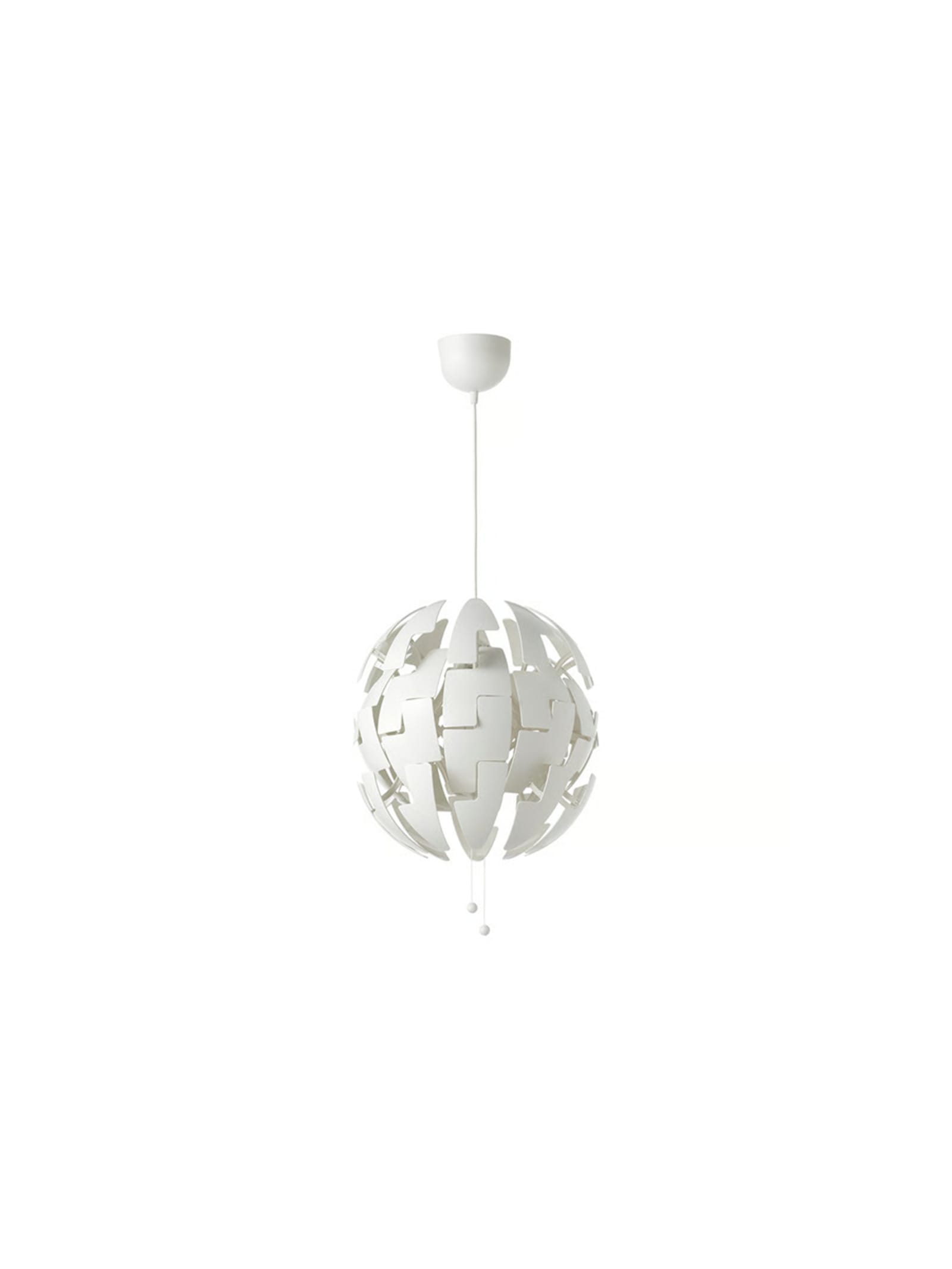
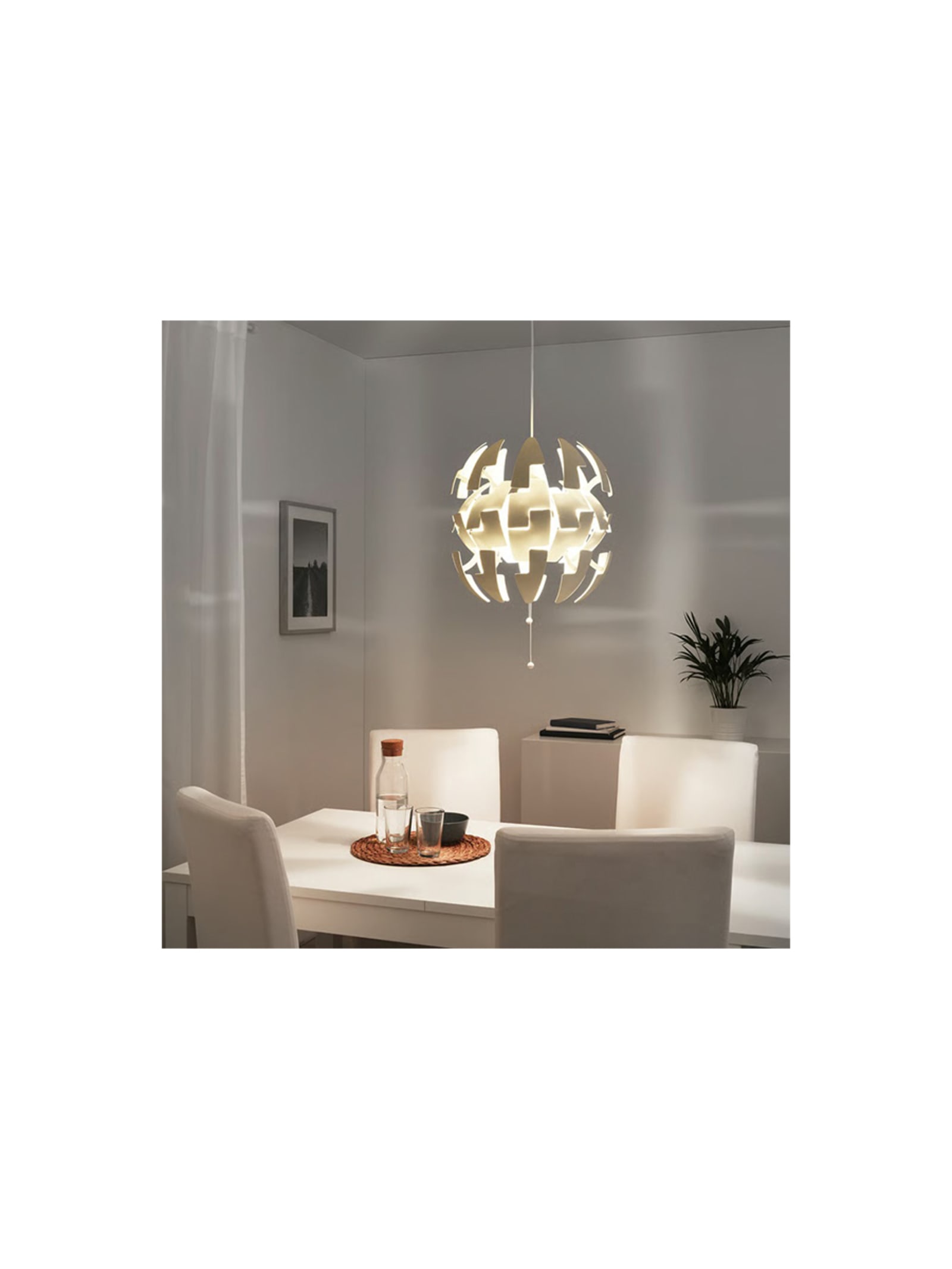
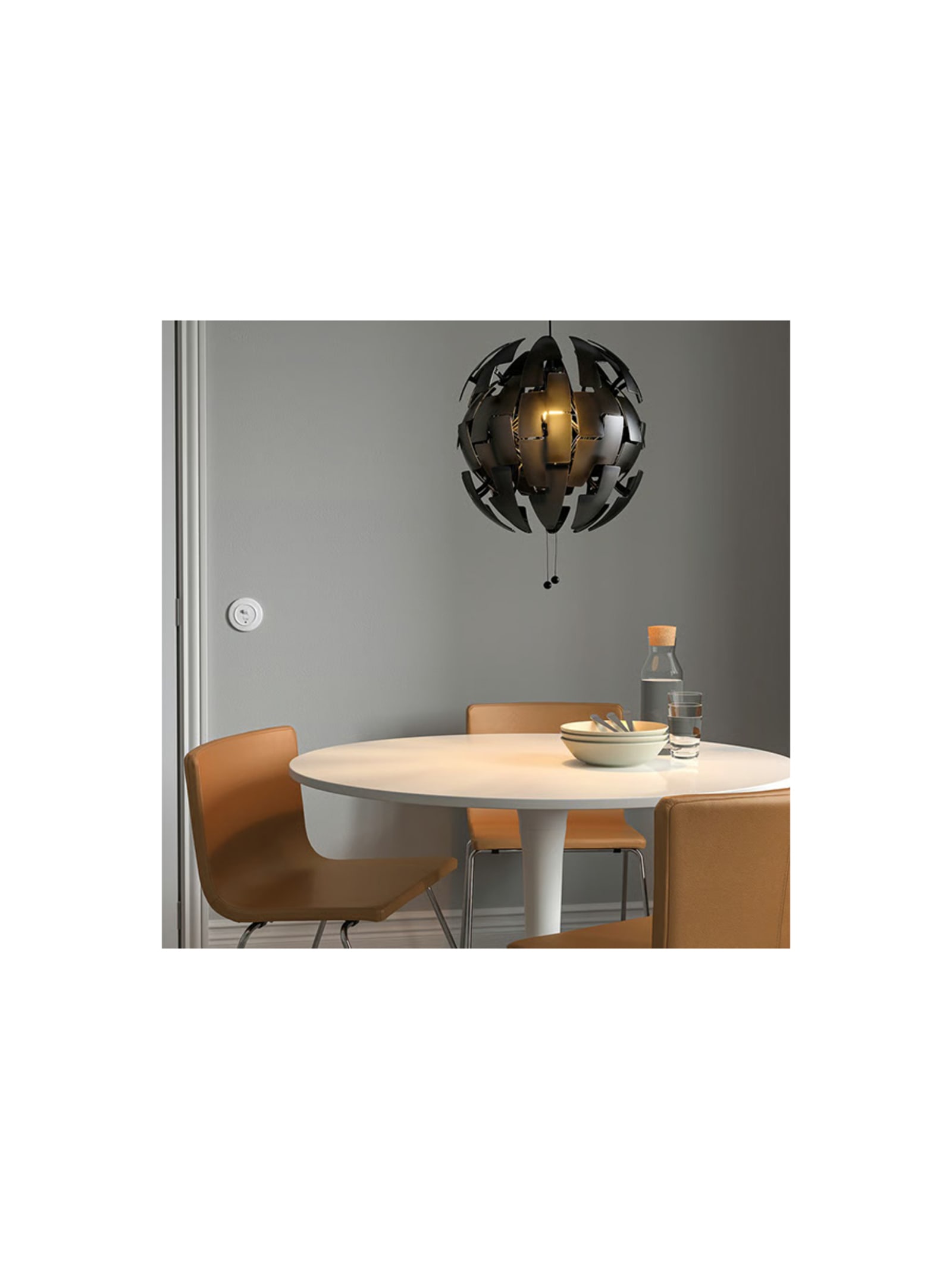
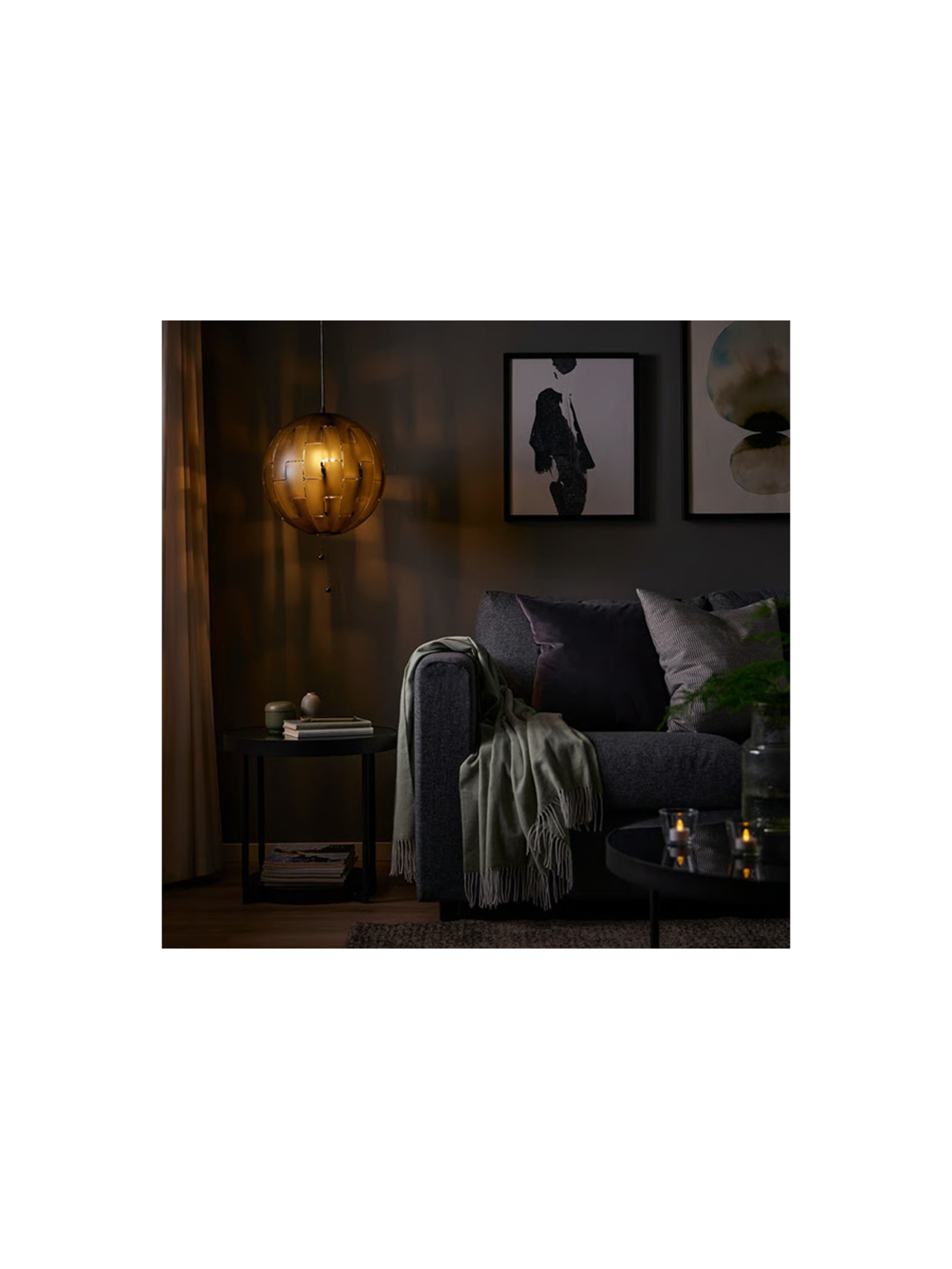
The PS 2014 pendant was designed by David Wahl for IKEA's PS 2014 collection and won a Red Dot award. Its shade is an assembly of partly-recycled plastic petals that open and close: pull the strings and the globe changes shape, and the light changes with it, more open for a wider, softer spread, more closed for a dimmer, contained glow. It works, in effect, as a manual dimmer driven by form rather than electronics. Inspired by science-fiction films, it reads as a spaceship or an imploding planet, around 35cm across, and the petals throw detailed shadow patterns across walls and ceiling. It has one presence switched off and another switched on, both of which were designed. It is a lamp that makes a statement, which suits some rooms and overwhelms others.
Design intent
- +Pulling the strings changes the shade's shape and the light together, building a manual dimmer into the structure rather than adding electronics or swapping the bulb.
- +The shadow patterns the petals cast are a deliberate second effect: the lamp is designed to have one presence lit and another unlit.
Trade-offs
- -The petal globe is visually dominant; it announces itself in a room, which is right in some interiors and too much in others.
- -The string mechanism is for setting a shape and leaving it, not frequent adjustment, and the thin plastic petals can break if handled roughly during assembly.
Related products









The PS 2014 pendant was designed by David Wahl for IKEA's PS 2014 collection and won a Red Dot award. Its shade is an assembly of partly-recycled plastic petals that open and close: pull the strings and the globe changes shape, and the light changes with it, more open for a wider, softer spread, more closed for a dimmer, contained glow. It works, in effect, as a manual dimmer driven by form rather than electronics. Inspired by science-fiction films, it reads as a spaceship or an imploding planet, around 35cm across, and the petals throw detailed shadow patterns across walls and ceiling. It has one presence switched off and another switched on, both of which were designed. It is a lamp that makes a statement, which suits some rooms and overwhelms others.
Design intent
- +Pulling the strings changes the shade's shape and the light together, building a manual dimmer into the structure rather than adding electronics or swapping the bulb.
- +The shadow patterns the petals cast are a deliberate second effect: the lamp is designed to have one presence lit and another unlit.
Trade-offs
- -The petal globe is visually dominant; it announces itself in a room, which is right in some interiors and too much in others.
- -The string mechanism is for setting a shape and leaving it, not frequent adjustment, and the thin plastic petals can break if handled roughly during assembly.