
SmartSleep Wake-up Light / Philips
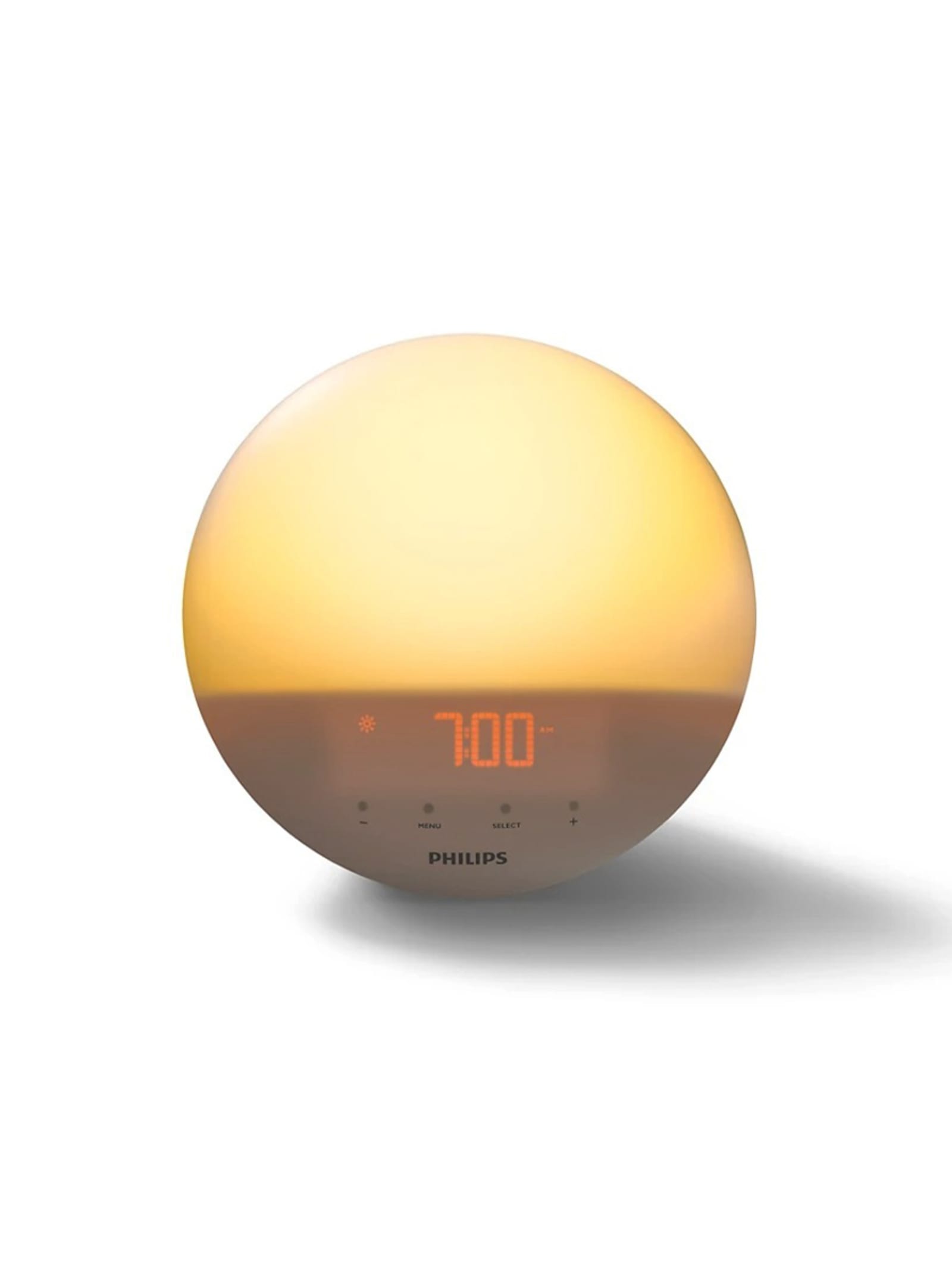
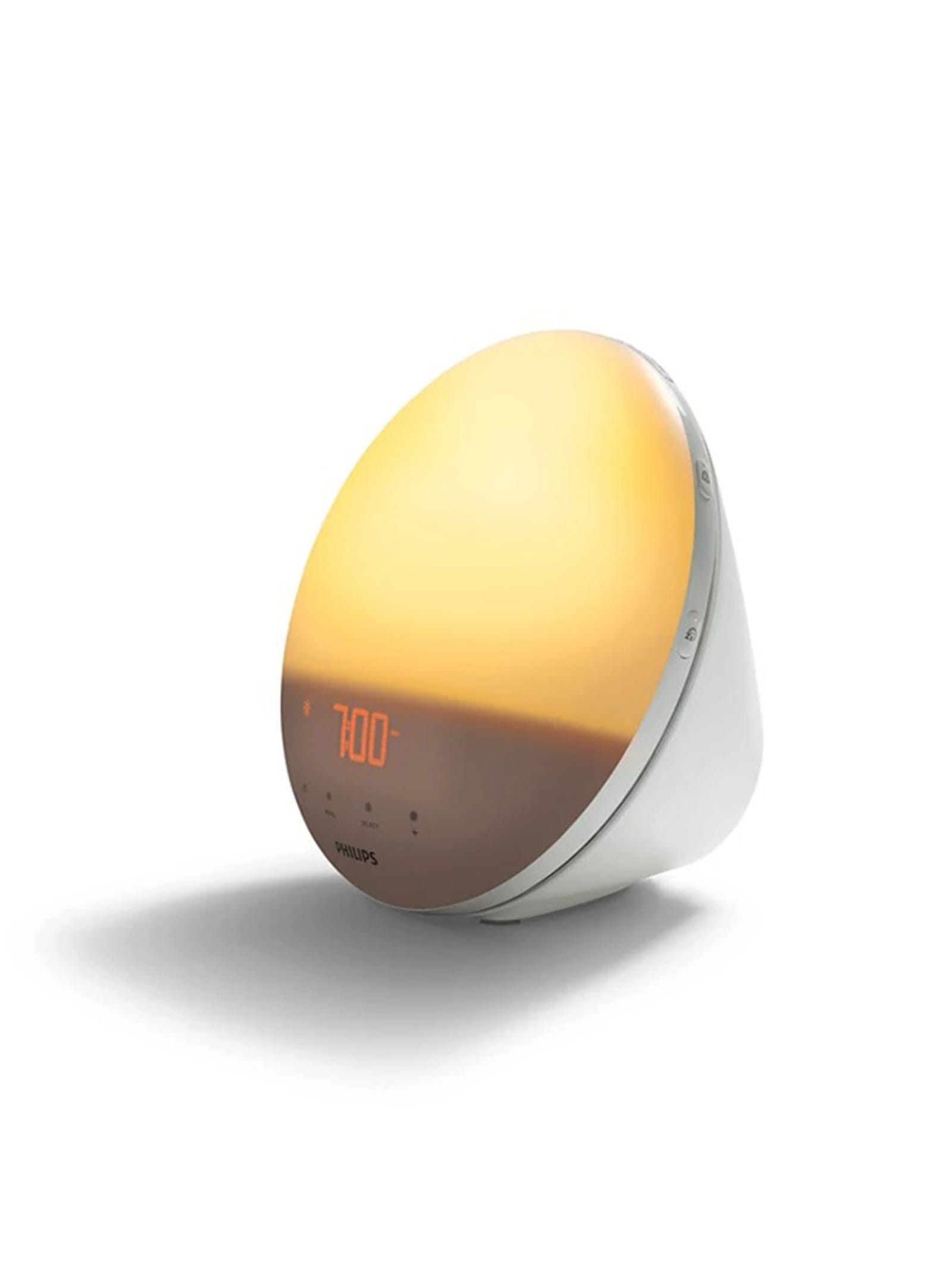
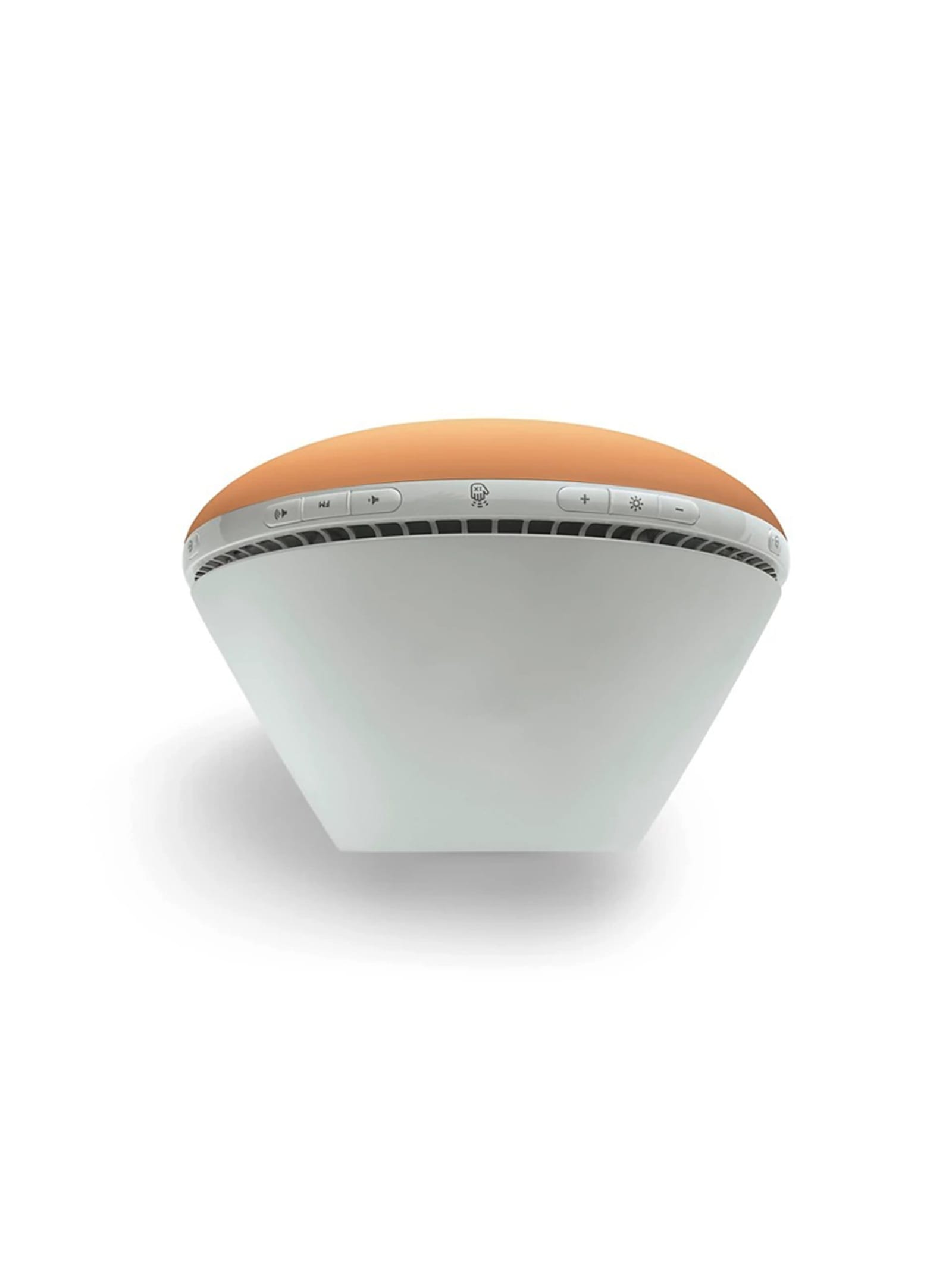
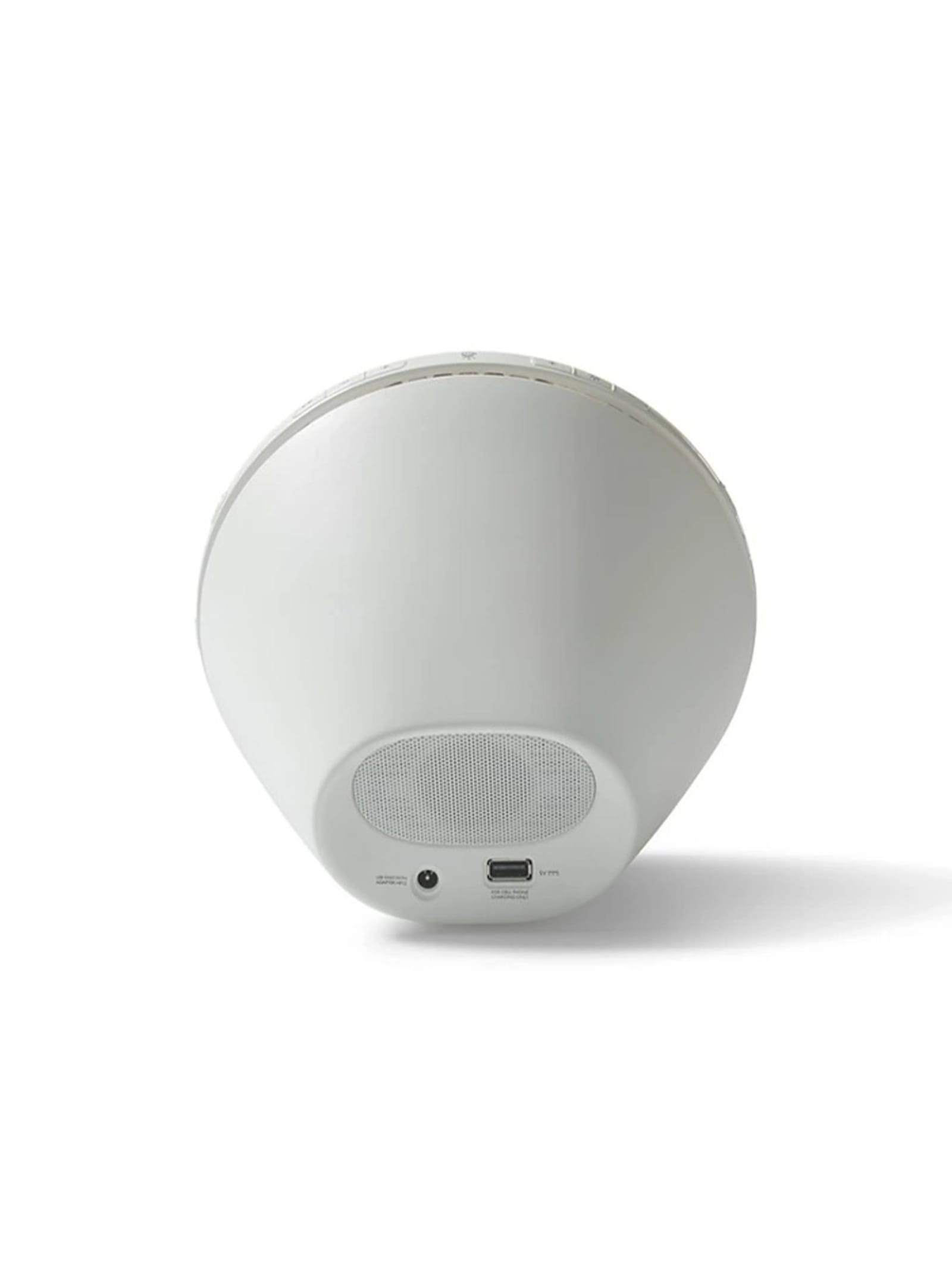
The SmartSleep HF3520 treats waking as a gradual physiological event rather than a sudden one. Over 20 or 30 minutes before the set time, the dome brightens through deep red, orange and yellow to roughly 300 lux, the change in light prompting the body to begin its own waking process; at the alarm time one of five nature sounds, or an FM radio station, fades in over the top. The same logic runs in reverse for sleep, the light dimming to ease the wind-down. The plastic dome doubles as a reading lamp with 20 brightness levels and snoozes with a tap on its surface. This is the non-connected model: no app, no Bluetooth, no smart-home links, just light, sound and a radio set through buttons on the body.
Design intent
- +The wake sequence is built around the body's cortisol response: light begins well before the alarm so waking starts gradually, and sound arrives only as a backstop once the light has done its work.
- +Folding alarm, reading lamp, sunset wind-down and FM radio into one dome keeps the bedside clear and gives the object a use across the whole evening and morning, not only at the alarm.
Trade-offs
- -The large dome takes up real bedside space, and its glossy plastic shows fingerprints and fine scratches sooner than a matte finish would.
- -Every setting is reached through small physical buttons and a menu reviewers consistently find hard to learn; there is no app to fall back on.




The SmartSleep HF3520 treats waking as a gradual physiological event rather than a sudden one. Over 20 or 30 minutes before the set time, the dome brightens through deep red, orange and yellow to roughly 300 lux, the change in light prompting the body to begin its own waking process; at the alarm time one of five nature sounds, or an FM radio station, fades in over the top. The same logic runs in reverse for sleep, the light dimming to ease the wind-down. The plastic dome doubles as a reading lamp with 20 brightness levels and snoozes with a tap on its surface. This is the non-connected model: no app, no Bluetooth, no smart-home links, just light, sound and a radio set through buttons on the body.
Design intent
- +The wake sequence is built around the body's cortisol response: light begins well before the alarm so waking starts gradually, and sound arrives only as a backstop once the light has done its work.
- +Folding alarm, reading lamp, sunset wind-down and FM radio into one dome keeps the bedside clear and gives the object a use across the whole evening and morning, not only at the alarm.
Trade-offs
- -The large dome takes up real bedside space, and its glossy plastic shows fingerprints and fine scratches sooner than a matte finish would.
- -Every setting is reached through small physical buttons and a menu reviewers consistently find hard to learn; there is no app to fall back on.