7 Dedicated Alarm Clocks That Work Better Than Your Smartphone
- 24 Jan 2026
- 28 May 2026
- 7 min
A smartphone can wake you. It can also show messages, headlines, emails, weather, and whatever you were looking at before you went to sleep. That breadth is convenient. It is rarely calm.
Alarm clocks were designed around interruption. Their purpose is narrow and deliberate. They display the time. They sound when required. Then they stop. There are no notifications waiting behind the glass, no gestures that lead somewhere else.
This difference matters more than it seems. Waking is a transitional moment, and the device that handles it shapes what happens next. A phone introduces possibility. A dedicated clock introduces certainty.
The clocks below are not nostalgic objects. They represent different approaches to the same constraint: how to interrupt sleep reliably, with as little cognitive residue as possible. Analogue and digital. Sound and light. Compact and substantial.
Each one prioritises the task over versatility. That focus is the advantage.
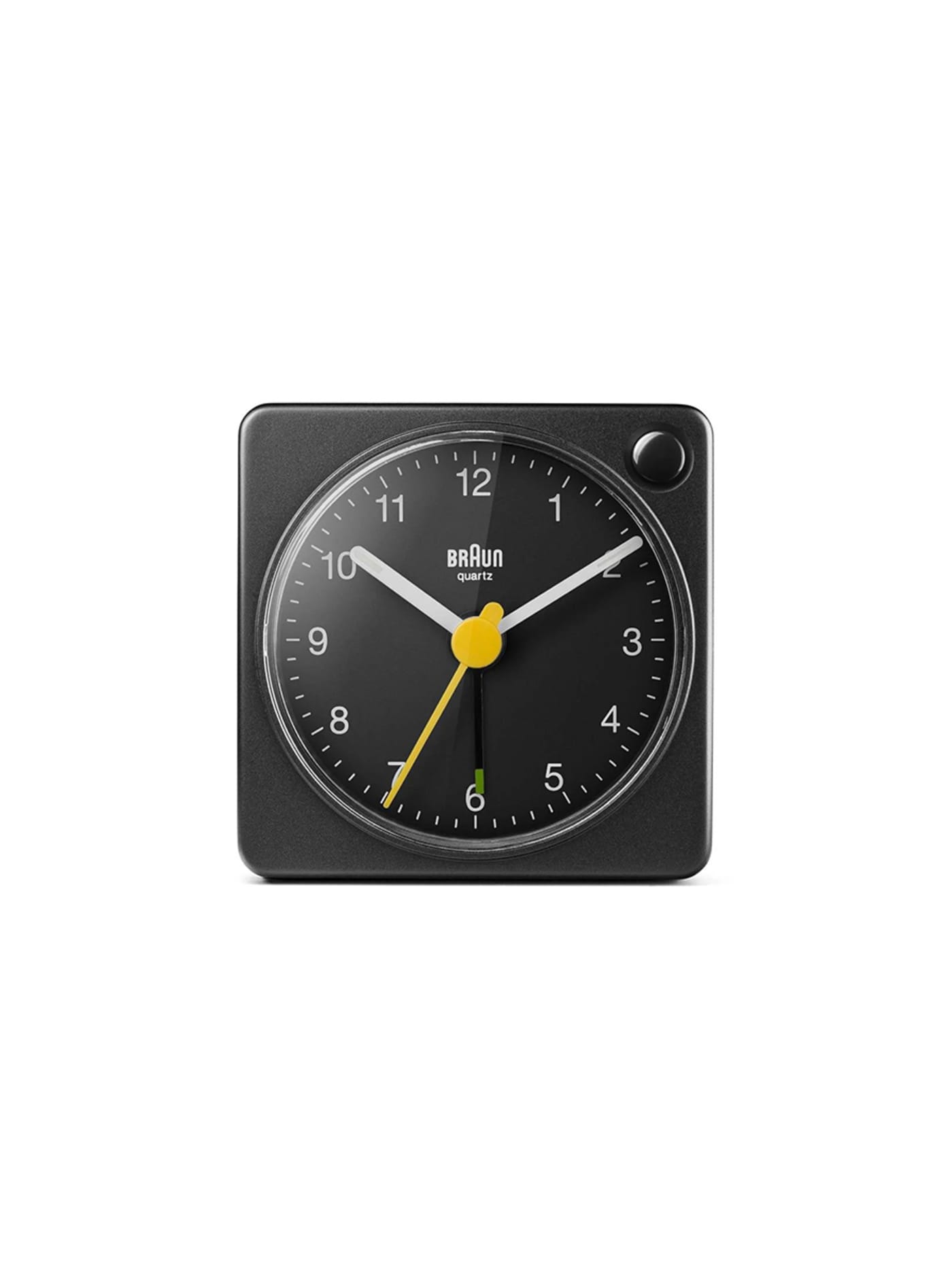
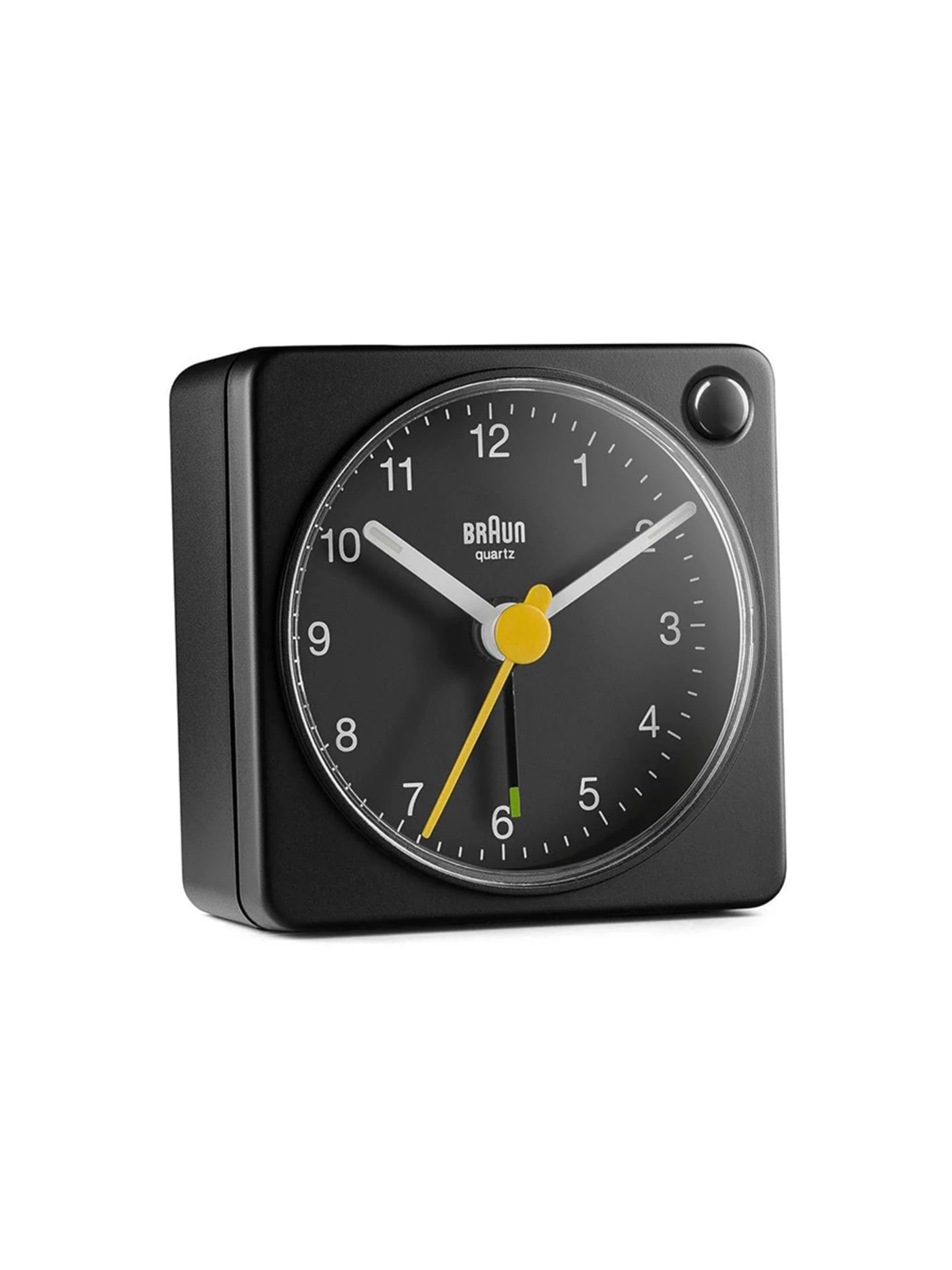
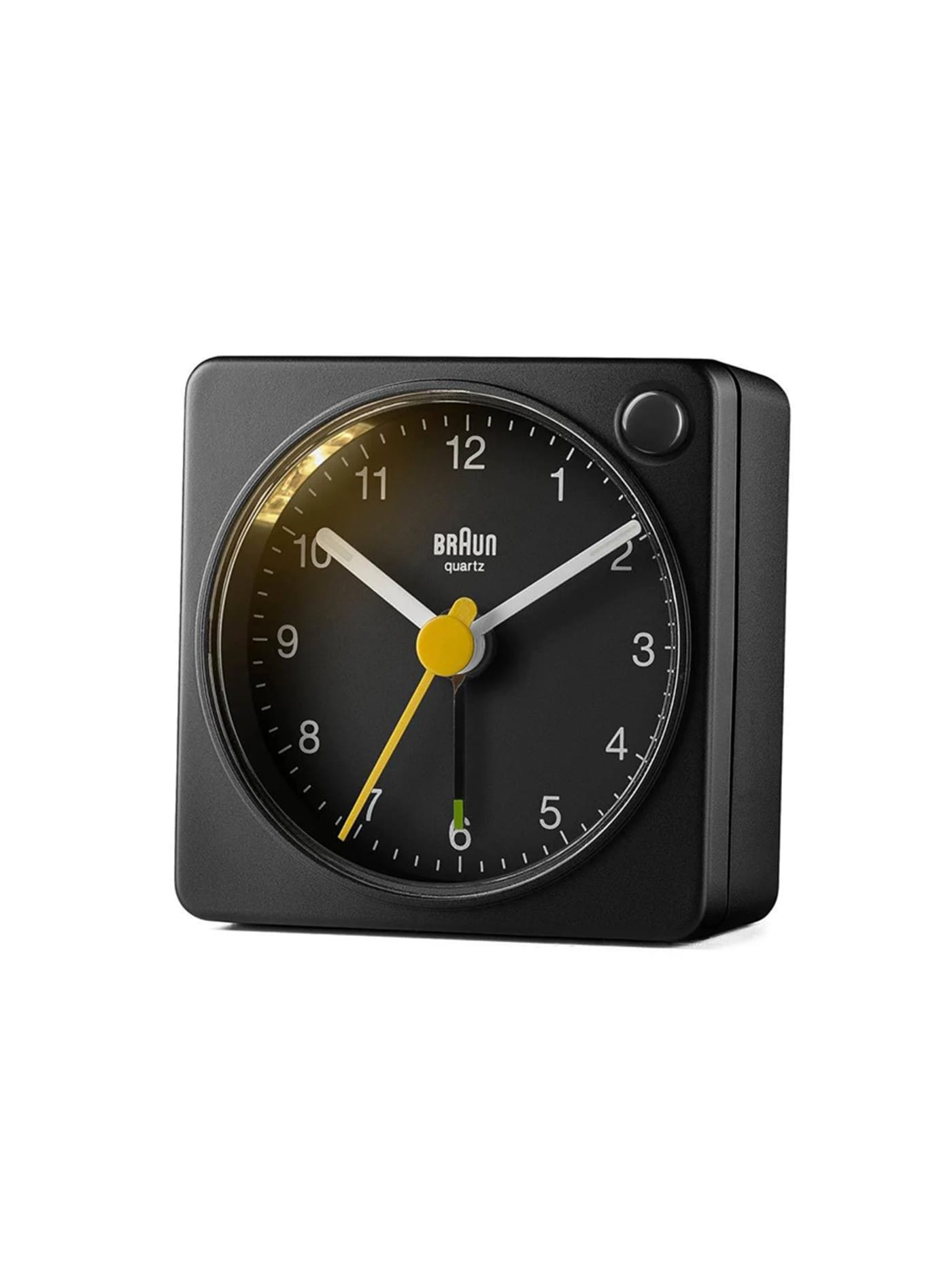
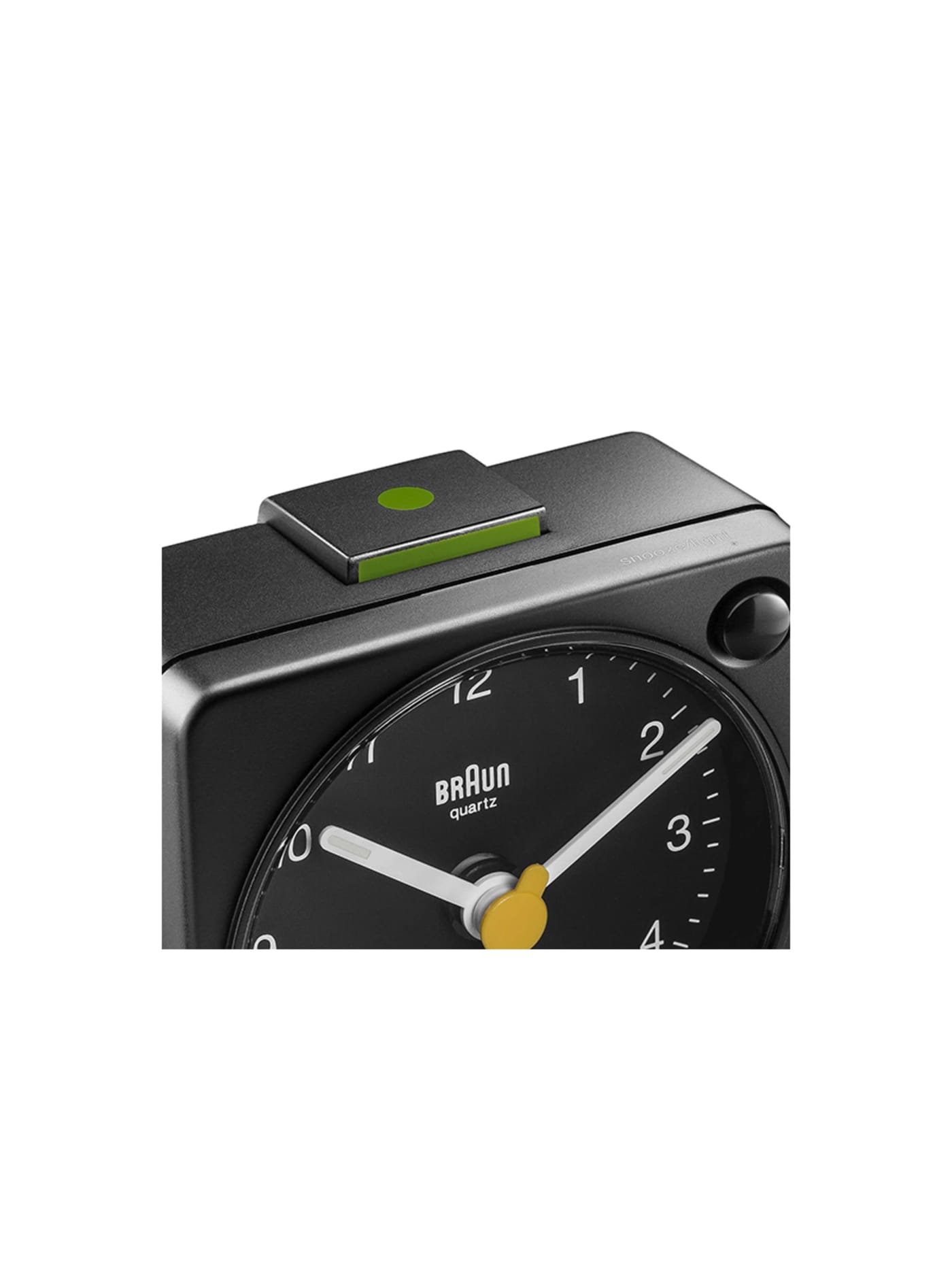
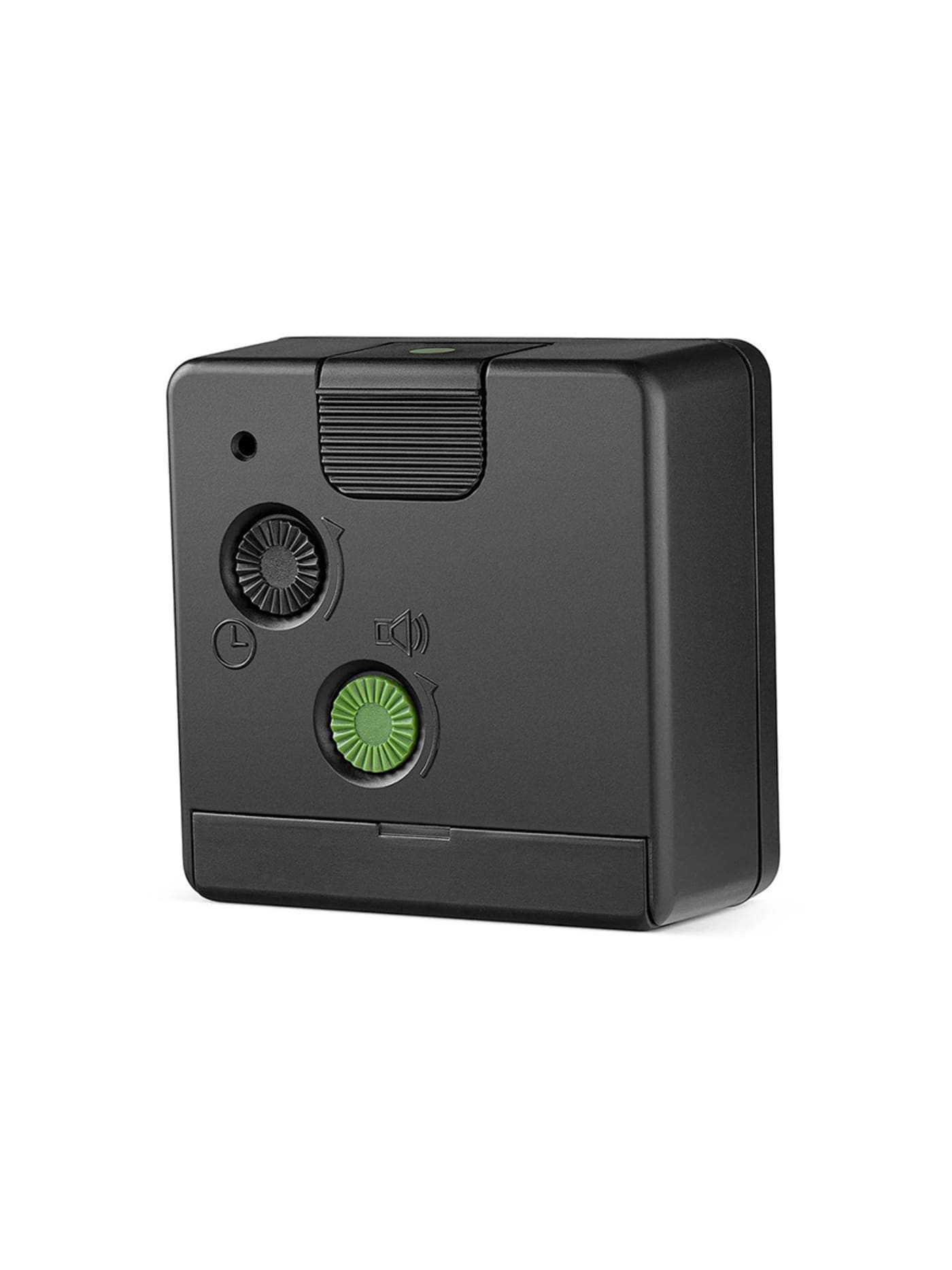
The BC02X does one thing well and leaves the rest alone. The dial is clear, contrast is strong, and the case stays visually quiet on a bedside. There are no notifications waiting behind the time, no glow from a screen that invites further attention. The crescendo alarm matters. It introduces you to the morning without demanding immediate reaction, yet it never pretends to be gentle wellness theatre. The controls are physical and separate. You can find them without looking. A phone can wake you. It just rarely stops there. The BC02X ends the interaction where it should end. That containment is the advantage.
Design intent
- The dial is designed for a single glance in a dark, unfamiliar room, which is why legibility is the only thing it optimises for.
- Everything is scaled to be packed and forgotten: small, light, and matt-finished so it survives a wash bag without showing the marks.
Trade-offs
- At travel scale the dial is harder to read across a room than a full bedside clock.
- The gentle crescendo alarm suits light sleepers but can be too quiet to rouse a heavy one.
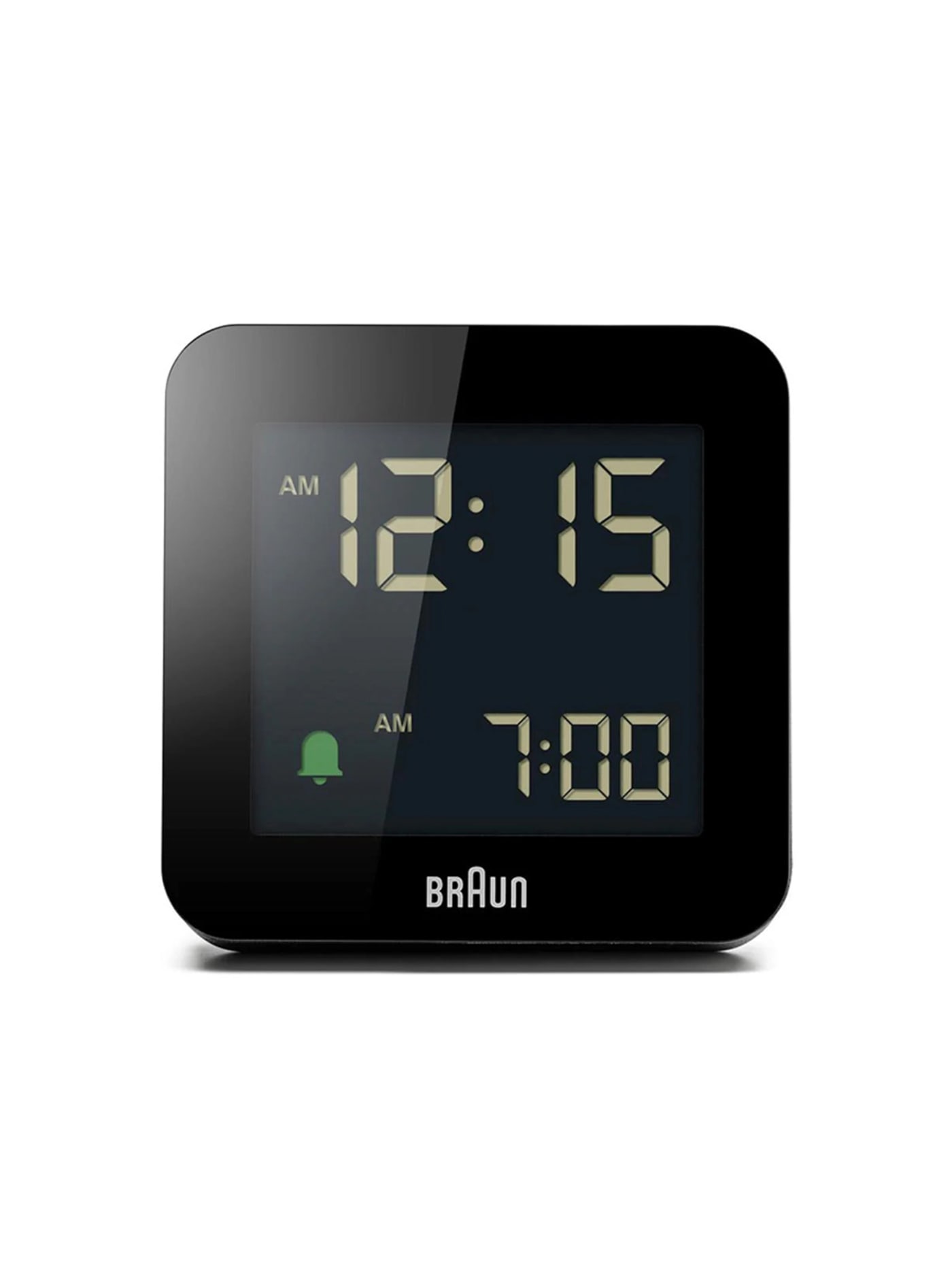
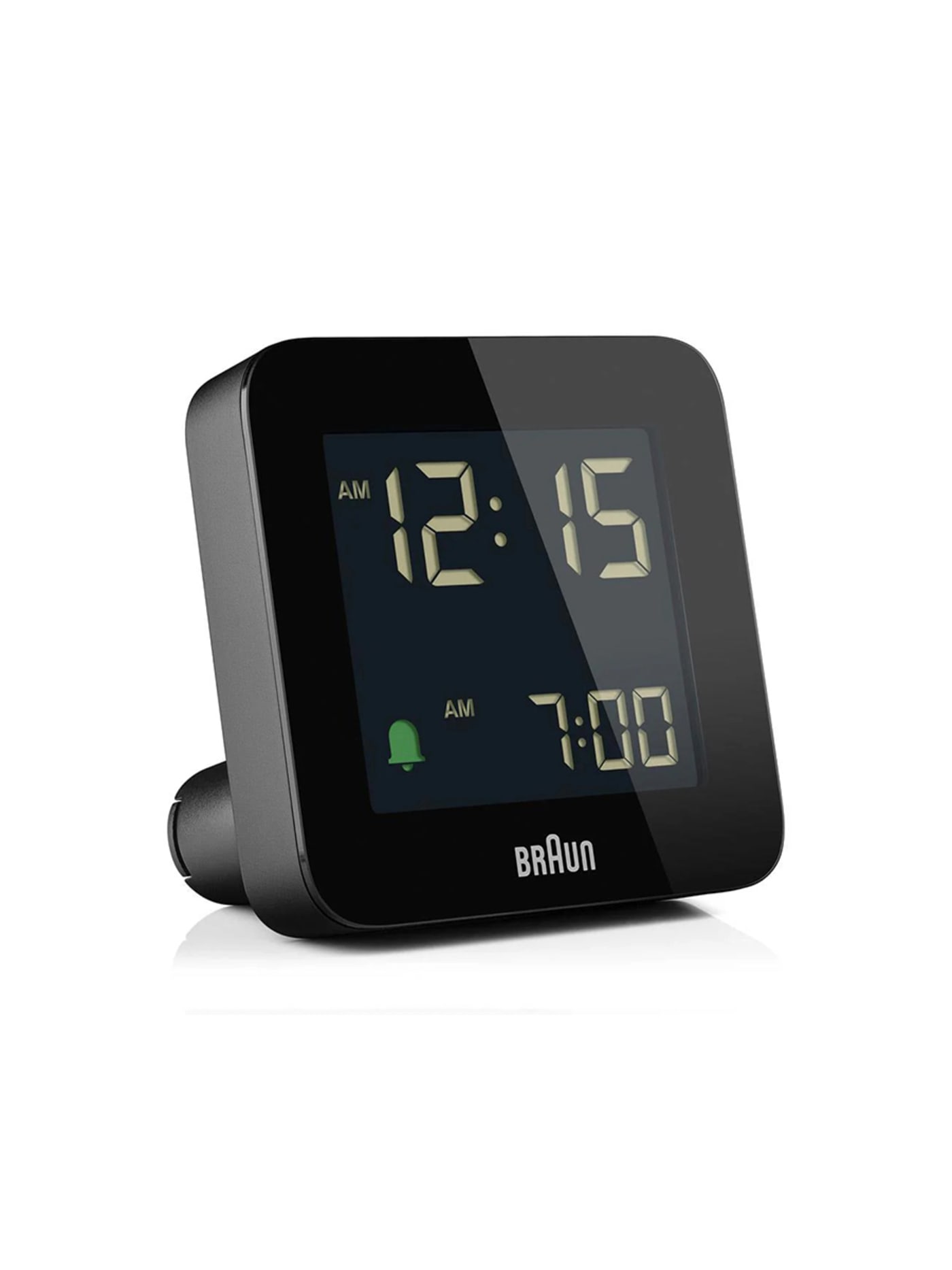
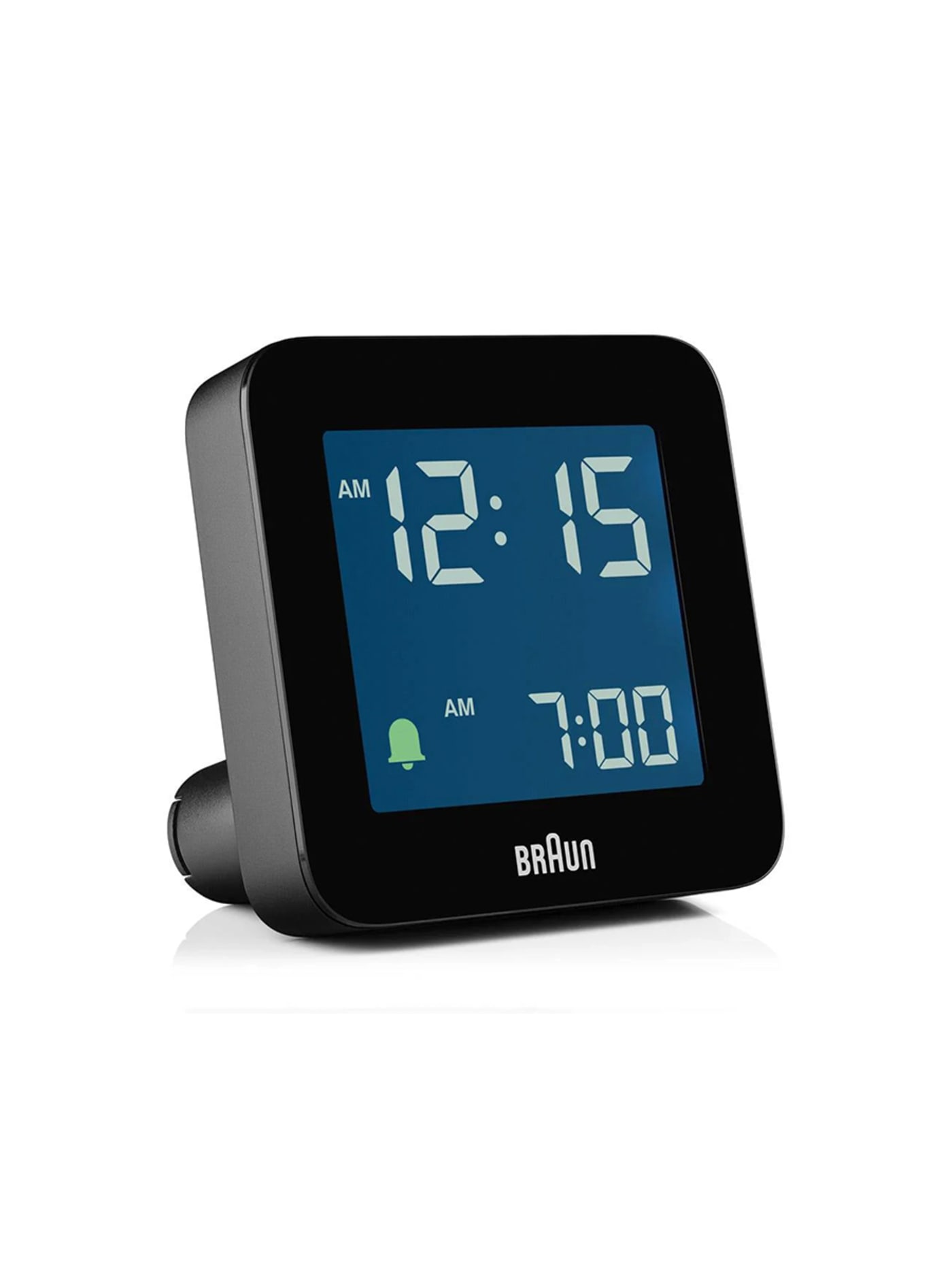
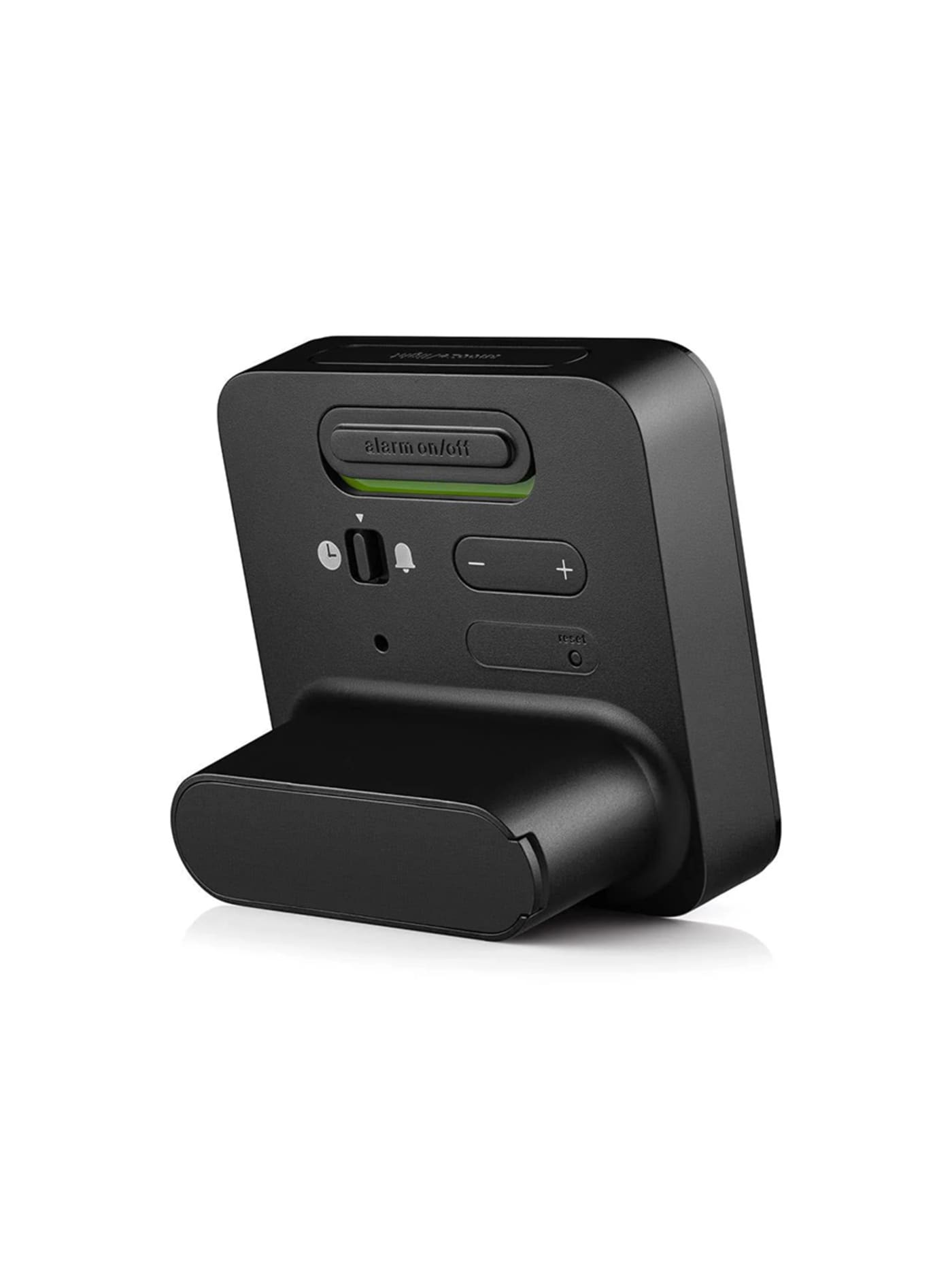
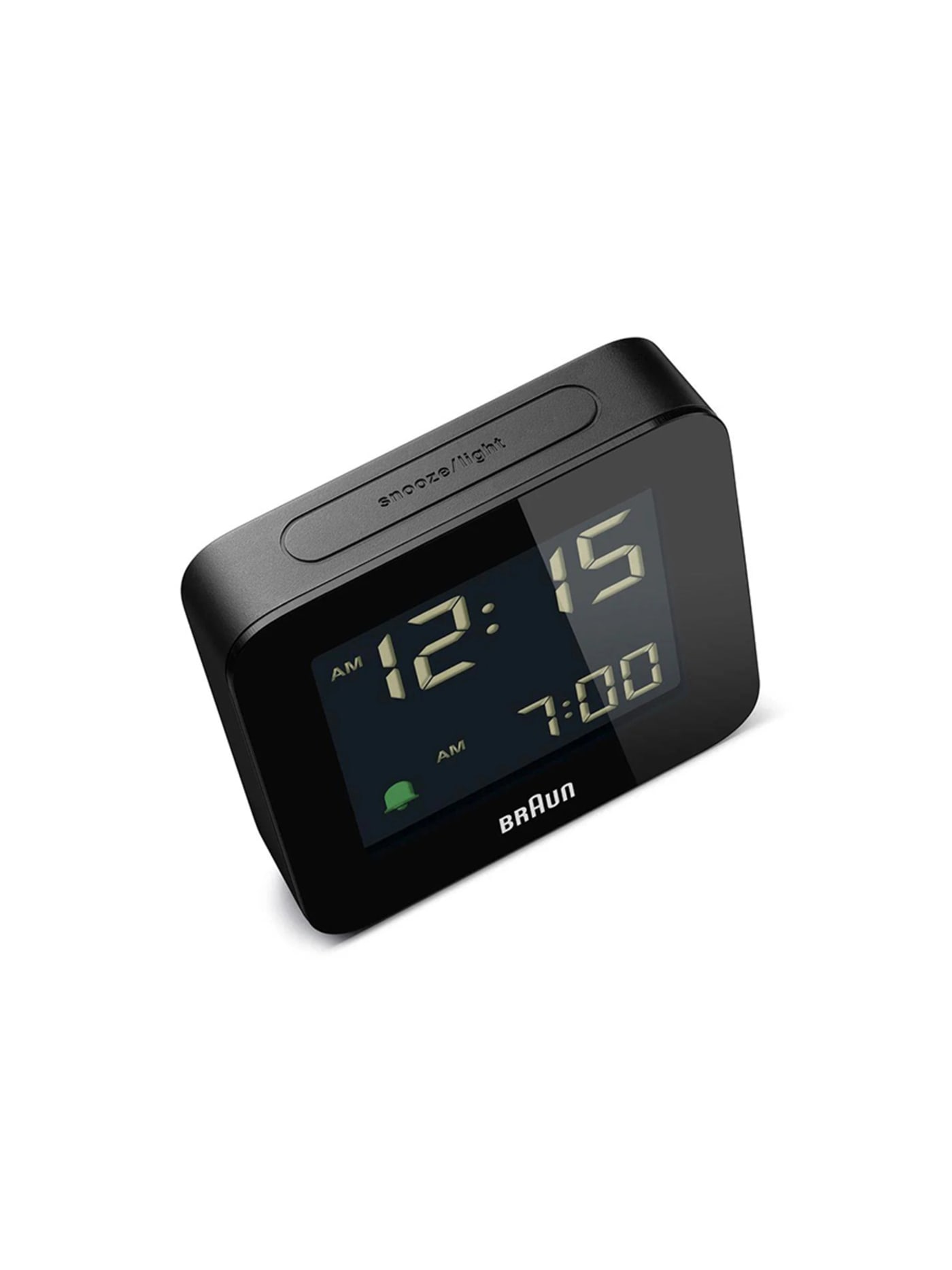
The BC09 proves that digital does not have to mean layered. The display is large, evenly spaced, and immediate. Time is visible from across the room without interpretation. There are no menus to enter, no secondary functions competing for attention. The snooze and light controls are obvious, not hidden behind touch gestures or screen states. It behaves the same way every night. A smartphone alarm shares space with messages, updates, and the possibility of scrolling. The BC09 does not. It shows the time. It sounds when required. Then it stops. For many people, that simplicity is the difference between waking up and drifting sideways into distraction.
Design intent
- The interface is kept mechanical rather than touch-sensitive, prioritising a clock that behaves the same way every time over one that merely looks more modern.
- A crescendo alarm replaces the abrupt digital buzzer, waking gradually, a deliberate softening of the one moment the clock exists for.
Trade-offs
- The reverse LCD, light on dark, is harder to read in dim conditions until the backlight is pressed.
- There is no radio, projection or connectivity; the clock does one thing, which is the appeal, but it is the whole of what it offers.
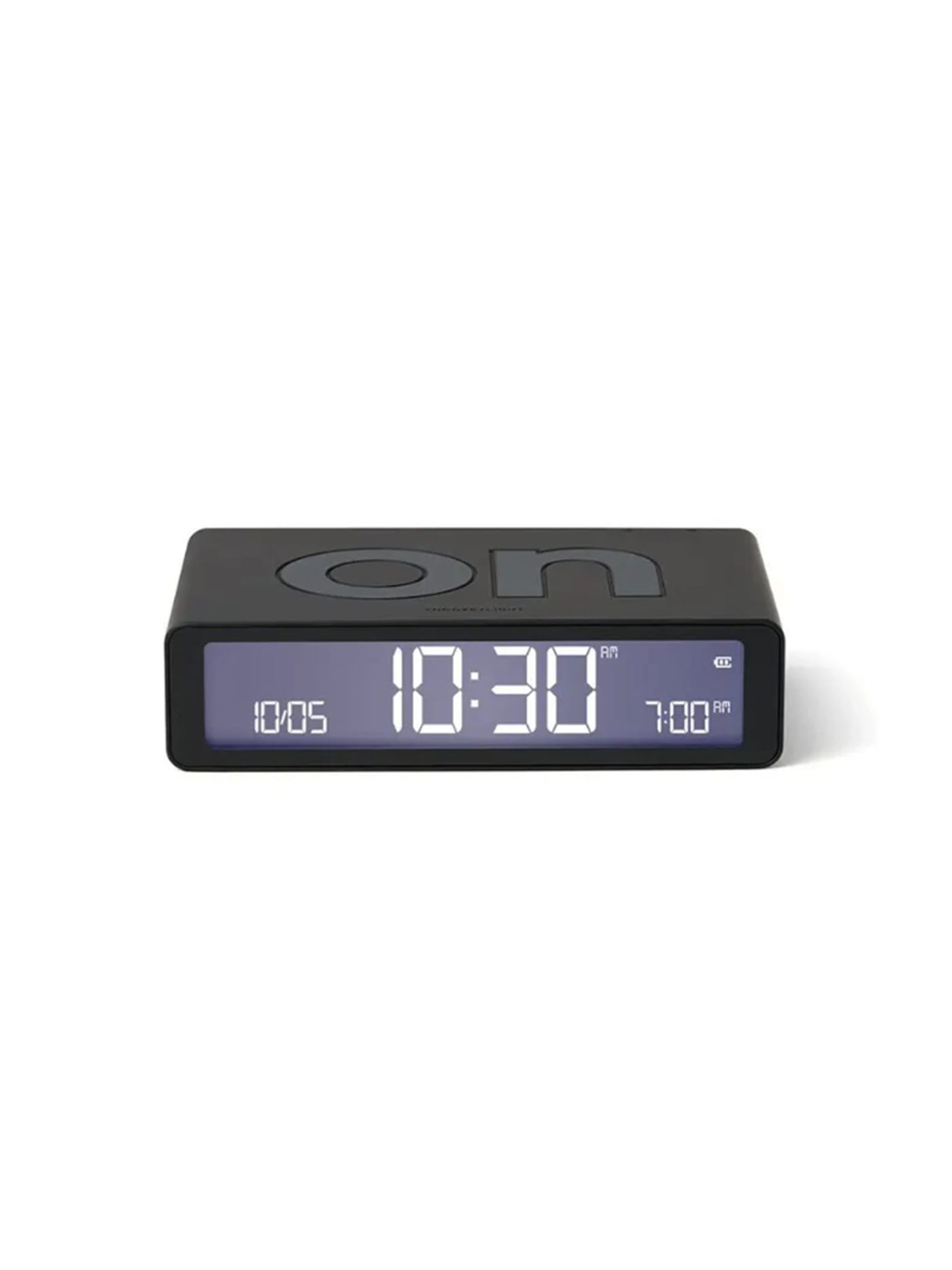
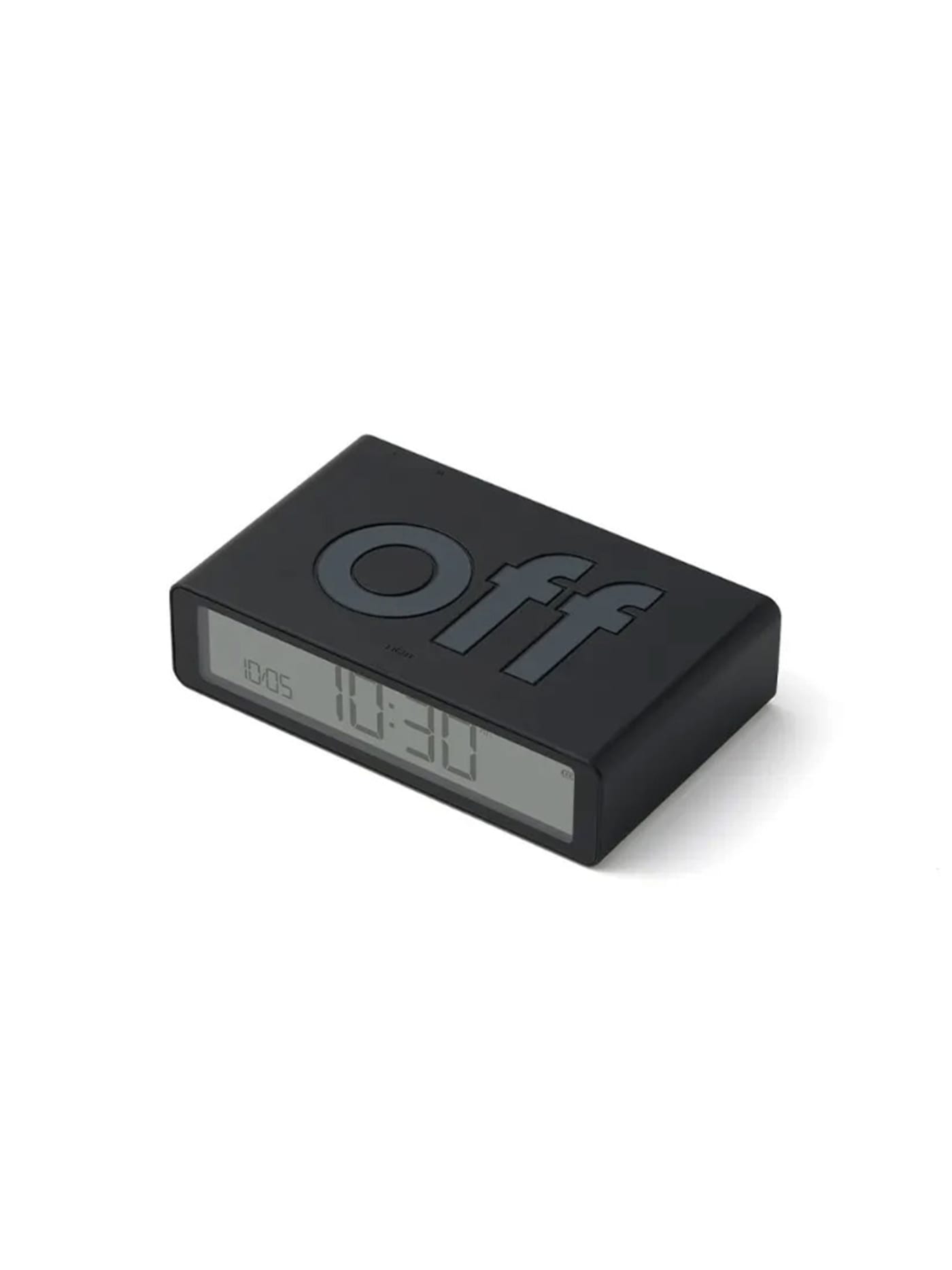
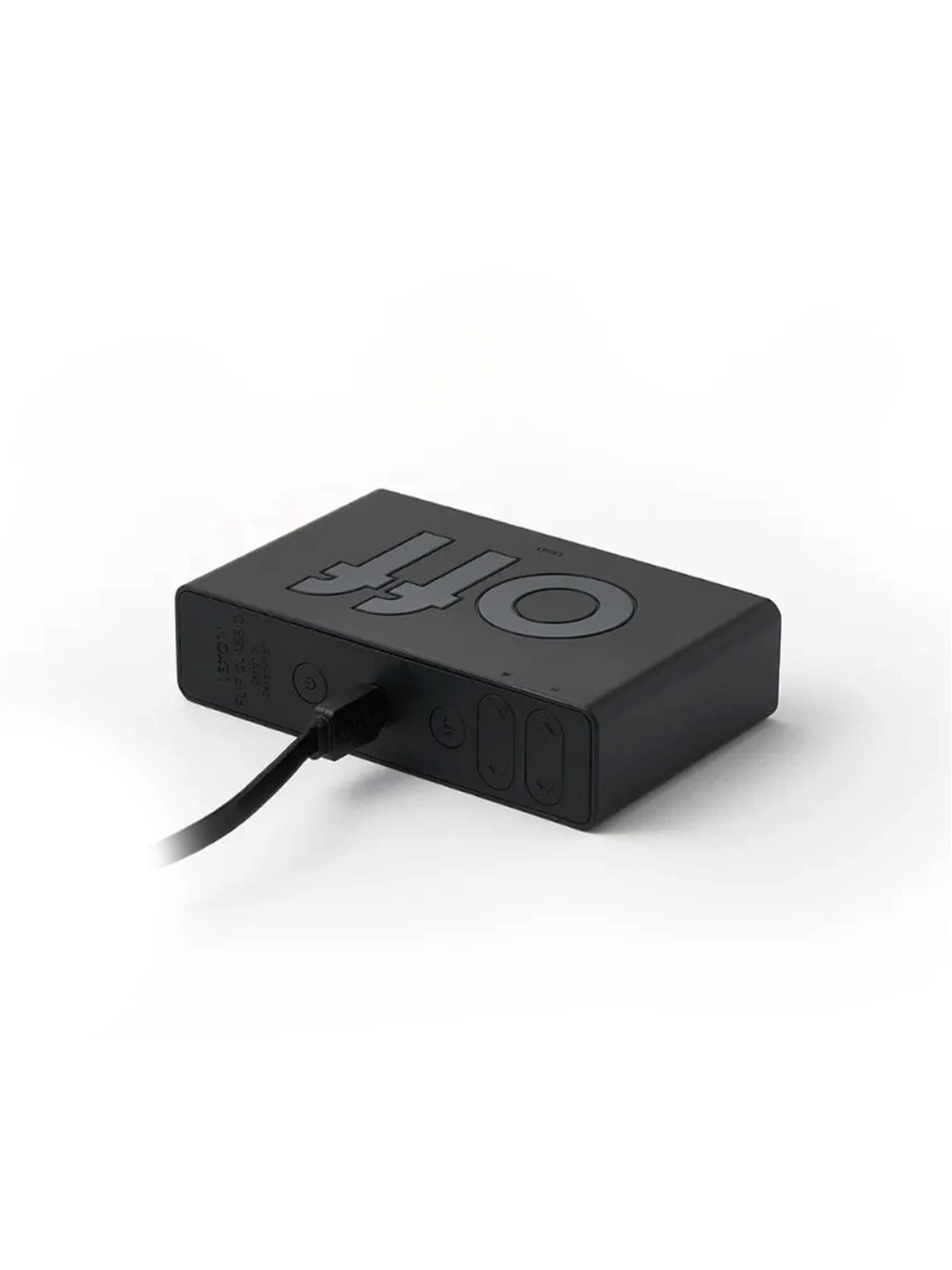
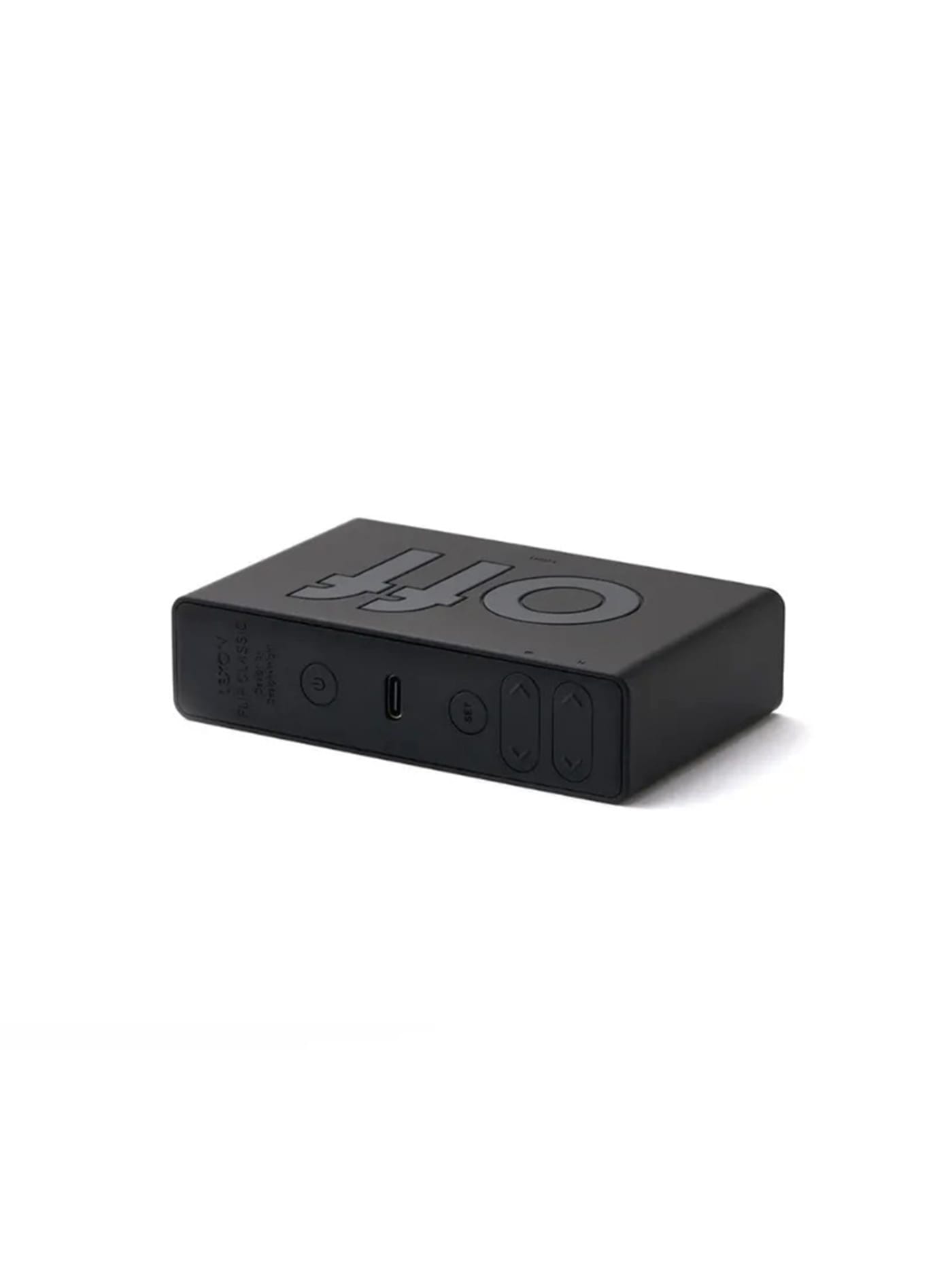
The Flip Classic is built around a single gesture. Turn it one way and the alarm is on. Turn it the other and it is off. That physical state removes ambiguity entirely. There is no wondering whether the alarm is armed. No checking a tiny icon on a screen. The object itself tells you, visibly and immediately, simply by which face is pointing up. It is compact, light, and easy to pack, running for up to six months on a rechargeable USB-C battery. A phone can travel, but it brings everything else with it. The Flip Classic brings only the function you asked for. In unfamiliar rooms, that focus becomes reassuring.
Design intent
- Setting the alarm by orientation, ON face up or OFF face up, removes button-hunting in the dark and makes the clock's state readable from across the room.
- The flat, compact form and long USB-C battery life keep it equally at home as a bedside or travel clock, with a travel lock to stop accidental triggering.
Trade-offs
- A single alarm with no weekday or weekend scheduling limits it for anyone with a varied routine.
- The gesture is binary by design: there is no graduated or customisable wake, just on or off.
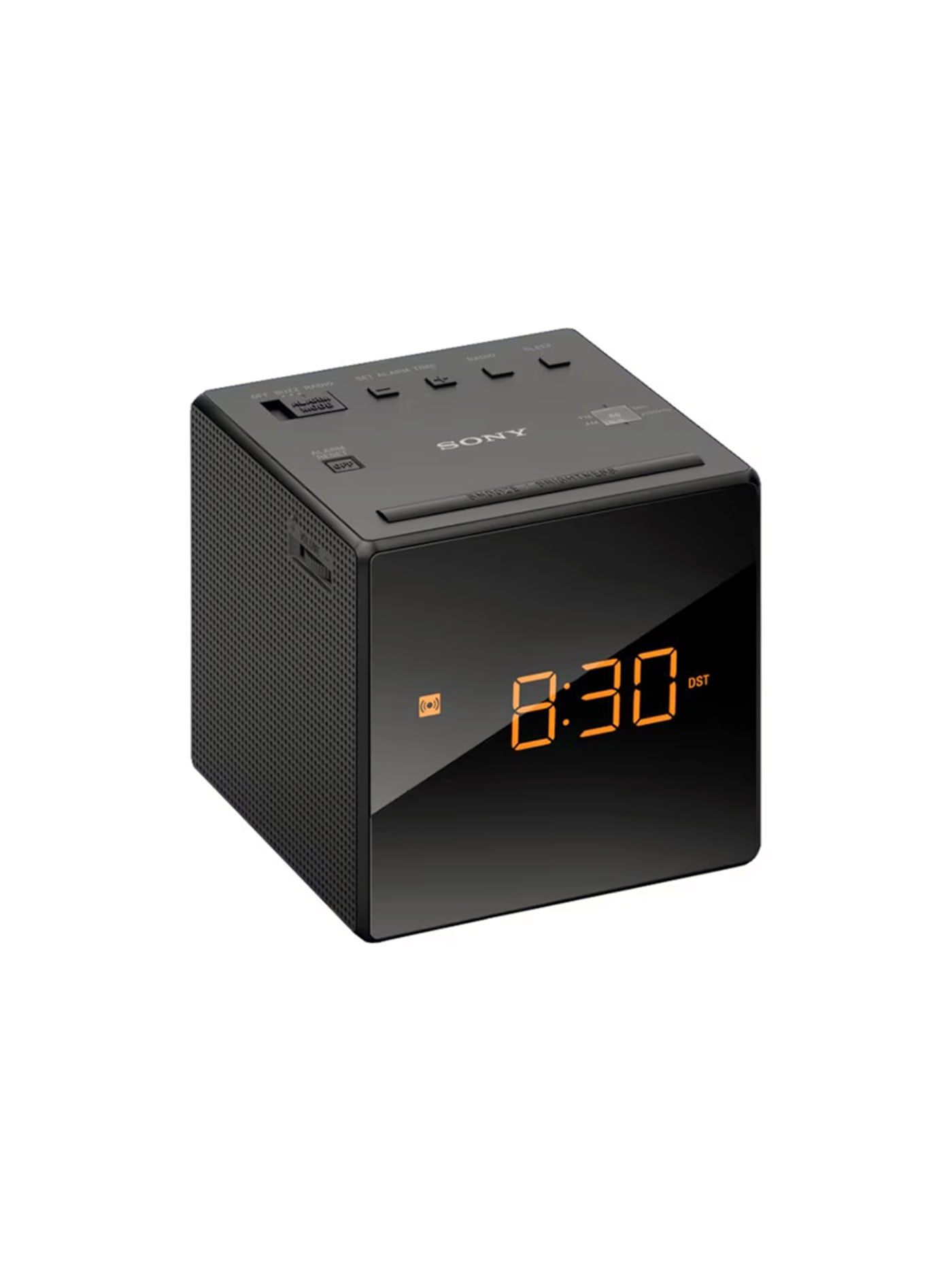
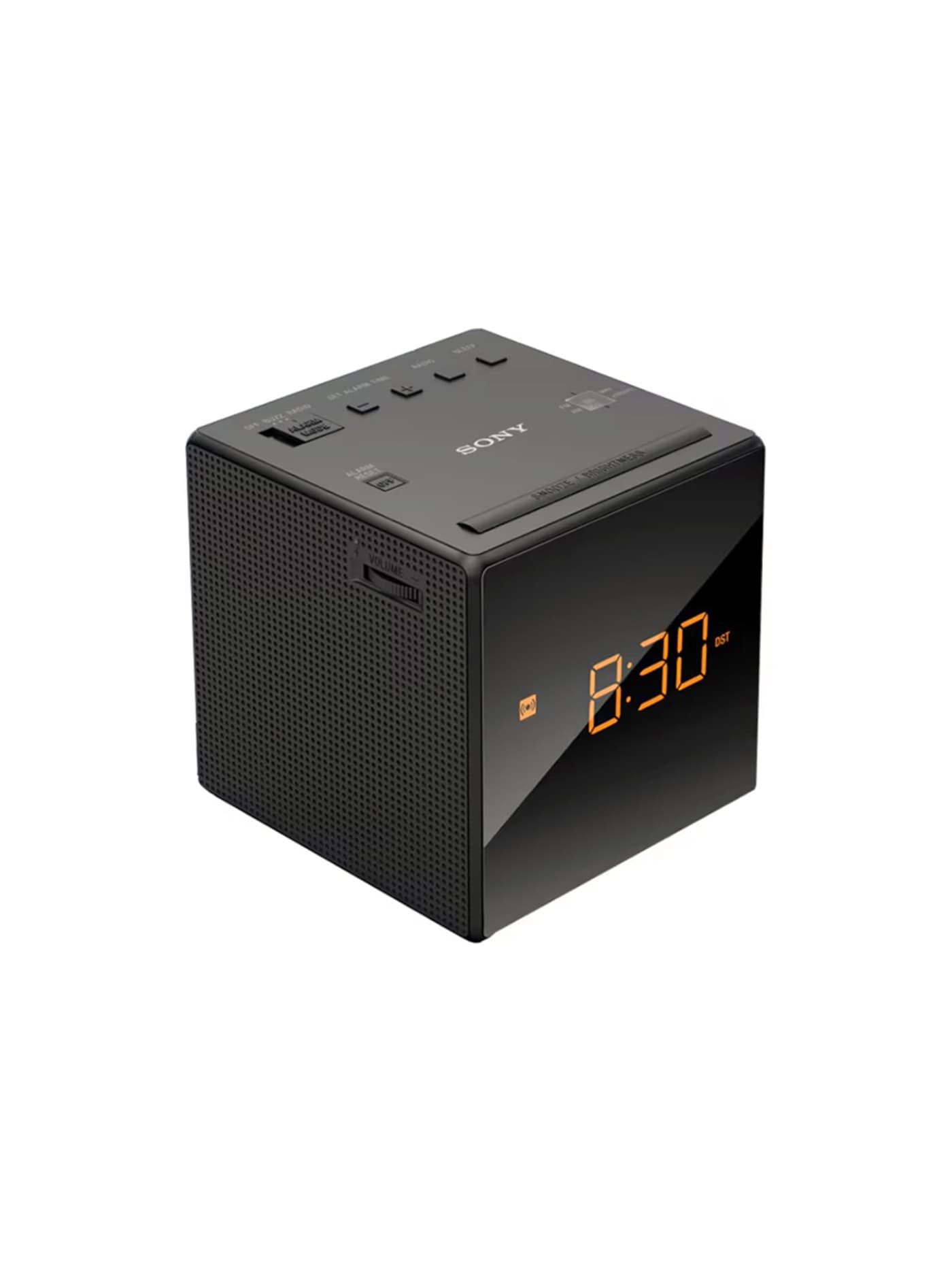
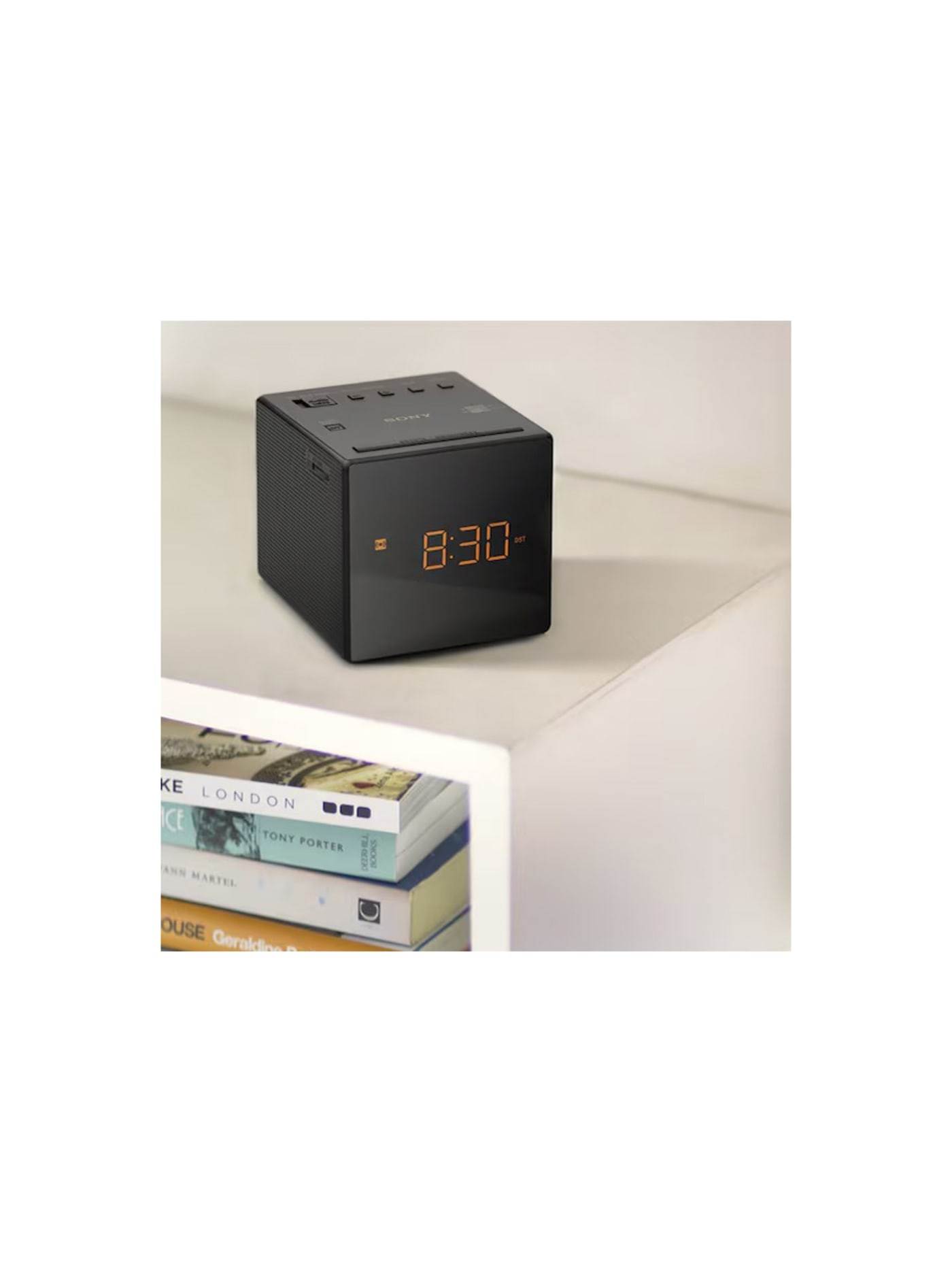
The ICFC1 is not trying to be refined. It is trying to be obvious. The display is bold, the form is stable, and the alarm function is clearly separated from the clock. At this price, the value is clarity without negotiation. There are no themes, no custom tones pulled from streaming services, no software updates waiting in the background. You set the time. You set the alarm. It rings. A phone offers more flexibility, but that flexibility is rarely free. The ICFC1 removes the decision-making entirely. For a device that exists to interrupt sleep, that bluntness can be an advantage.
Design intent
- Compressing clock, alarm and radio into a 10cm cube with a handful of physical controls keeps the object legible and free of setup, the opposite of a connected bedside device.
- Factory presetting and automatic daylight-saving adjustment cut the manual steps to near zero, so the clock mostly looks after itself once plugged in.
Trade-offs
- Analogue tuning on a dial this small is imprecise, which makes pinning down a particular station more fiddly than a digital tuner would be.
- A single alarm with no weekday scheduling, and a modest top buzzer volume, limit how far it stretches beyond a simple bedside wake.
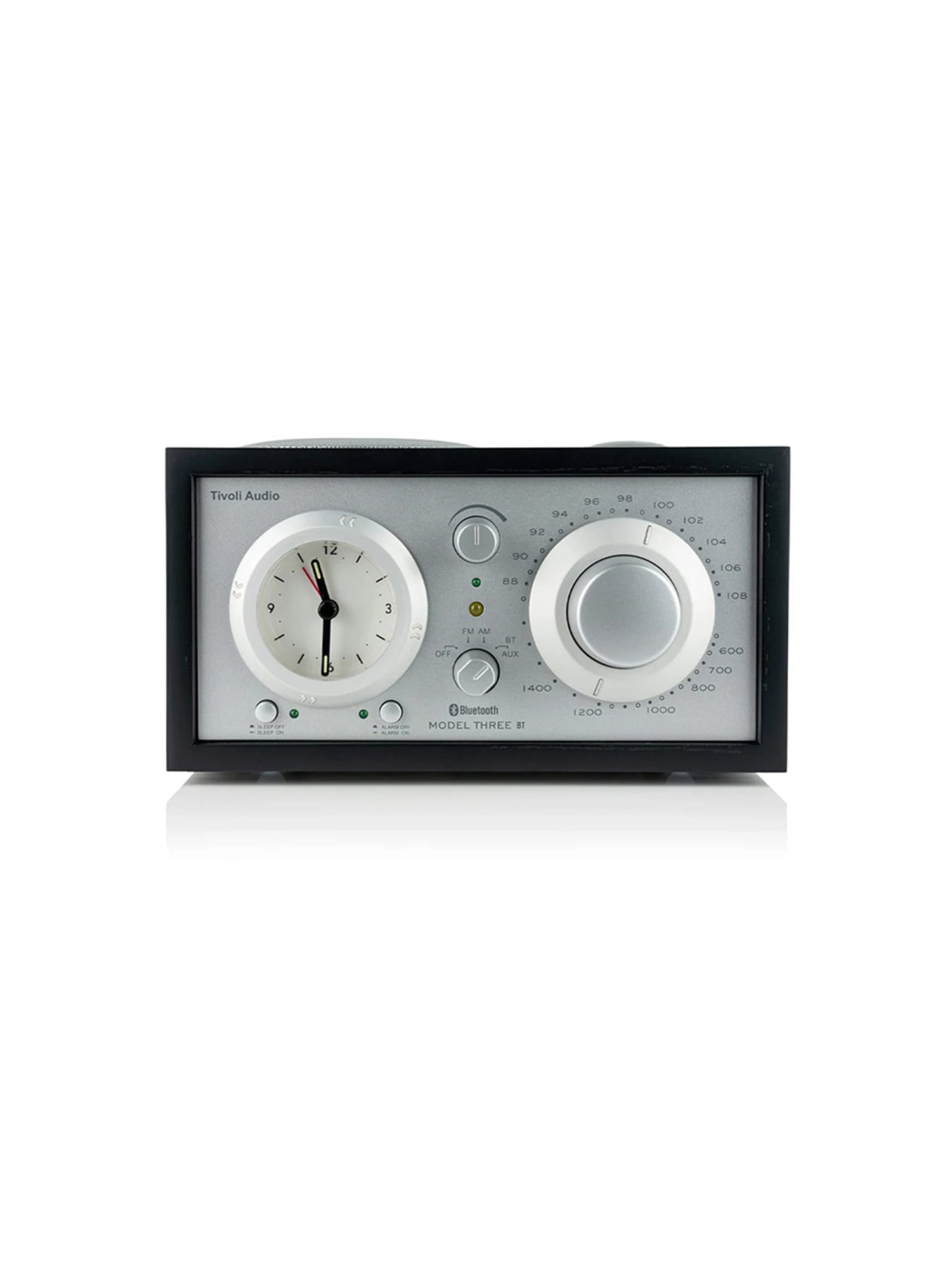
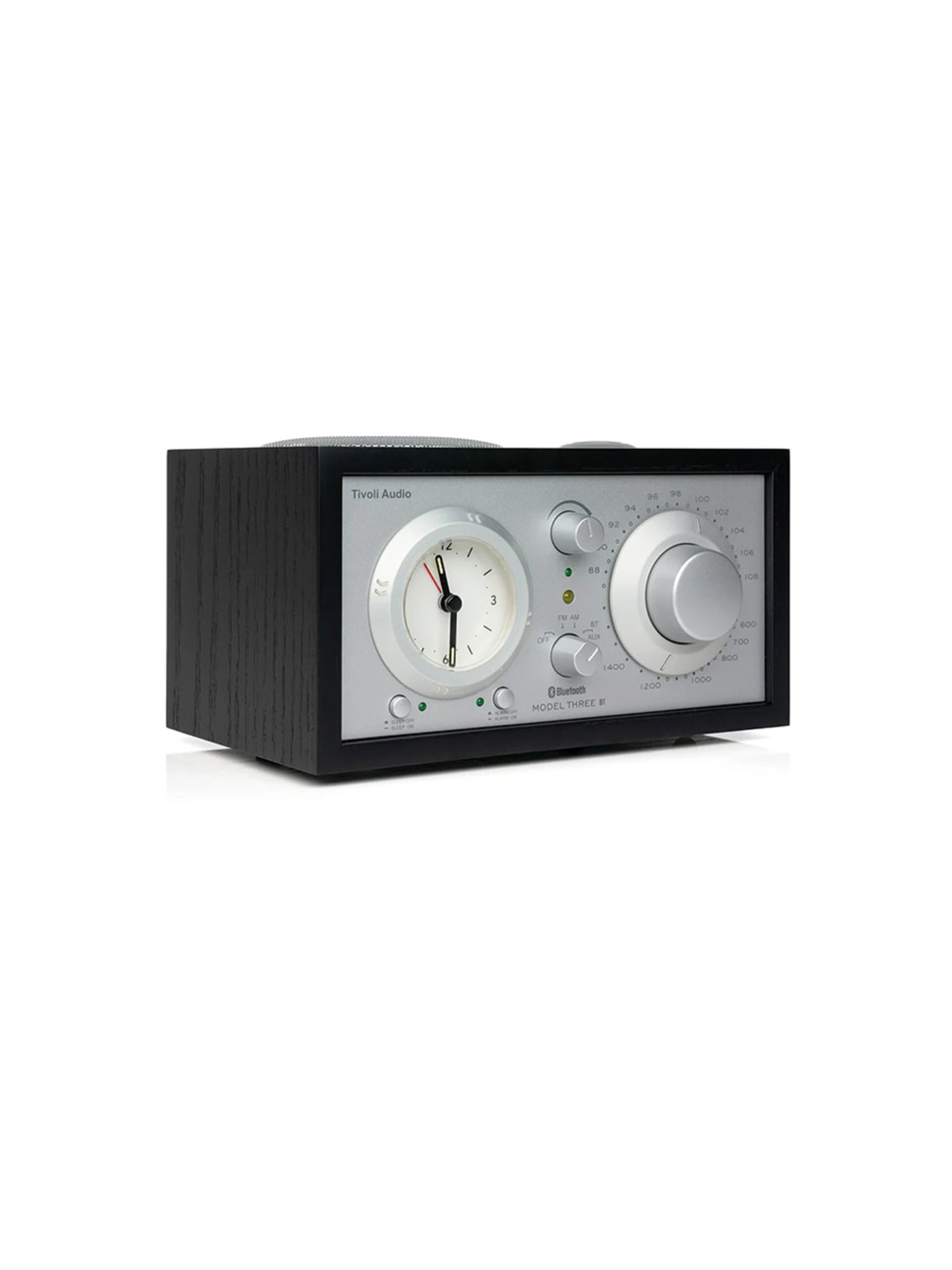
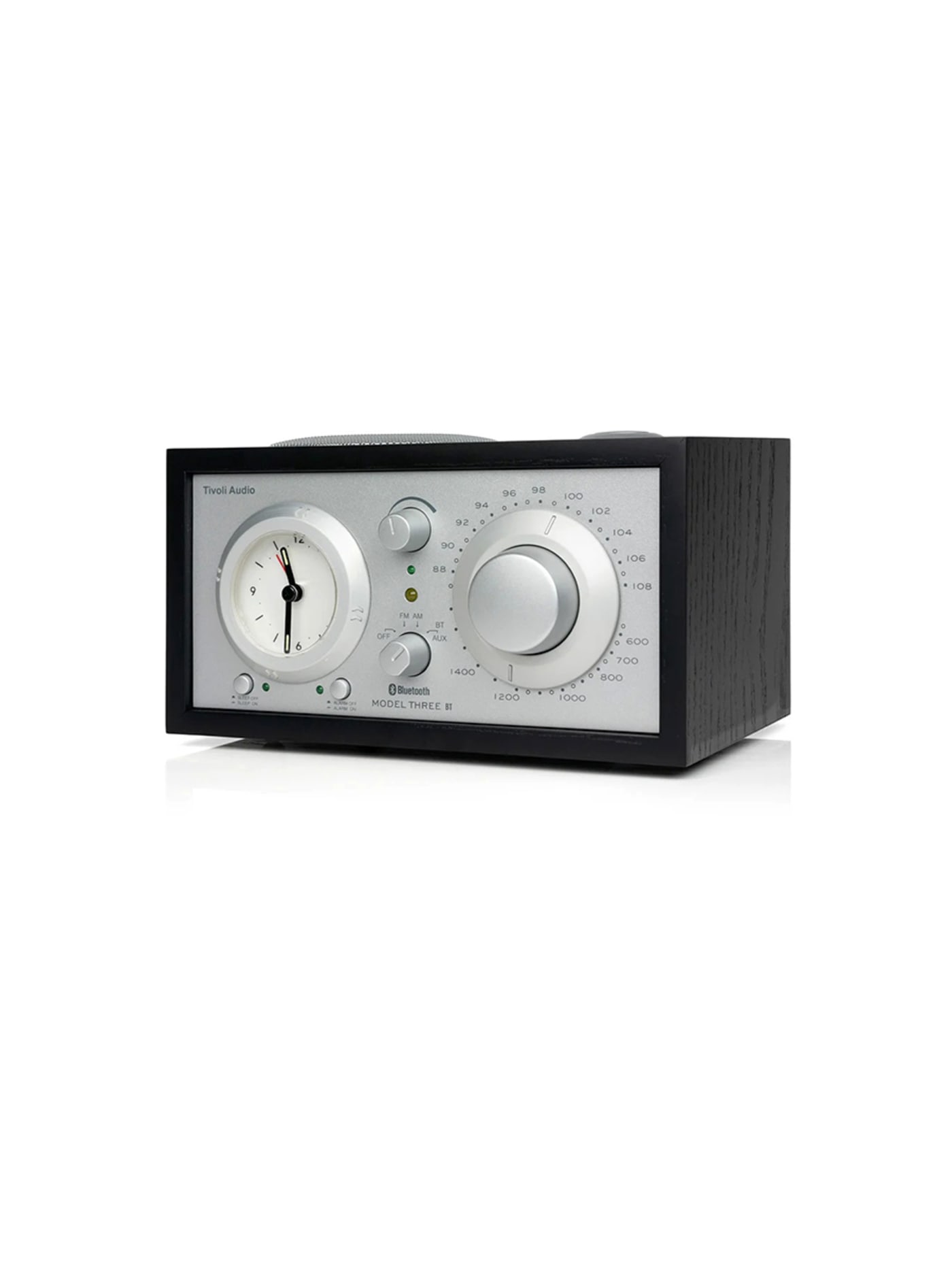
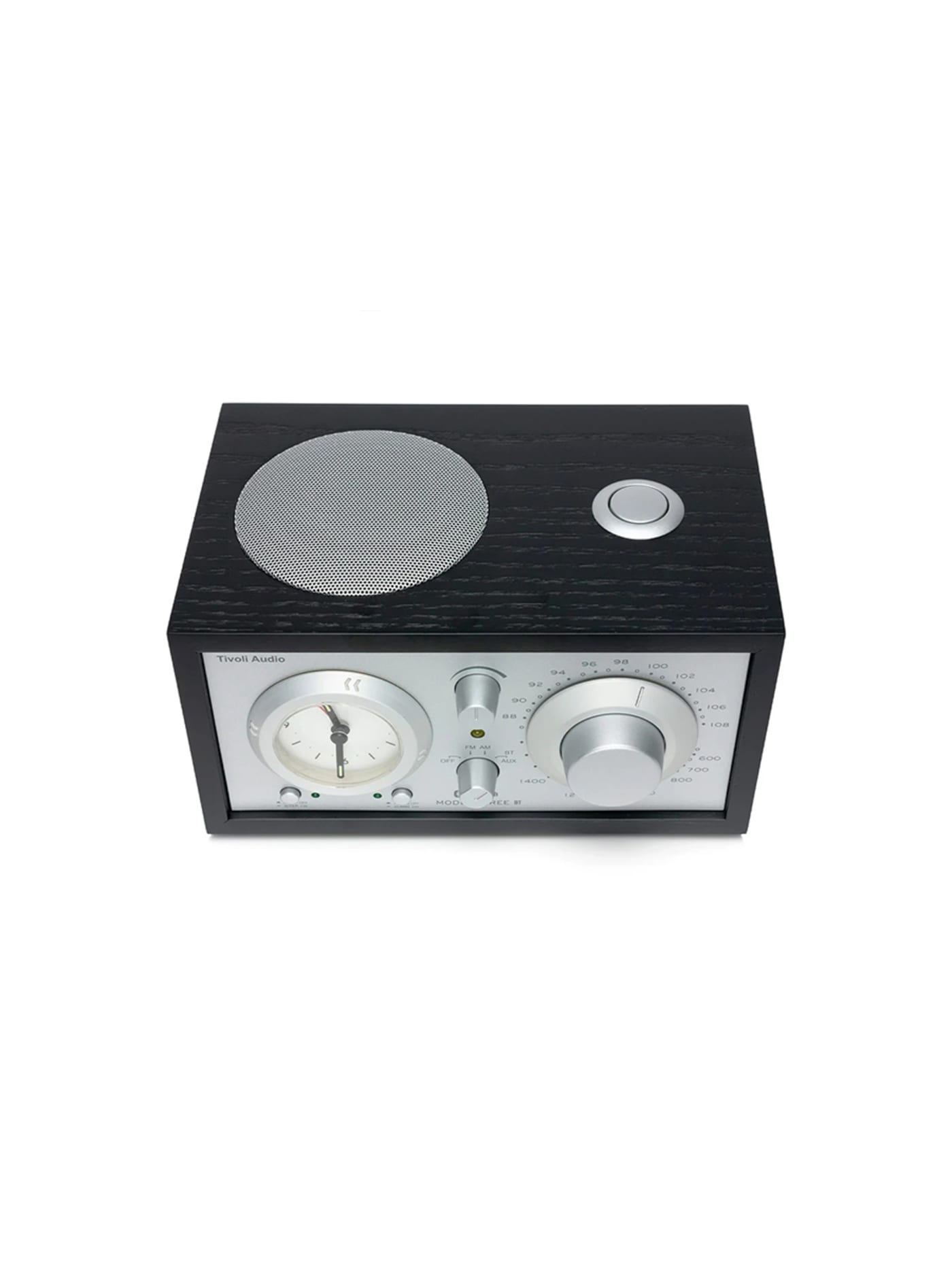
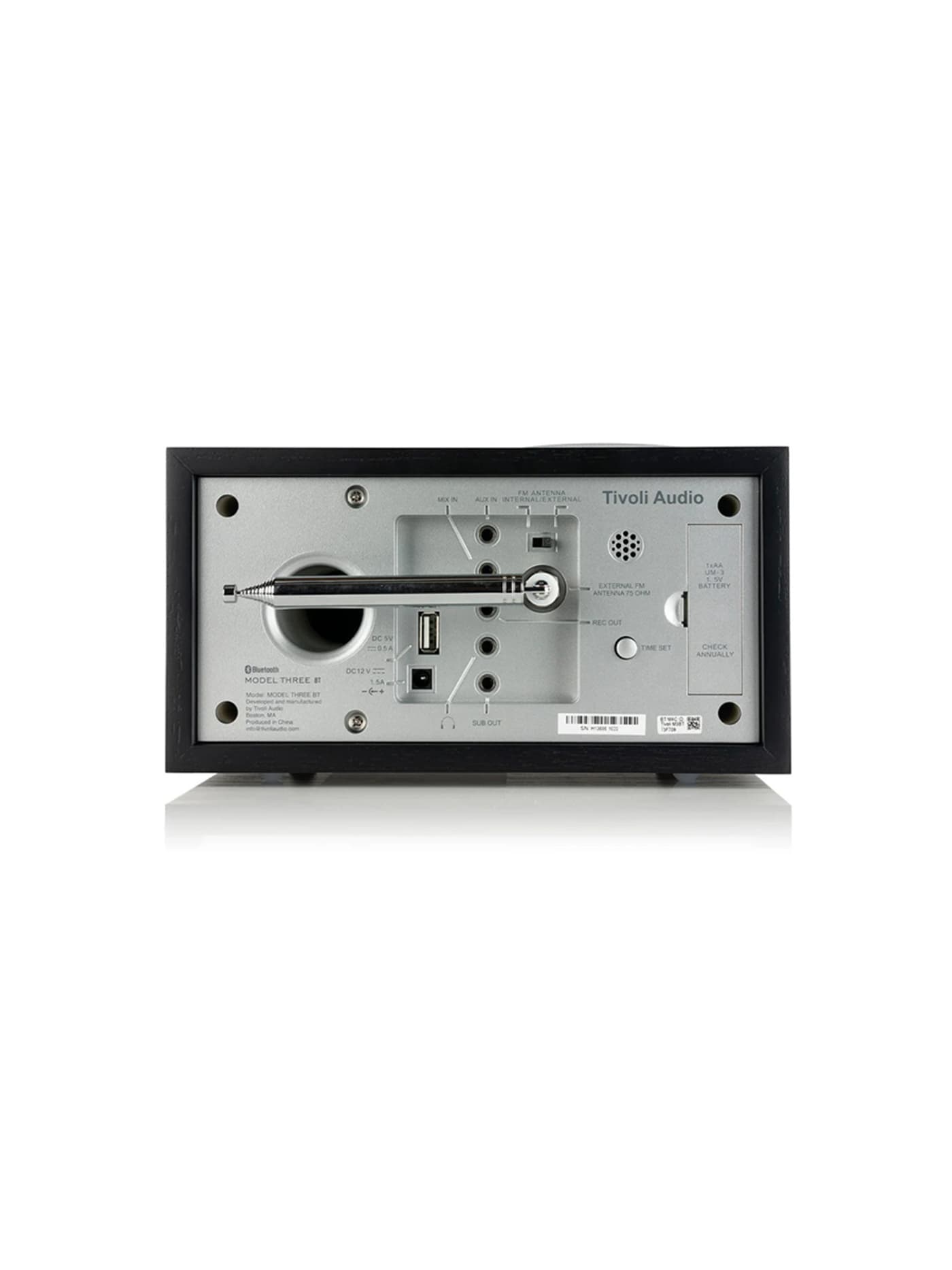
The Model Three treats waking as part of a wider ritual. The radio is analogue. The controls are dials. Adjustments happen through touch rather than tapping glass. It is larger than a typical bedside clock, and more expensive. That is the trade. In return, you get a device that occupies space with intention and does not ask to be upgraded or re-paired every few months. A phone alarm is interchangeable. This is not. It invites a slower kind of interaction, even in the morning. If waking is part of a daily rhythm rather than a race to silence a notification, the difference becomes noticeable.
Design intent
- Building the radio into a real-wood cabinet with analogue dials treats it as an object worth leaving on view, the opposite of a disposable plastic clock radio.
- A single top-firing full-range driver with a frequency-contouring circuit puts sound quality at the centre and spreads it evenly regardless of where you sit relative to the radio.
Trade-offs
- The illuminated clock face is not dimmable; the glow is gentle by design, but several owners still find it too bright for a fully dark bedroom.
- At its price it sits alongside dedicated Bluetooth speakers that offer more audio flexibility, while its alarm and feature set stay deliberately basic.
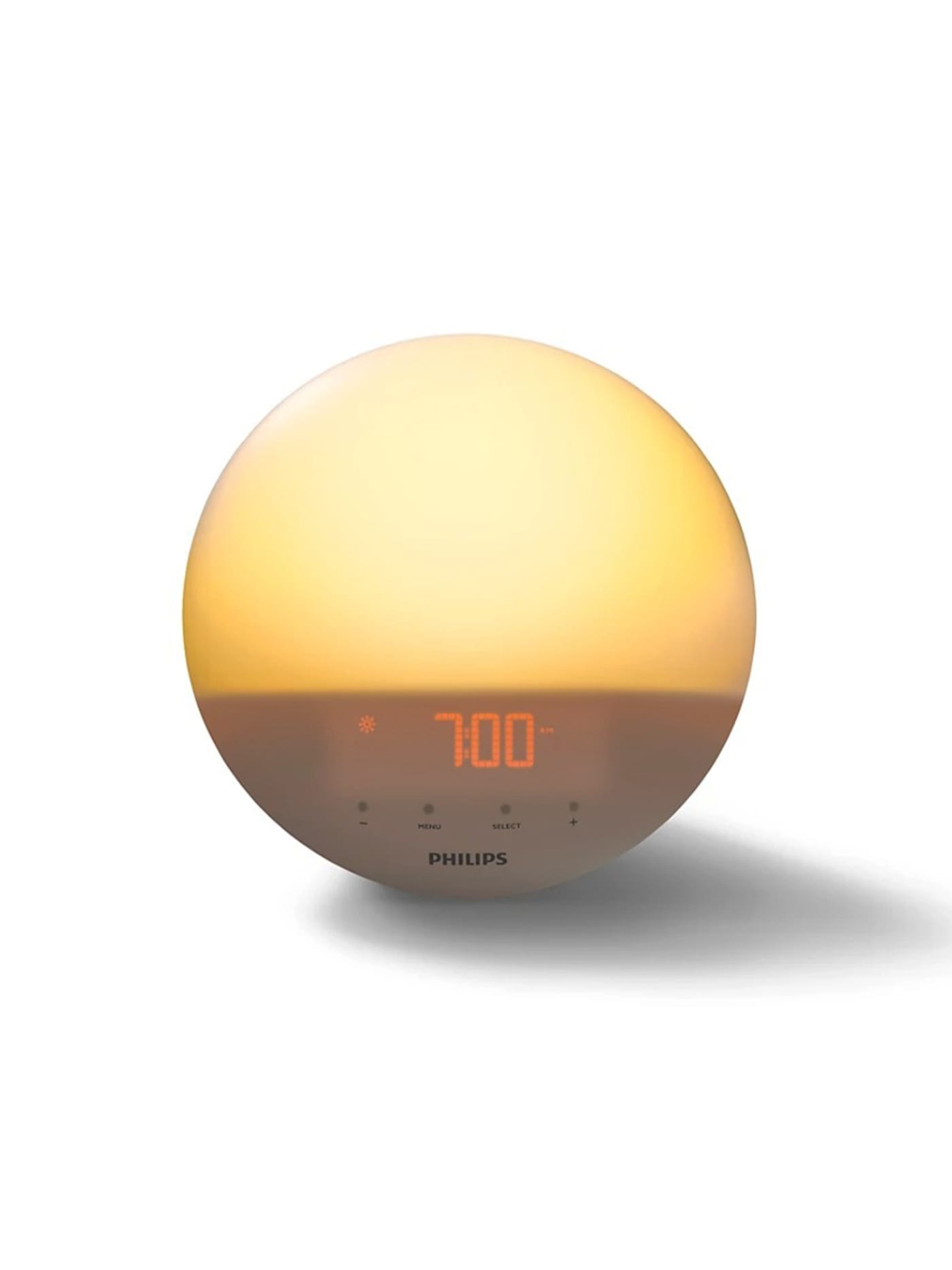
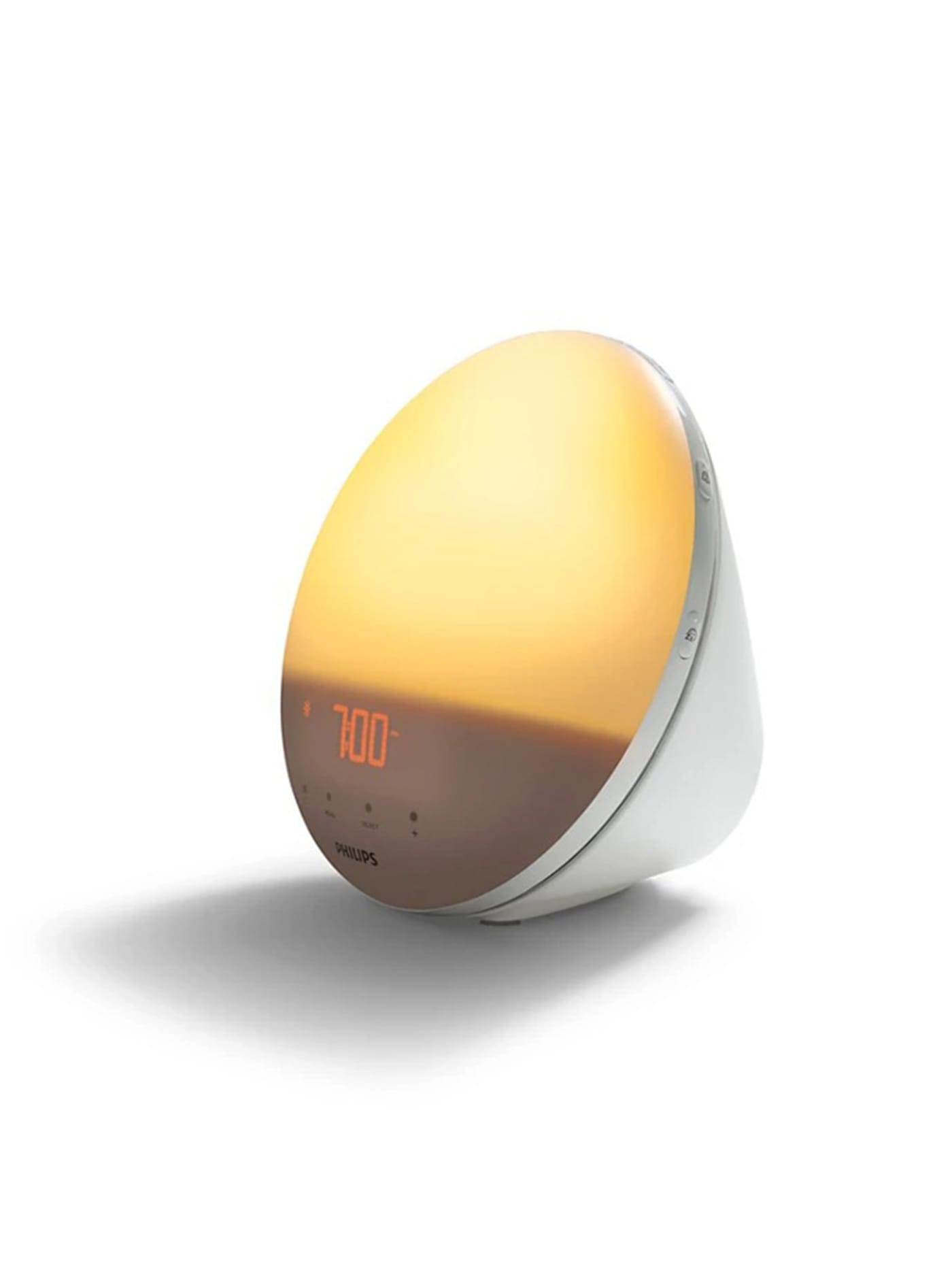
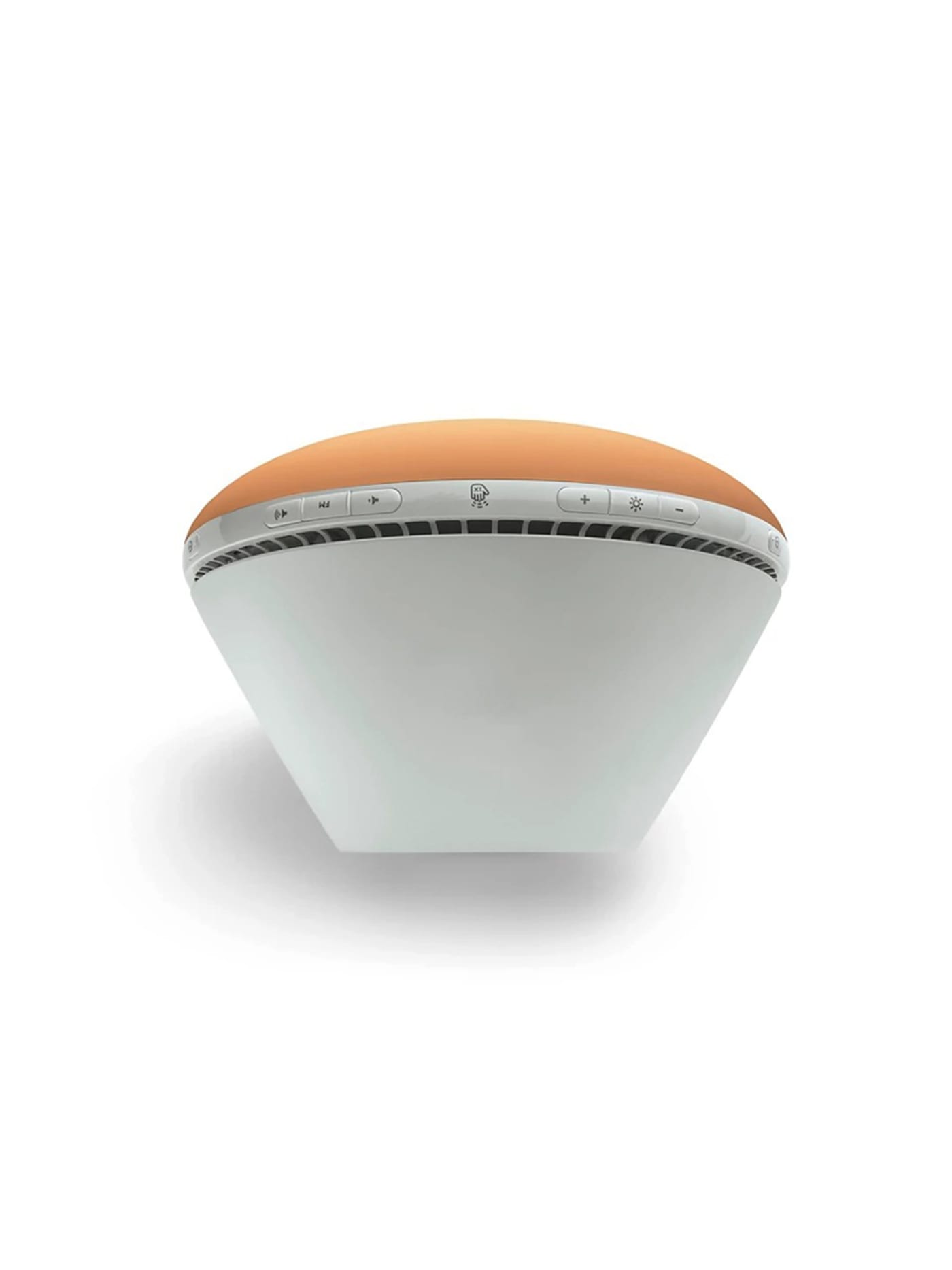

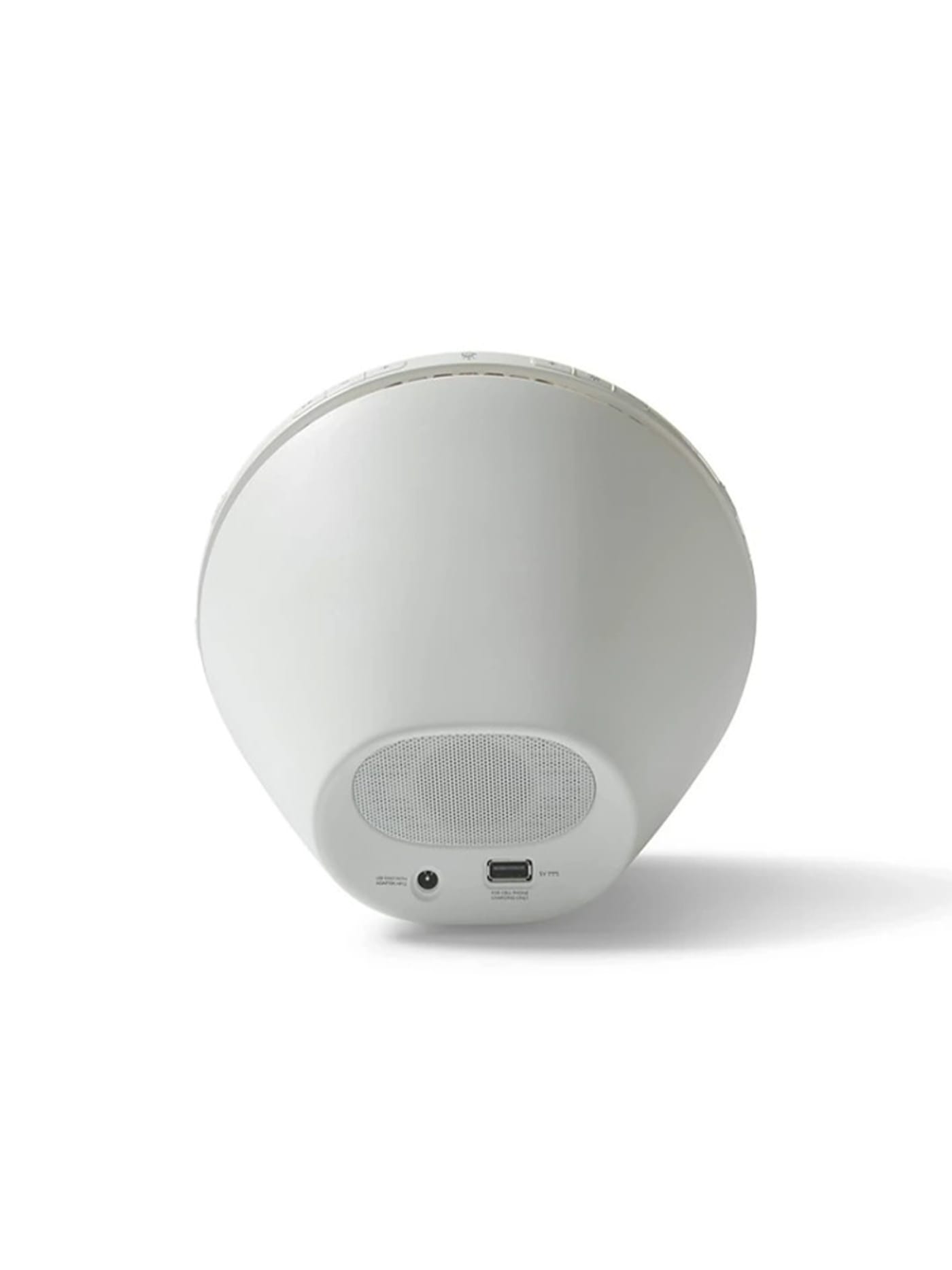
The HF3531 approaches waking as a physiological event rather than a sound cue. Light increases gradually before the alarm tone arrives. The room changes first. You respond second. A phone can simulate a gentle tone. It cannot fill the space with light. That physical shift alters the experience of waking in a way software alone cannot replicate. It takes up more bedside space than a small clock, and costs more than a basic alarm. In exchange, it replaces the jolt of sound with a staged transition. For heavy sleepers or darker rooms, that change is not cosmetic. It is structural.
Design intent
- The wake sequence is built around the body's cortisol response: light begins well before the alarm so waking starts gradually, and sound arrives only as a backstop once the light has done its work.
- Folding alarm, reading lamp, sunset wind-down and FM radio into one dome keeps the bedside clear and gives the object a use across the whole evening and morning, not only at the alarm.
Trade-offs
- The large dome takes up real bedside space, and its glossy plastic shows fingerprints and fine scratches sooner than a matte finish would.
- Every setting is reached through small physical buttons and a menu reviewers consistently find hard to learn; there is no app to fall back on.
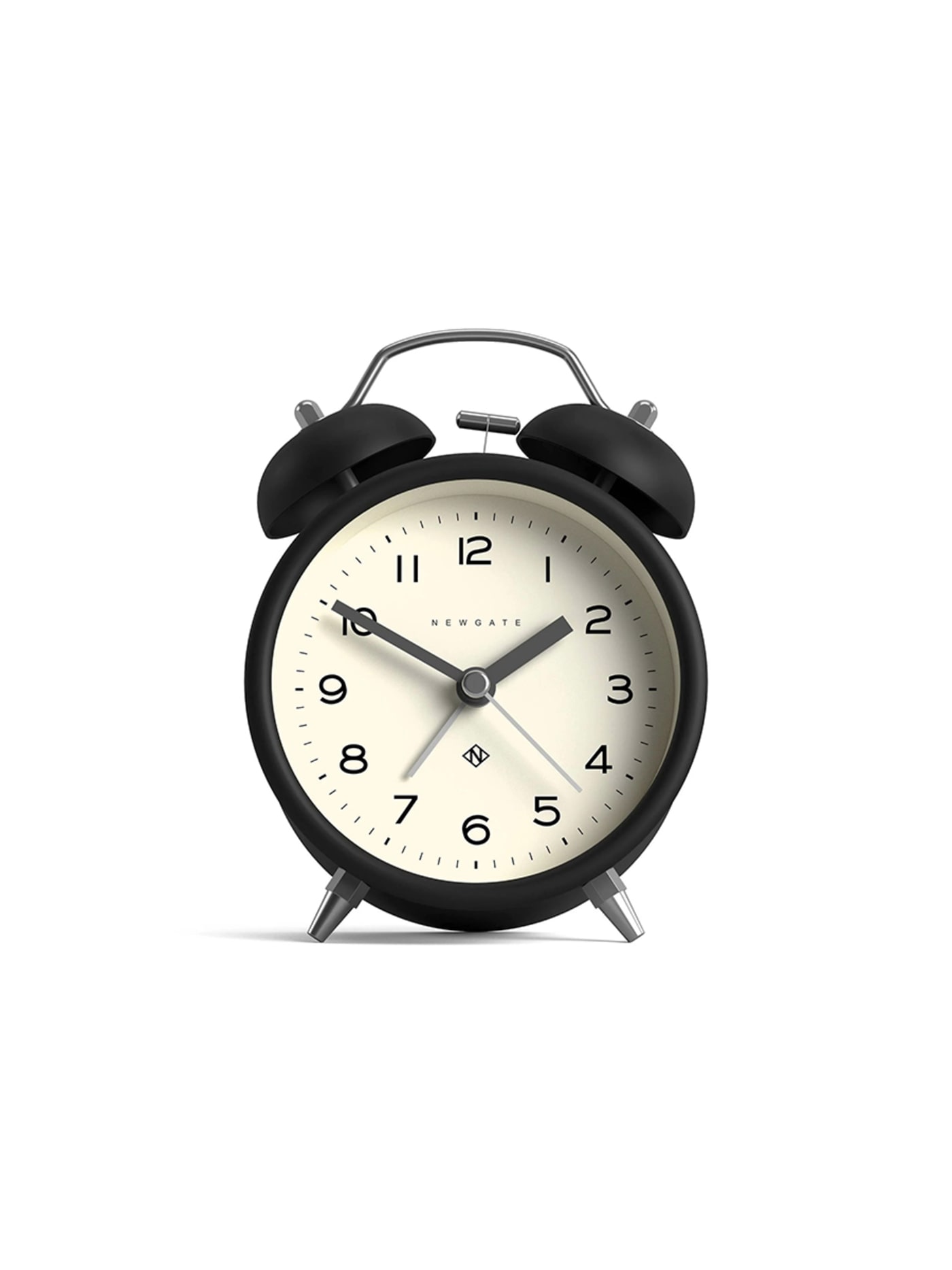
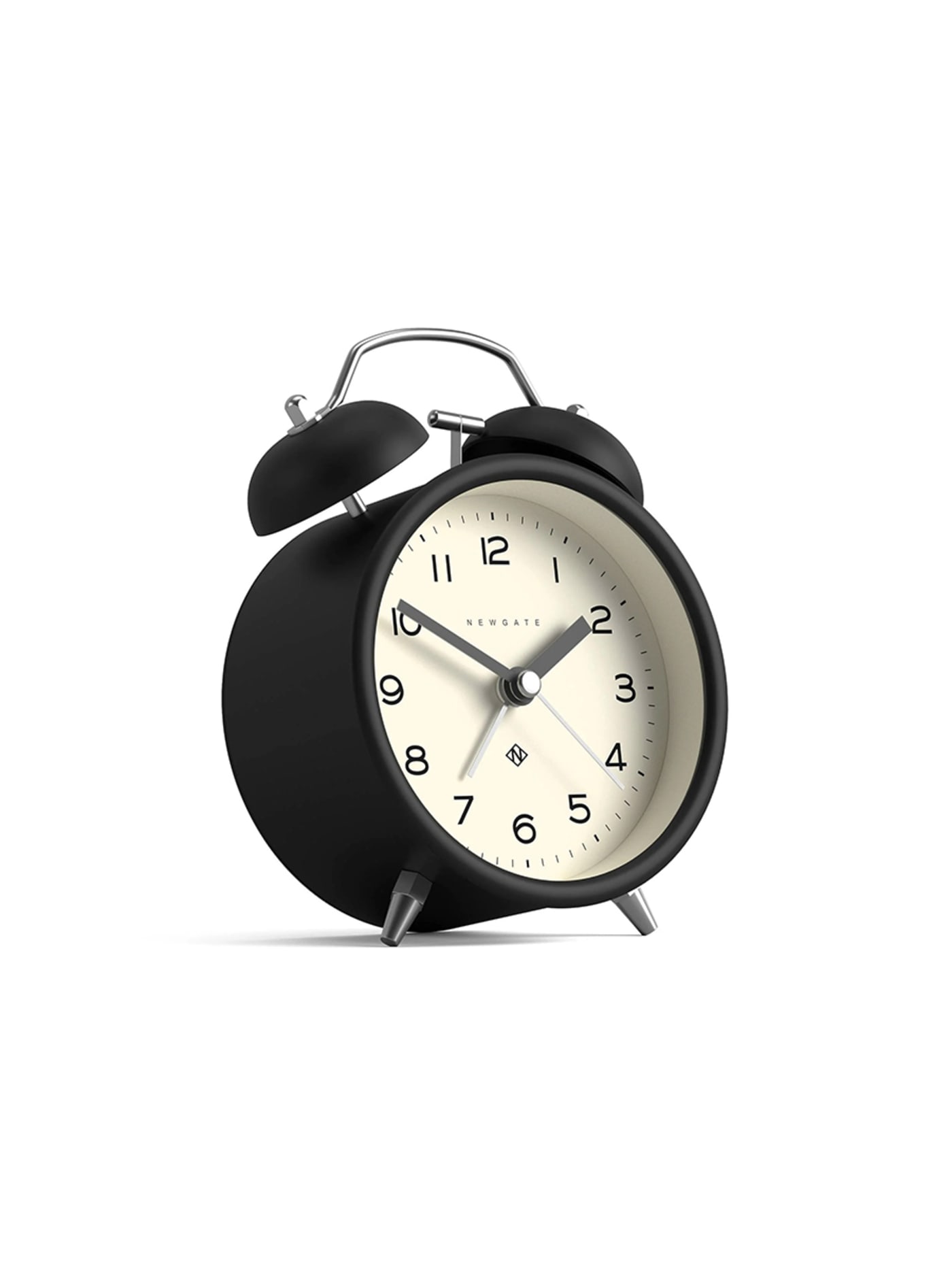
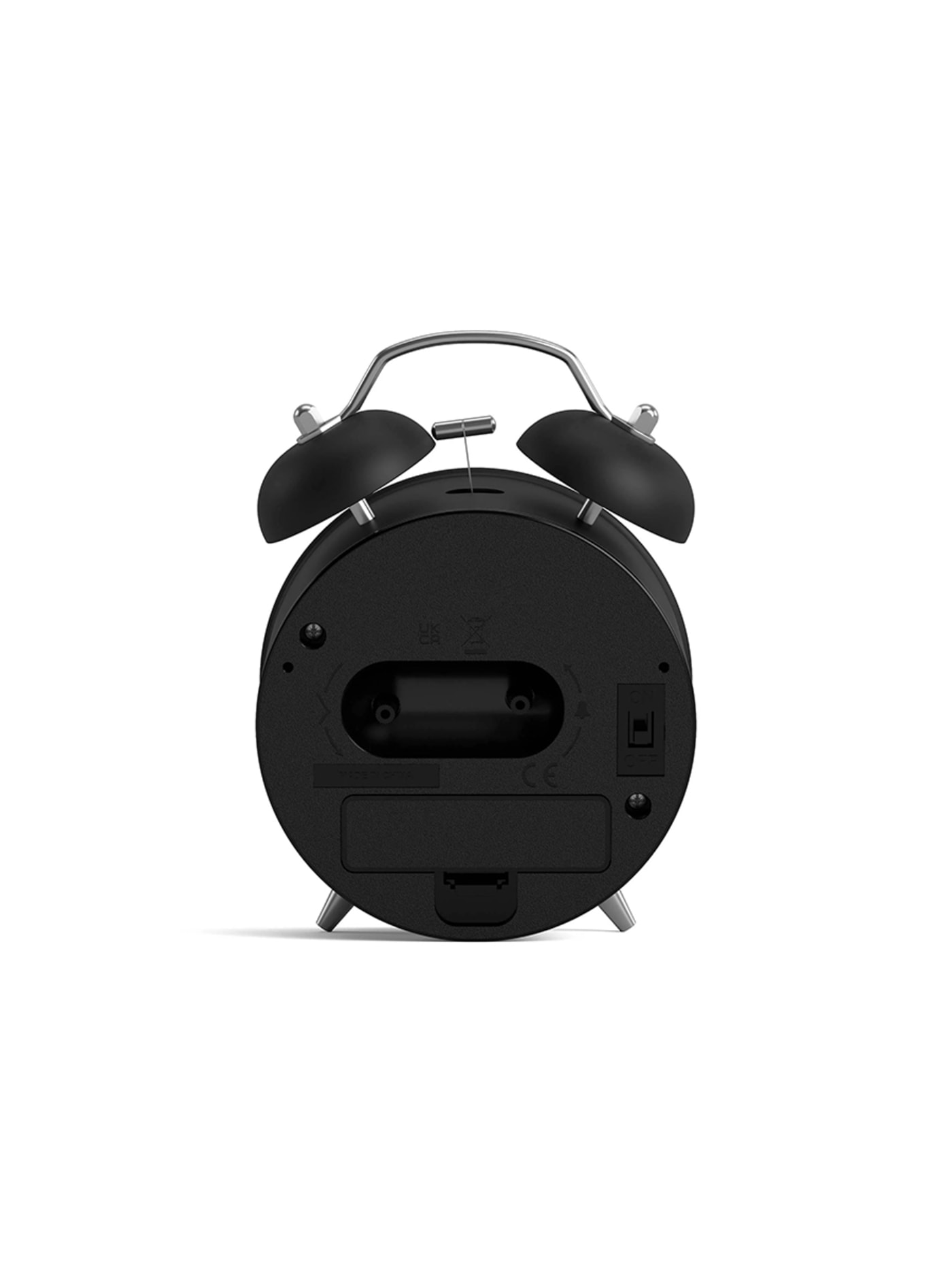
The Charlie Bell leans into volume. The twin bells and hammer are not subtle, and they are not meant to be. This is an alarm you will hear. There are no secondary features: no soft glow, no radio, no digital display. Just time and interruption. It occupies more visual space than a minimalist clock and announces itself even before it rings. If you struggle to wake or tend to negotiate with softer alarms, a mechanical bell removes the option. A phone relies on restraint. This does not. Sometimes certainty is the point.
Design intent
- It keeps the physical bell-and-hammer alarm, the part people recognise and trust, while dropping the winding and the ticking through a battery quartz silent-sweep movement.
- A contemporary graphic dial and a broad palette of matt colours update the twin-bell archetype without touching its fundamental form.
Trade-offs
- The bell alarm has no volume control and no graduated wake; it suits decisive risers more than gradual ones.
- With the alarm off it is purely decorative, offering no secondary function beyond telling the time.
Final thoughts
None of these clocks are more capable than a phone. They are less capable. That is the point.
A single-purpose object limits what can happen in the moment you use it. It removes secondary pathways and narrows the interaction. In the context of waking, that narrowing can be genuinely useful. There is no inbox attached to a twin bell. No scrolling attached to a sunrise lamp.
This is not an argument against smartphones. It is an argument for boundaries. When a device is designed around one task, its constraints become part of its strength. The form reflects the function because there is nothing else competing for attention.
A dedicated alarm clock does not promise optimisation or personalisation. It promises reliability. It interrupts sleep, and then it gets out of the way.
Sometimes that is enough.