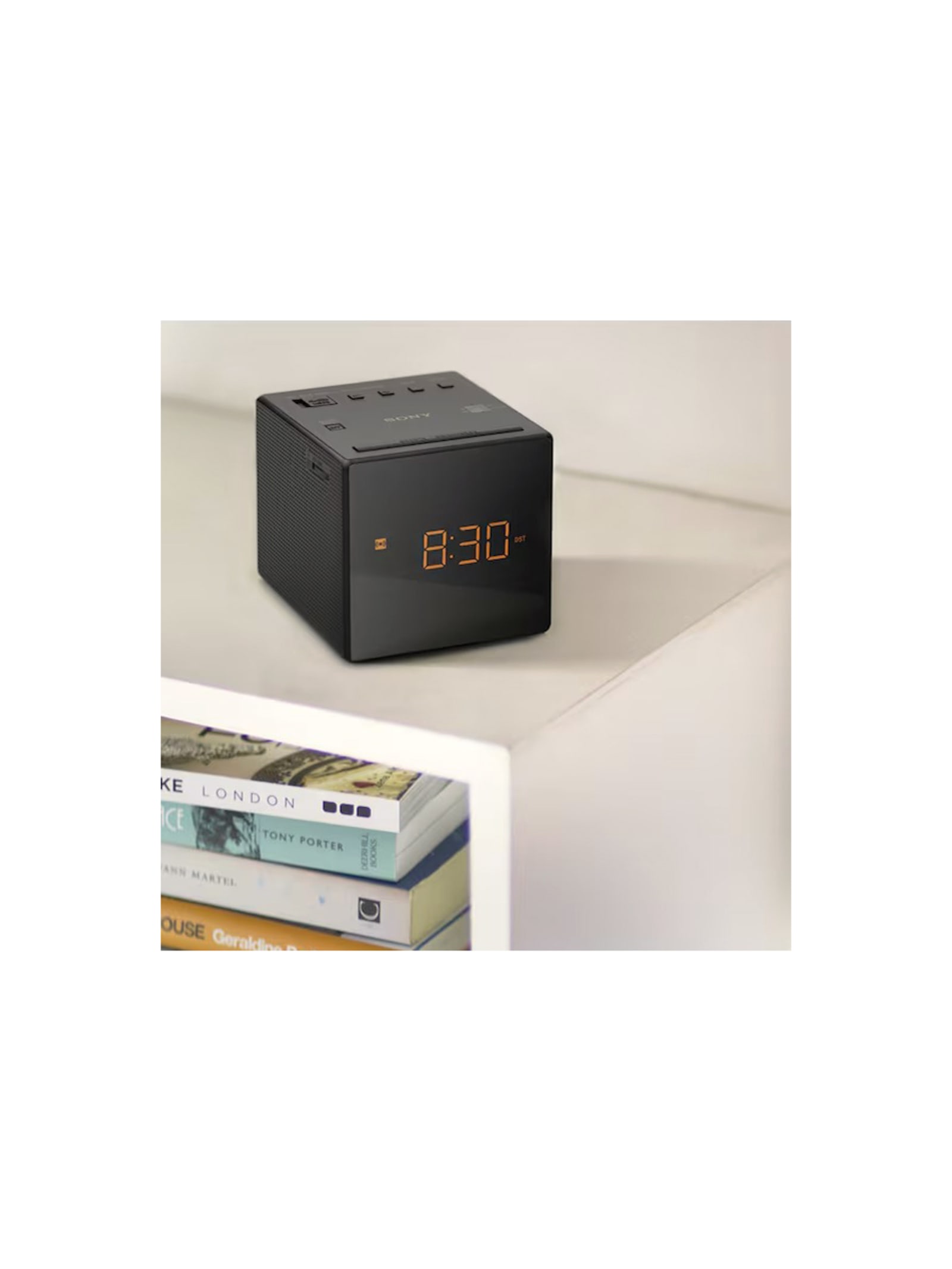
ICFC1 Clock Radio / Sony
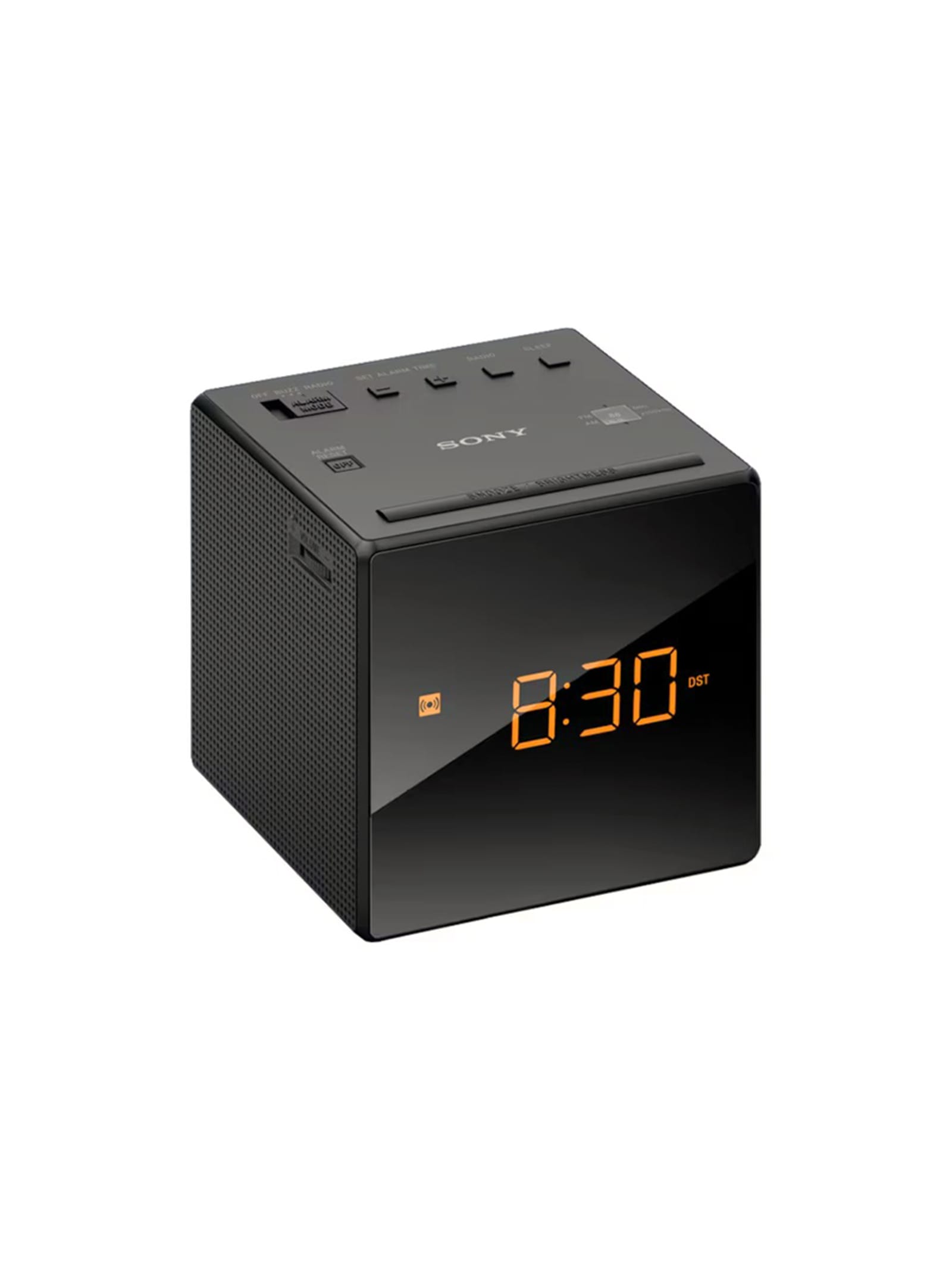
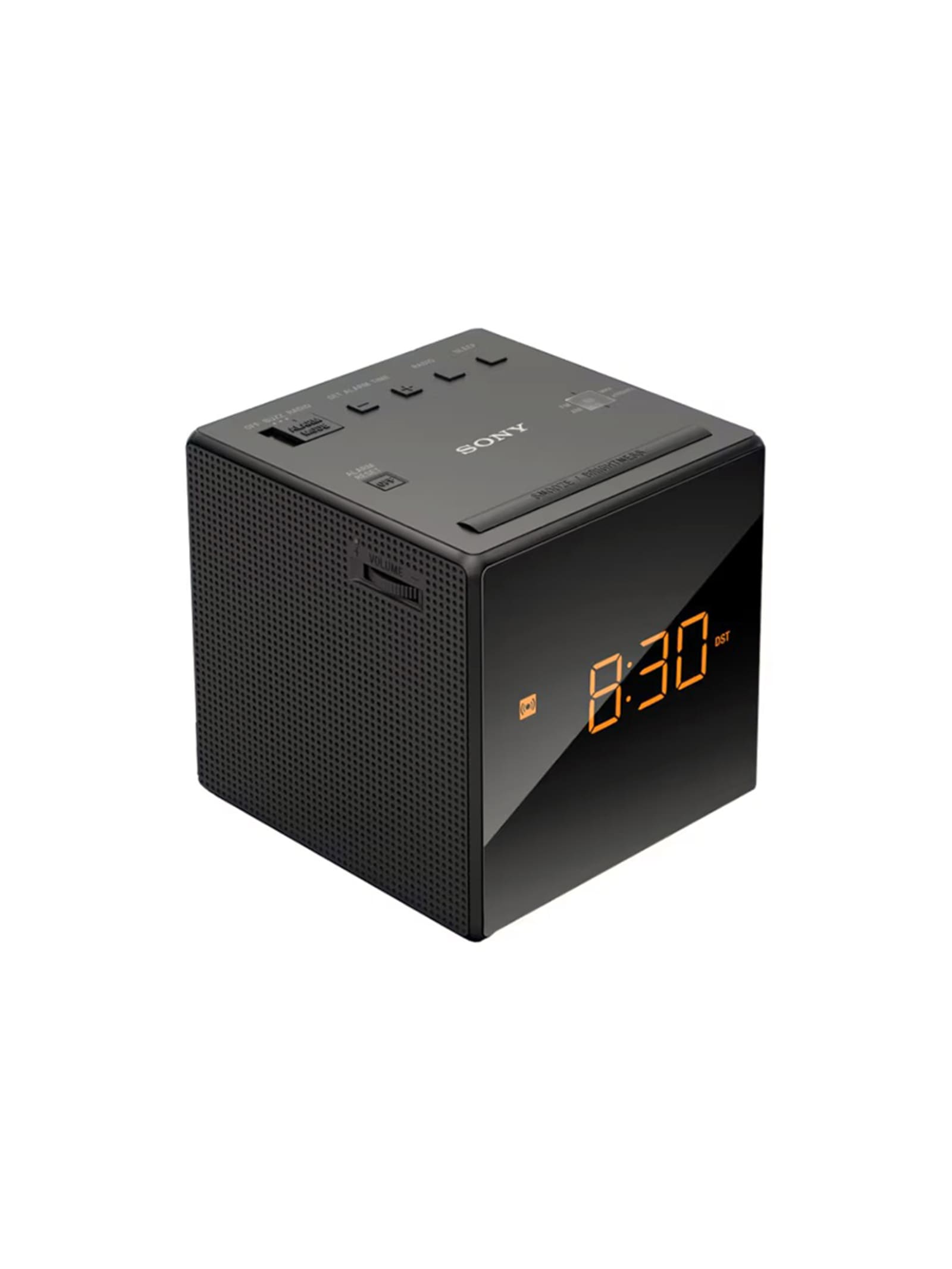
The ICF-C1 distils decades of Sony clock radios into a 101mm cube weighing around 480 grams. An analogue dial on the side tunes AM and FM, volume sits on the other, and a single alarm wakes you to the radio or a buzzer that starts quiet and climbs so the waking is gradual rather than a jolt. The display brightness adjusts so it reads in daylight and does not glare at night, and the clock arrives preset at the factory, shifting itself for daylight saving without intervention. A CR2032 cell holds the time through a power cut. It is mains-powered with no app, no wireless and nothing to configure beyond a wall socket, in black or white.
Design intent
- +Compressing clock, alarm and radio into a 10cm cube with a handful of physical controls keeps the object legible and free of setup, the opposite of a connected bedside device.
- +Factory presetting and automatic daylight-saving adjustment cut the manual steps to near zero, so the clock mostly looks after itself once plugged in.
Trade-offs
- -Analogue tuning on a dial this small is imprecise, which makes pinning down a particular station more fiddly than a digital tuner would be.
- -A single alarm with no weekday scheduling, and a modest top buzzer volume, limit how far it stretches beyond a simple bedside wake.
The ICF-C1 distils decades of Sony clock radios into a 101mm cube weighing around 480 grams. An analogue dial on the side tunes AM and FM, volume sits on the other, and a single alarm wakes you to the radio or a buzzer that starts quiet and climbs so the waking is gradual rather than a jolt. The display brightness adjusts so it reads in daylight and does not glare at night, and the clock arrives preset at the factory, shifting itself for daylight saving without intervention. A CR2032 cell holds the time through a power cut. It is mains-powered with no app, no wireless and nothing to configure beyond a wall socket, in black or white.
Design intent
- +Compressing clock, alarm and radio into a 10cm cube with a handful of physical controls keeps the object legible and free of setup, the opposite of a connected bedside device.
- +Factory presetting and automatic daylight-saving adjustment cut the manual steps to near zero, so the clock mostly looks after itself once plugged in.
Trade-offs
- -Analogue tuning on a dial this small is imprecise, which makes pinning down a particular station more fiddly than a digital tuner would be.
- -A single alarm with no weekday scheduling, and a modest top buzzer volume, limit how far it stretches beyond a simple bedside wake.