AirTag / Apple
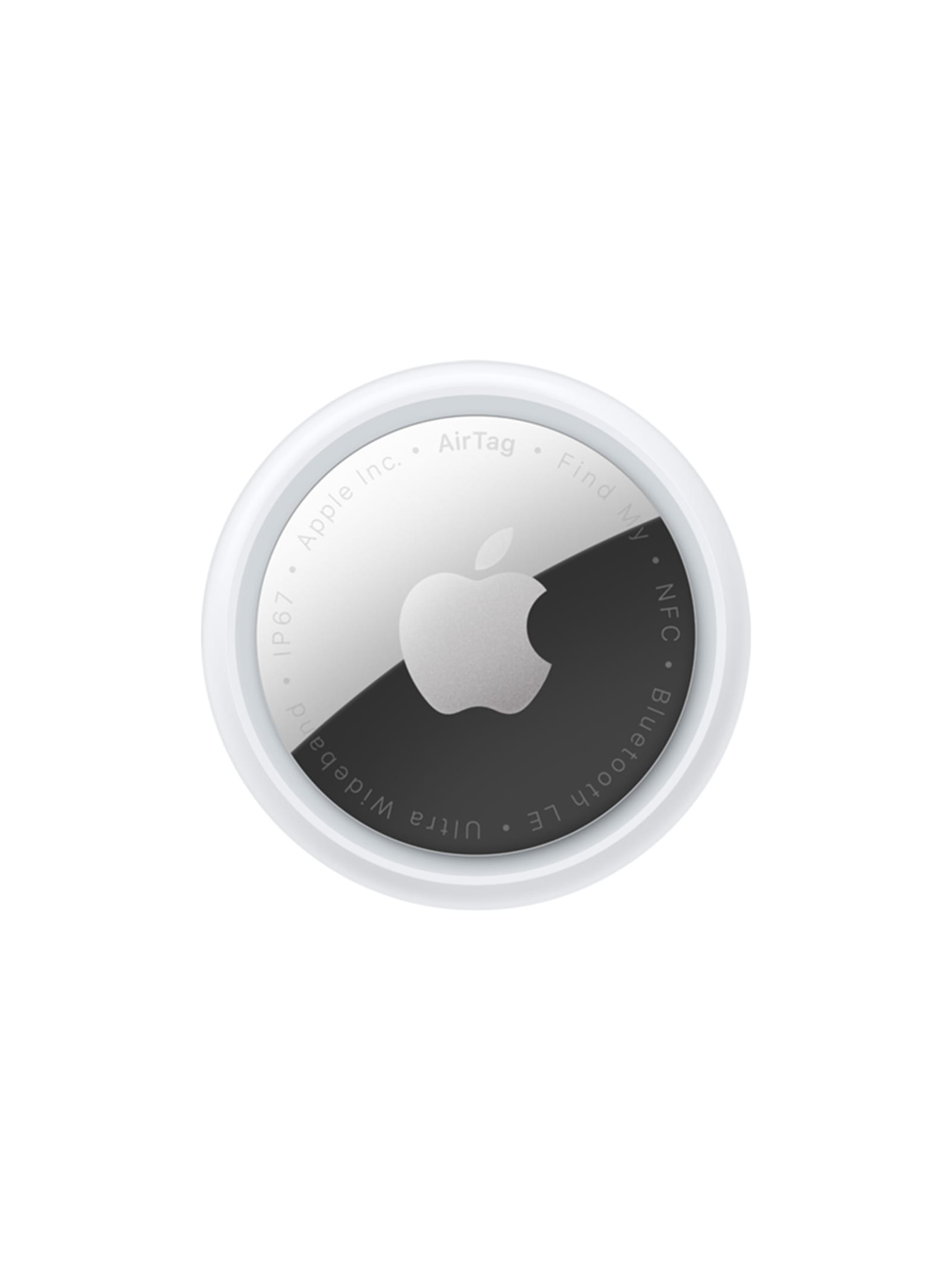
The AirTag is interesting for how little object surrounds the function. It is a 31mm disc of white plastic and stainless steel whose only job is to make a lost thing findable, and it does almost nothing itself: a replaceable CR2032 battery, a sealed body, an ultra-wideband chip and a small speaker. Everything else, the locating, the network, the privacy safeguards, is delegated to the hundreds of millions of Apple devices already in the world. The current second-generation version looks identical to the original but fits a newer ultra-wideband chip that extends Precision Finding to roughly fifty per cent greater range and lets an Apple Watch guide you in, not just an iPhone. The speaker is louder, and harder to prise out, a quiet anti-stalking measure.
Design intent
- +Locating intelligence lives in the surrounding Find My network rather than in the tag, which is what keeps the AirTag passive, cheap and able to run a year or more on a coin cell.
- +The battery is user-replaceable without tools, an honest decision in a category where most rivals are sealed and discarded when they die.
Trade-offs
- -Its usefulness is entirely contingent on Apple's ecosystem. Away from iPhones it is an inert disc, with no GPS or cellular of its own.
- -It locates the object it is attached to, not itself: drop a bare AirTag and its small, featureless body is hard to find by hand.
The AirTag is interesting for how little object surrounds the function. It is a 31mm disc of white plastic and stainless steel whose only job is to make a lost thing findable, and it does almost nothing itself: a replaceable CR2032 battery, a sealed body, an ultra-wideband chip and a small speaker. Everything else, the locating, the network, the privacy safeguards, is delegated to the hundreds of millions of Apple devices already in the world. The current second-generation version looks identical to the original but fits a newer ultra-wideband chip that extends Precision Finding to roughly fifty per cent greater range and lets an Apple Watch guide you in, not just an iPhone. The speaker is louder, and harder to prise out, a quiet anti-stalking measure.
Design intent
- +Locating intelligence lives in the surrounding Find My network rather than in the tag, which is what keeps the AirTag passive, cheap and able to run a year or more on a coin cell.
- +The battery is user-replaceable without tools, an honest decision in a category where most rivals are sealed and discarded when they die.
Trade-offs
- -Its usefulness is entirely contingent on Apple's ecosystem. Away from iPhones it is an inert disc, with no GPS or cellular of its own.
- -It locates the object it is attached to, not itself: drop a bare AirTag and its small, featureless body is hard to find by hand.