12 One-Bag Travel Essentials for Any Trip
- 5 Jul 2026
- 15 Jul 2026
- 14 min
Travelling out of a single bag you never have to check is one of the quiet pleasures of getting wiser about how you move through a trip. No waiting at the carousel, no dragging a case up station stairs, nothing to lose but the bag on your back. We have made the full case for packing this way here, but the gist is simple: carry less, move freely, and think about your luggage as little as possible.
The difficulty, of course, is deciding what makes the cut. When space is scarce, every object has to earn its place, either by doing more than one job well or by doing a single job so often that it is worth the room it takes. The list below is where we would start: the things worth packing on almost any trip, whatever the reason for it, the objects you reach for first and worry about least.
A couple of these choices are more personal than the rest. The bag and the shoes, in particular, depend a great deal on you and where you are heading, so where that is true we have said so and pointed to a few alternatives worth weighing up.
This is the core kit that suits almost any journey. If you would like our recommendations for a particular kind of trip, we have put together focused one-bag lists for those too, including one-bag setups for business travel and for content creators.
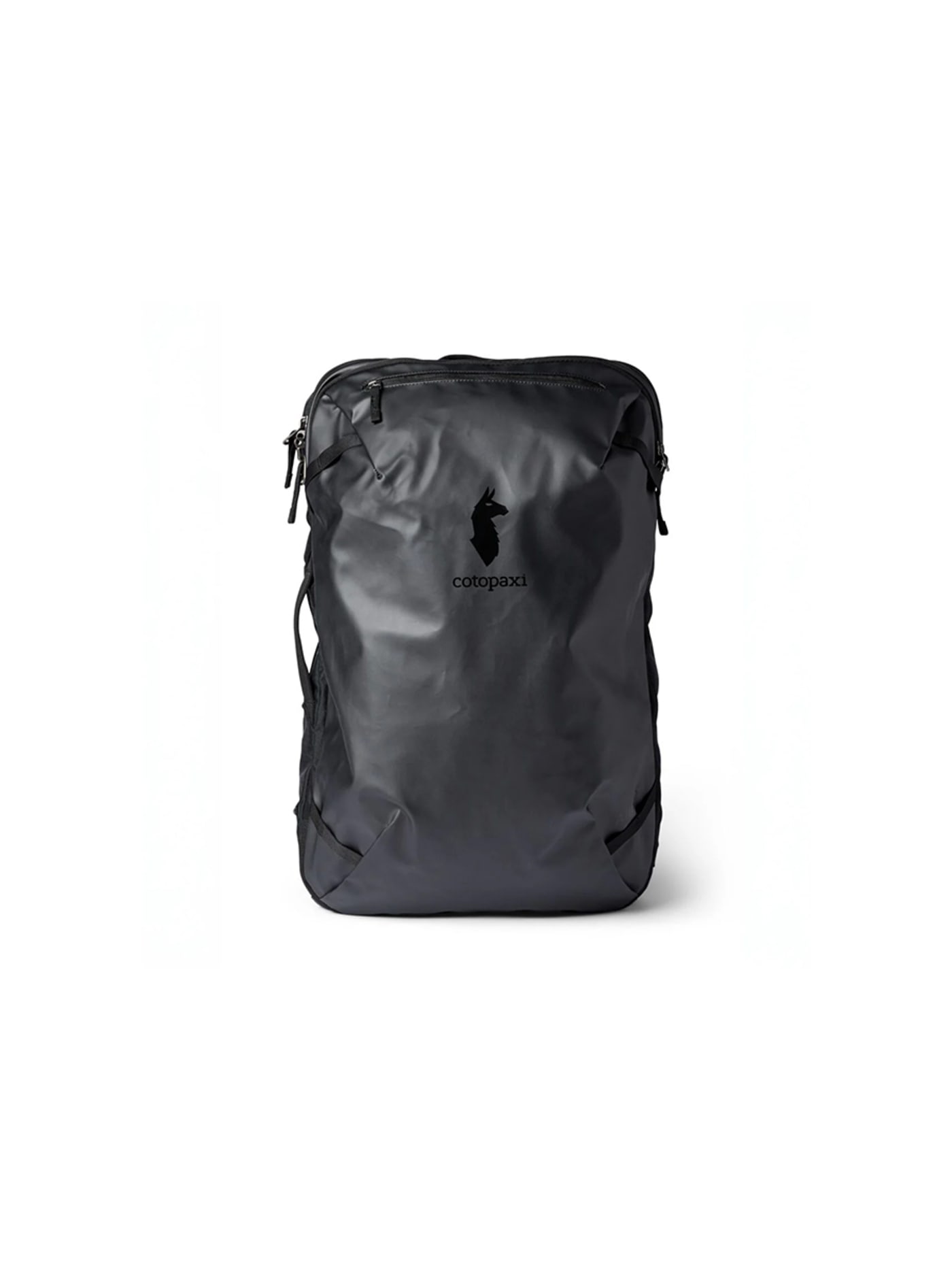
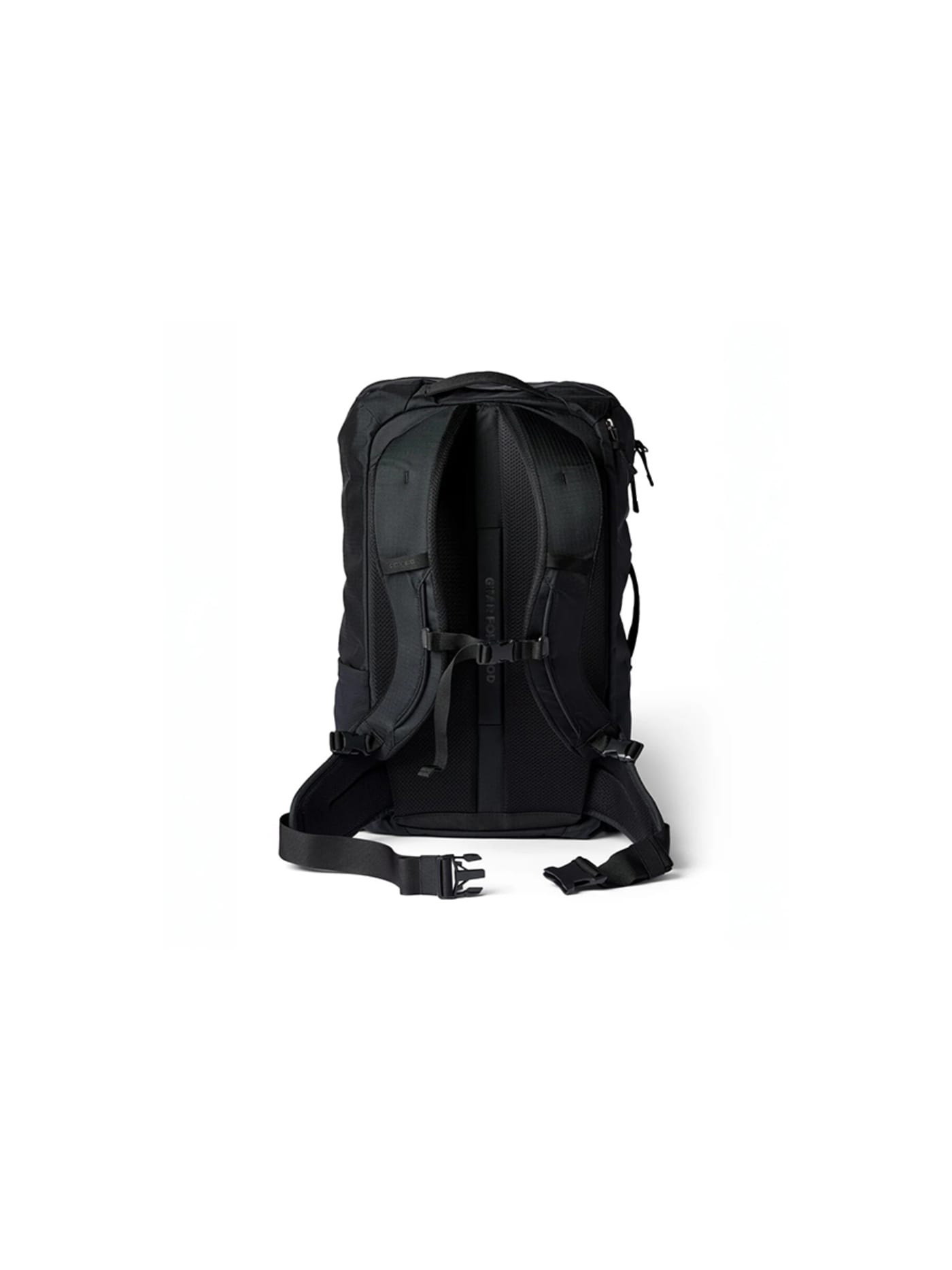
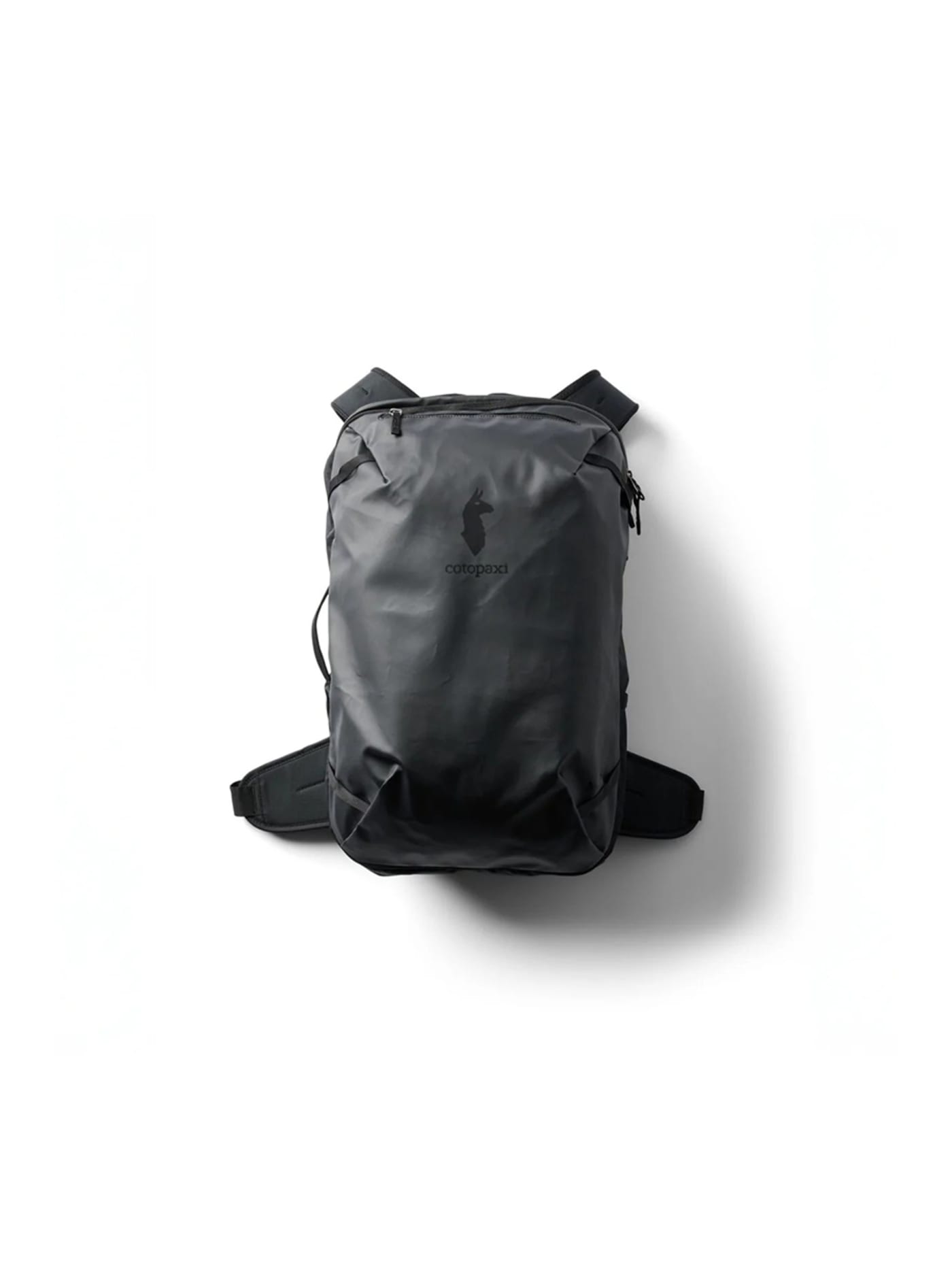
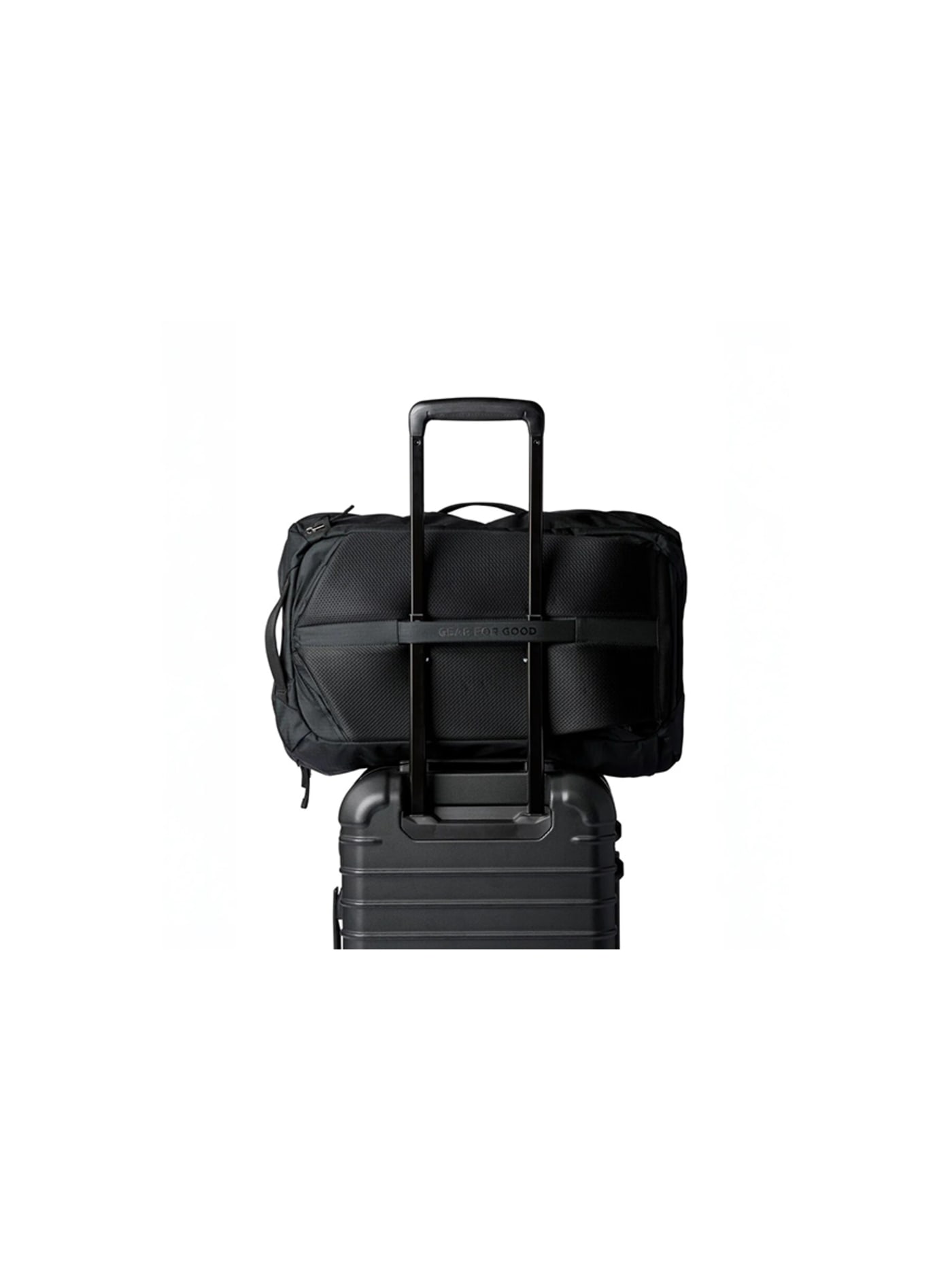
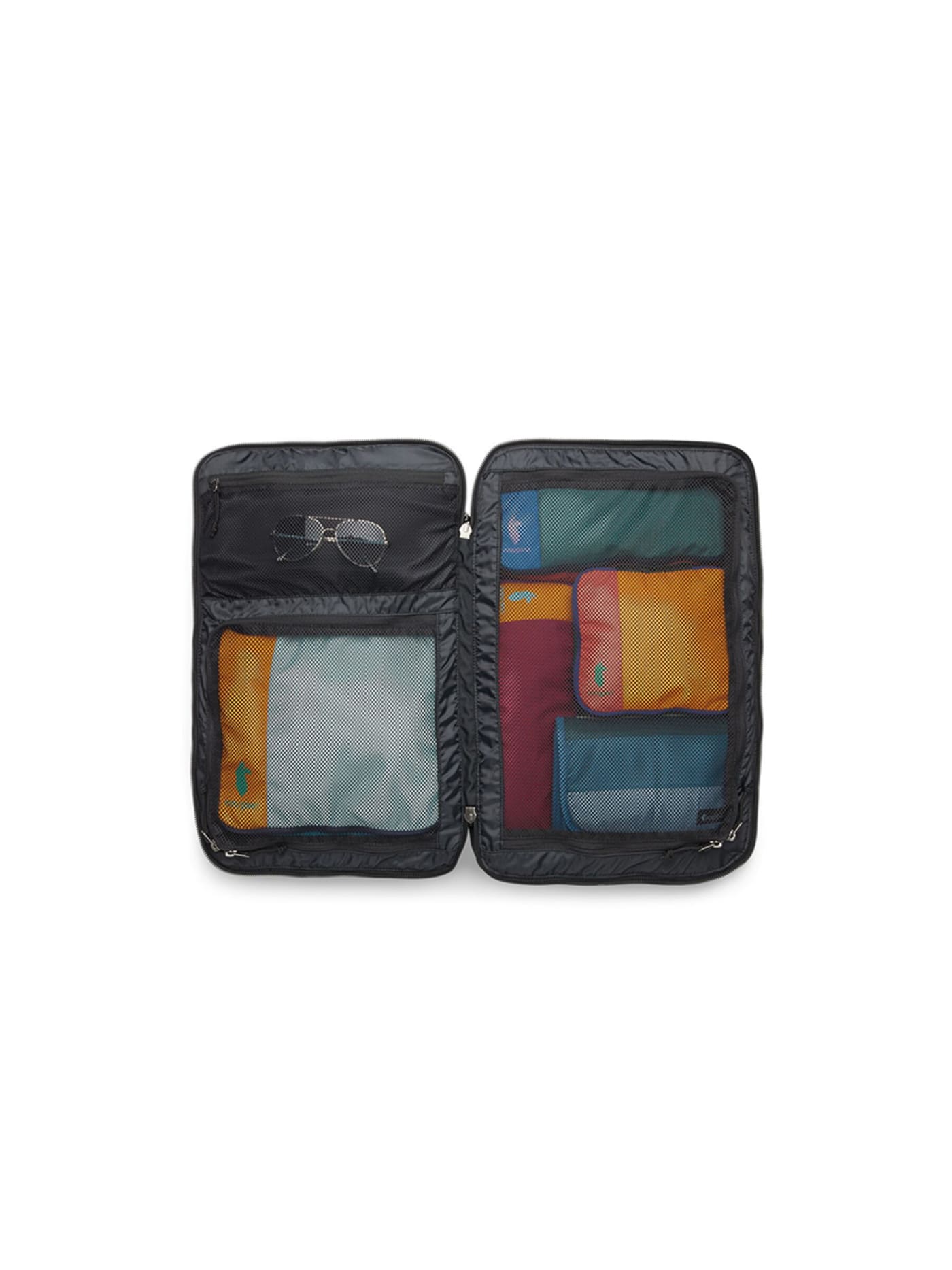
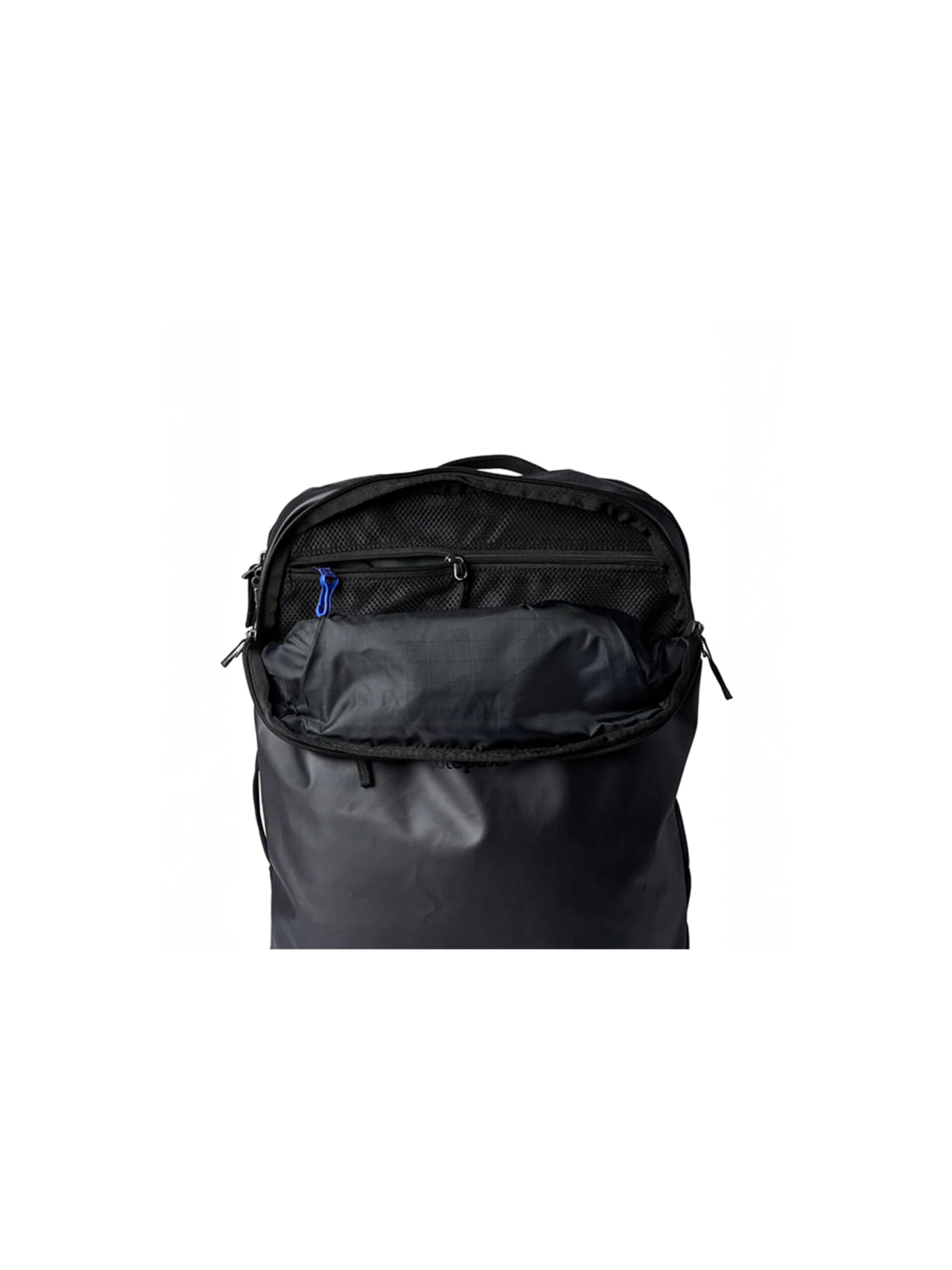
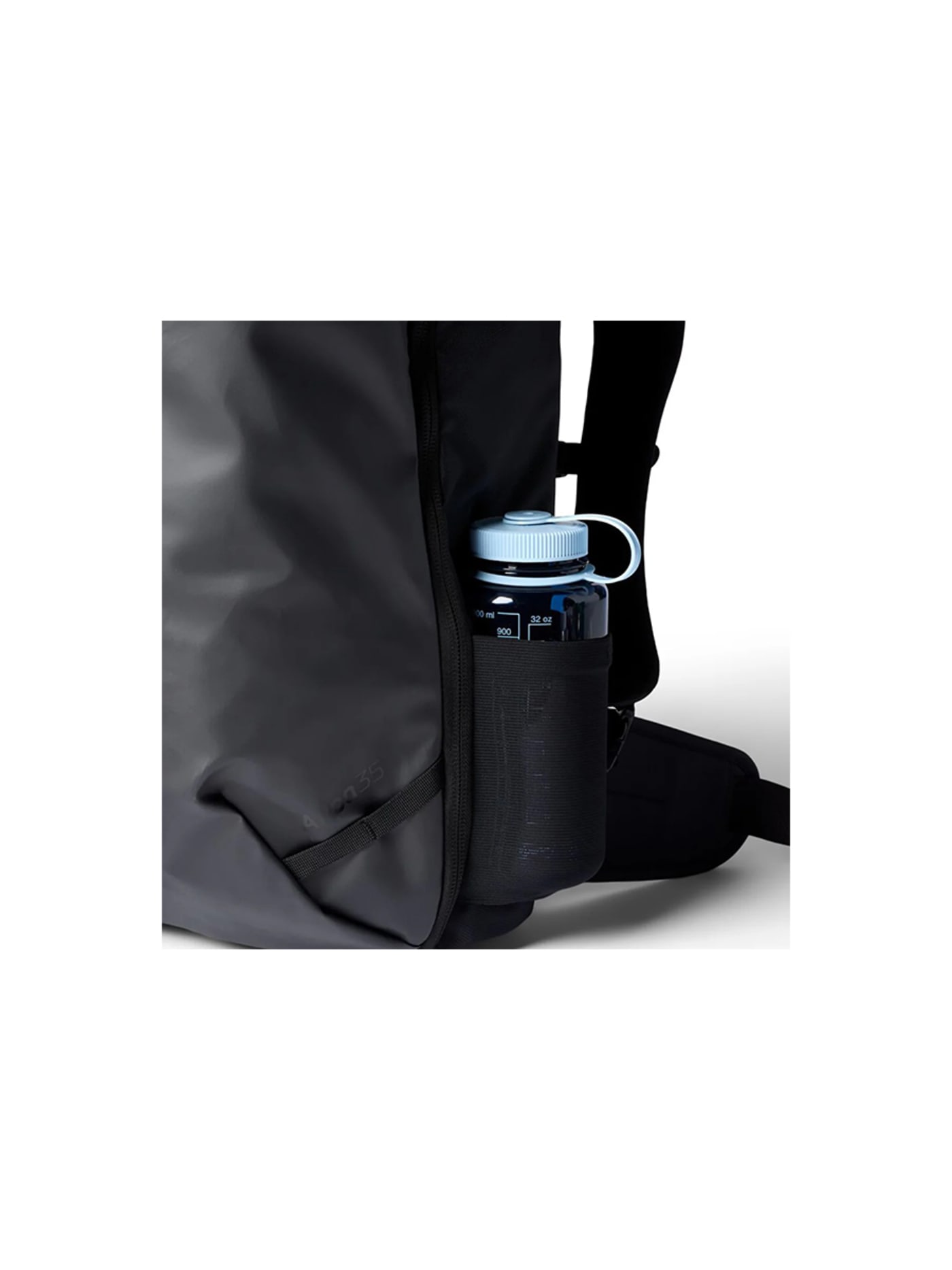
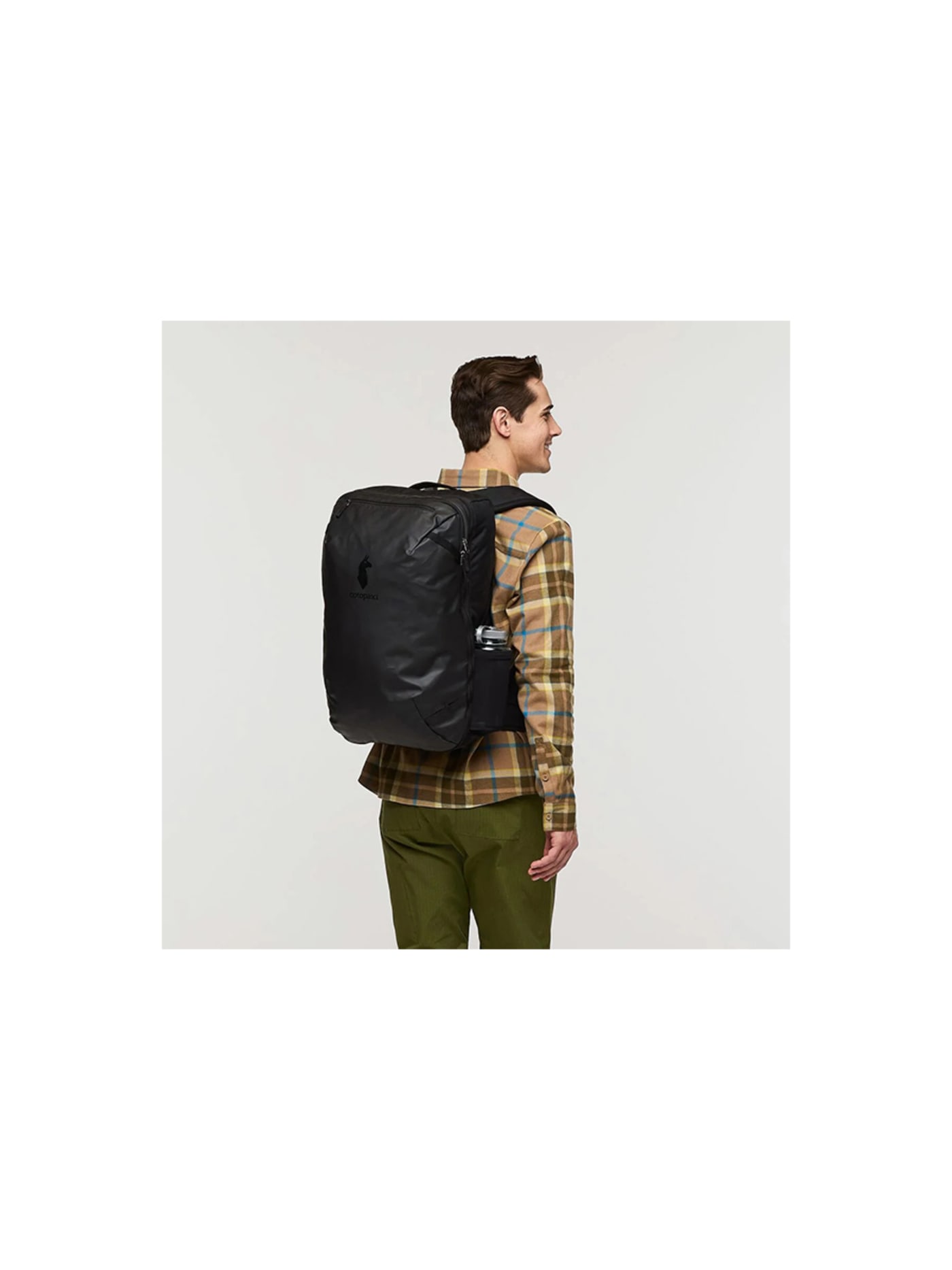
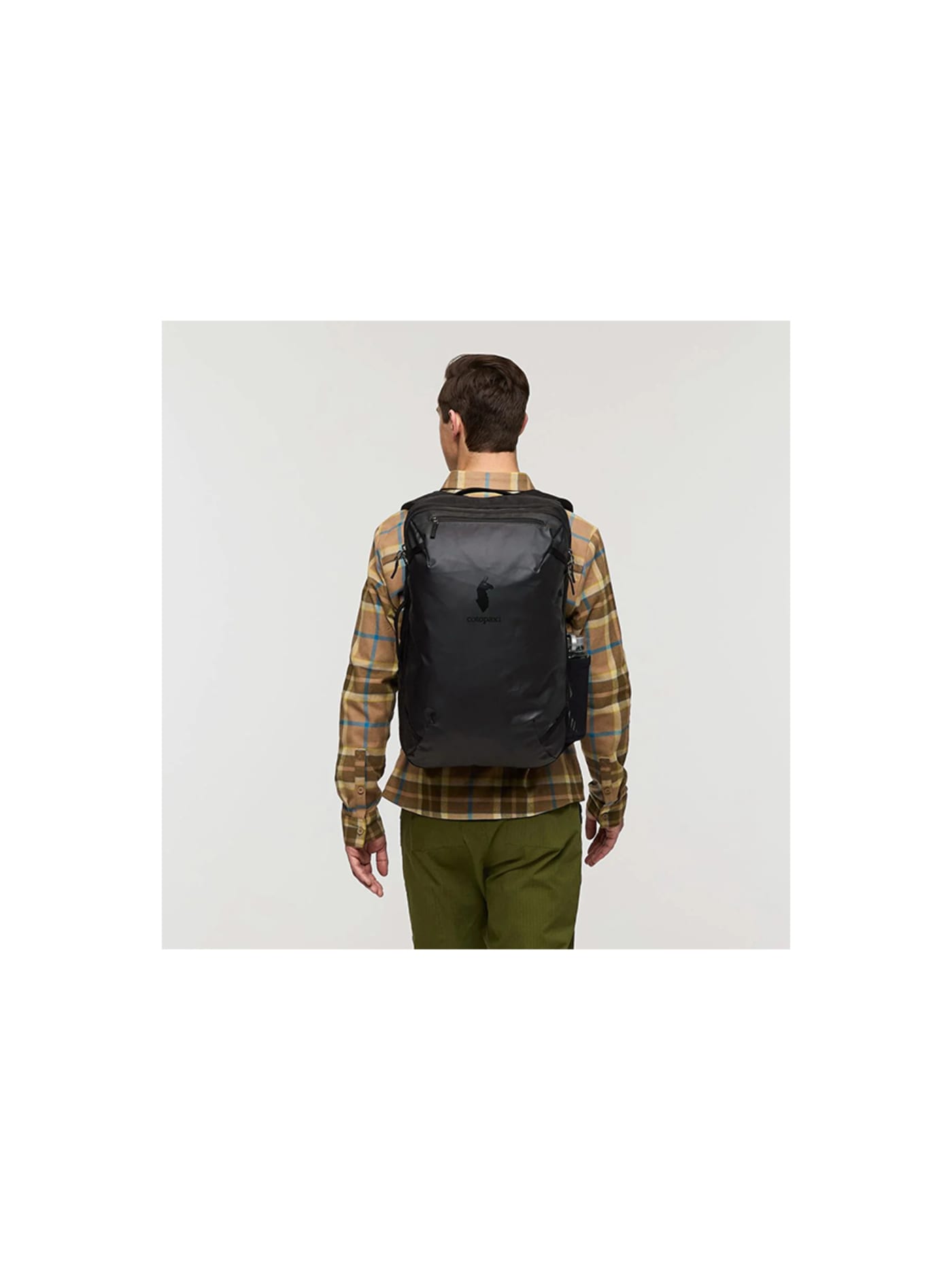
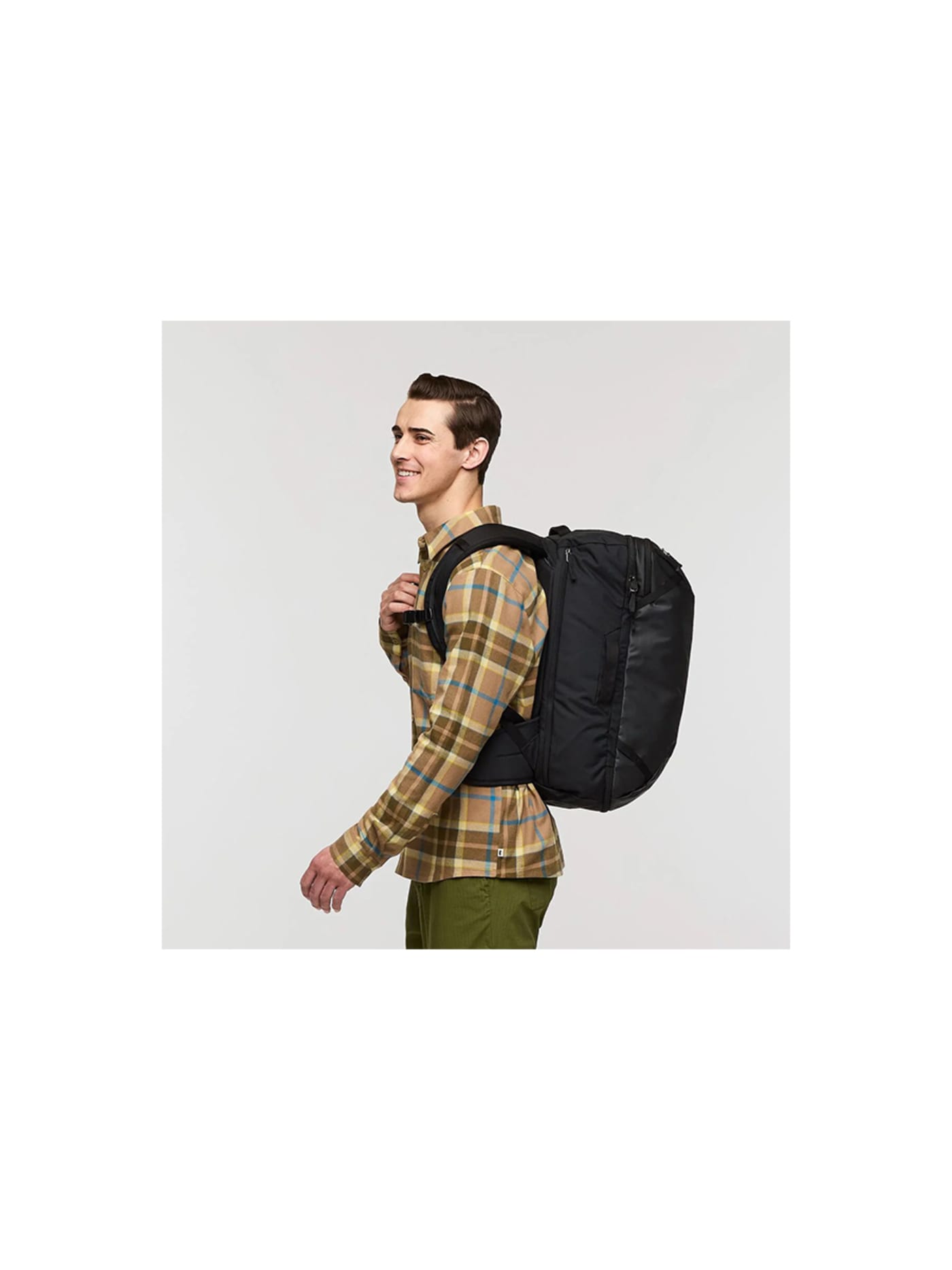
Everything else on this list goes inside this, which is why it matters more than any of it. The Allpa treats a backpack like a suitcase: a zip runs around three sides so it opens flat into two halves of mesh compartments, everything visible, nothing sinking to the bottom. It has a proper padded hip belt, unusual on a travel bag, that shifts the weight off your shoulders on a long walk from the station, and the straps tuck away when you want to check it or sling it as a duffel. It is a genuine all-rounder, which is why it leads here rather than any one specialist. The trade is that it is less rigidly structured than a business-first pack, and its bright colourways will not be to every taste. The bag is the most personal choice on this list, so it is worth weighing alternatives. The Tortuga Pro 40L leans closer to a hiking pack, with an adjustable harness and hip belt built for carrying a full load in comfort, while the Aer Travel Pack 4 is the sharper, more structured choice for city and business travel. Start with the bag; the rest follows from it.
Design intent
- The suitcase-style clamshell with two banks of zippered mesh compartments is the defining decision: the bag opens flat and the mesh dividers act as built-in packing cubes, so everything is visible and separated without buying extra organisation, the clearest answer to living out of a bag.
- The sustainability and comfort choices are structural, not cosmetic: a recycled TPU-coated shell, a genuine padded hip belt rare on travel packs, stowable straps to convert to a duffel, and Cotopaxi's B Corp model, including one-of-a-kind Del Día packs sewn from fabric offcuts.
Trade-offs
- The bold branding and often multicoloured styling, including a large logo, are polarising: toned-down colourways exist, but the identity is playful rather than discreet, unlike the minimal urban packs it competes with.
- The TPU shell is water-resistant, not waterproof, so the zippers can admit water in sustained rain, and the deep, boxy shape can pull on the shoulders and sit awkwardly if it is packed carelessly.
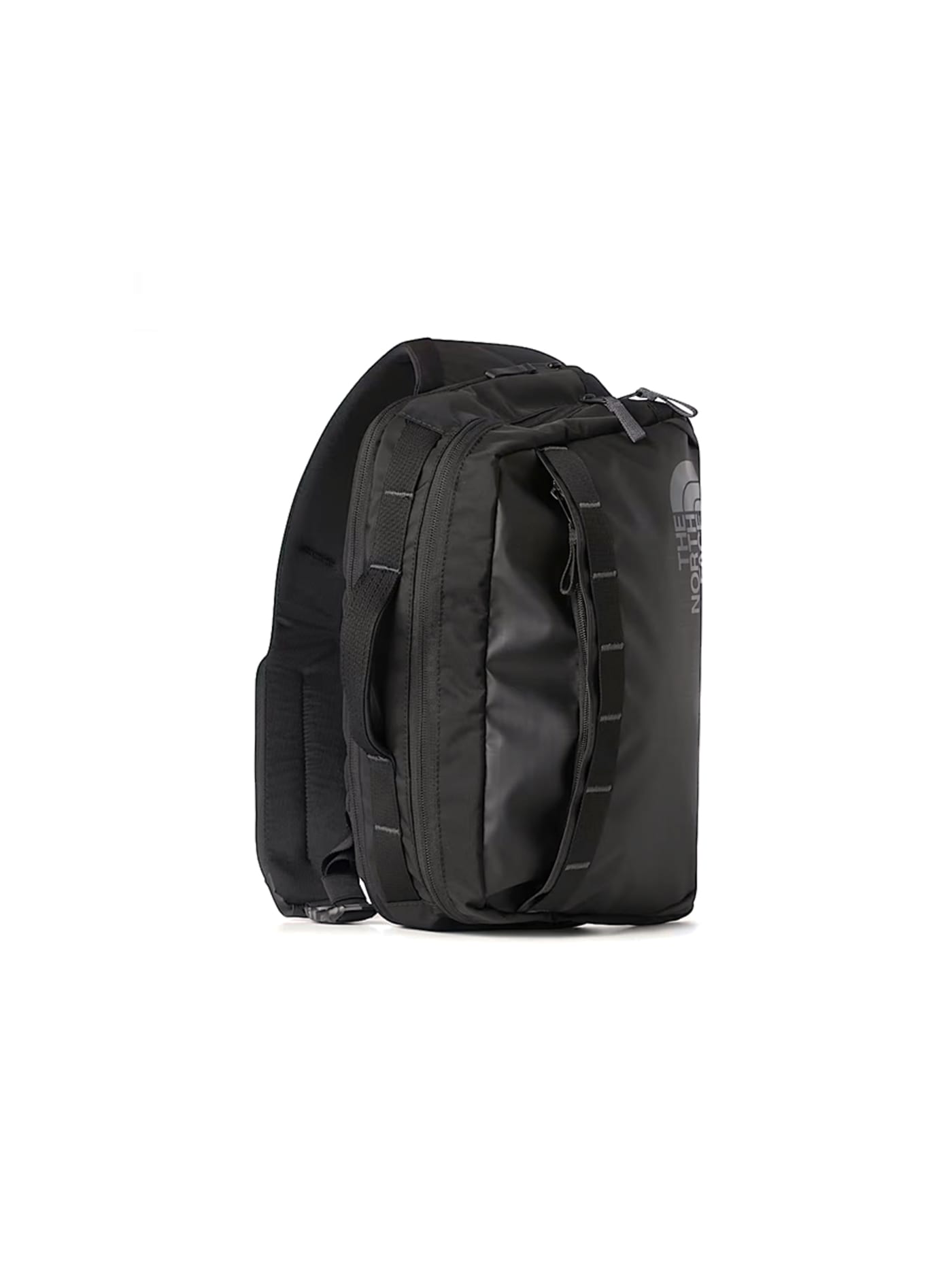
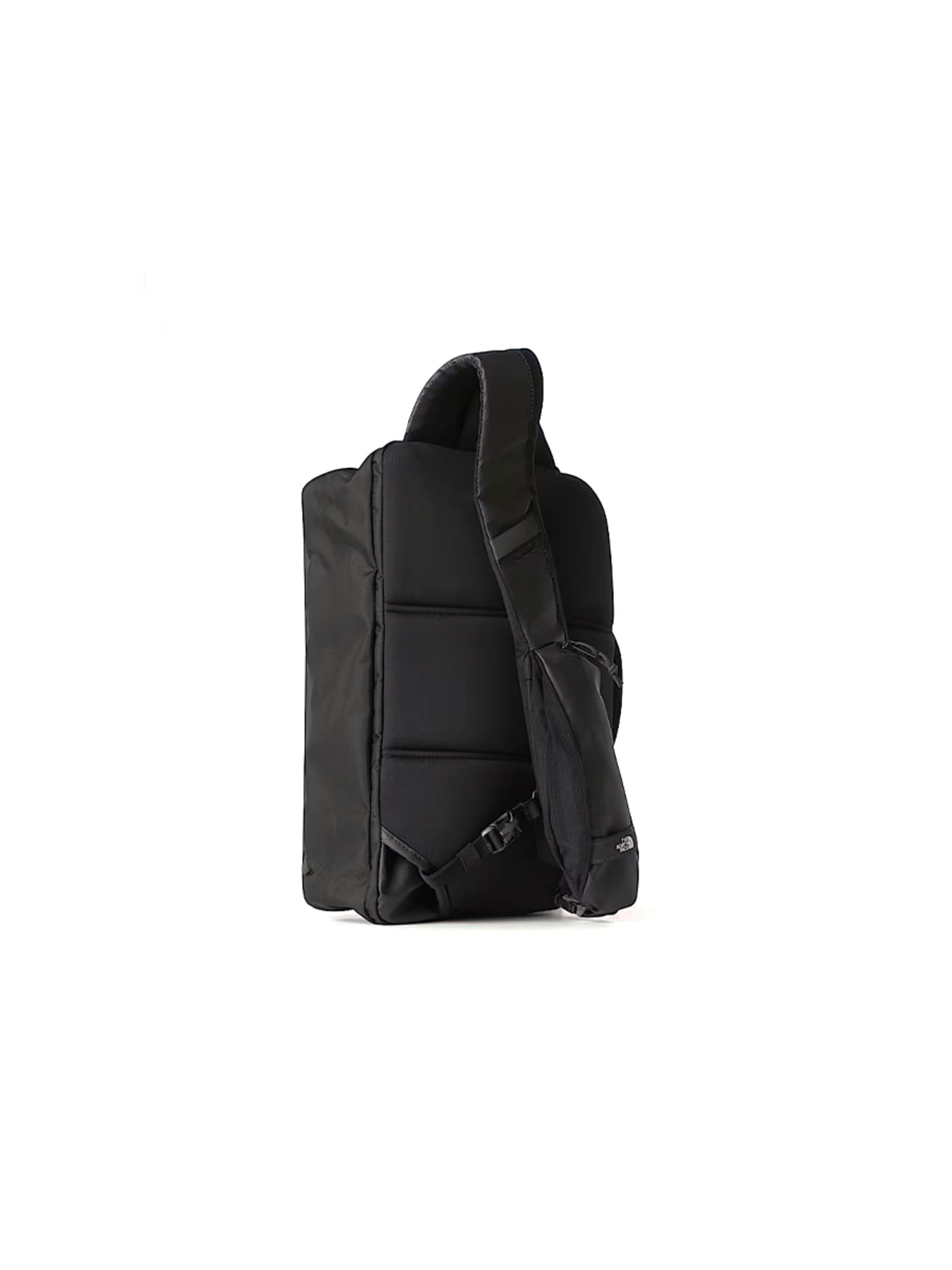
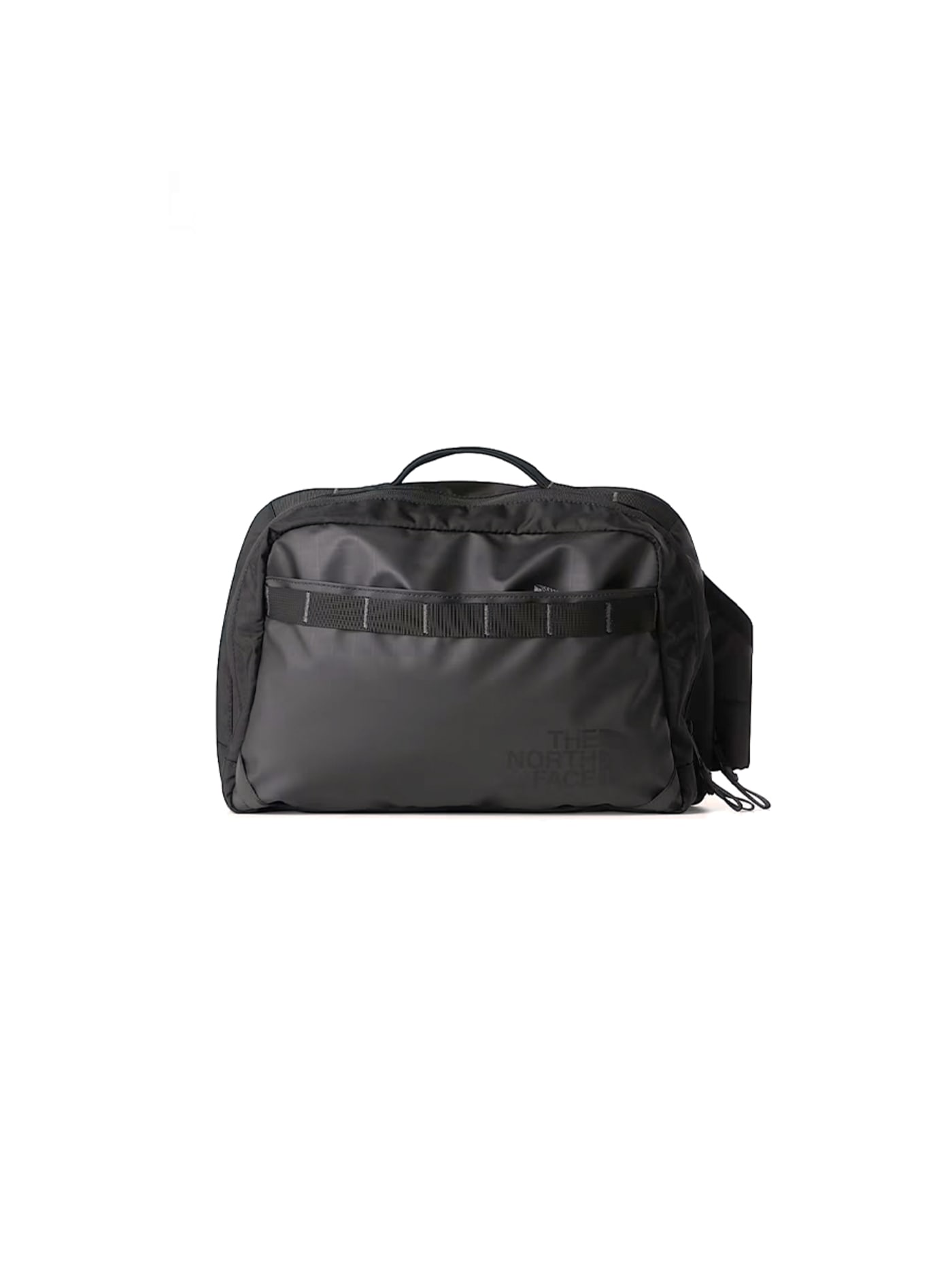
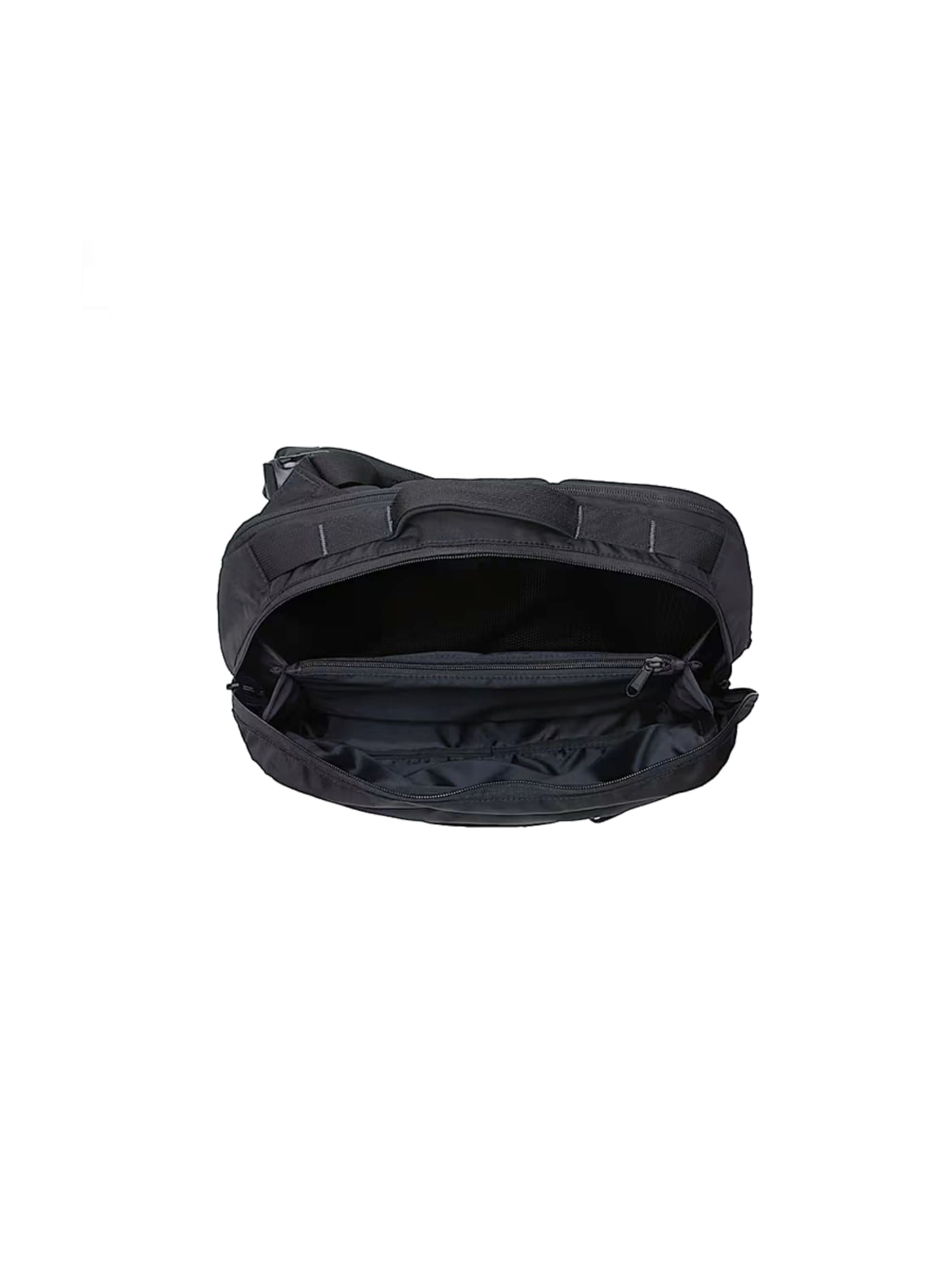
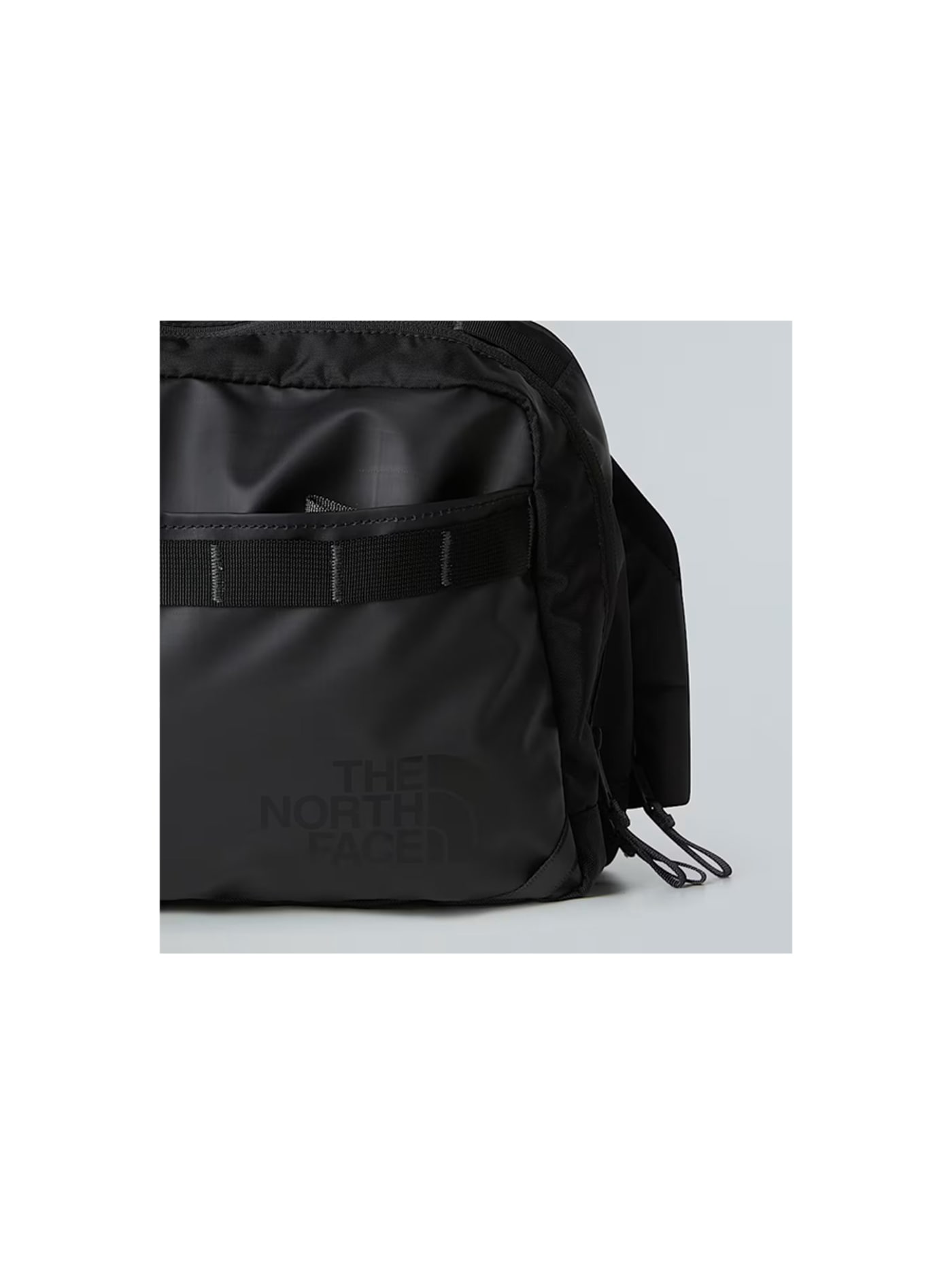
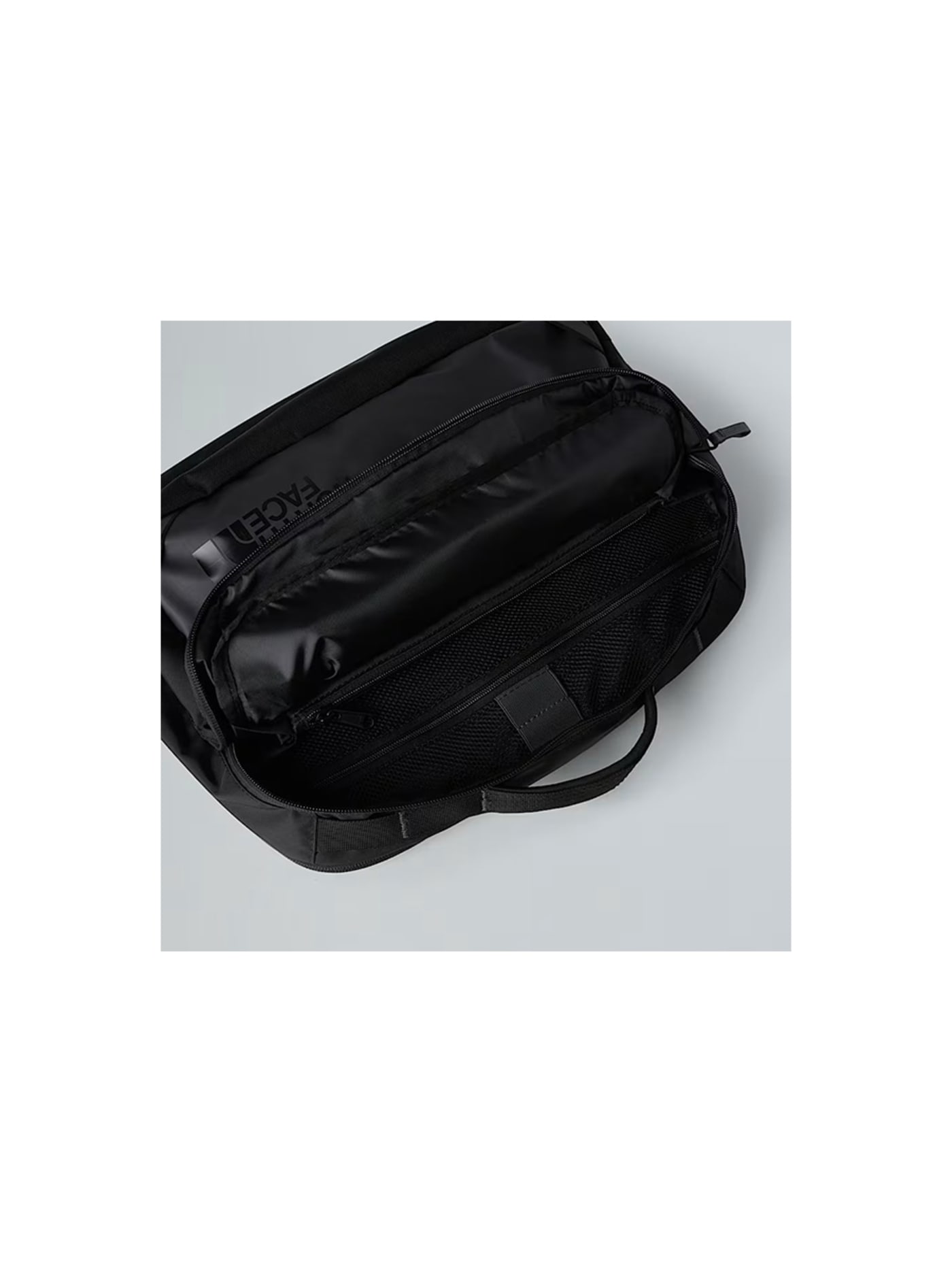
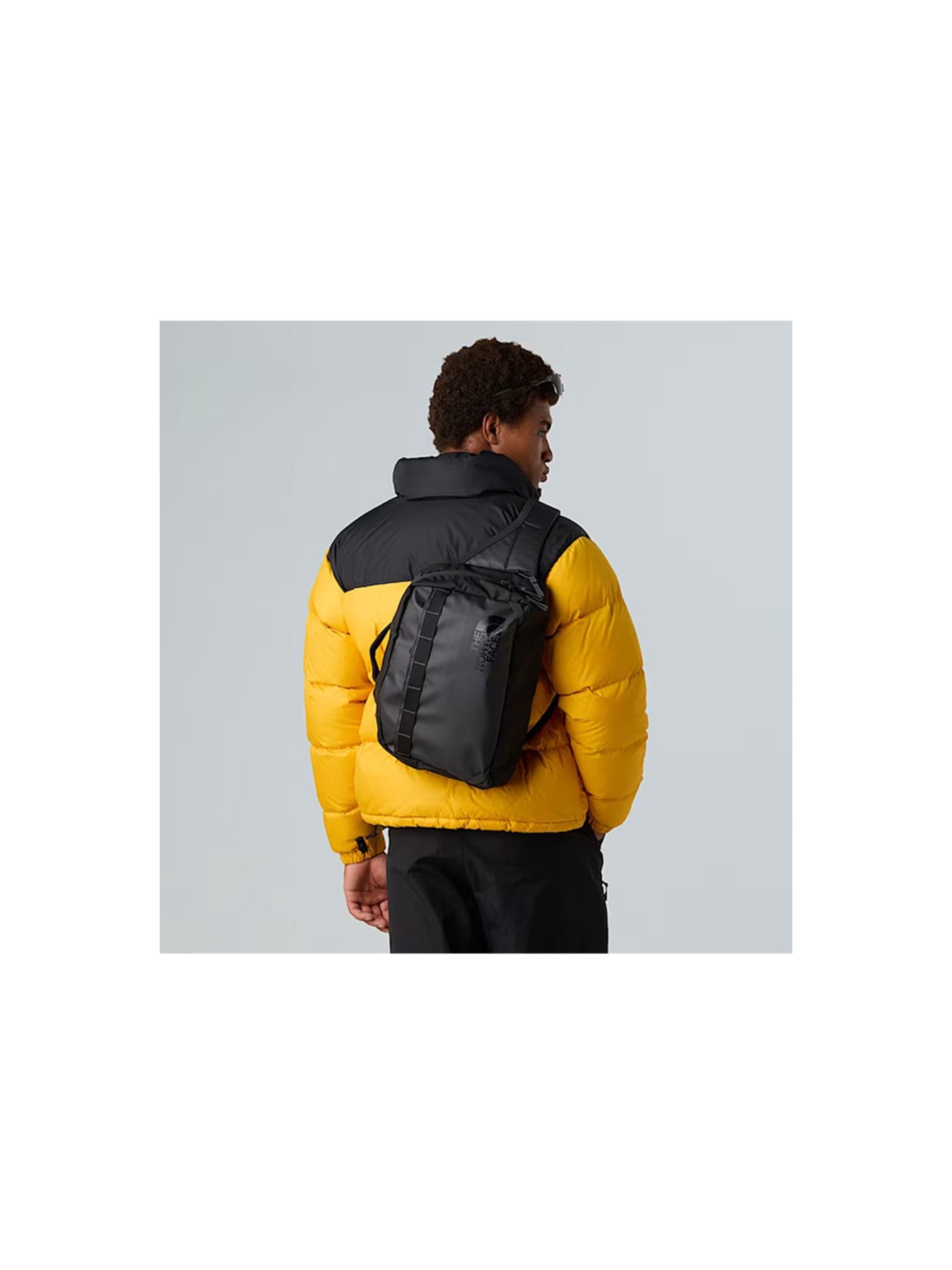
Here is the piece most one-bag lists forget. Your main pack holds the whole trip, but you do not want it on your back all day once you have arrived. Hauling a full carry-on around a city, into a café, onto a day walk, is exactly the weight you travelled light to avoid. So the trick is to pack a second, smaller bag inside the first, and carry only that once you are settled. The Voyager Sling is a good version of it: eleven litres of weatherproof fabric with a padded tablet sleeve, big enough for a day out with a water bottle, a layer and a camera, small enough to wear across the body and forget. It flattens into the main bag when you are moving between places. If you want it to disappear entirely, a fully collapsible packable daypack folds smaller still, at the cost of comfort and structure. Which way you go depends on how much you carry through a day: a sling if you want it organised and ready, a packable if you want it to vanish when empty.
Design intent
- Borrowing the Base Camp Duffel's TPU-coated recycled-polyester fabric gives a small everyday sling the same rain resistance and abuse tolerance as the full-size bag, scaled down to a daily carry.
- An 11-litre body with a padded tablet sleeve and a stabiliser strap places it between a minimal day pouch and a small bag, sized for a commute or a travel day without becoming a backpack.
Trade-offs
- 300D recycled polyester is practical and light rather than a material that invites long-term attention; it performs for everyday use but lacks the substance of a heavier ballistic-nylon carry.
- The single adjustable sling strap suits across-the-body wear in one orientation; it is an everyday-convenience bag rather than a load-hauling or all-day-comfort system.


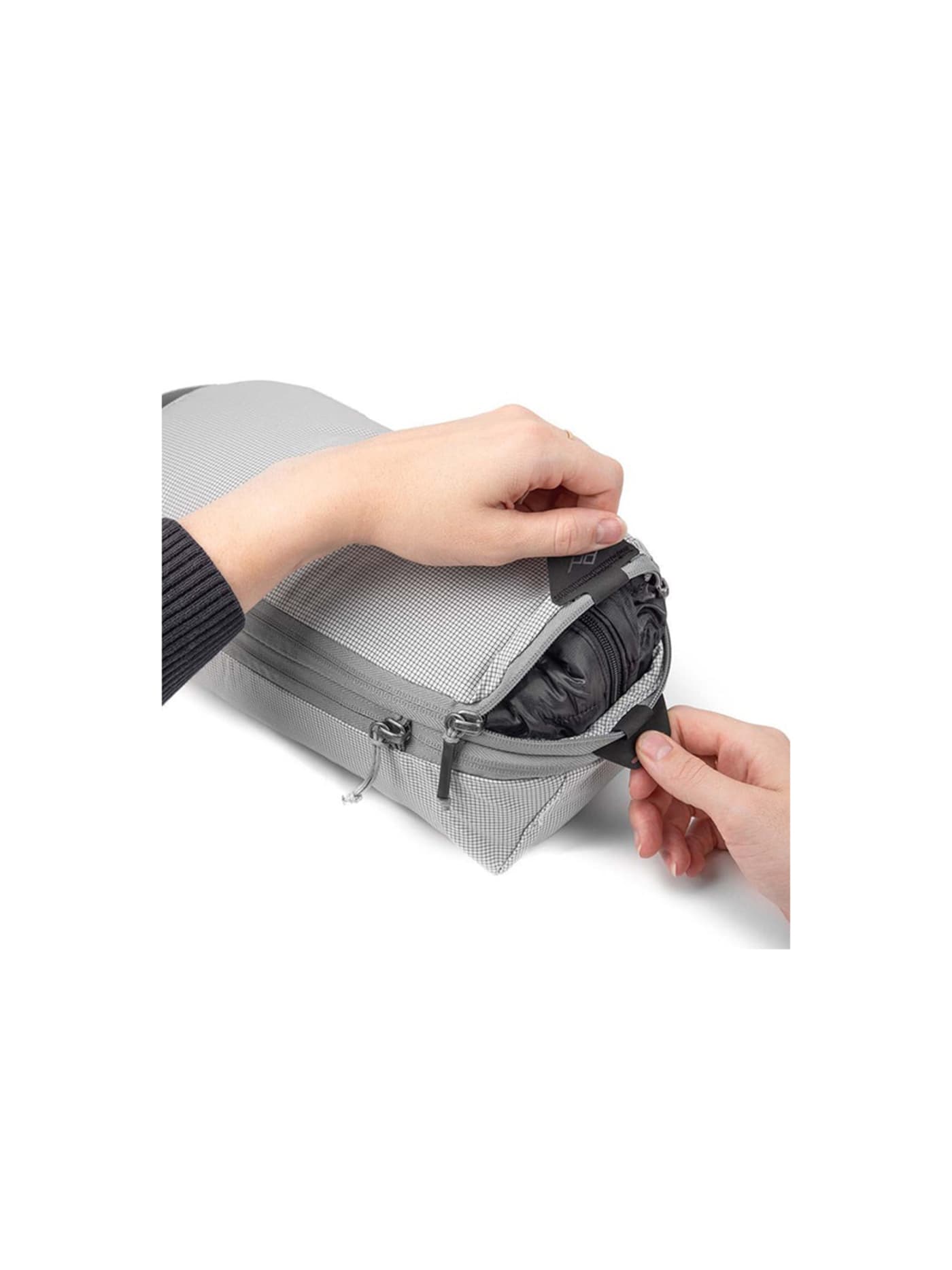
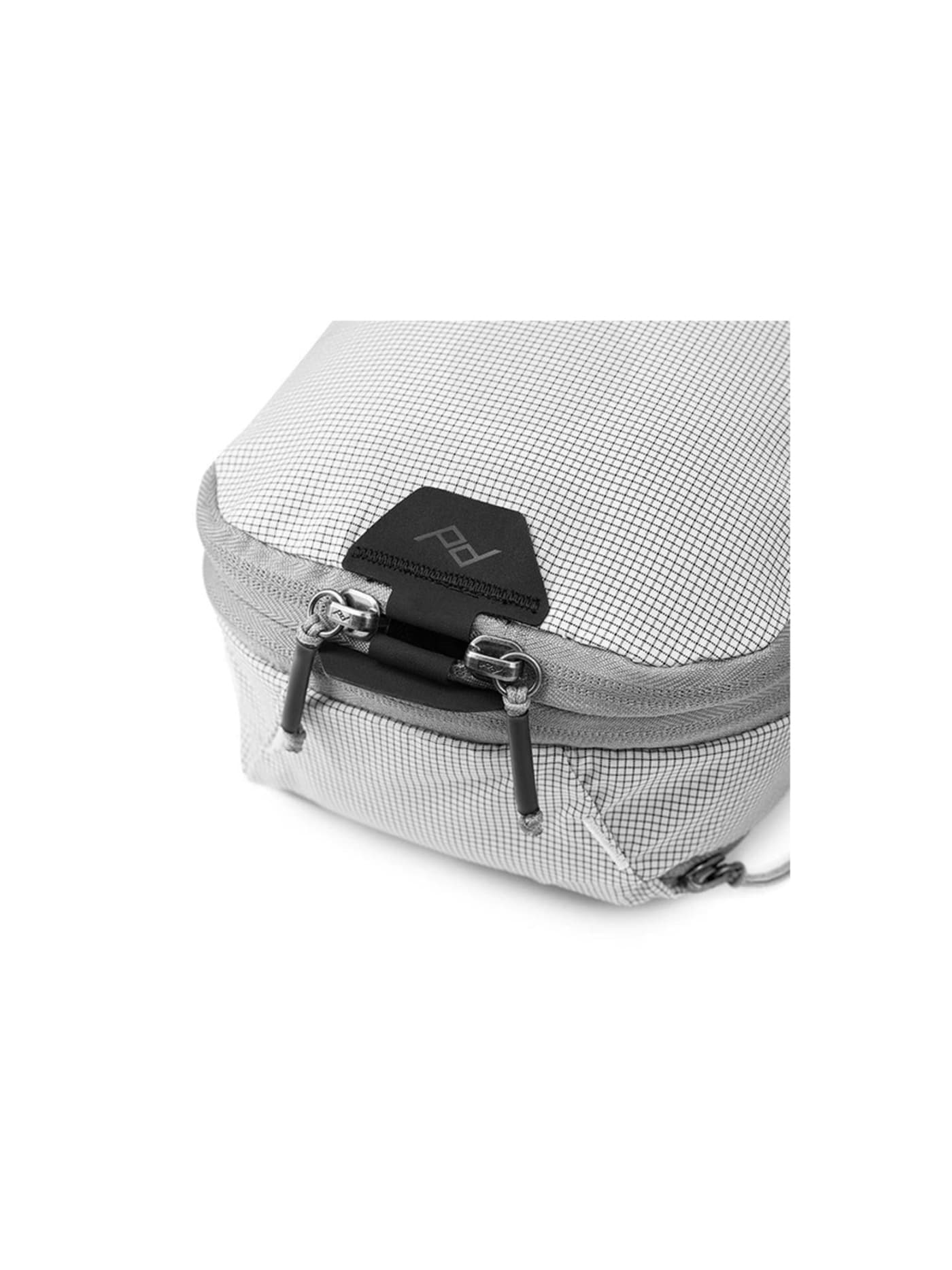
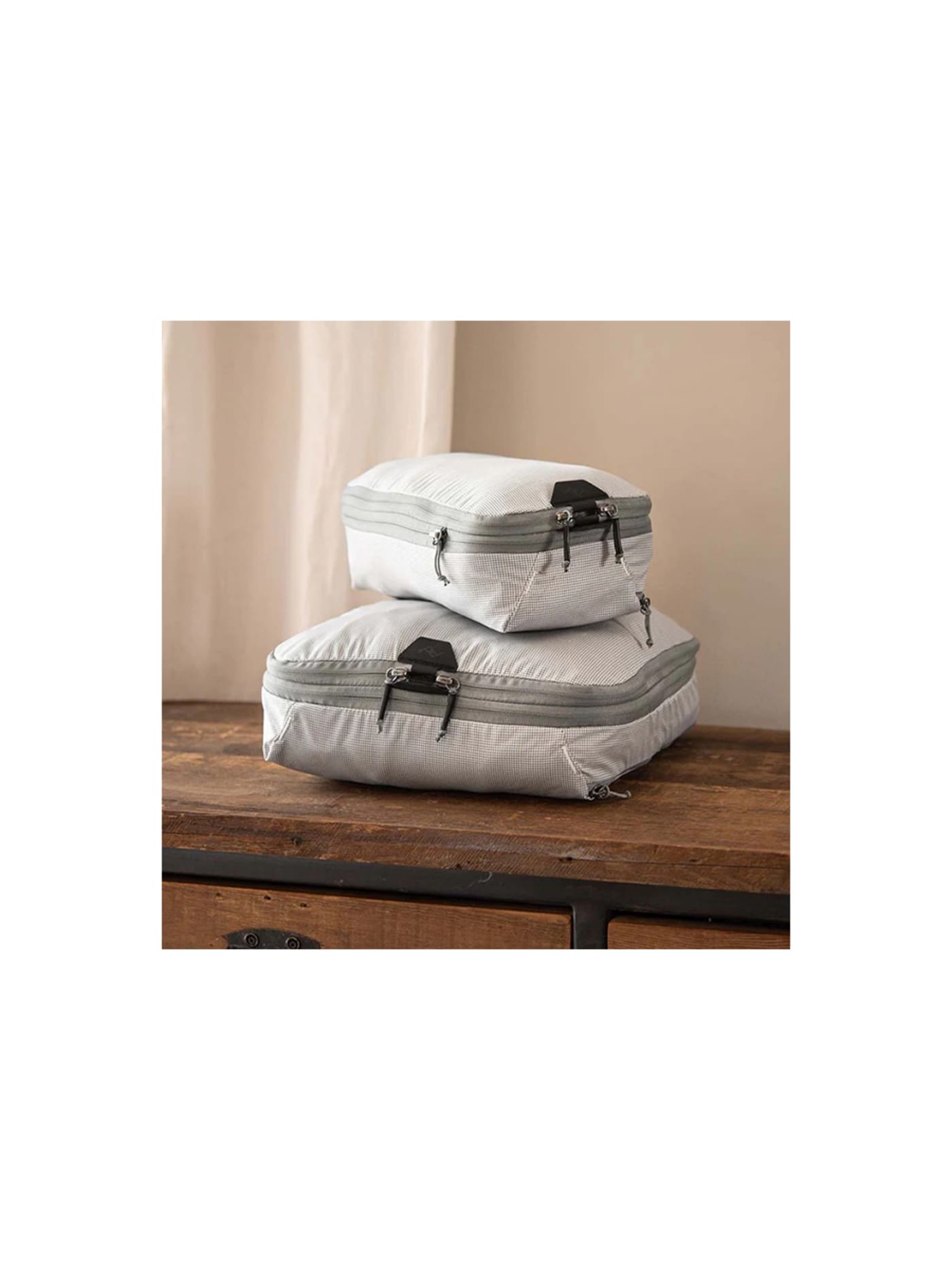
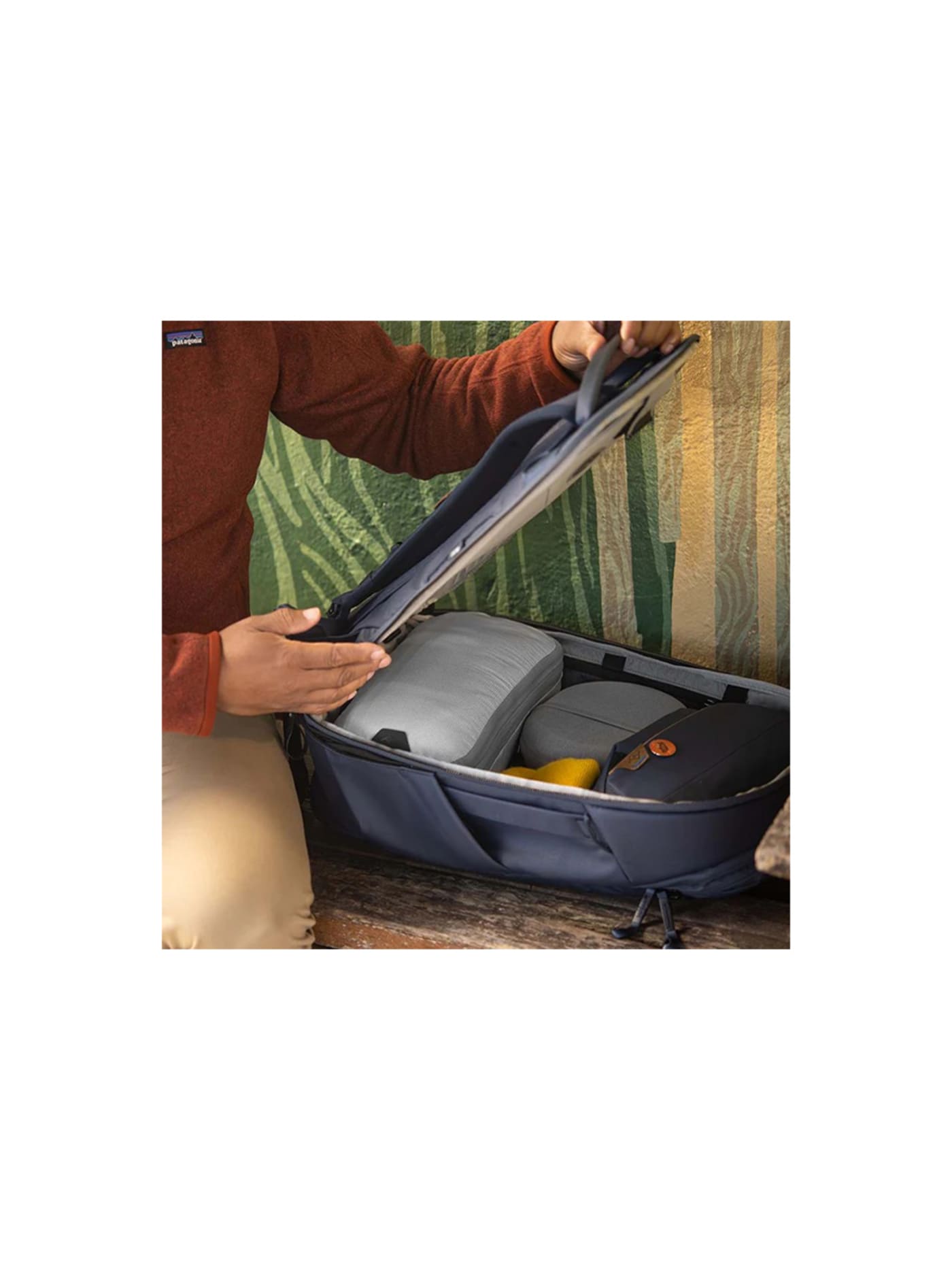

One-bag travel is really a packing system, and this is the object that makes the system work. Its single mid-zip does two jobs a plain fabric envelope cannot: cinched, it compresses a load flat to buy back space; unzipped, it splits into two sealed halves, so worn clothes stay away from clean. That is the whole case for a cube over folding straight into the bag. The trade is a little added weight and the discipline of packing to a system rather than stuffing. For anyone travelling out of one bag for more than a couple of days, the order it imposes is what keeps a small bag usable rather than a jumble you dig through.
Design intent
- The dual-chamber zip is the defining decision: one cube both compresses a load and, using the same central zip, splits into clean and worn halves, so a single object does the job most travellers solve with two separate pouches or a compression sack.
- It is designed as part of a system rather than in isolation: the dimensions, fabric and zippers match the Travel Backpack so cubes fill it without gaps, which is where the organisation pays off and is the point of buying into the ecosystem.
Trade-offs
- It costs far more than a generic packing cube that would carry the same clothes, so the premium buys the compression and clean/dirty split rather than raw capacity.
- The structure and weatherproof fabric add a little weight and rigidity over a bare stuff sack, and the cube earns its keep mainly for travellers who commit to packing with a system rather than stuffing a bag loose.
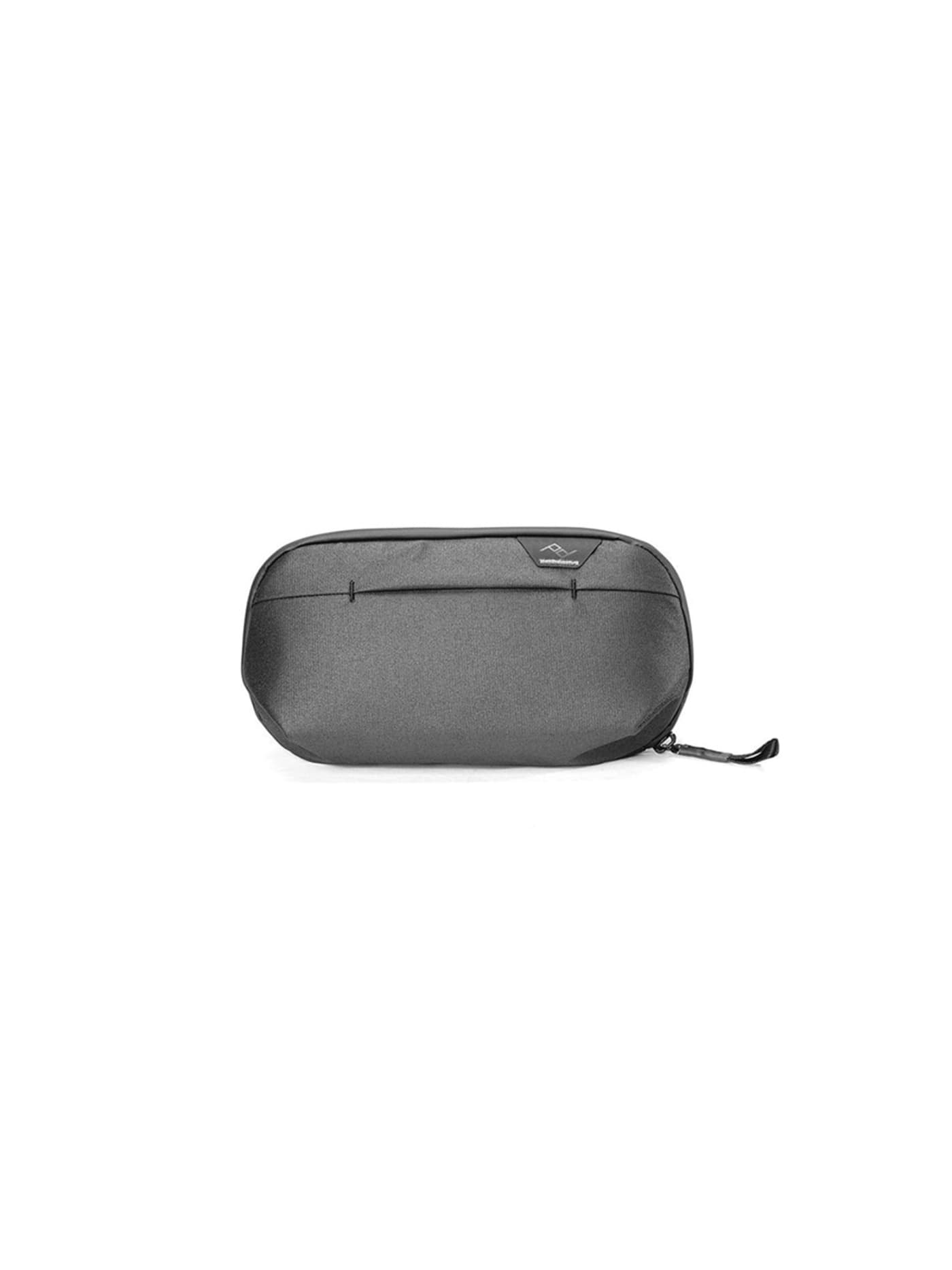
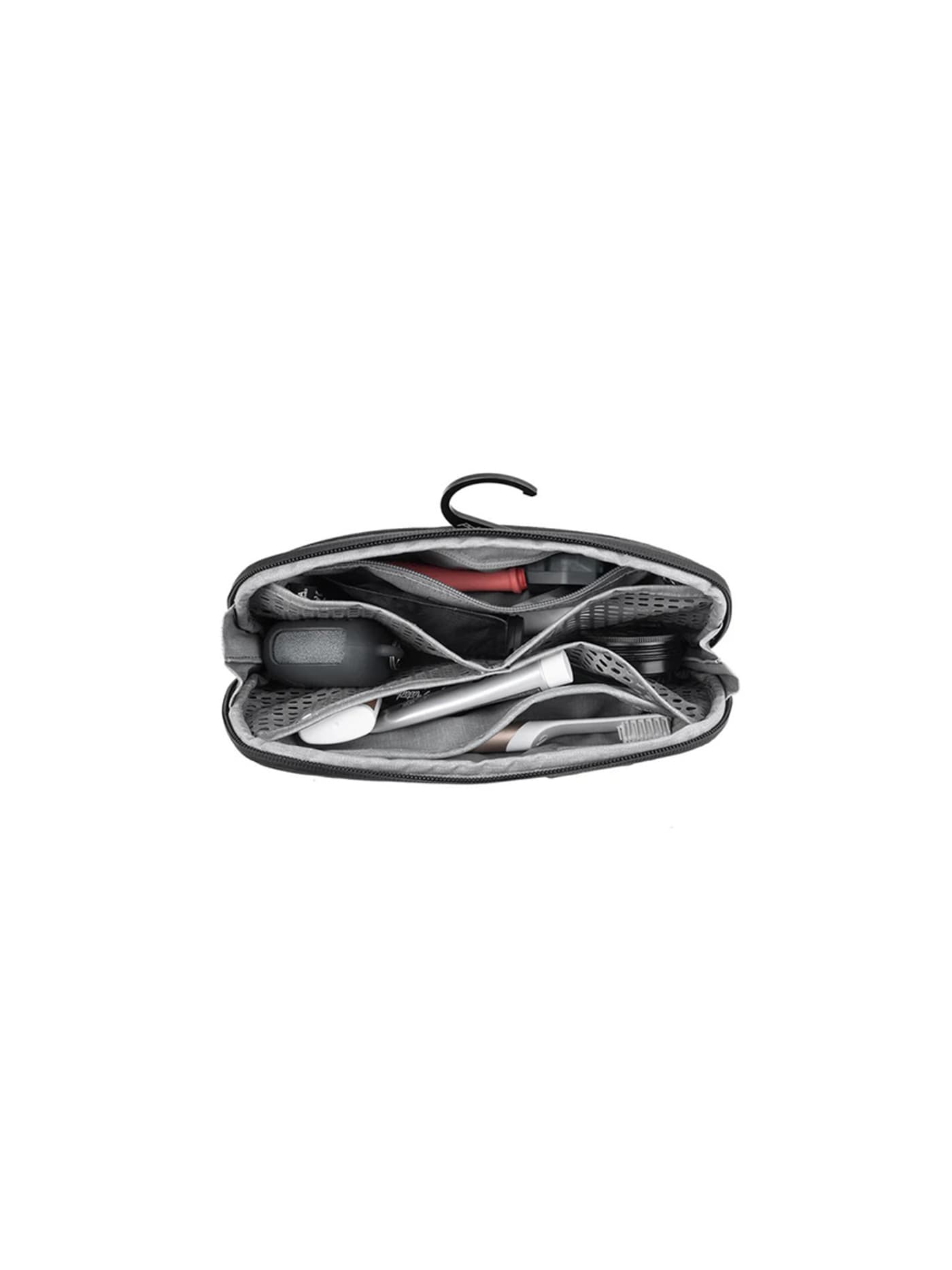
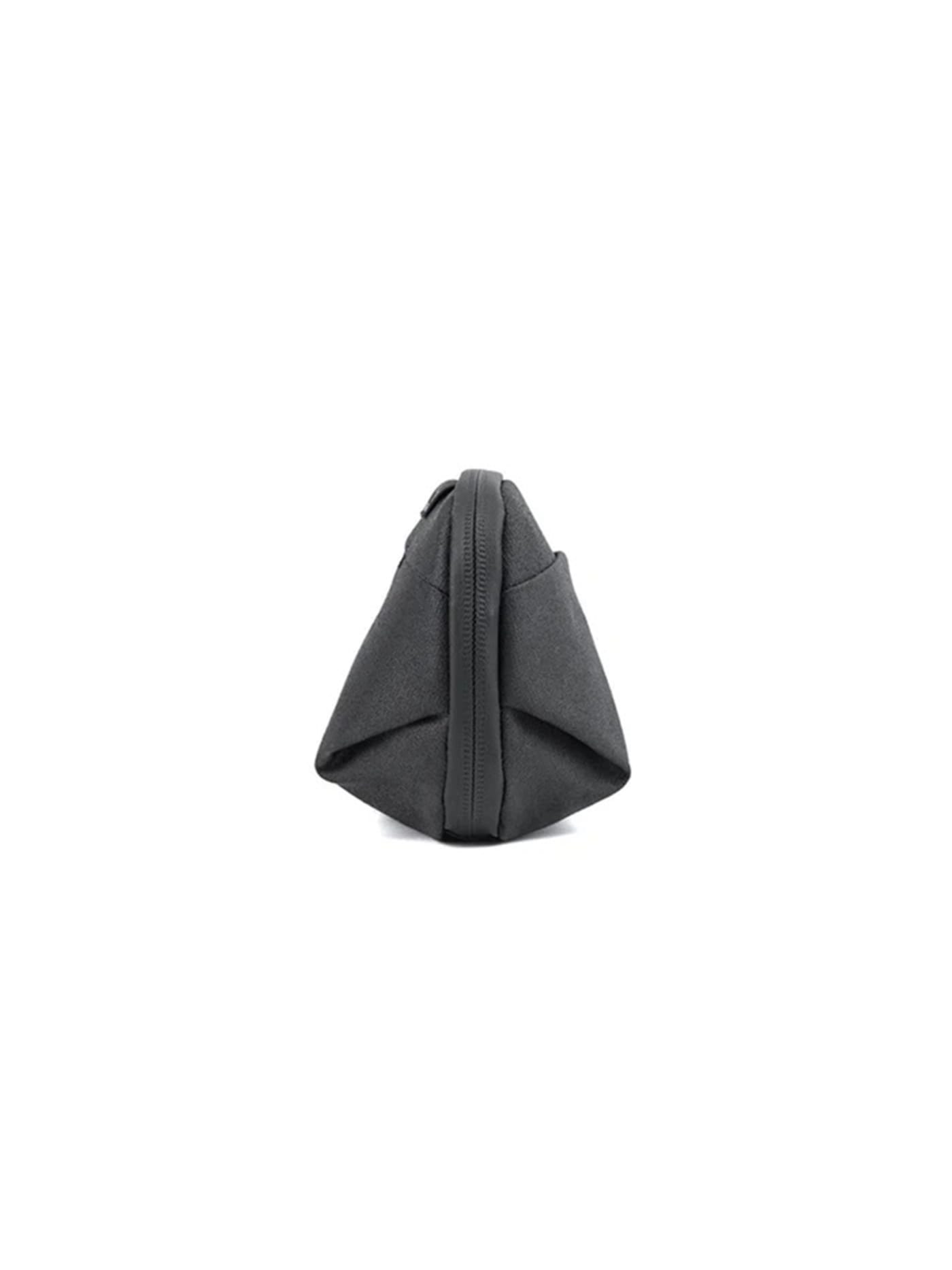
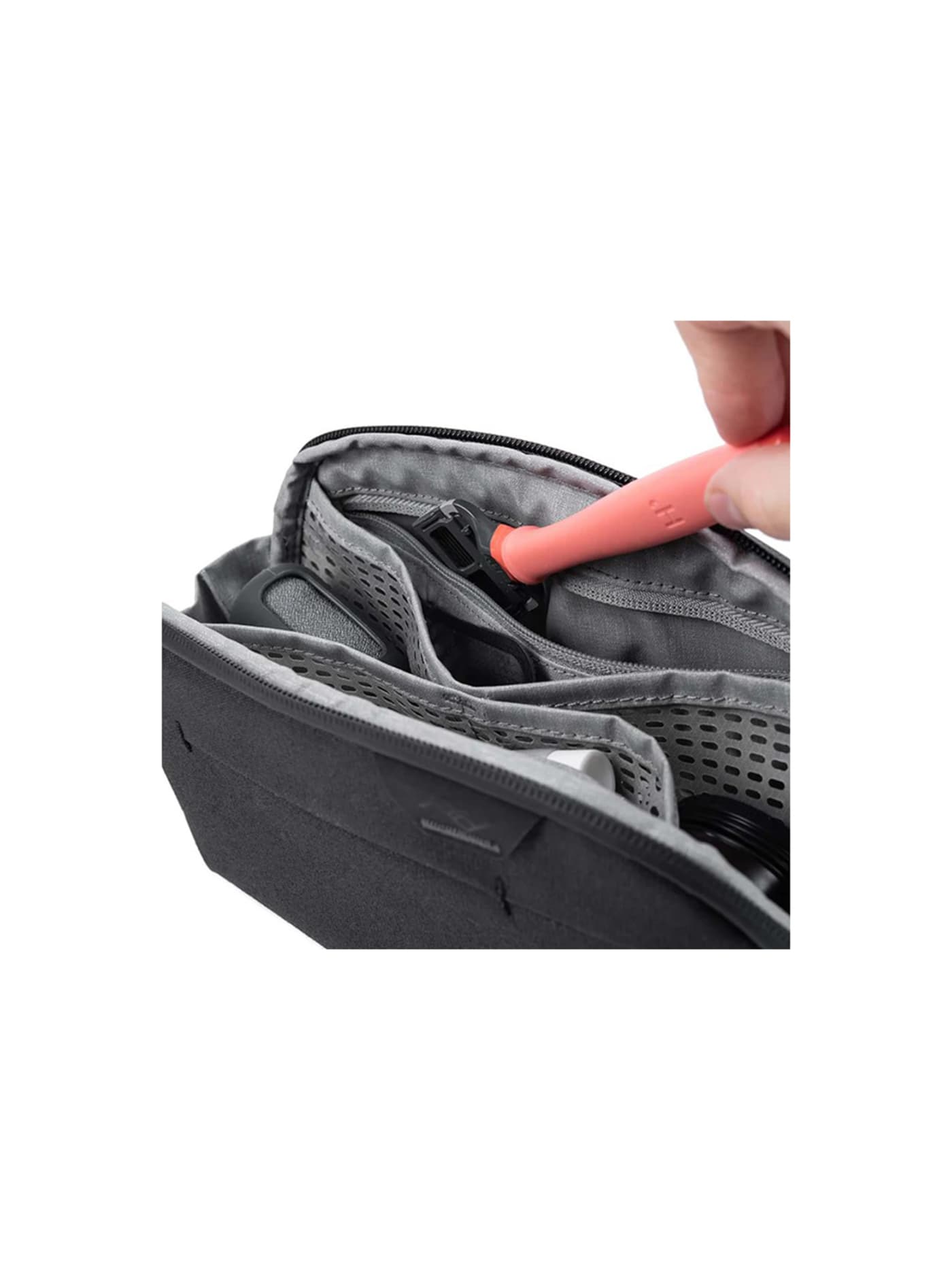


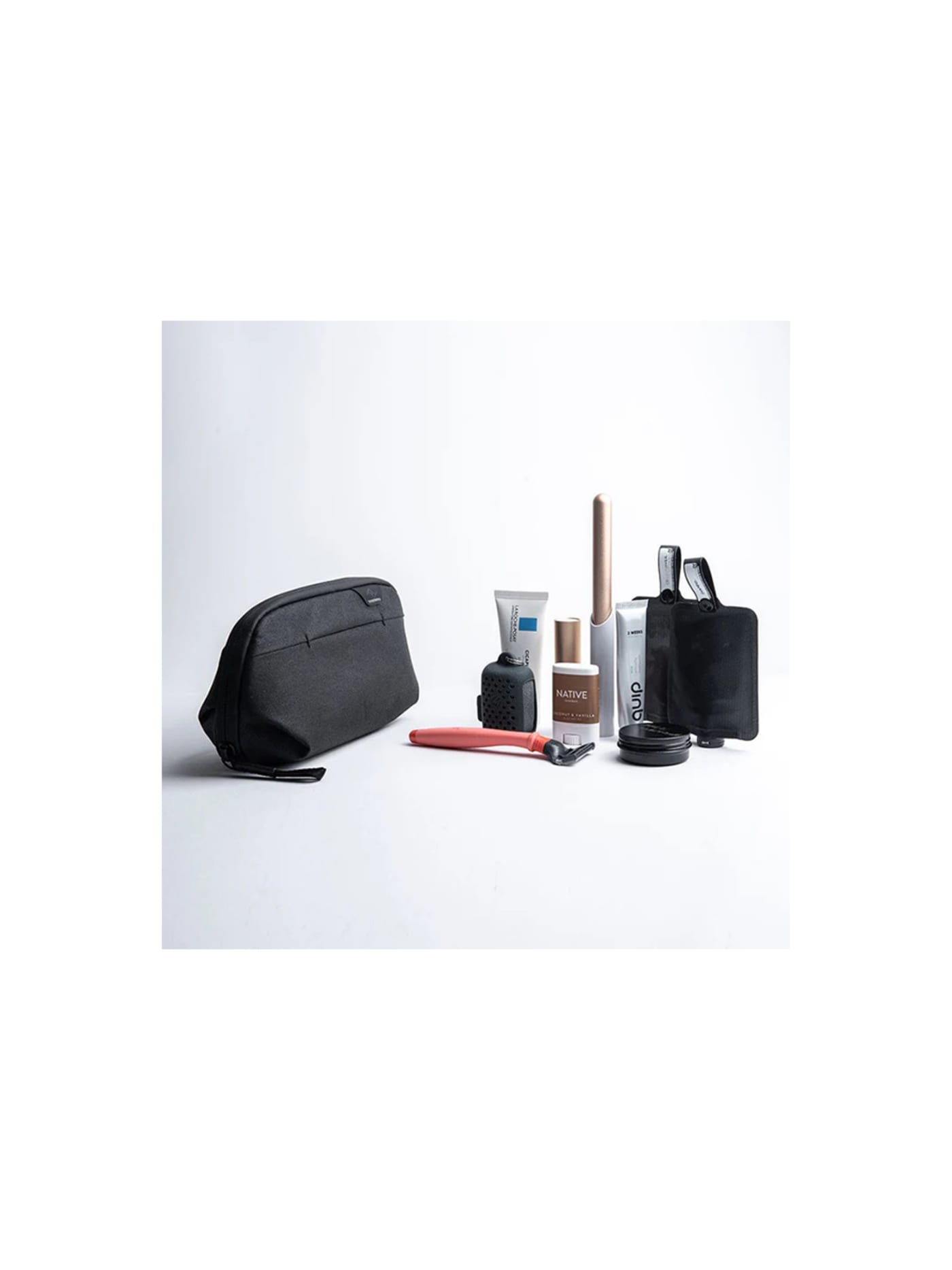
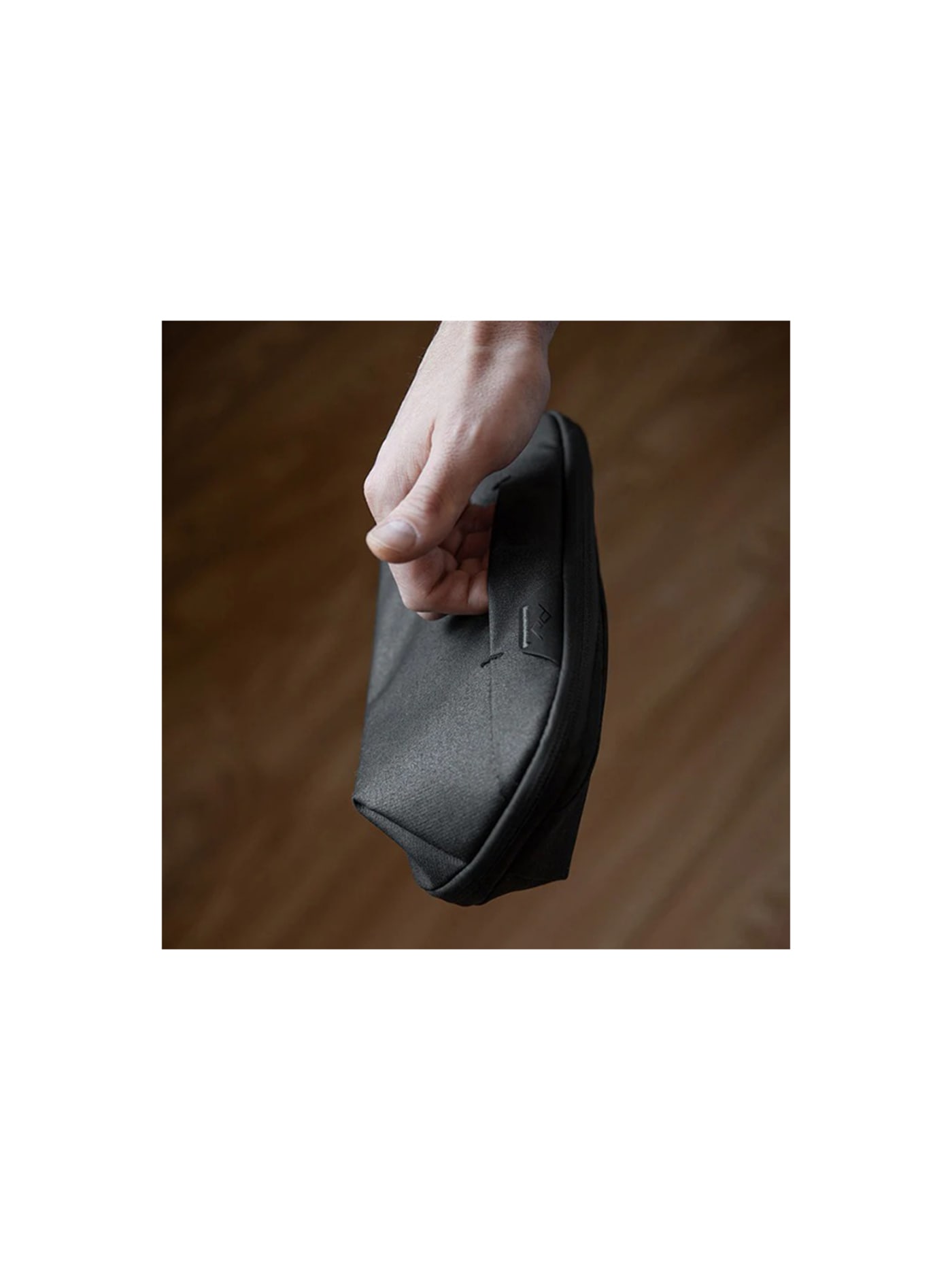


A toiletry bag fails in two predictable places: it has nowhere to hang in a cramped bathroom, and it does not contain what leaks. This one is built around both. It stands open so you can see everything, folds out a hook to hang from a rail, and lines its base so a burst bottle stays put. The removable inner pouch lifts out for the airport liquids tray, which quietly solves the security-queue fumble. The other half of the job is what goes inside it. Rather than pack full-size bottles, decant what you need into a set of squeezable silicone travel bottles like the HumanGear GoToob+: they collapse as they empty, seal against leaks, and come in cabin-legal sizes, so three small bottles you refill replace the big ones you cannot bring. Deciding how much you actually need is one-bag travel in miniature. The pouch is more structured and dearer than a plain zip bag, which is the trade. If you want something smaller and cheaper, the Osprey Ultralight Roll Organiser rolls rather than stands, saving space at the cost of the hang-and-see convenience. Either way, a wash kit has to work in a bad hotel bathroom, which is exactly where this one earns its place.
Design intent
- The design targets the toiletry bag's real failures: an integrated fold-out hook and a self-standing wide mouth solve using it in a small bathroom with no counter, so the pouch works hung open rather than slumped shut on a wet surface.
- Spill containment is treated as a structural problem, not an afterthought: a sealed, wiped-clean lined base and a removable inner pouch keep leaks contained and lift liquids out for security, so a failure inside the bag does not become a failure across the whole pack.
Trade-offs
- The hook, standing structure and lined base add weight and cost over a plain zip bag, so the spend buys the way it is used rather than extra capacity.
- The structured form holds its shape whether full or nearly empty, so it is less space-efficient for a minimal toiletry kit than a soft pouch that collapses down.
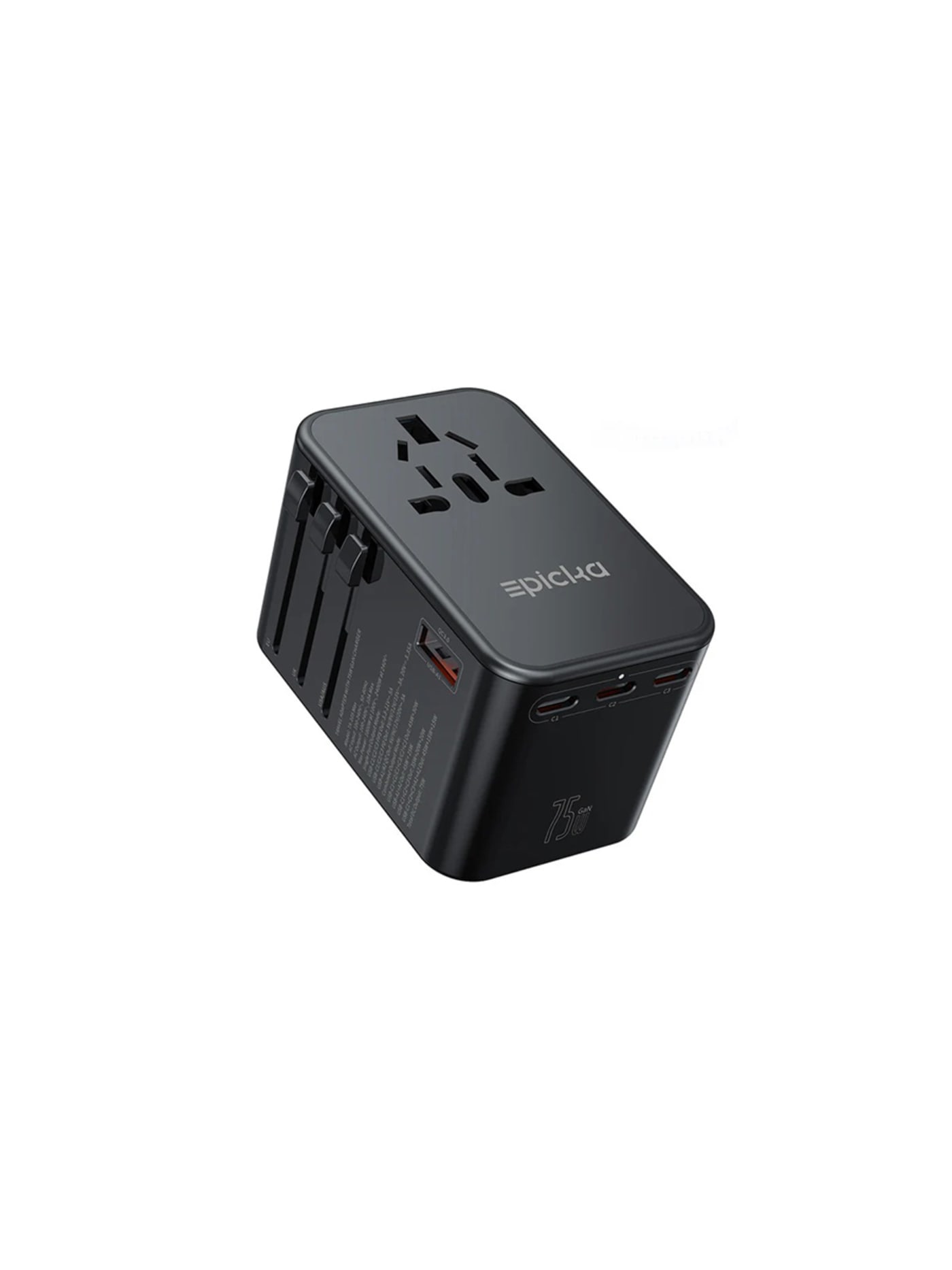
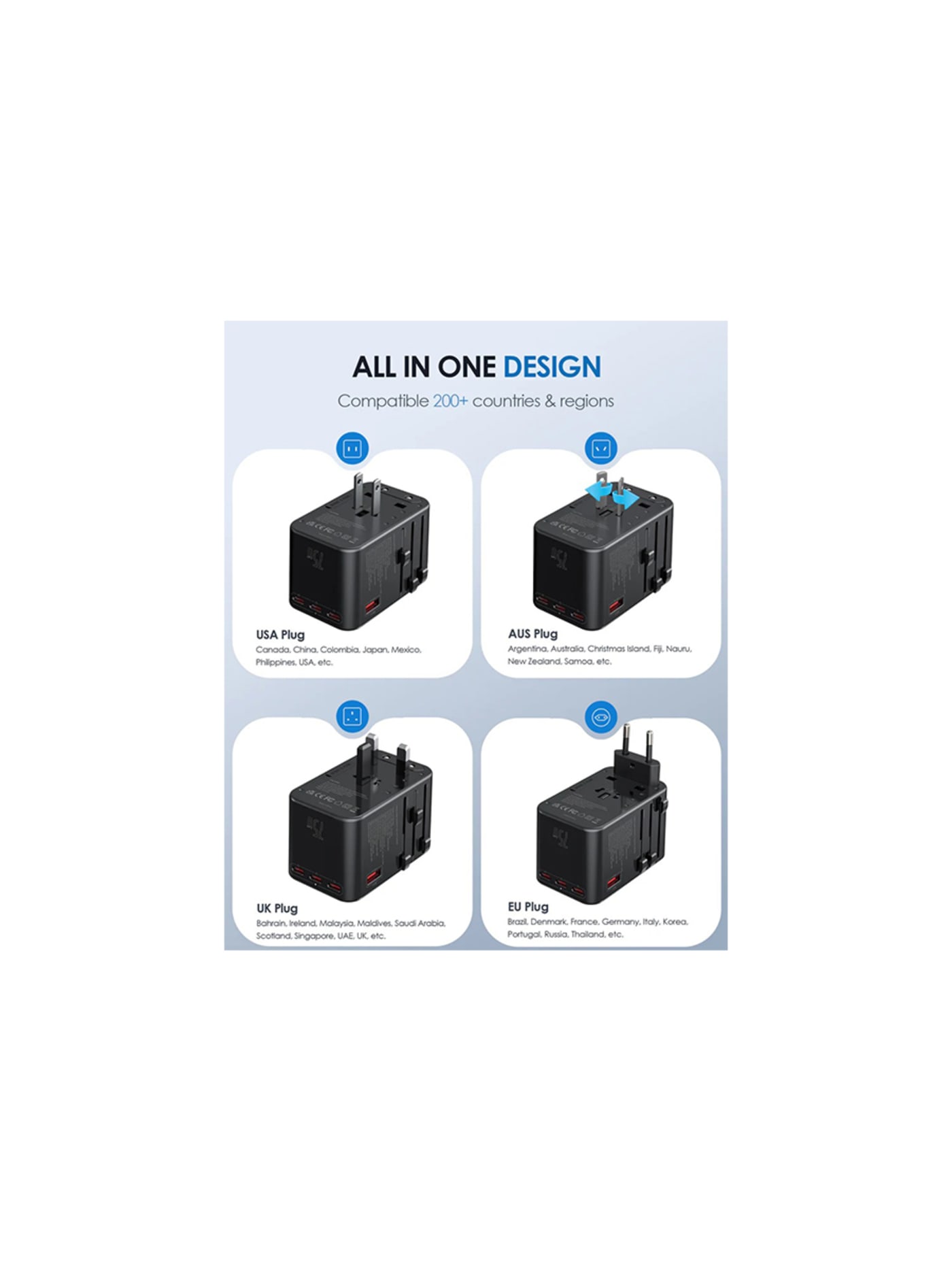
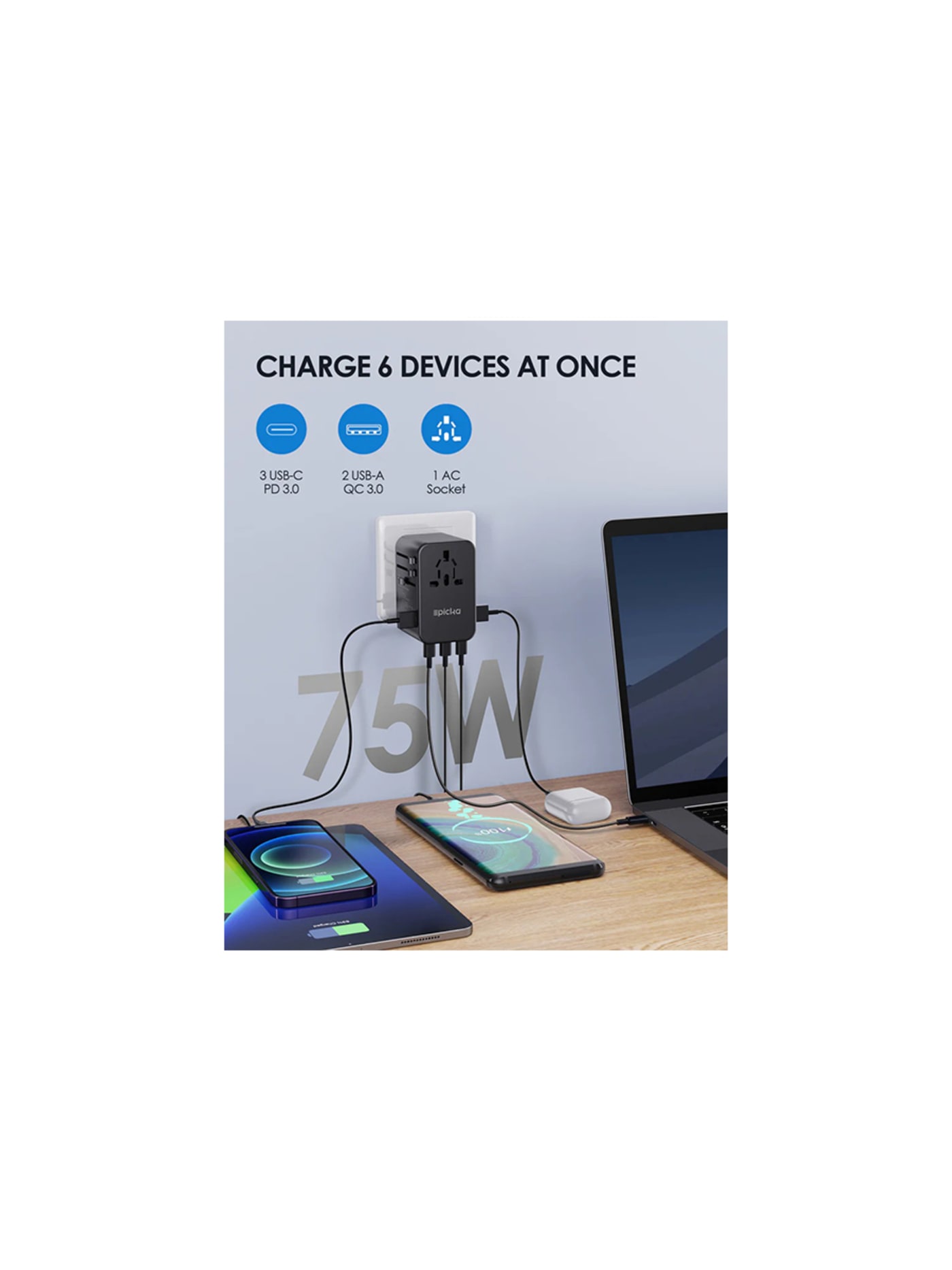

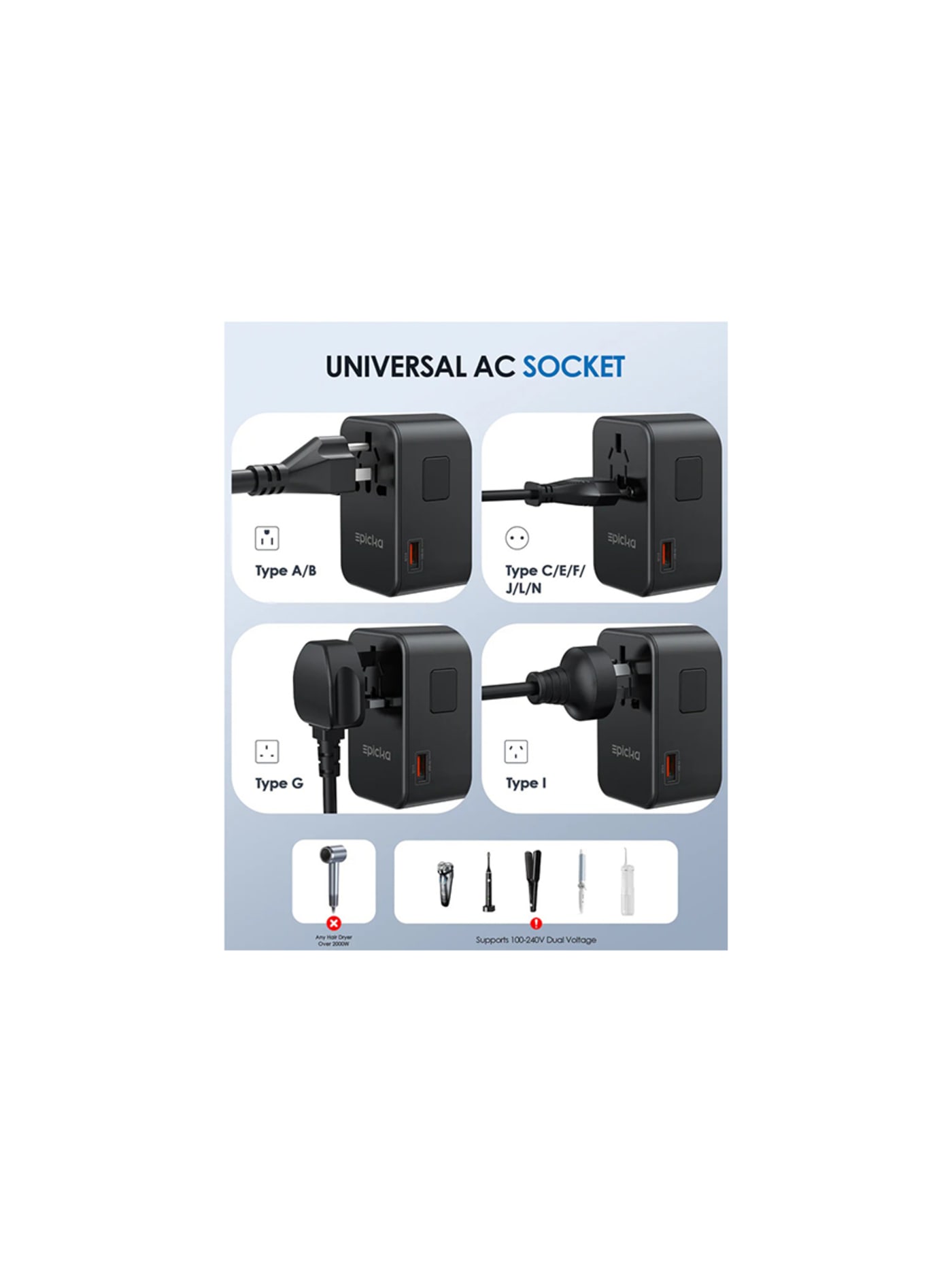
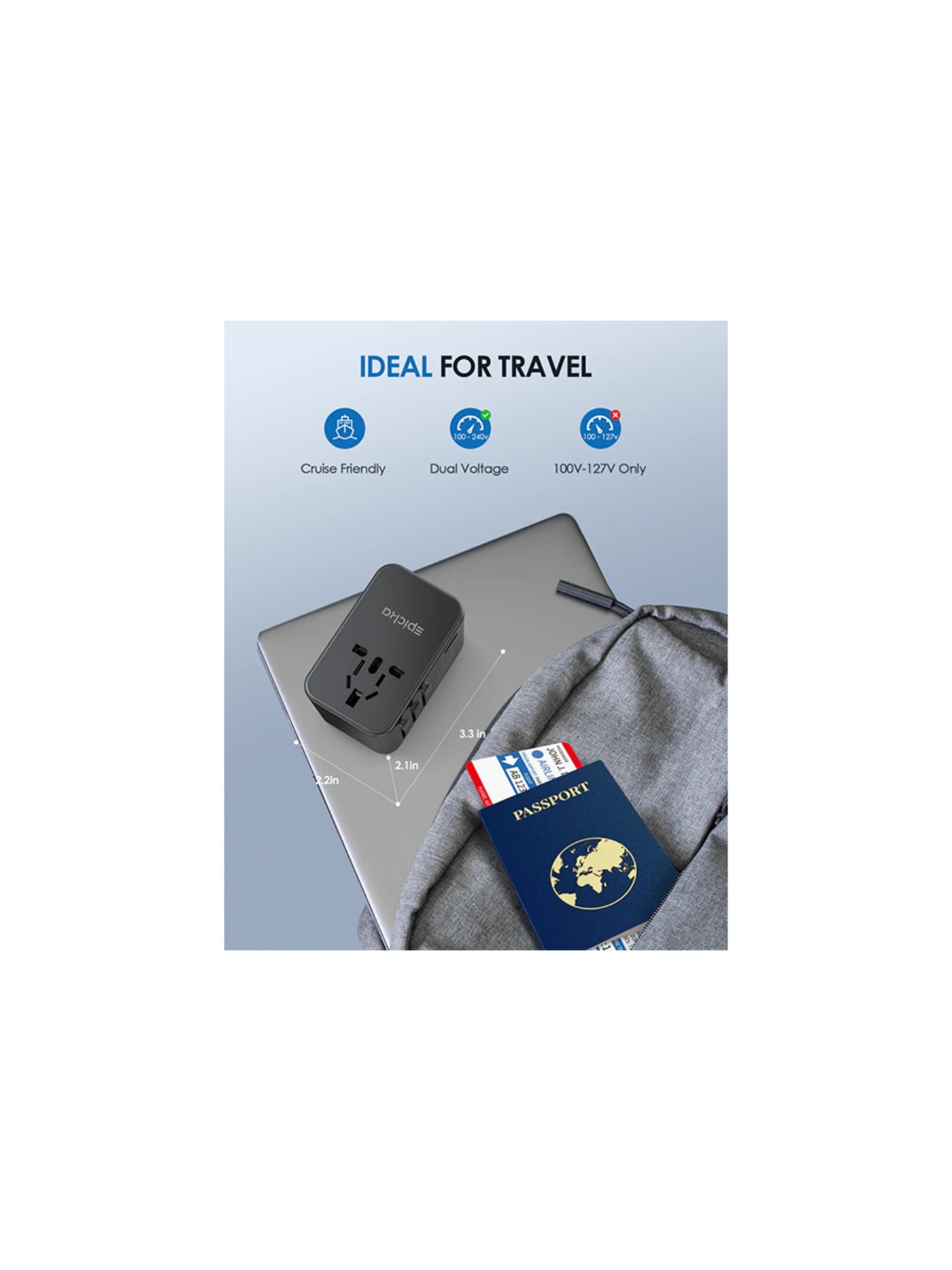

One object instead of a drawer of chargers and a handful of regional adapters. Four plugs slide out to cover most of the world, and enough power runs through it to charge a laptop and a phone at once, so the laptop's own brick can stay home. That saved weight is the whole argument for it over a cheap airport adapter. Two honest limits matter on this kind of trip. It does not convert voltage, so it is for dual-voltage electronics, not hairdryers or straighteners. And universal does not mean everywhere: India and South Africa need their own plug. Within those bounds, it is the single object that keeps everything else on this list running.
Design intent
- The core decision is consolidation through GaN: the more efficient, cooler-running gallium-nitride circuitry shrinks a multi-port fast charger enough to sit inside a travel adapter, so one palm-sized block replaces a separate wall charger and a set of single-country plug adapters.
- The sliding, self-locking plug mechanism keeps a genuinely multi-region tool compact and safe: four regional plugs retract into one body and a lock exposes only the one in use and stops it collapsing mid-charge, solving international coverage without a bag of loose adapters.
Trade-offs
- It adapts plugs but does not convert voltage, so single-voltage appliances such as some hair dryers and shavers cannot be used safely abroad; only dual-voltage devices, which most laptops and phone chargers are, are suitable.
- Coverage is wide but not total, missing the Type D and Type M sockets of India and South Africa, and packing a mains passthrough and six ports makes it chunkier than a bare plug adapter, if far smaller than the separate chargers it replaces.

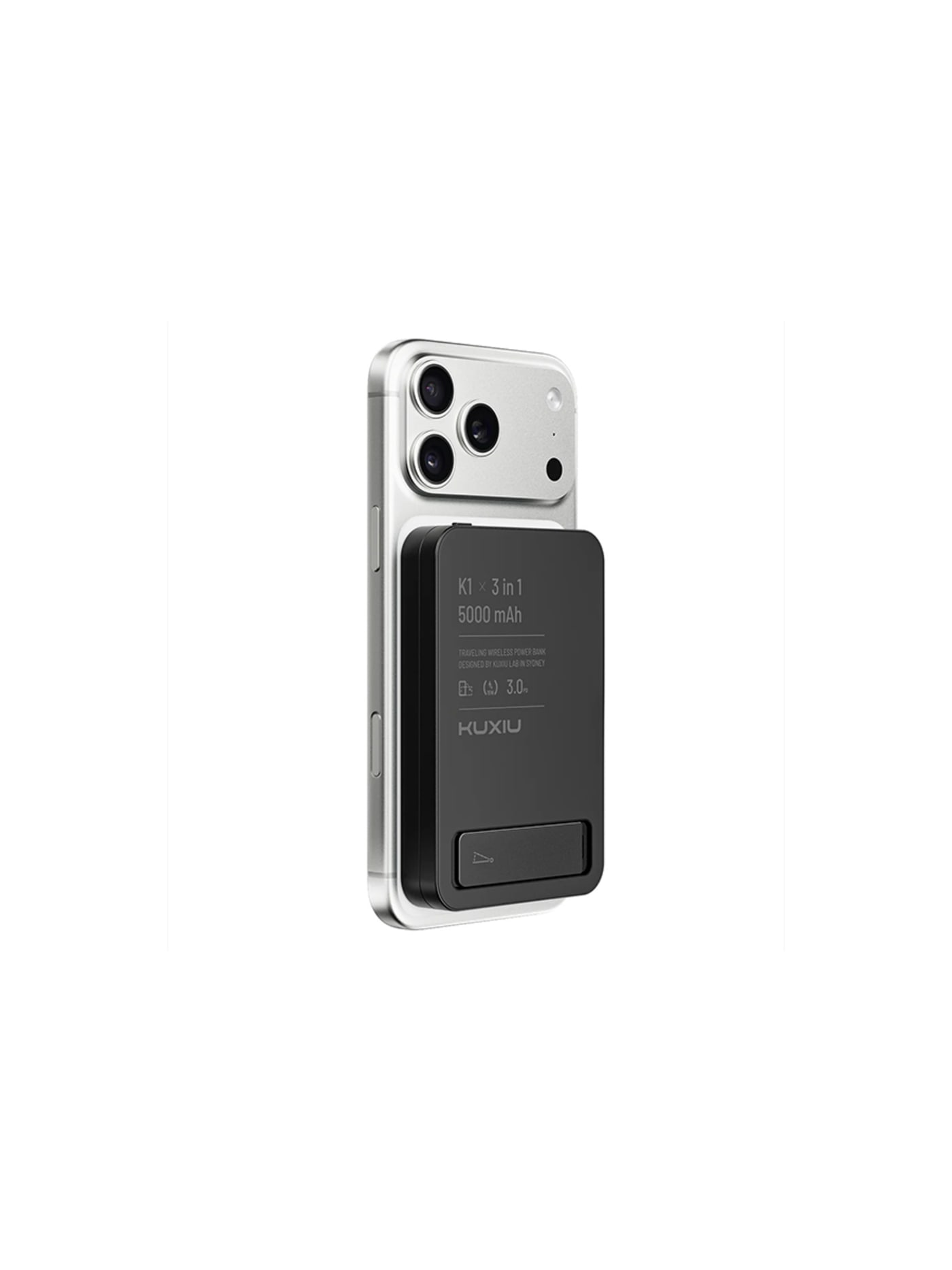
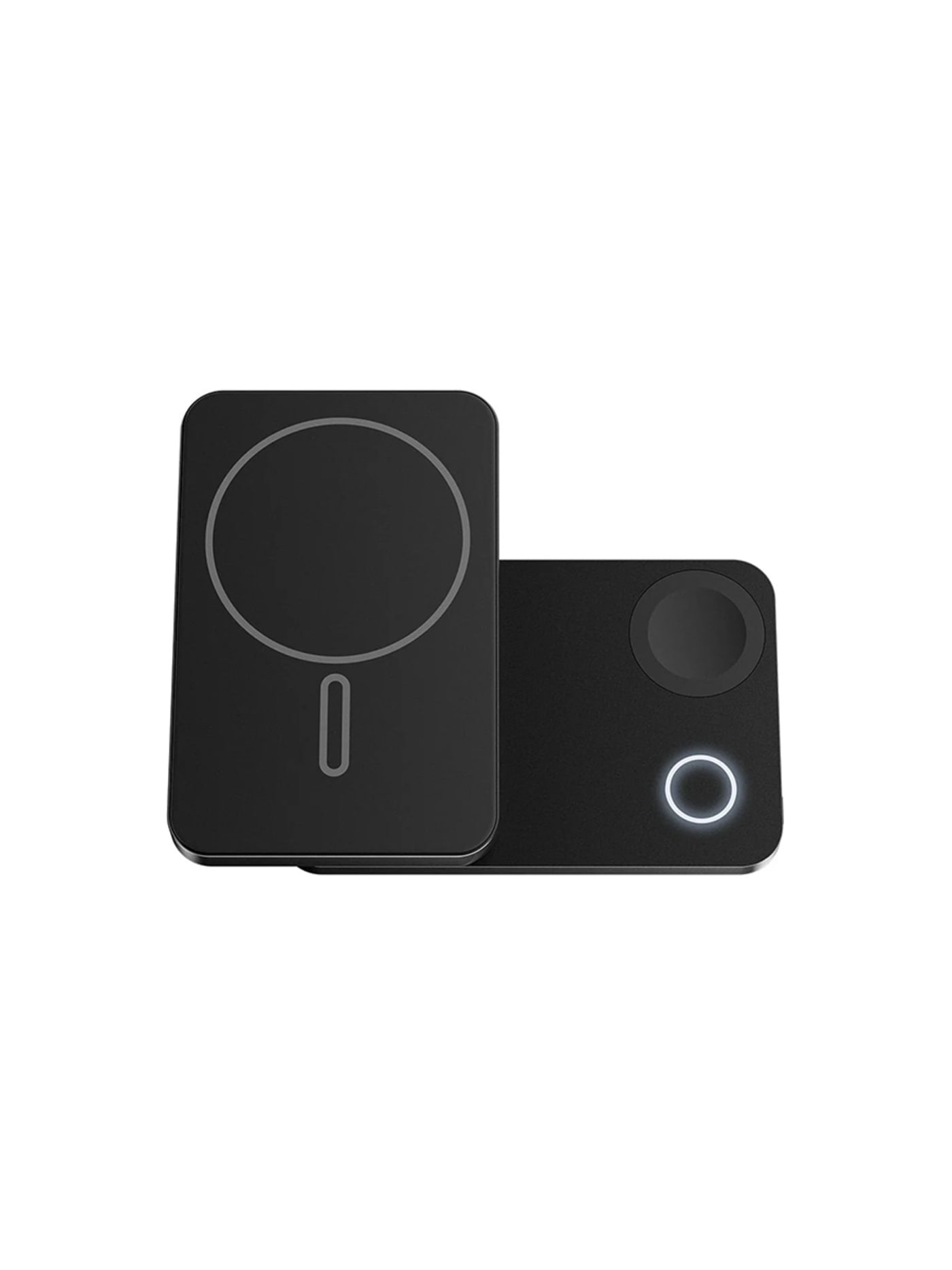
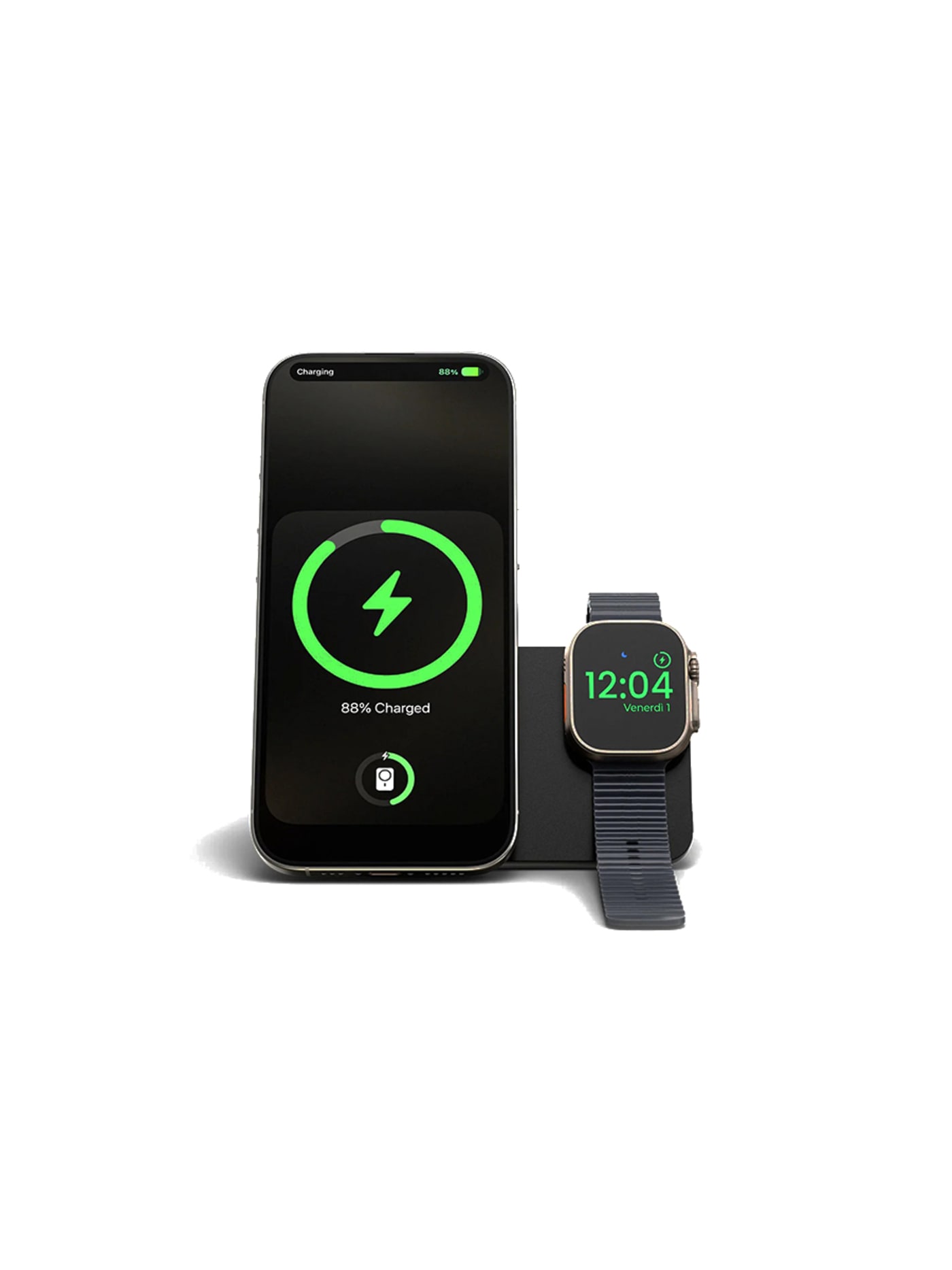
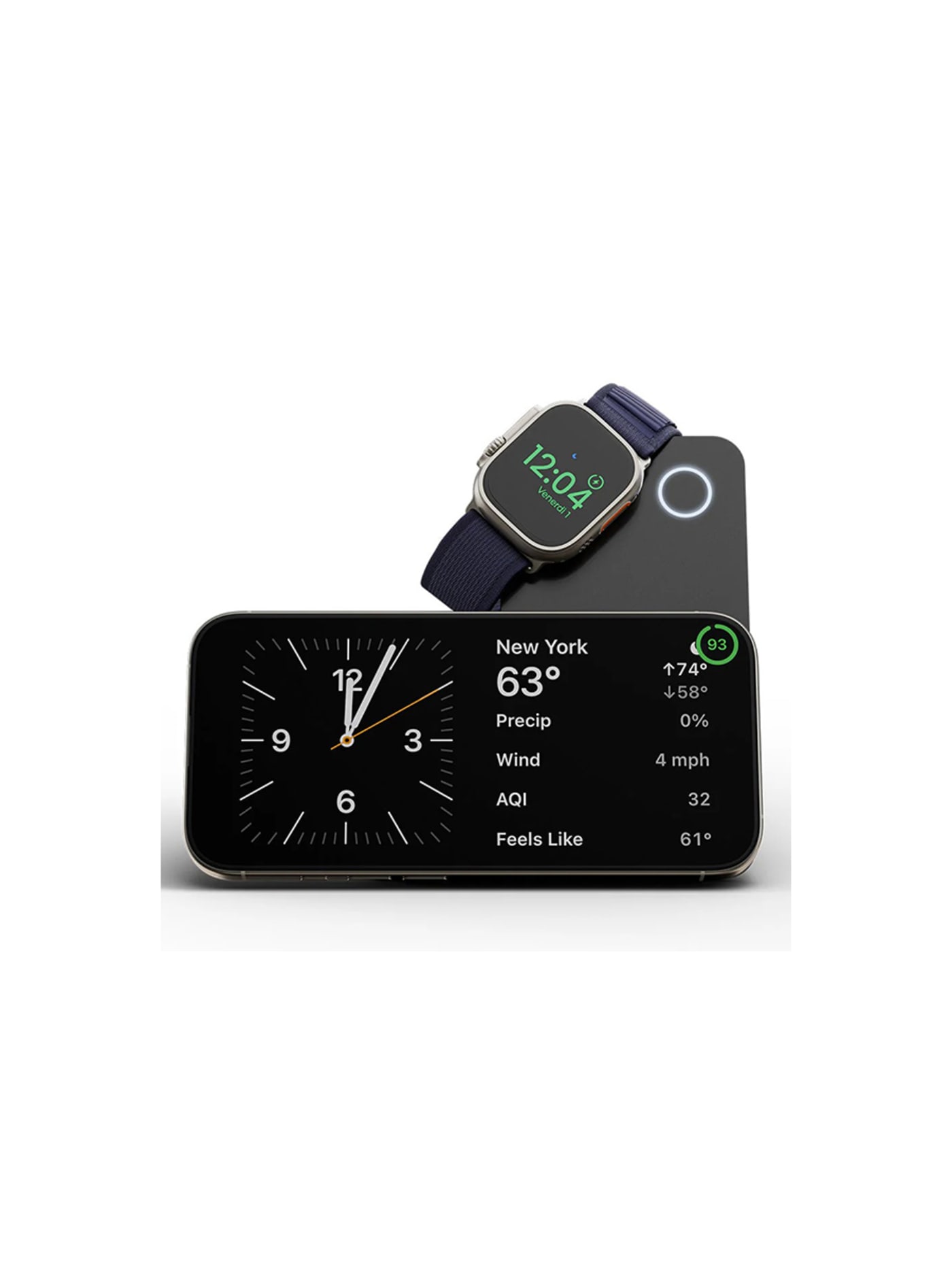

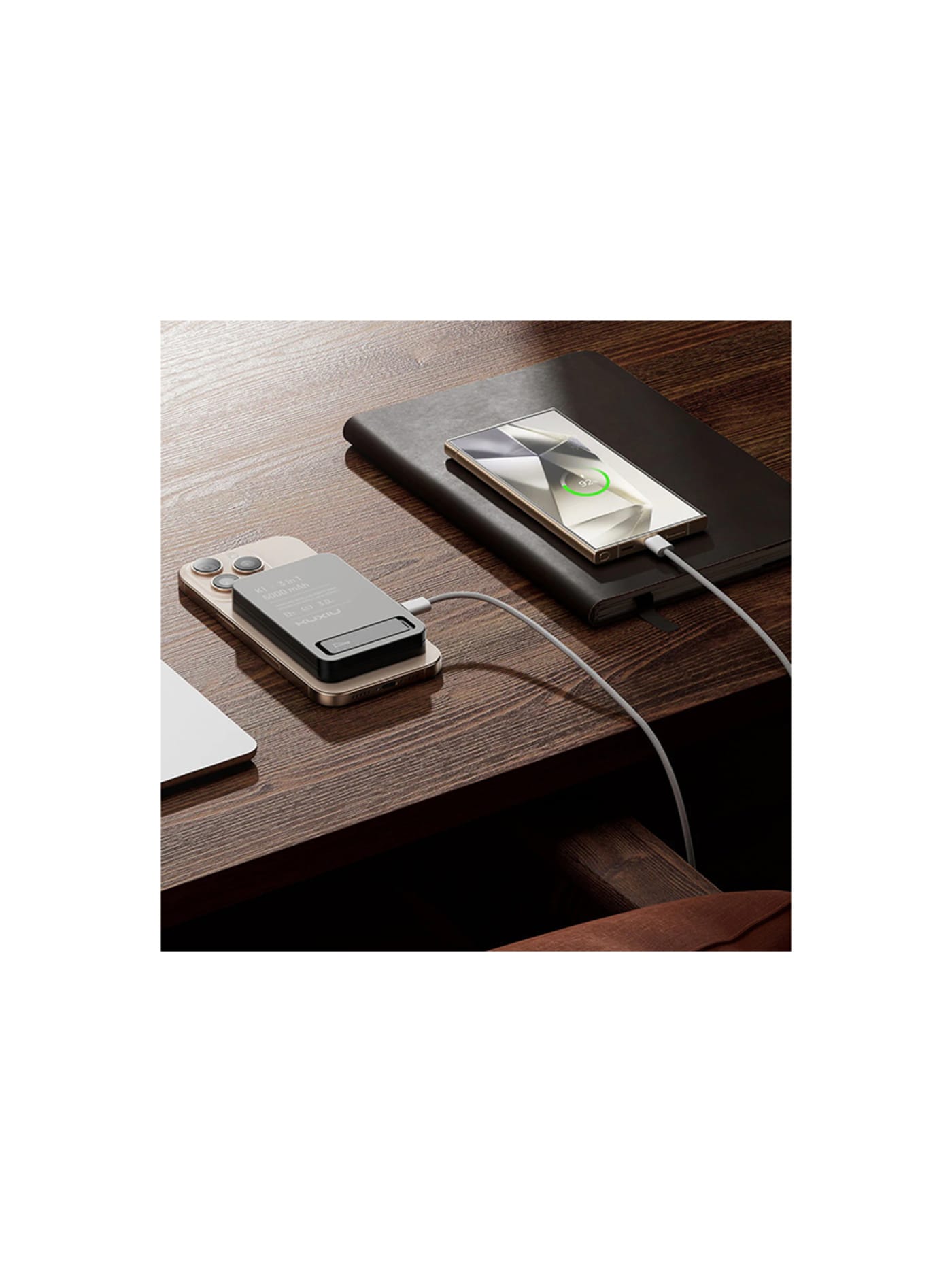

The same consolidation logic as the adapter, aimed at the day rather than the wall socket. It snaps magnetically to the back of a phone and charges it without a cable, then folds out a second pad for a watch or earbuds, so one card-sized object replaces a power bank, a cable and a watch charger. For a traveller carrying an iPhone, an Apple Watch and AirPods as a set, that is three things collapsed into one. The trade is full commitment to that ecosystem, and a modest capacity, roughly a phone and a bit, in exchange for the size. Outside the Apple set it offers little. Inside it, it earns its place by removing two other things from the bag.
Design intent
- The rotating rear panel is the central decision: one mechanism serves as both the second charging surface and a fold-out stand, which is what lets a single object replace a power bank, a watch charger and a propping accessory without growing beyond the footprint of a phone.
- It charges over Qi2 at a genuine 15W using sixteen N52 magnets in Apple's own layout, rather than the weaker generic arrays that throttle to 7.5W and drift off the coil, so the phone stays aligned and charges at full speed even while the bank is carried or held one-handed.
Trade-offs
- It is built entirely for Apple hardware. The magnet layout, the charging profiles and the secondary pad all assume an iPhone, Apple Watch and AirPods, so for anyone outside that set most of the design is inert weight and the bank offers no reason to choose it over a plain USB-C battery.
- The slim form caps capacity at around 1.2 phone charges, and wireless transfer loses further energy as heat, so the usable top-up falls short of the headline figure. The 10000mAh version recovers the capacity only by becoming thicker and heavier, giving up the pocketability that is the original's whole argument.
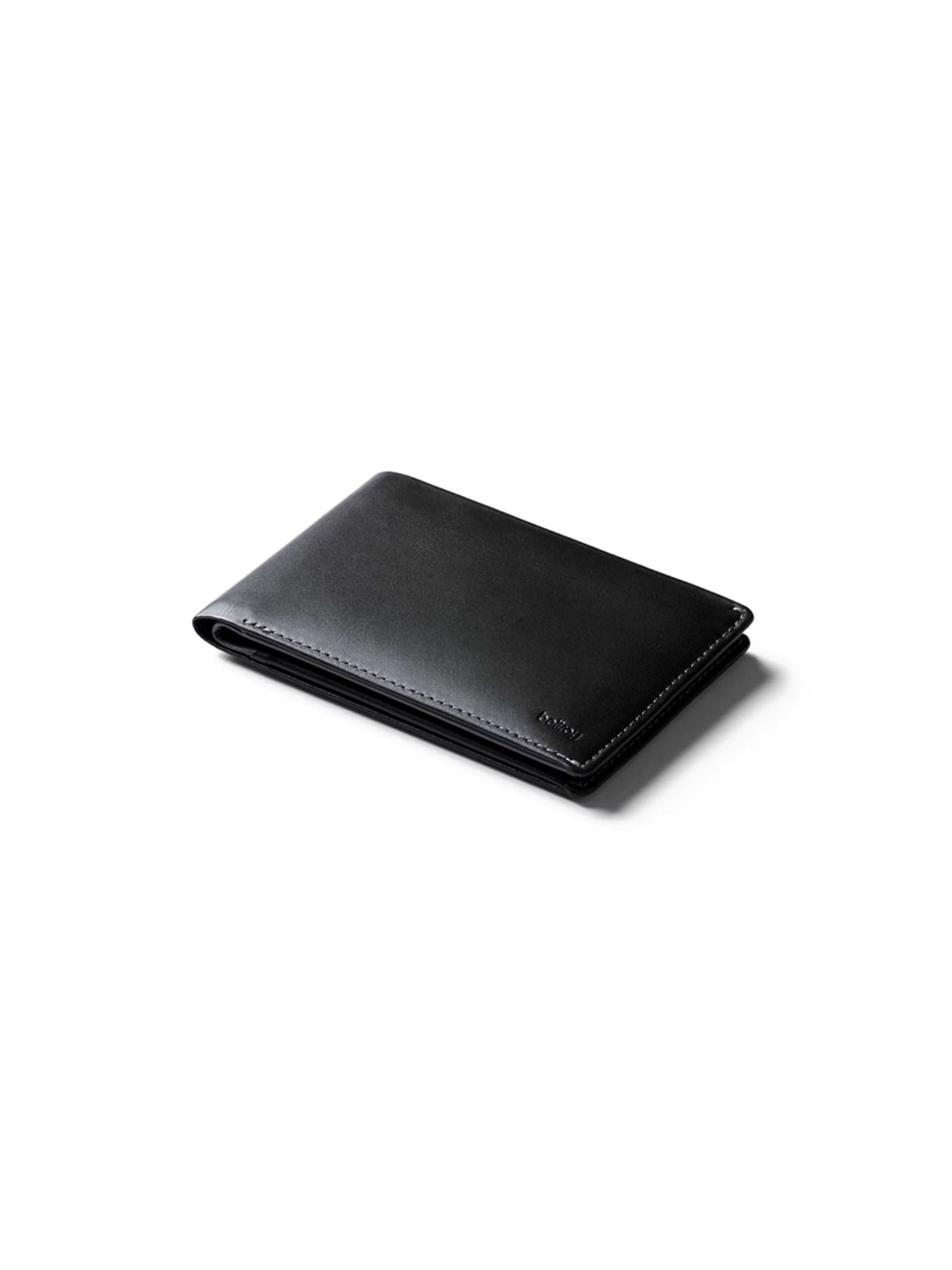


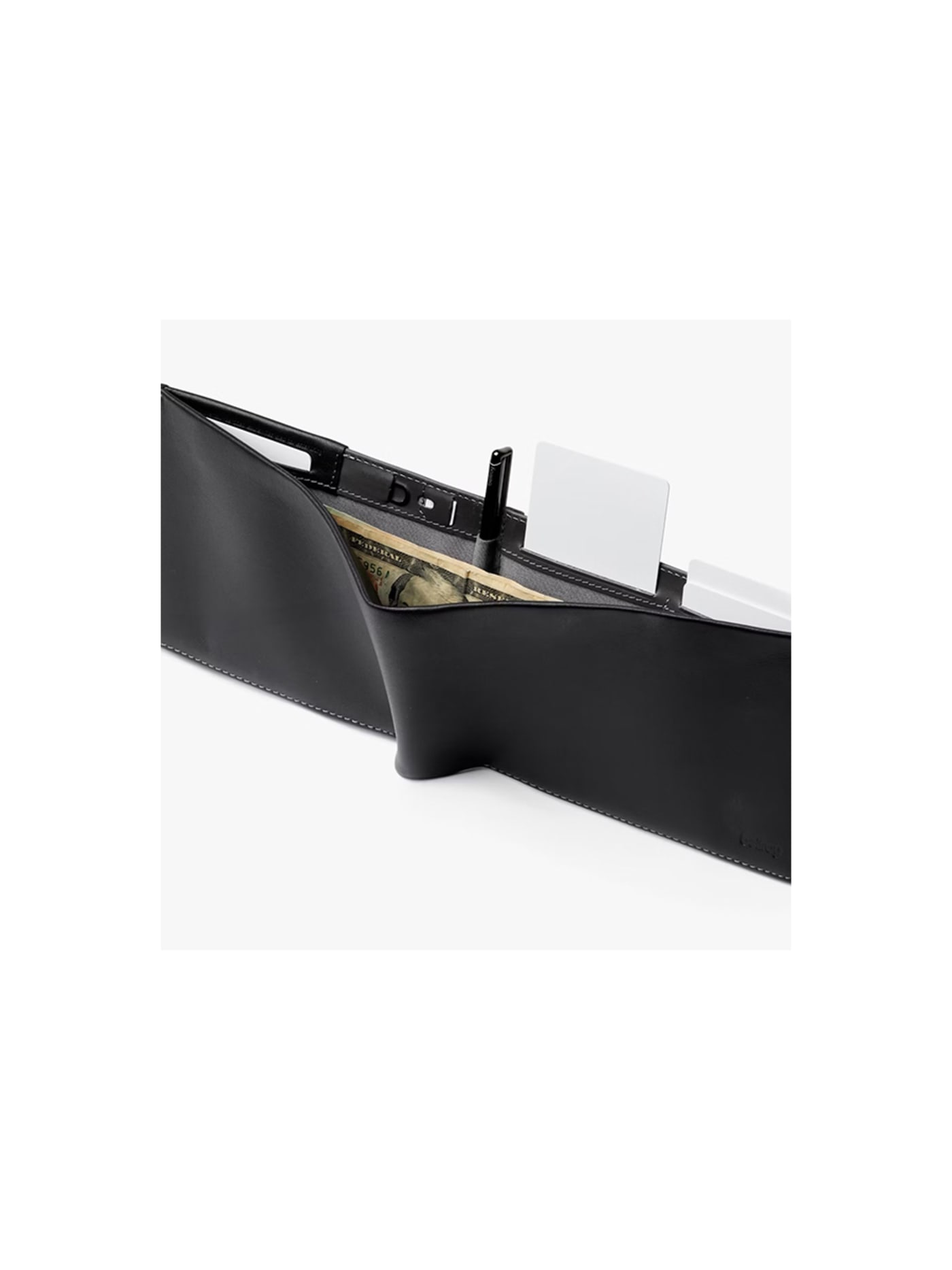
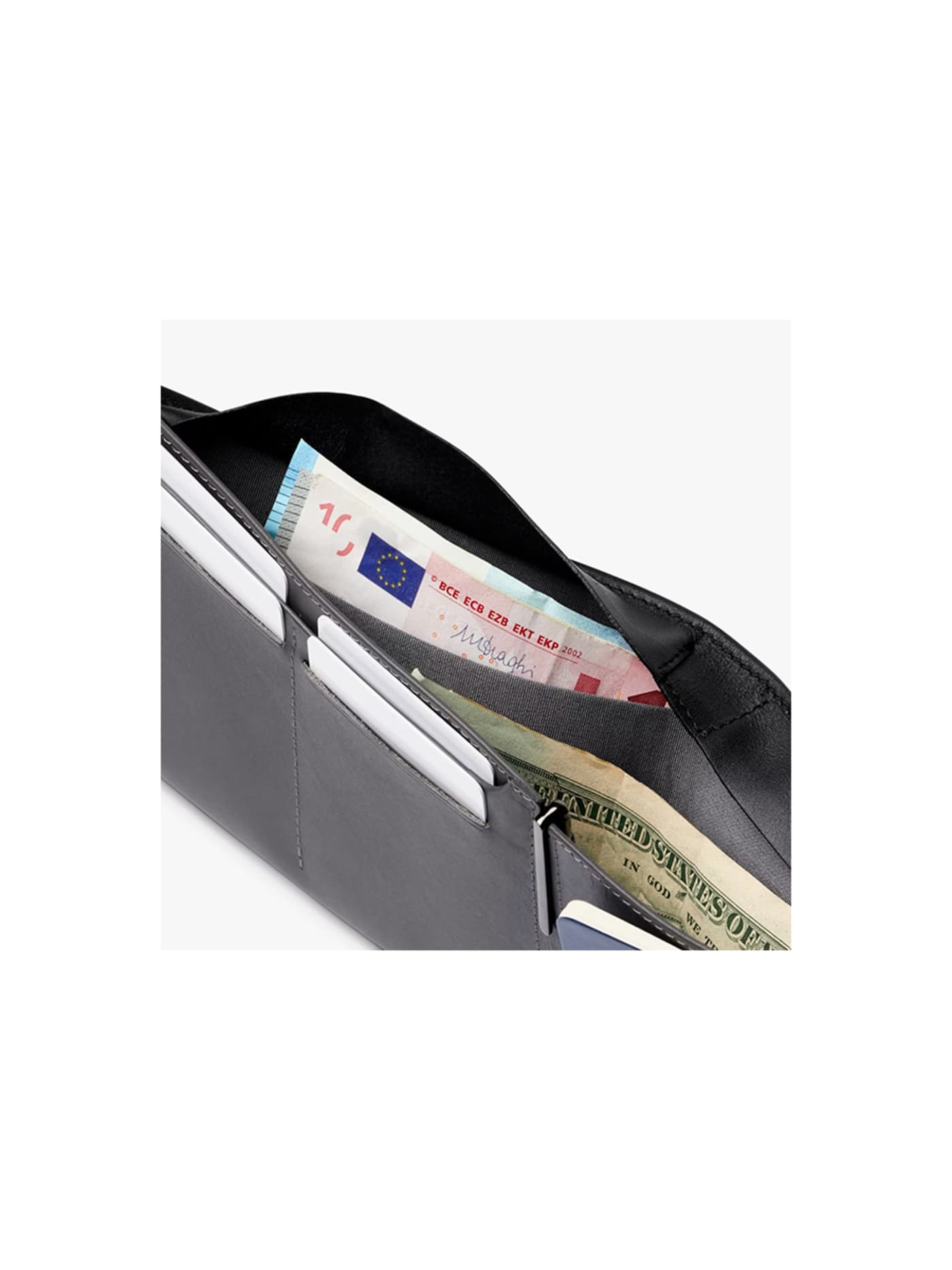
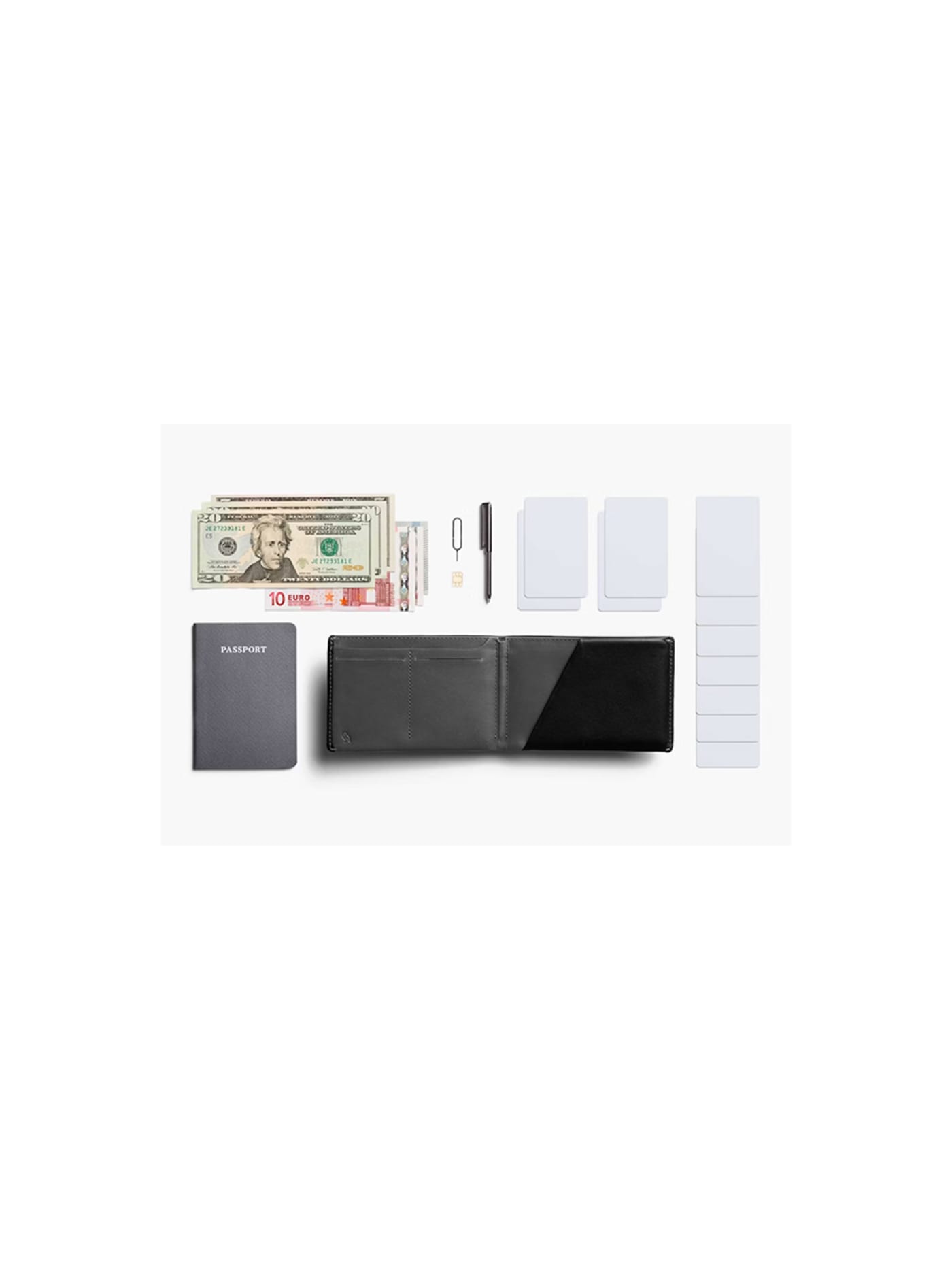
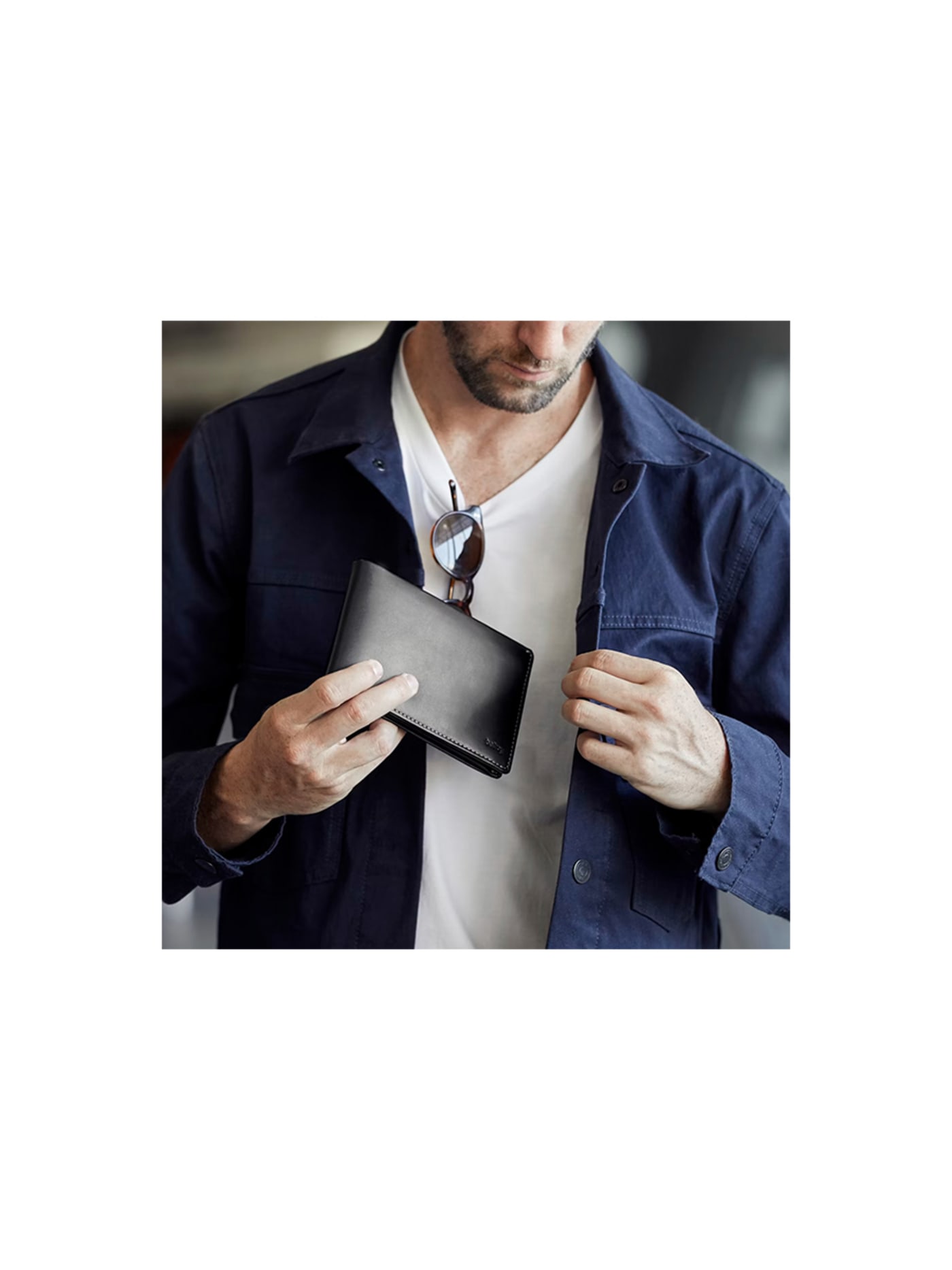
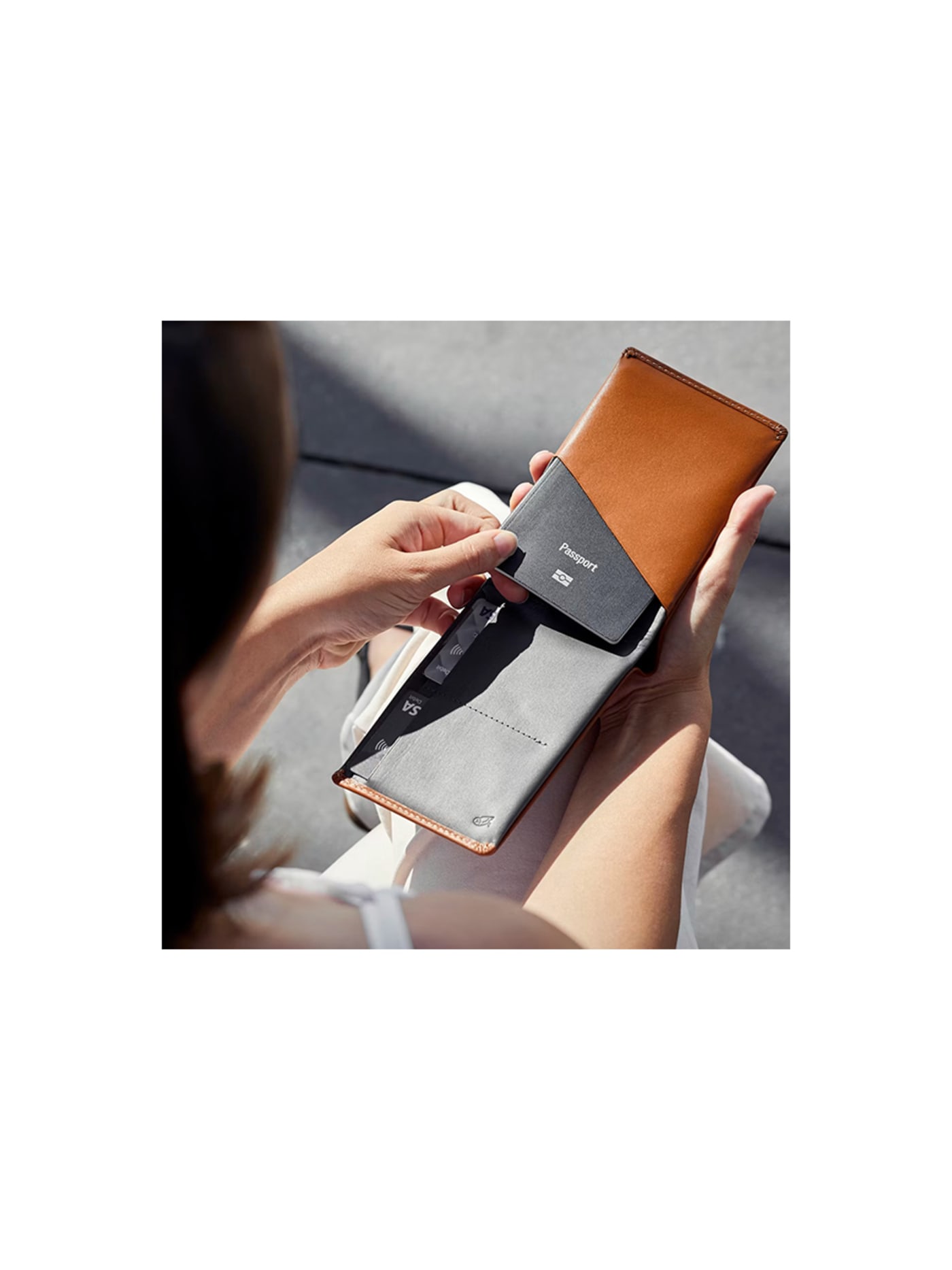
The scramble at the gate, solved by one slim object. It is sized around a passport and holds everything you present at a border: the passport, cards, two currencies kept apart, a little hidden cash, and a tiny pen tucked in the fold for the landing card you always end up filling in while queuing. Keeping travel documents in one deliberate place, separate from your everyday wallet, is the quiet discipline here. You reach for one thing at every checkpoint and always know where it is. The trade is that it is a second wallet to carry, worth it only while travelling. On the move, that single dedicated home for the documents is worth more than the space it takes.
Design intent
- The whole wallet is sized and organised around the passport and the moment you use it: a dedicated passport pocket, two currency sections, RFID shielding and an included pen consolidate everything you present at a gate or border into one slim object, so nothing is loose in a bag when you need it.
- Anticipating specific travel frictions is the design logic: the Micro Pen answers the landing-card queue, the twin note sections keep two currencies separate, and the AirTag slot addresses the particular fear of losing the one item you cannot travel without.
Trade-offs
- Designed around a passport, it is larger than an everyday wallet and does not sit comfortably in a trouser pocket, so it is a travel-specific object carried in a jacket or bag rather than a daily carry.
- The thin leather flap over the hidden cash section can lift and does not secure as firmly as on Bellroy's shorter wallets, and the passport pocket holds only one, so couples and families need one each.
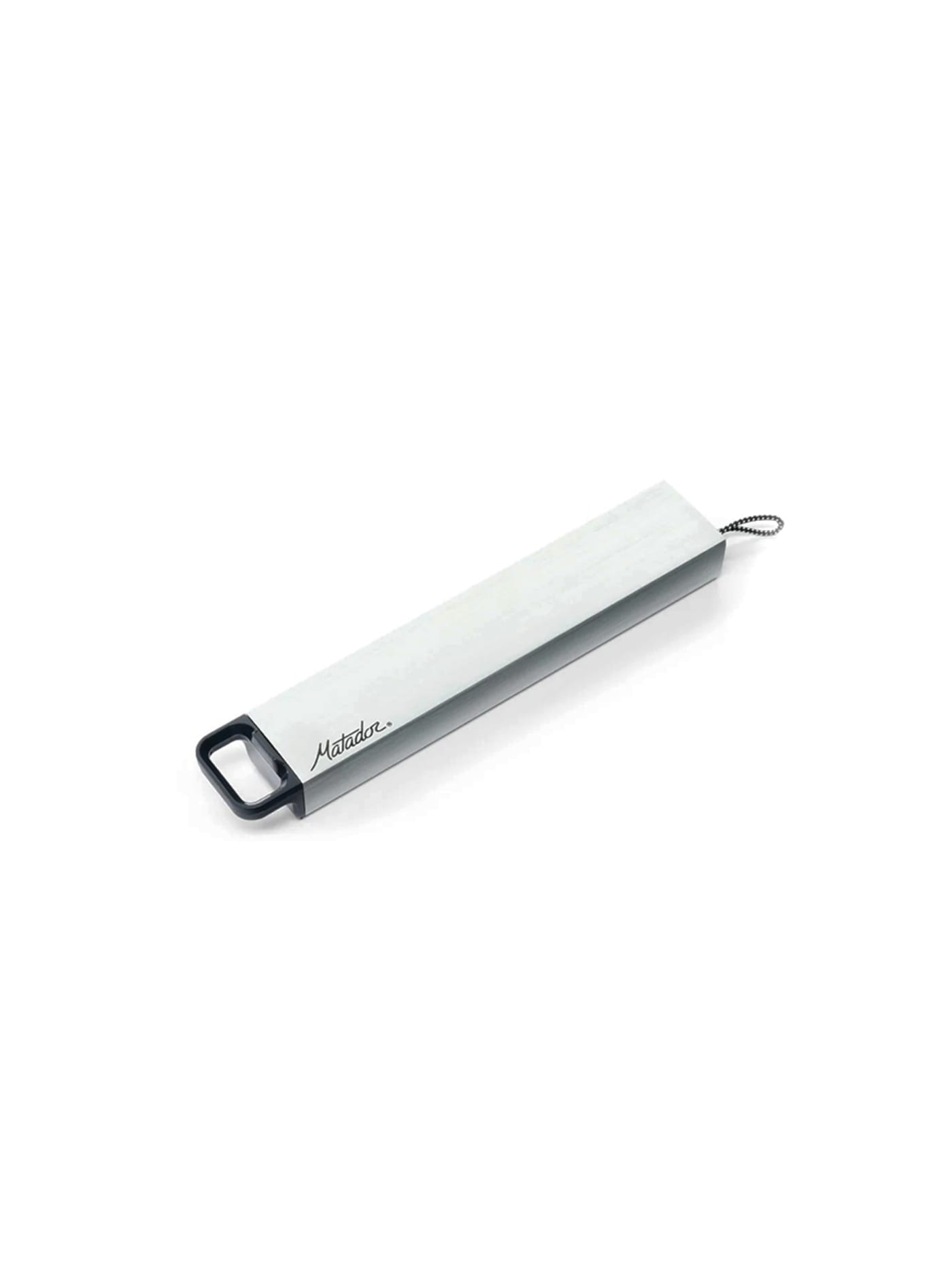
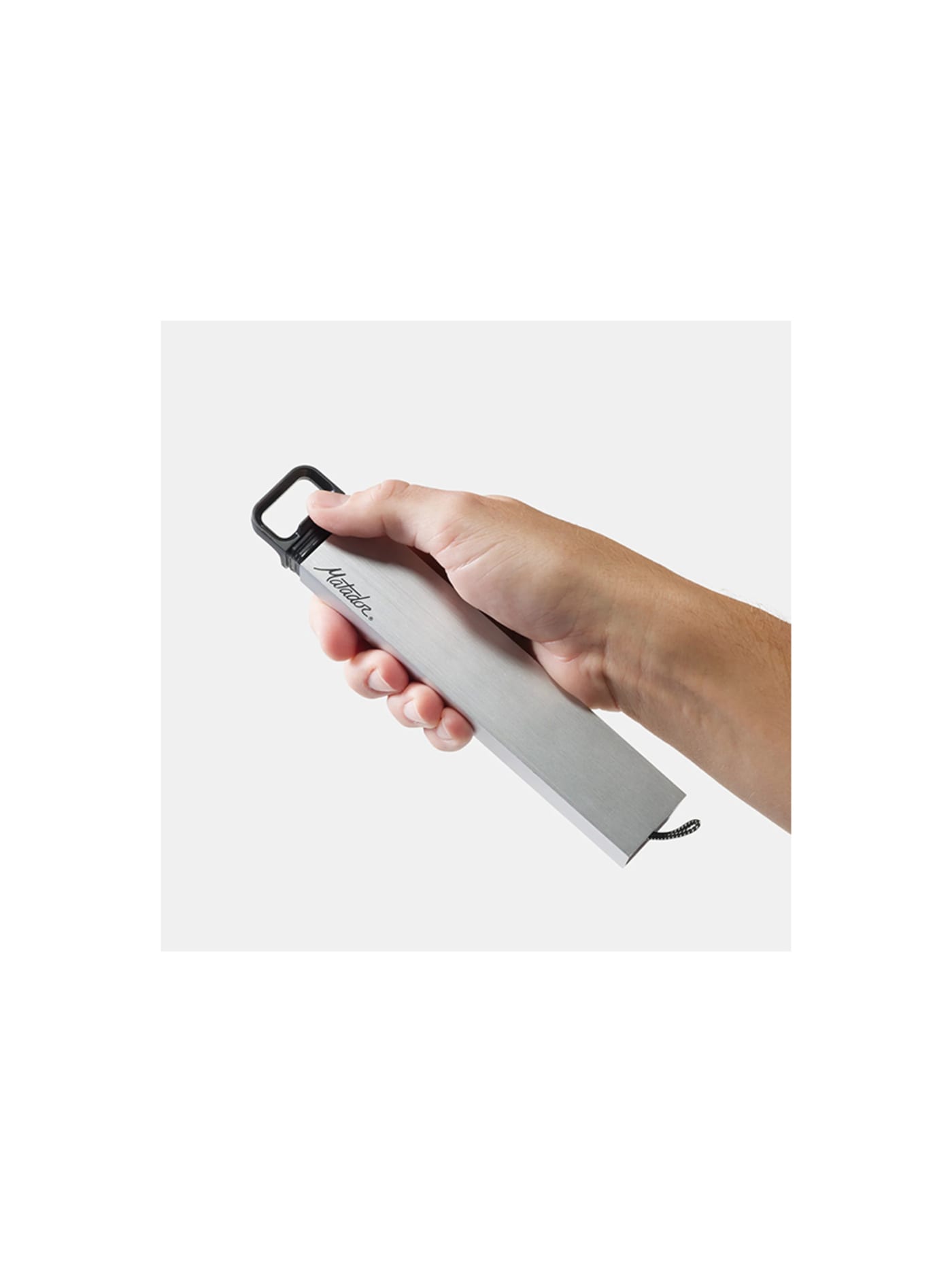
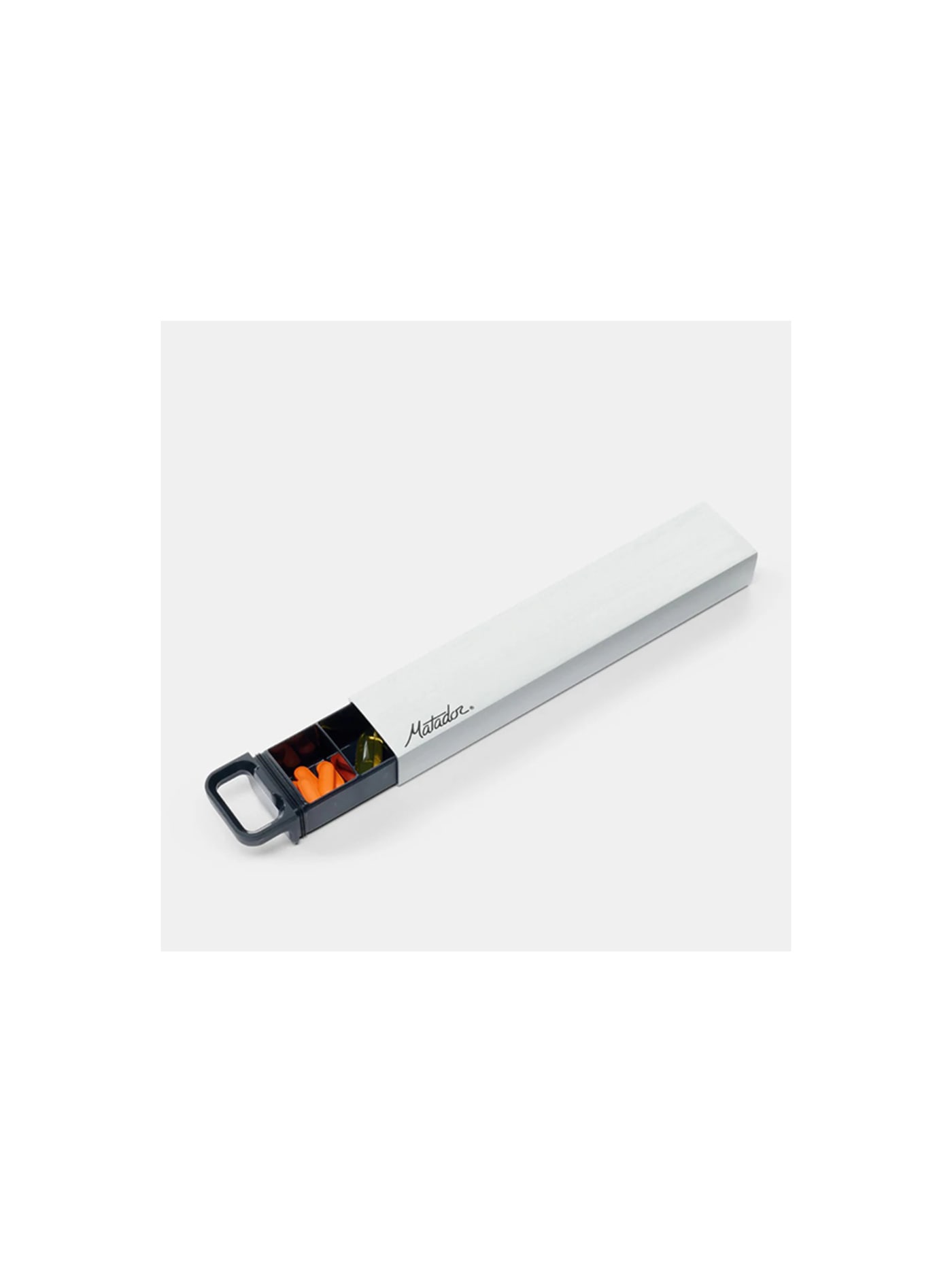
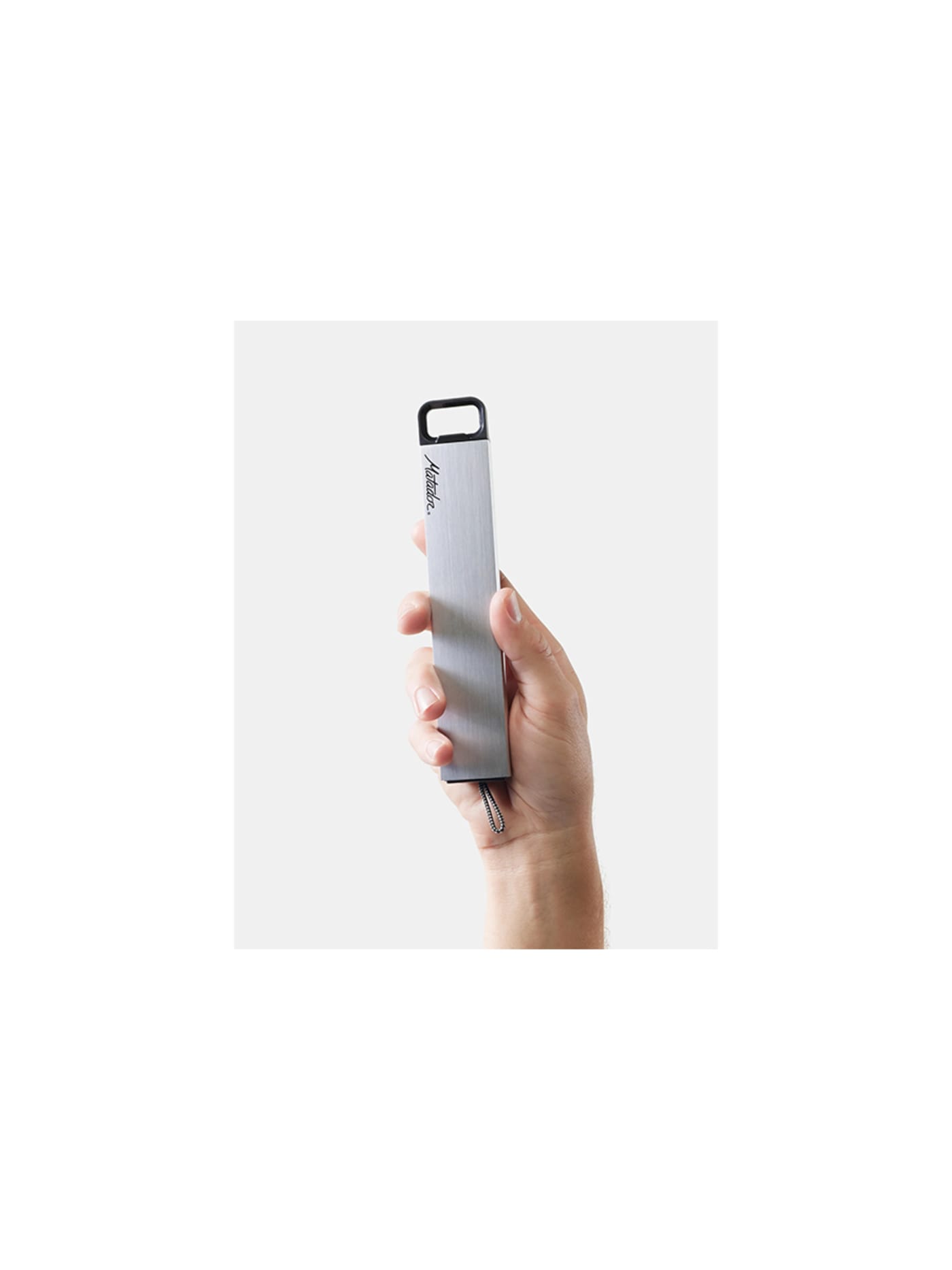
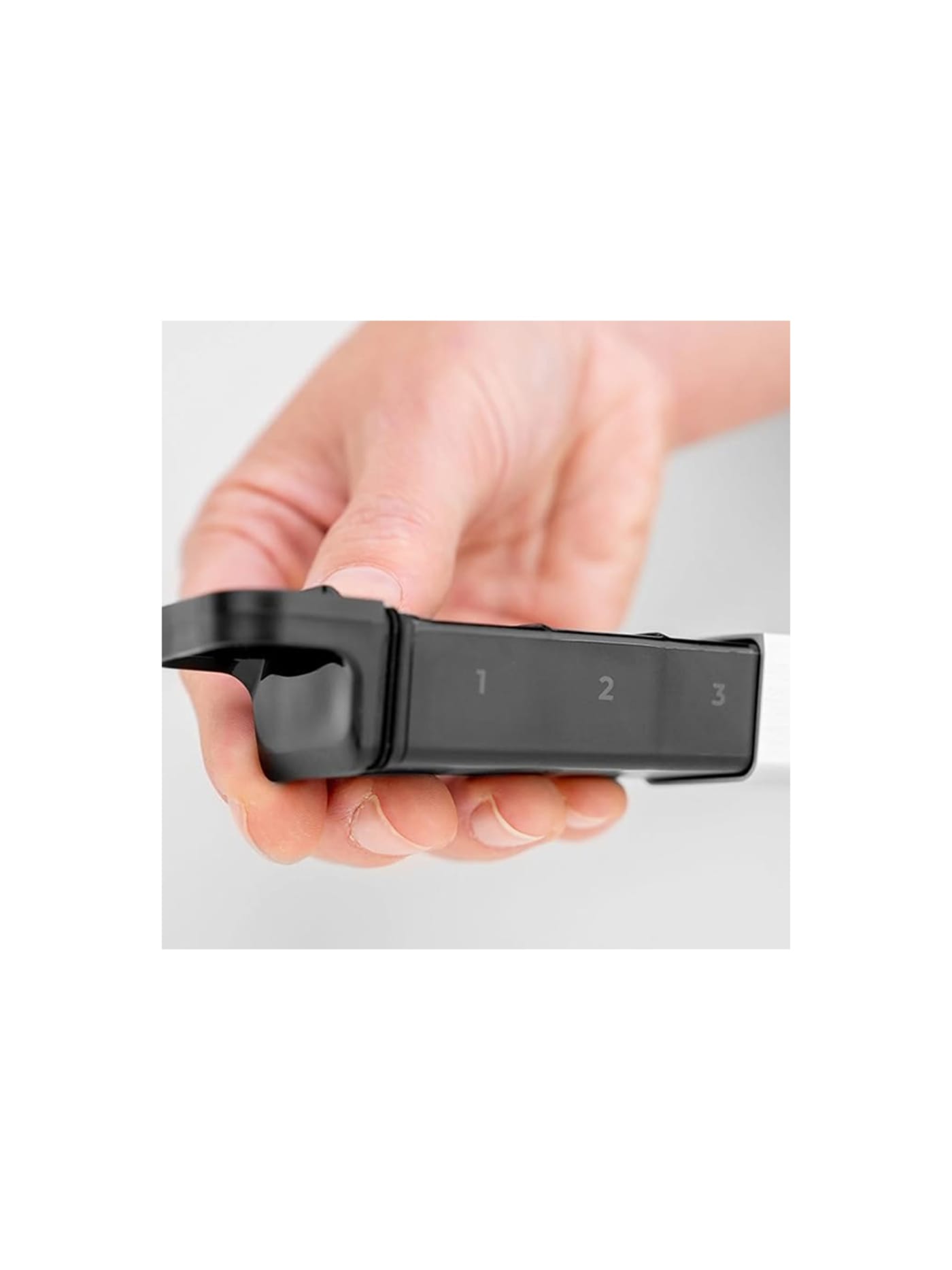
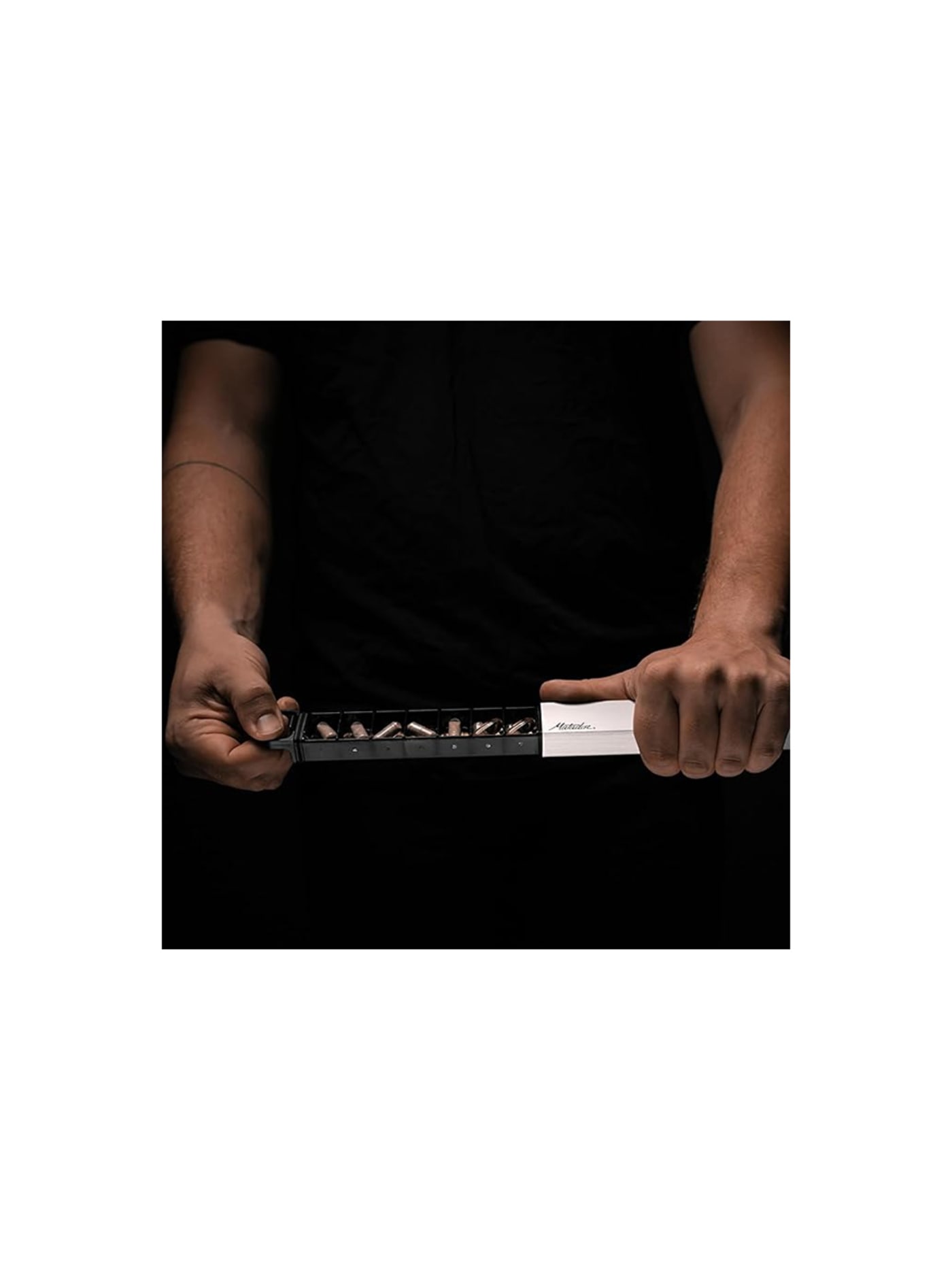
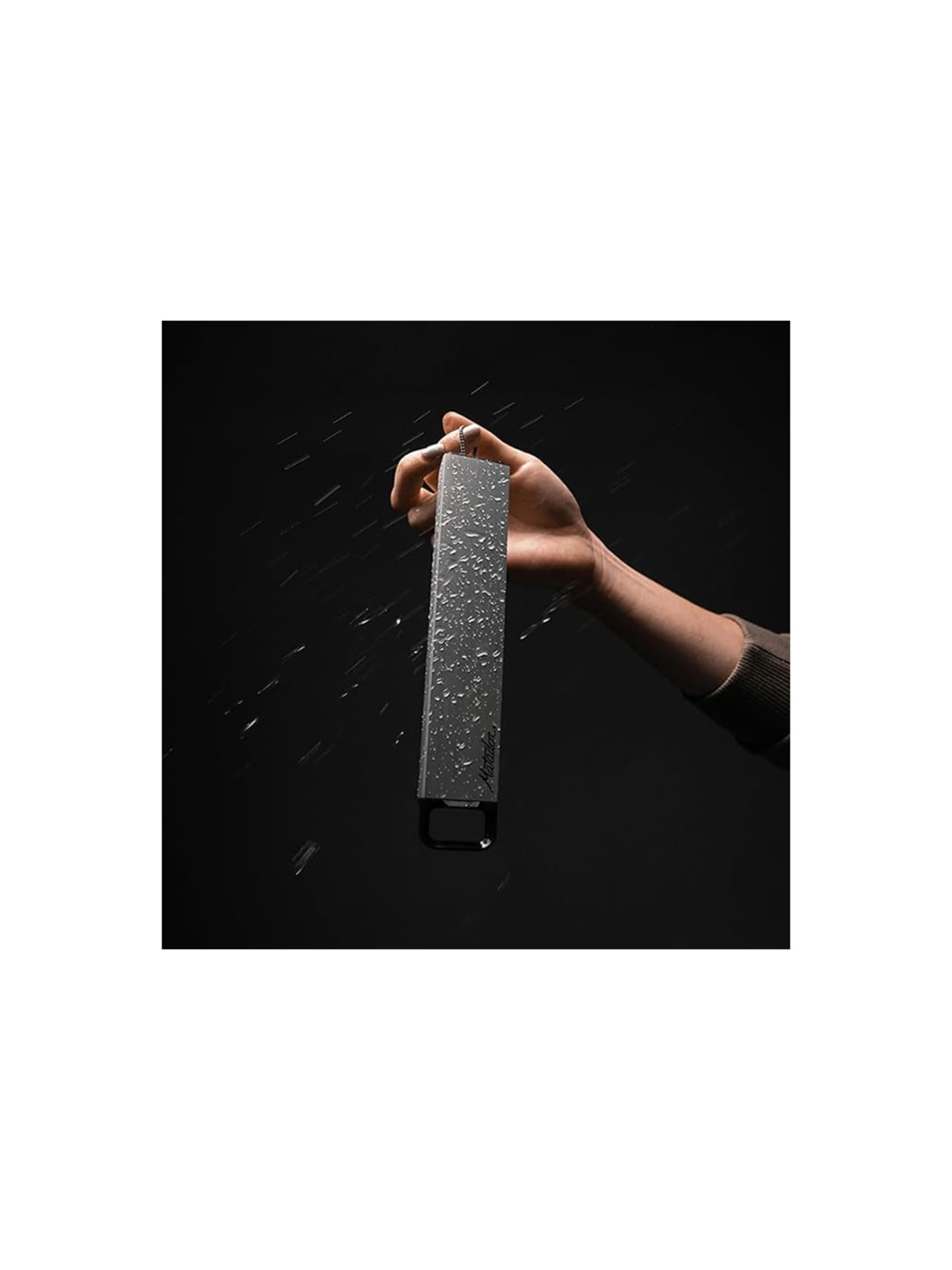
Medication is the thing you cannot buy your way out of forgetting at two in the morning in a strange city, which is why it earns a fixed place in the core. A crushproof anodised shell and a sealed lid mean a week of doses survives being thrown in a pack, rained on and knocked about, the exact ways a chemist's plastic organiser splits open and spills. Seven numbered compartments keep the days straight. It is heavier and dearer than the plastic box it replaces, which is the trade for it actually protecting what is inside. For a lighter, cheaper everyday alternative, the Muji PP Pill Case does the sorting without the waterproofing, splitting into single days you can pocket.
Design intent
- The defining decision is to treat a week of pills as gear worth protecting: a crush-proof anodised aluminium shell with silicone seals and an IPX4 rating stops the case being flattened, soaked or knocked open in a pack, the failures that plague the drugstore plastic box it replaces.
- Keeping the familiar seven-day logic inside a sealed cylinder is a neat resolution: a numbered sliding insert holds one day per slot, the canister presses or pulls open at the end, and a paracord loop clips it to a bag, so protection and simple organisation share one pocket-sized tube.
Trade-offs
- The compartments are sized for a simple daily regimen of a few pills; complex routines or large tablets quickly outgrow them, so it is for supplements and light medication rather than a full pharmacy.
- The tough opaque shell that protects the contents also hides them, so there is no glance-check of what remains, and it is rated splash-proof rather than submersible, at a price well above a plastic organiser.
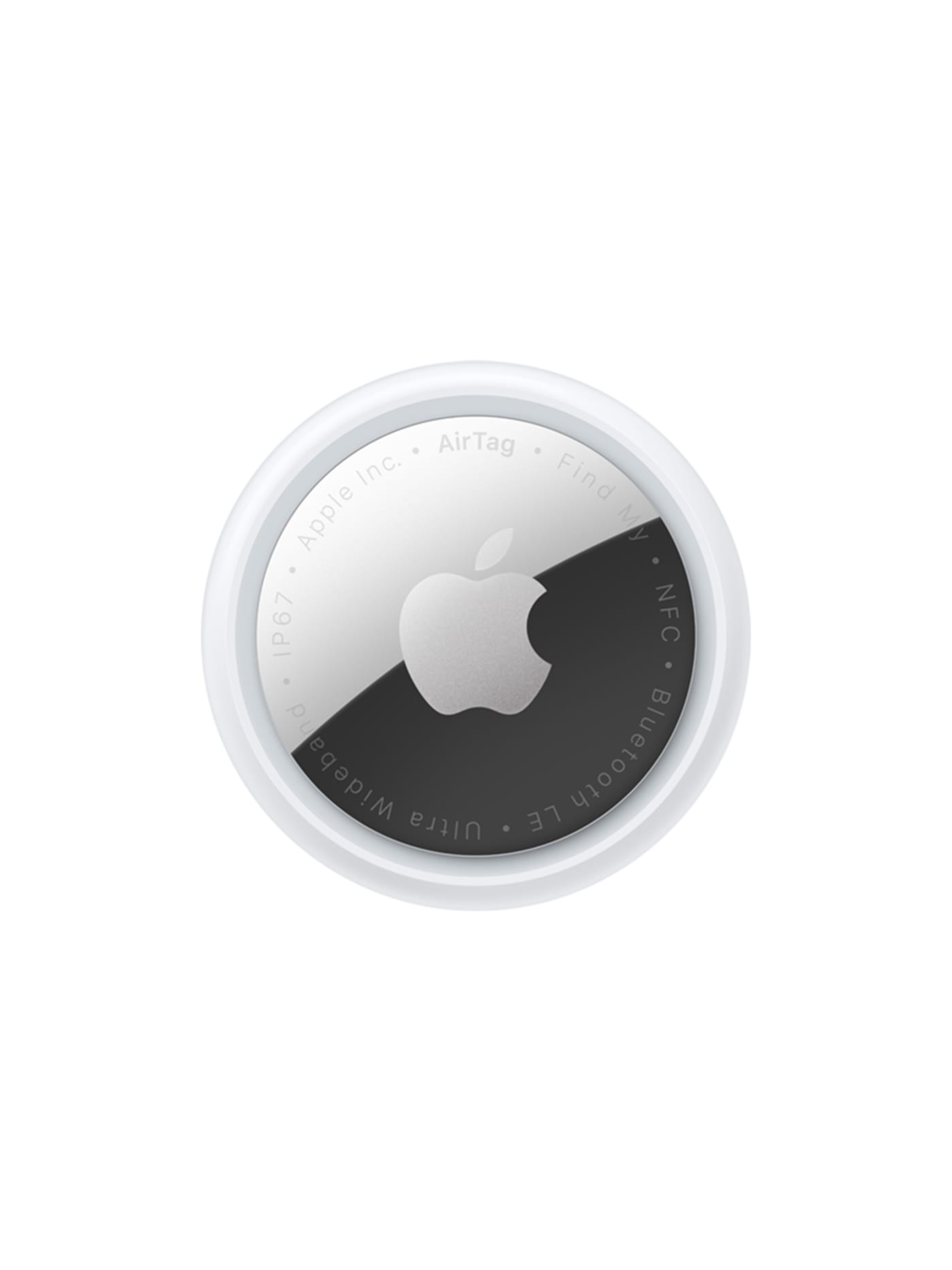
When the whole trip is in one bag, knowing where that bag is removes a low, constant hum of worry, and this is the smallest object that does it. A coin-sized disc that does almost nothing itself and borrows the work from the hundreds of millions of Apple devices already in the world, which is why it can be so small. Dropped in the bag, it turns "where is my luggage" from a question into a glance. The trade is the ecosystem: it is only useful to Apple users, and it is a tracker, not a lock. It tells you where a thing is; it does not stop it walking off. For its size and price, few objects earn their space more clearly.
Design intent
- Locating intelligence lives in the surrounding Find My network rather than in the tag, which is what keeps the AirTag passive, cheap and able to run a year or more on a coin cell.
- The battery is user-replaceable without tools, an honest decision in a category where most rivals are sealed and discarded when they die.
Trade-offs
- Its usefulness is entirely contingent on Apple's ecosystem. Away from iPhones it is an inert disc, with no GPS or cellular of its own.
- It locates the object it is attached to, not itself: drop a bare AirTag and its small, featureless body is hard to find by hand.
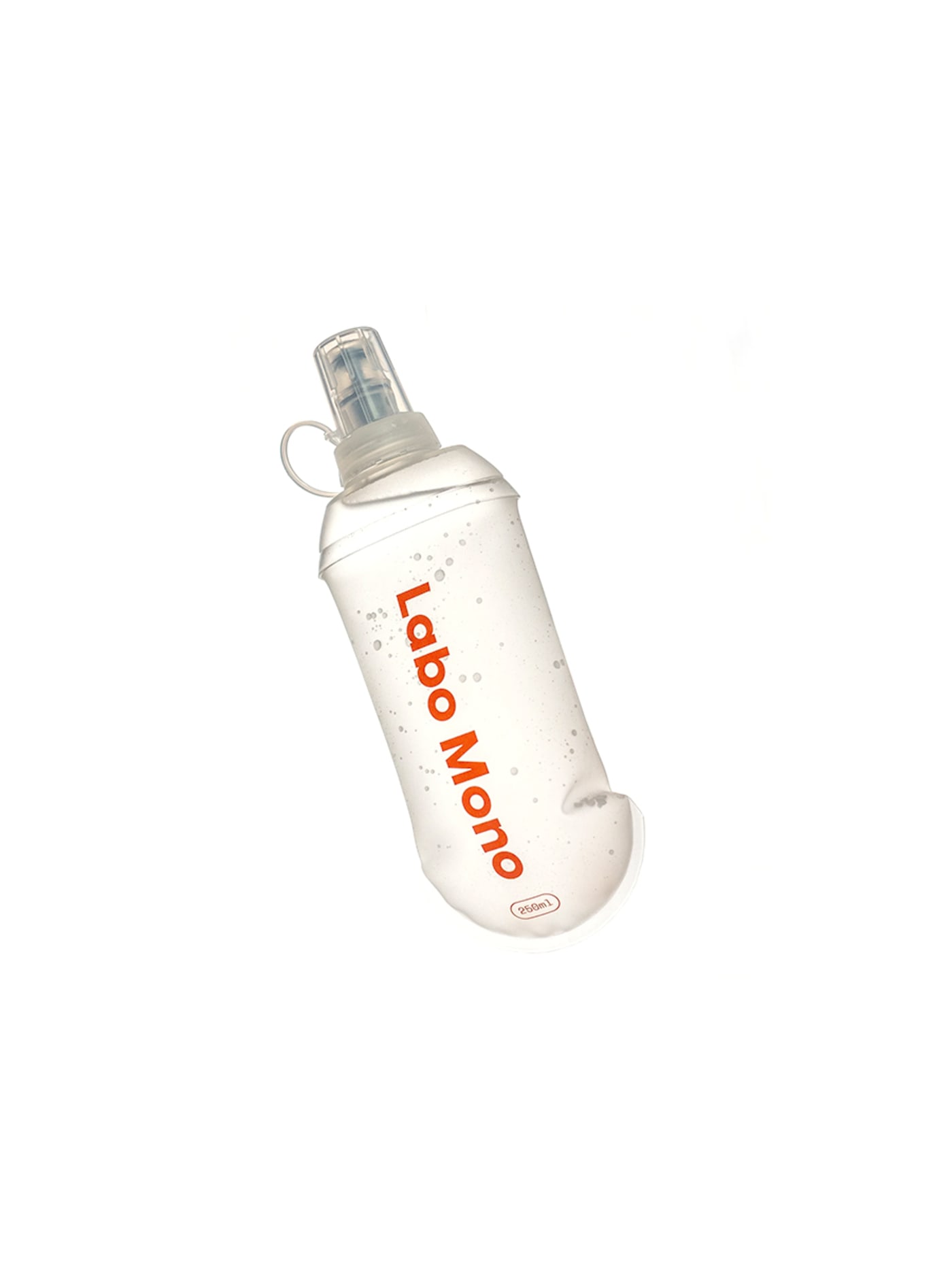
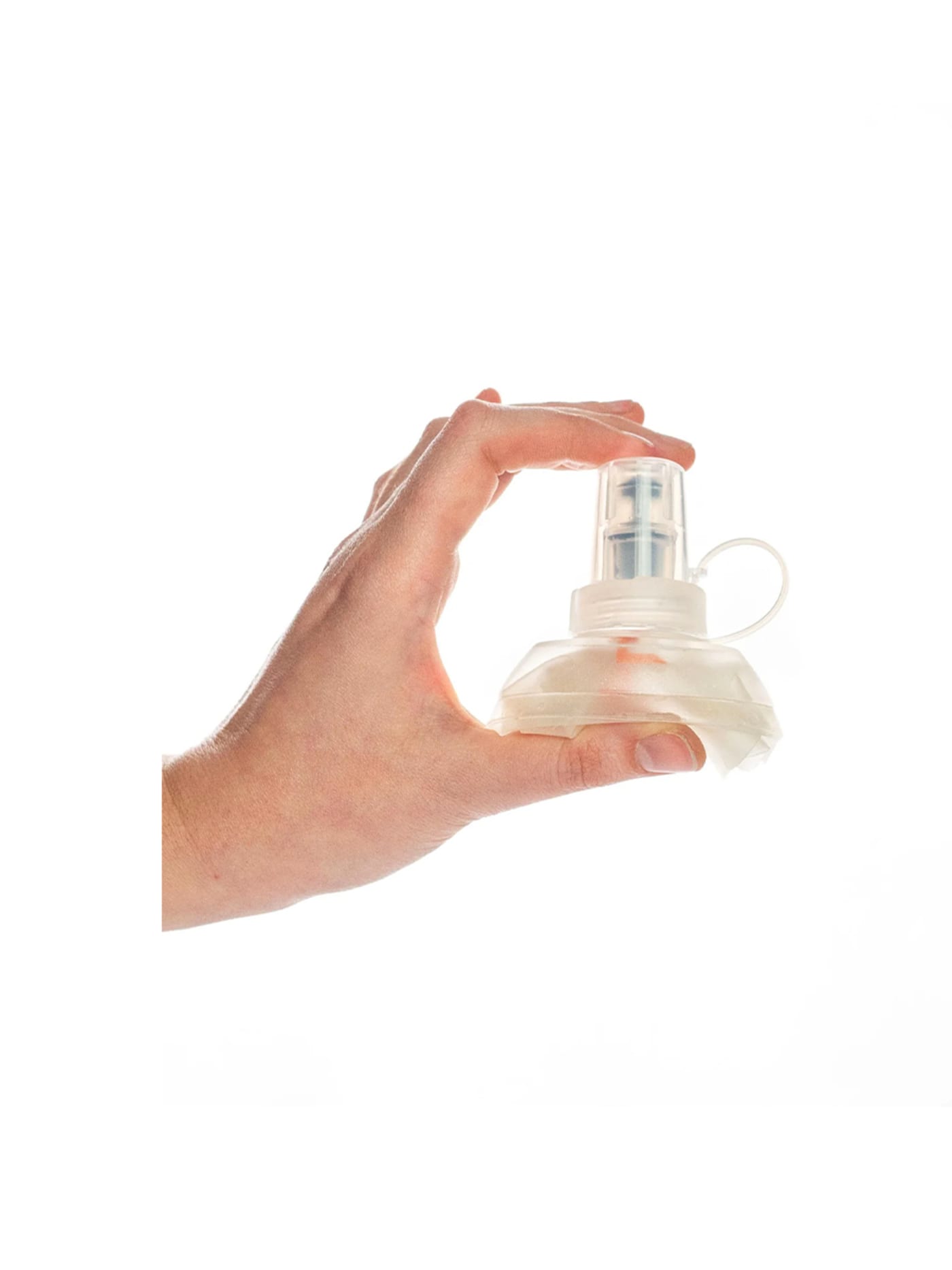
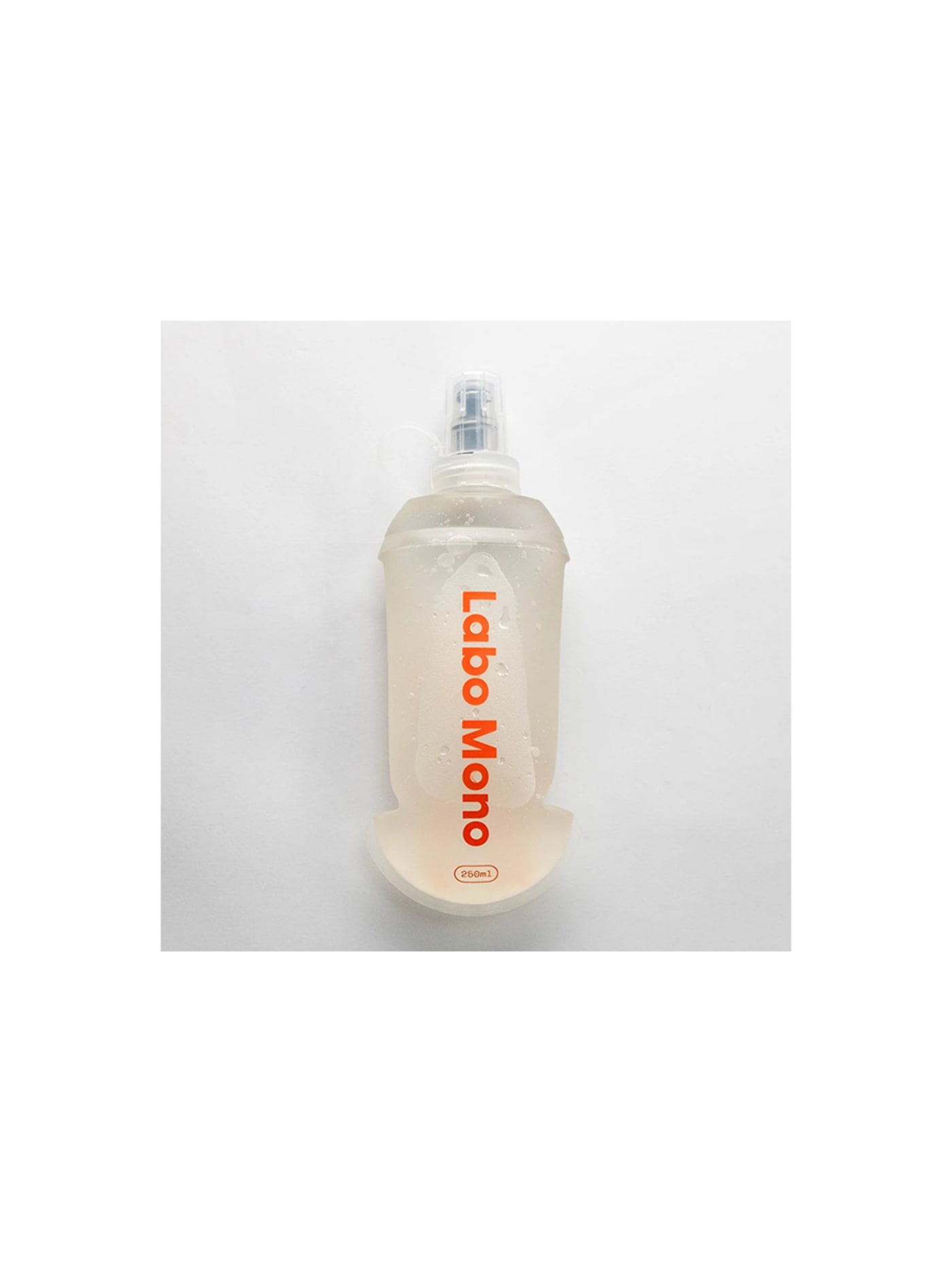
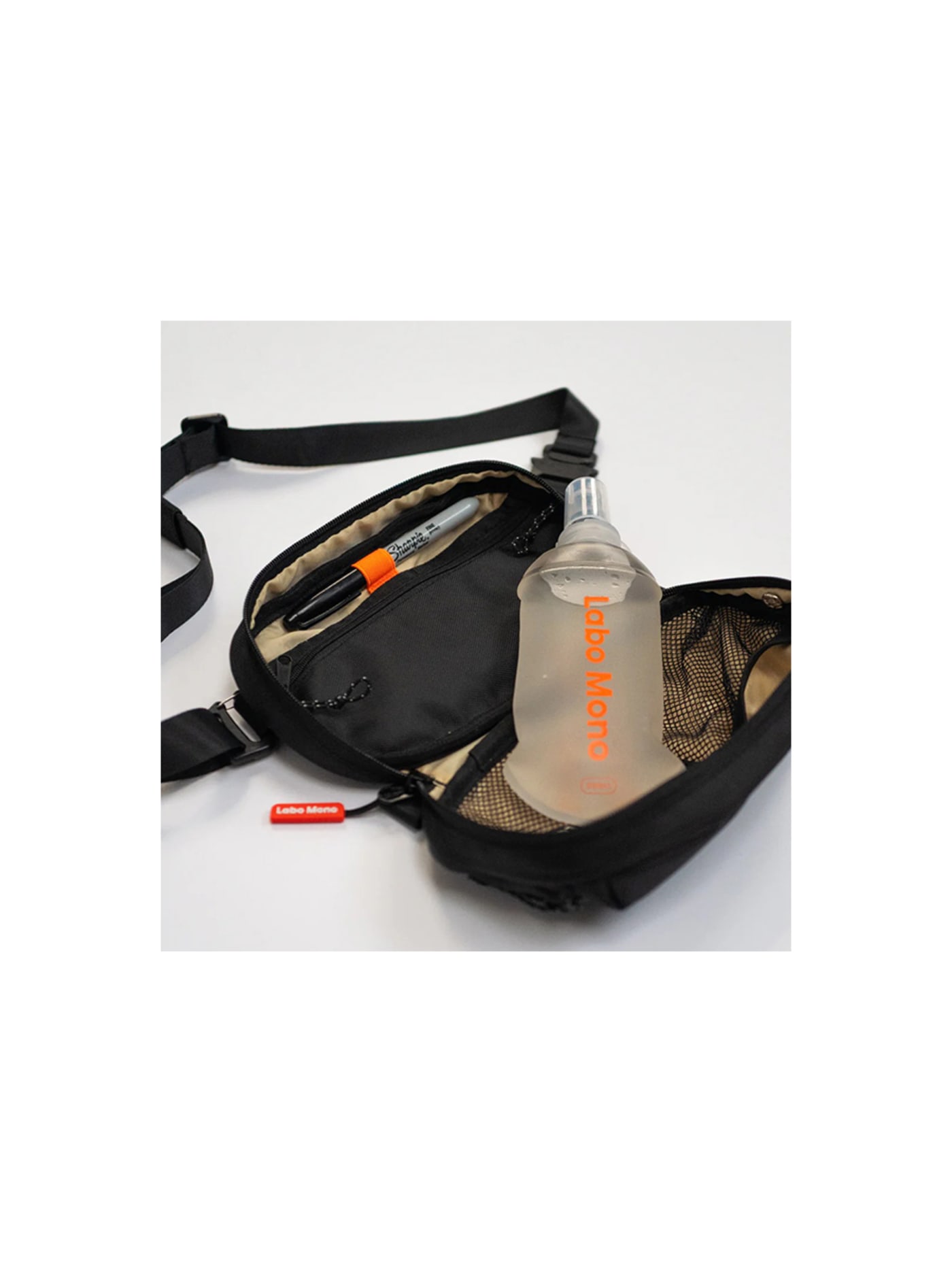
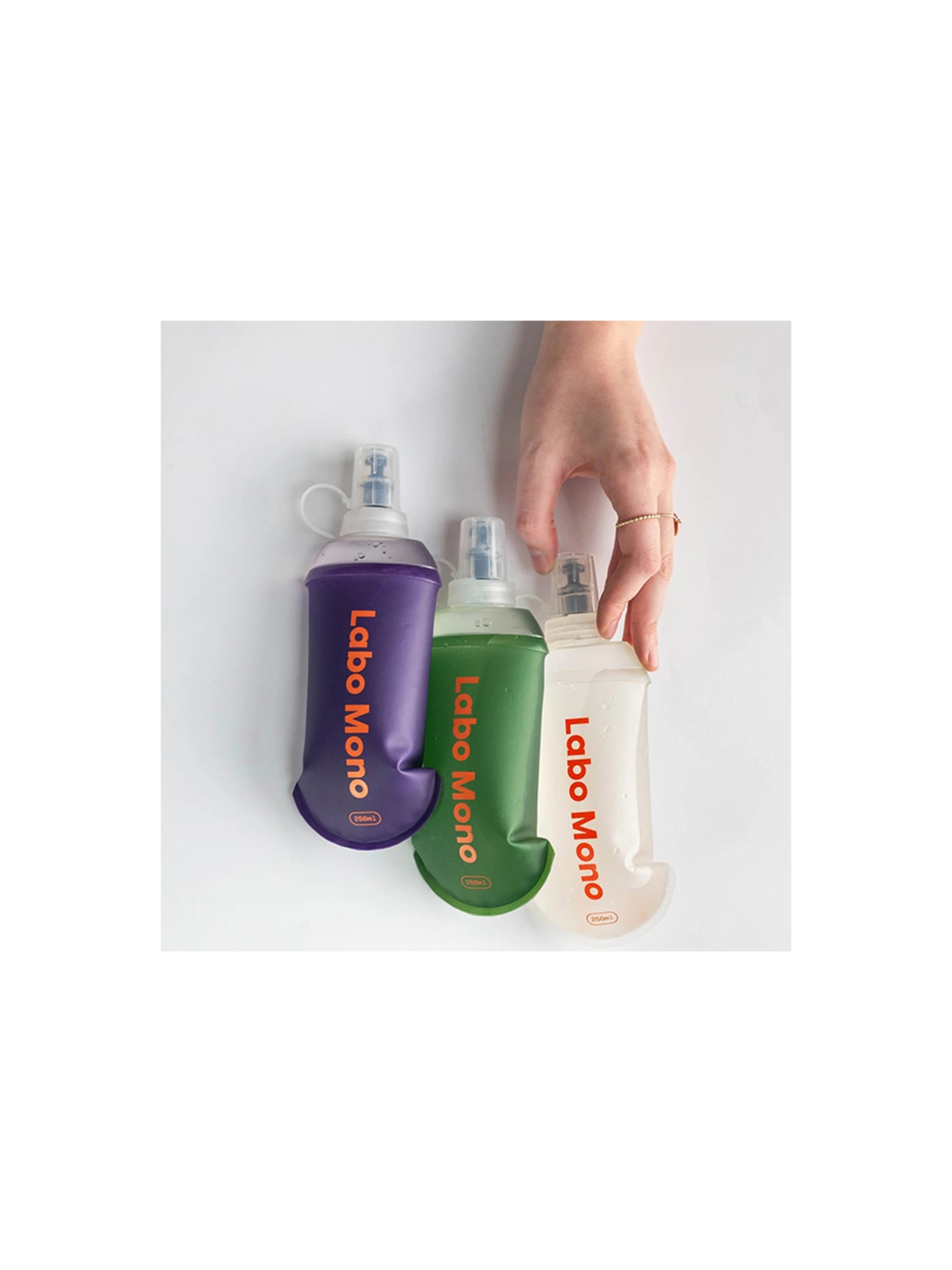
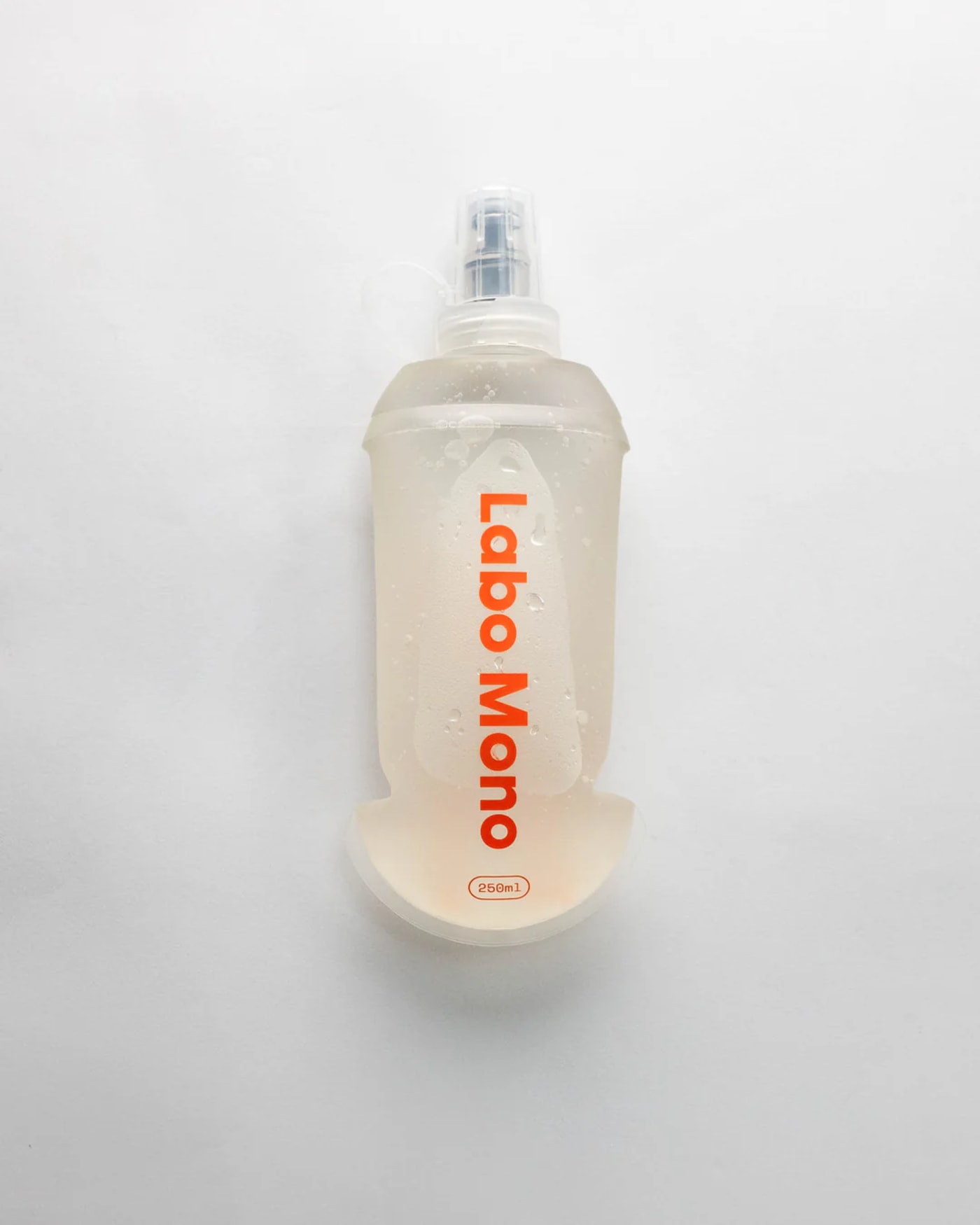
A water bottle earns a place in a small bag only if it disappears when empty, and this one does. It is a 250ml soft flask that shrinks as you drink and compresses almost flat when done, so it never claims space it is not using, which is the failure of a rigid bottle in a packed bag. A bite valve seals it, so there is no cap to lose. The 250ml is a deliberate limit rather than a shortfall: enough for a walk or a half-day out, on the assumption you will refill. For long stretches between taps it is too little, and that is the honest trade. For urban travel, where water is never far, the way it vanishes when empty matters more than how much it holds.
Design intent
- The 250ml capacity and collapsible body are a specific carry decision: enough water for likely use, with near-zero space cost when empty, which no rigid bottle can match.
- The bite valve removes the cap entirely, so drinking is a one-handed action in motion rather than an unscrew-and-replace.
Trade-offs
- 250ml runs short for extended outdoor use or hot weather; it suits urban carry and short activity, and heavy drinkers will refill it often.
- Soft-flask material can hold a faint flavour when new, so it benefits from a thorough wash before it feels neutral to drink from.
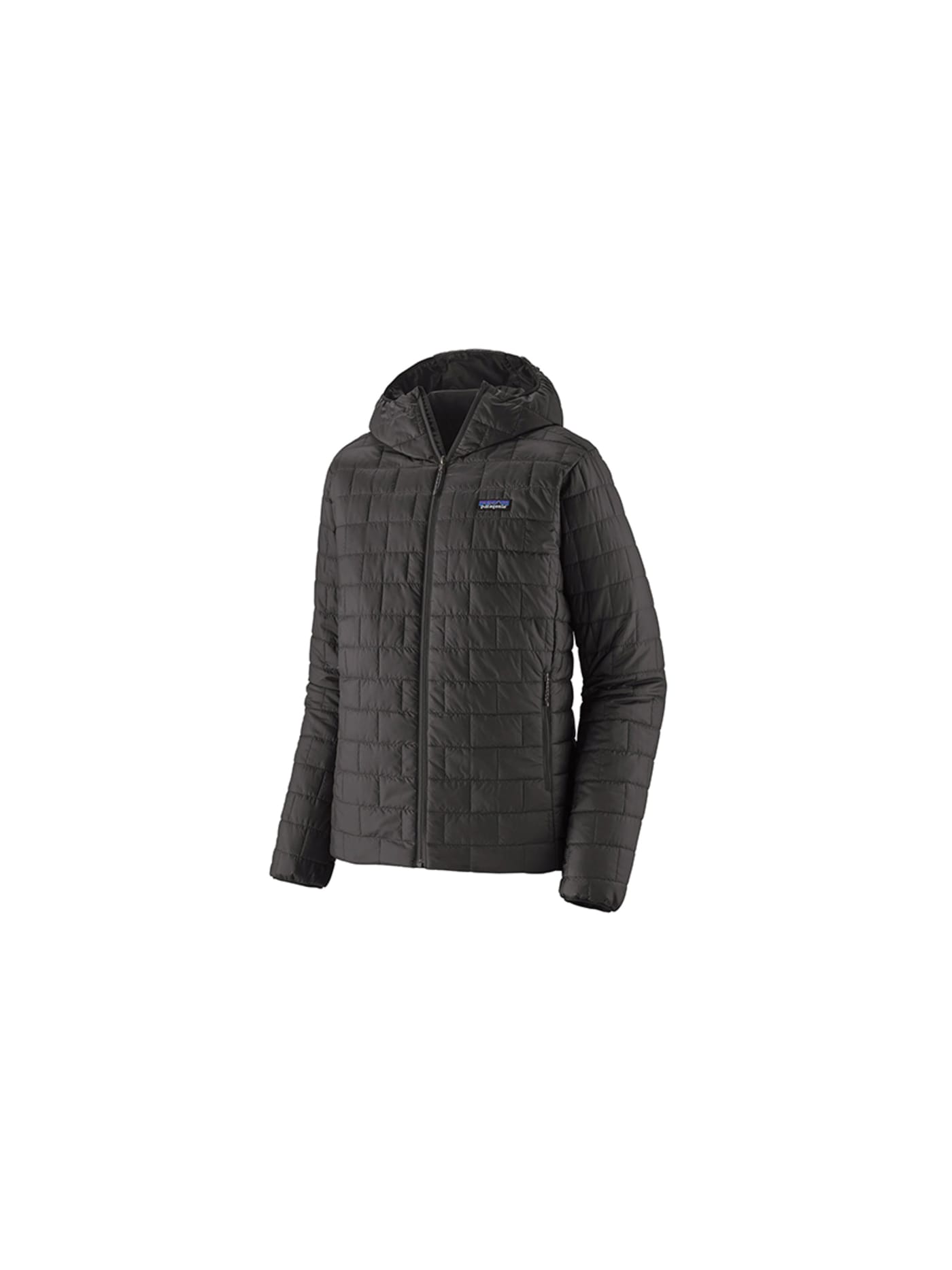
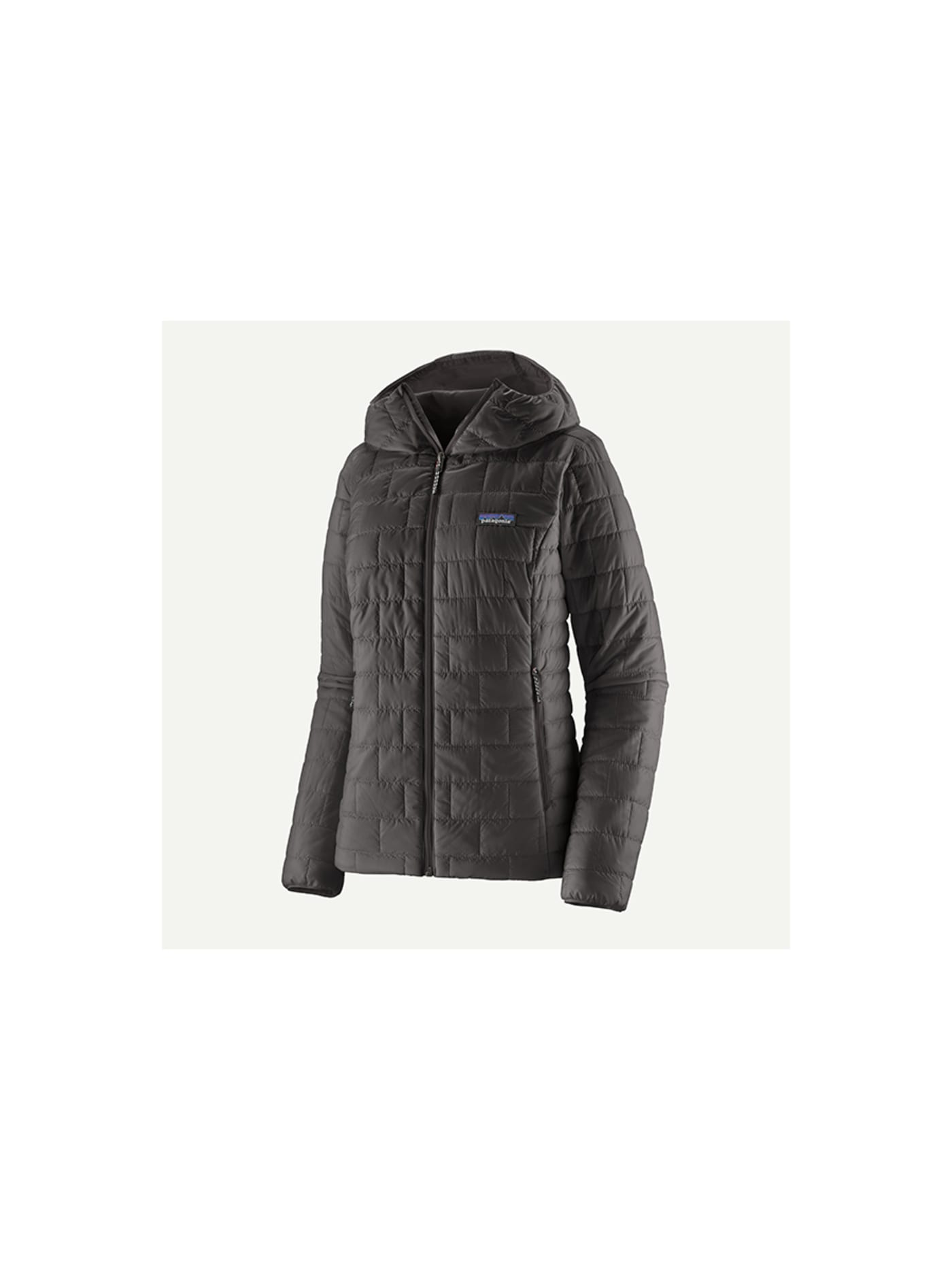
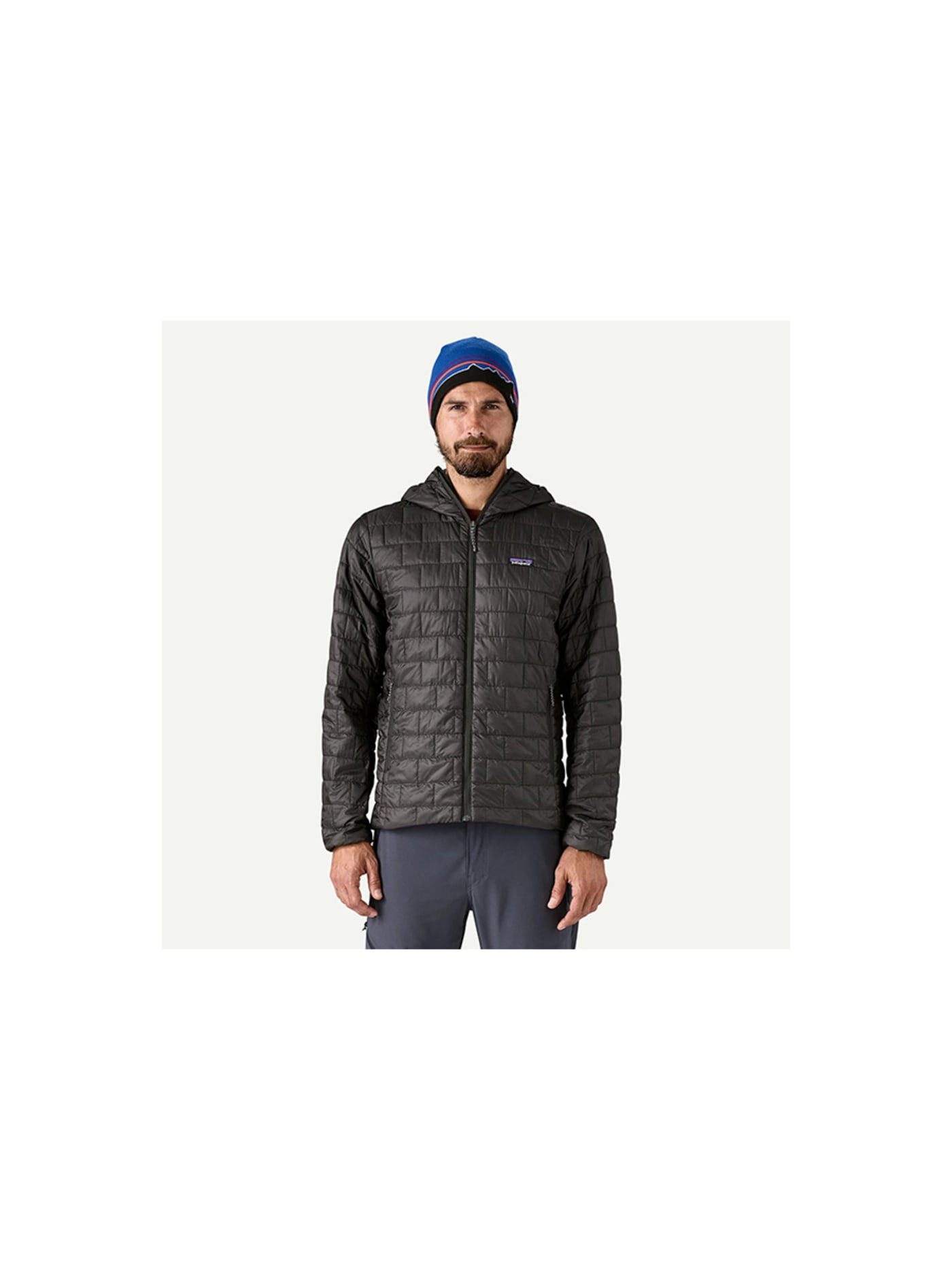
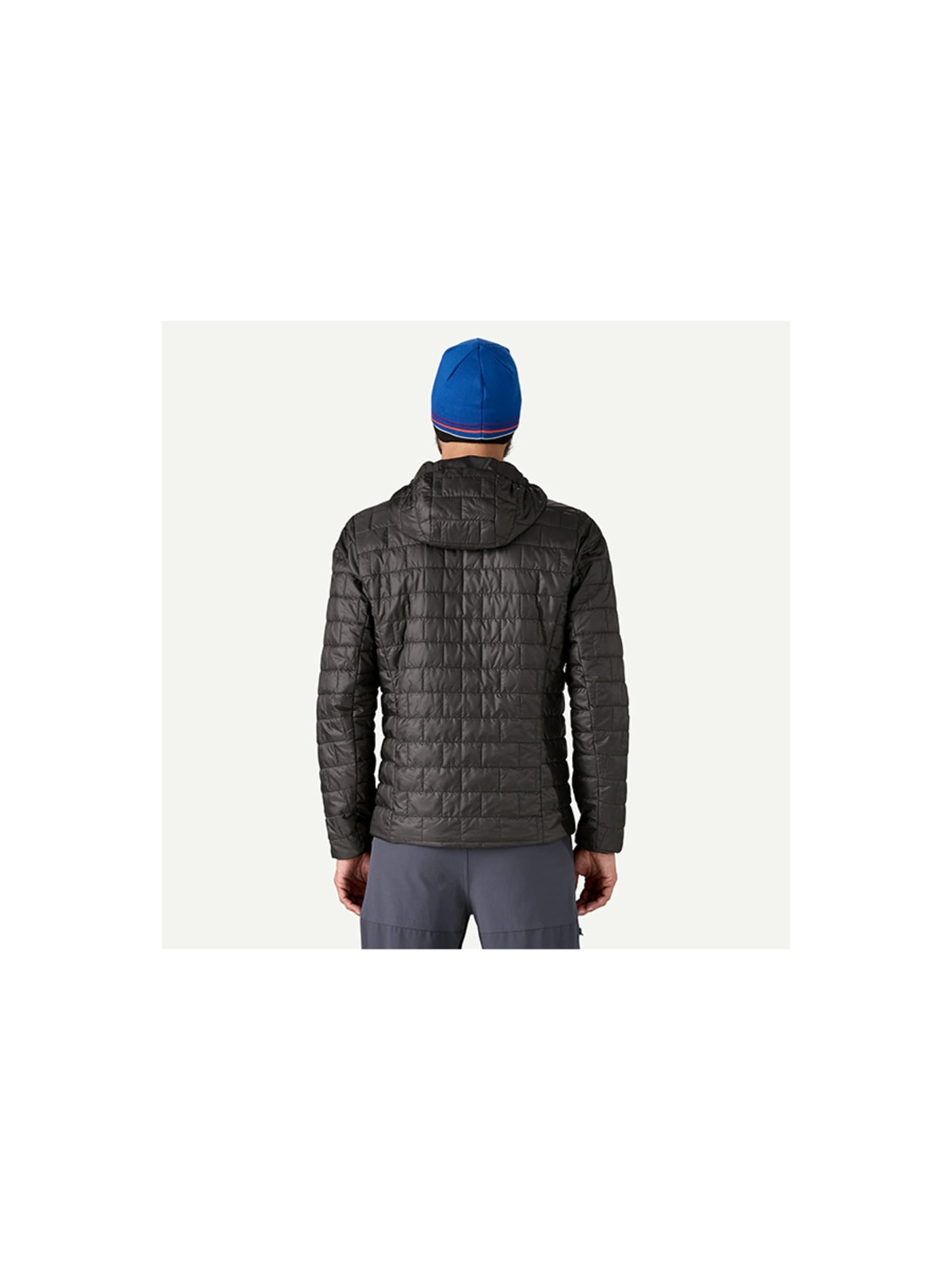
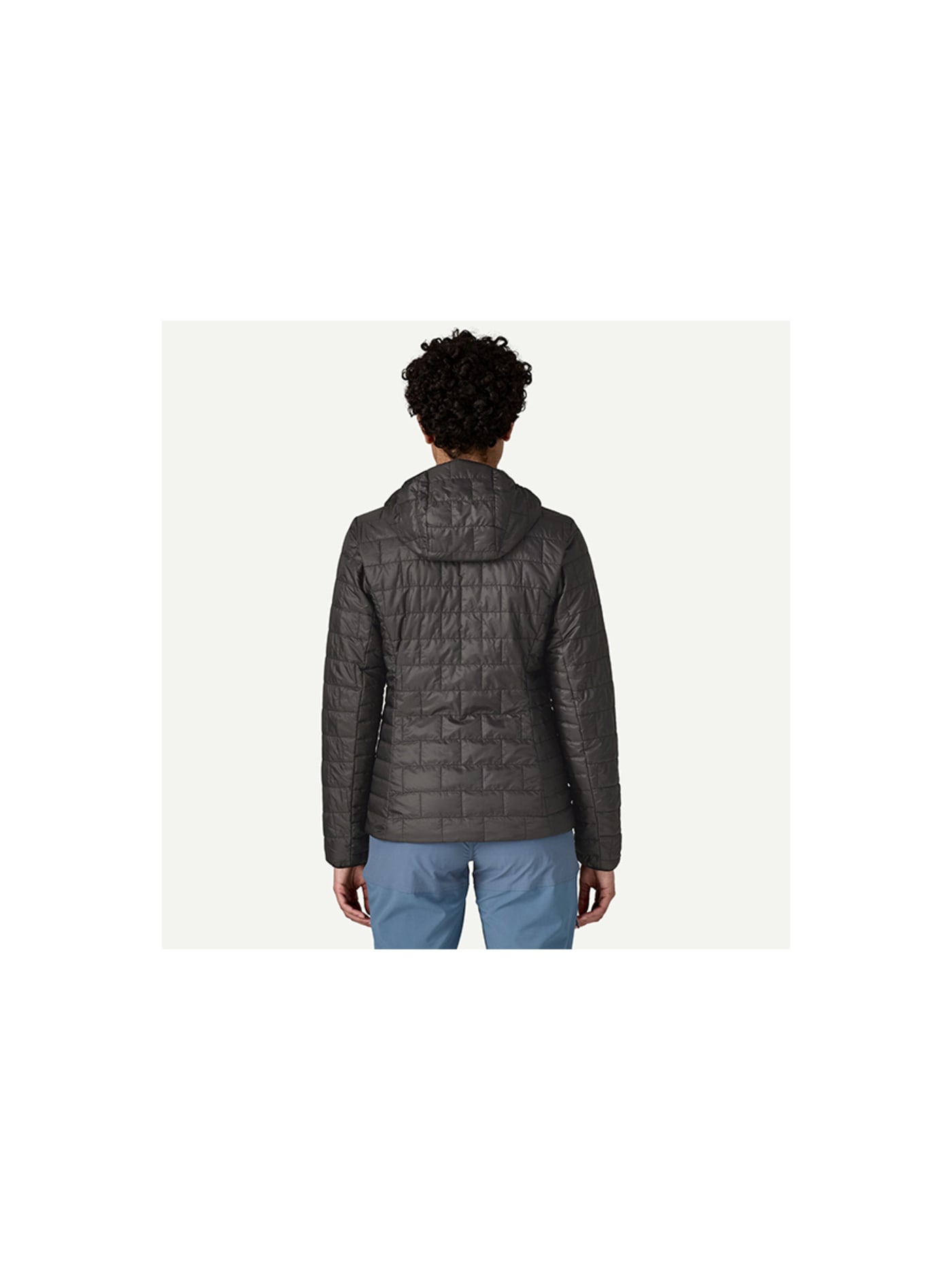
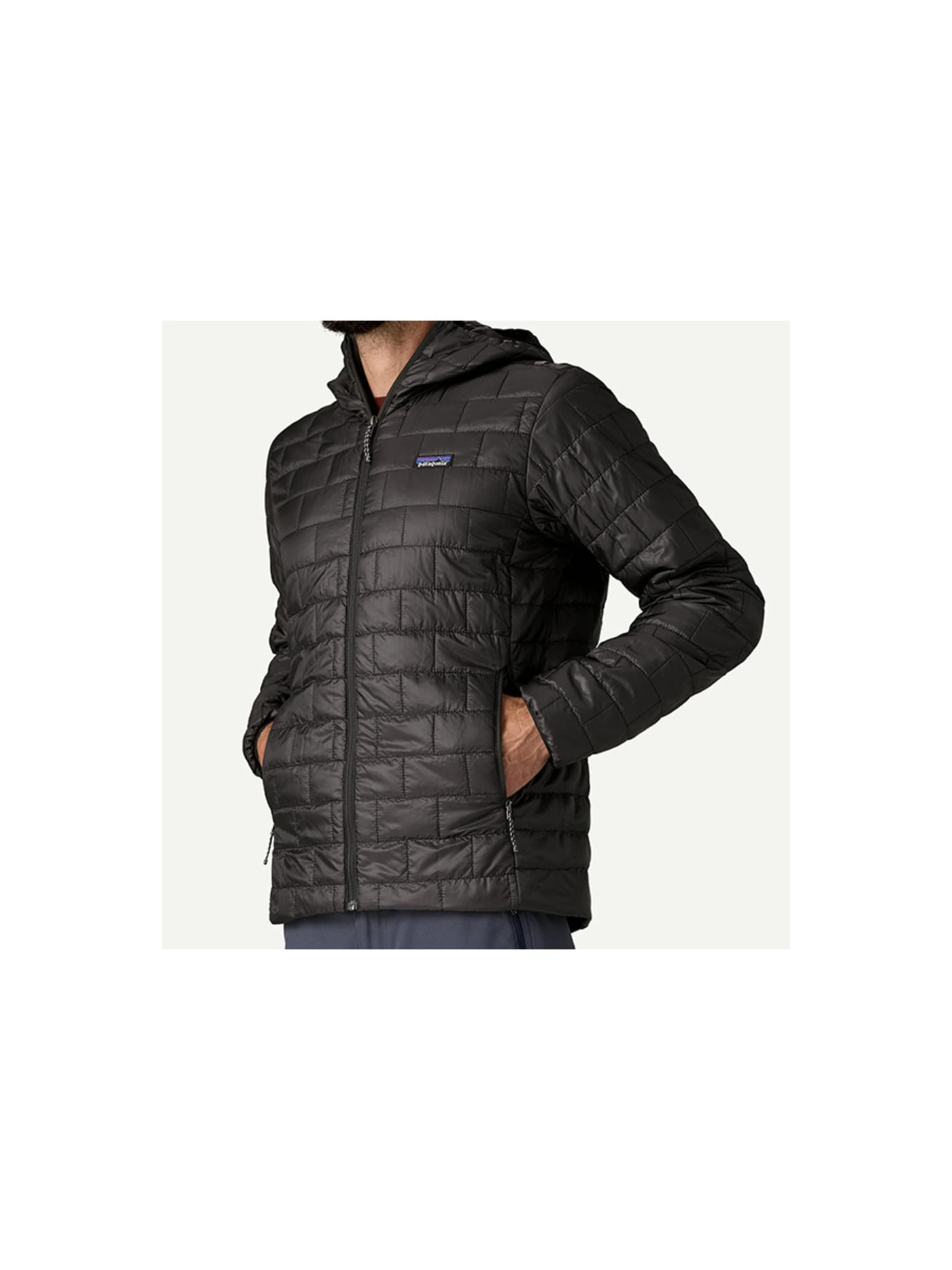
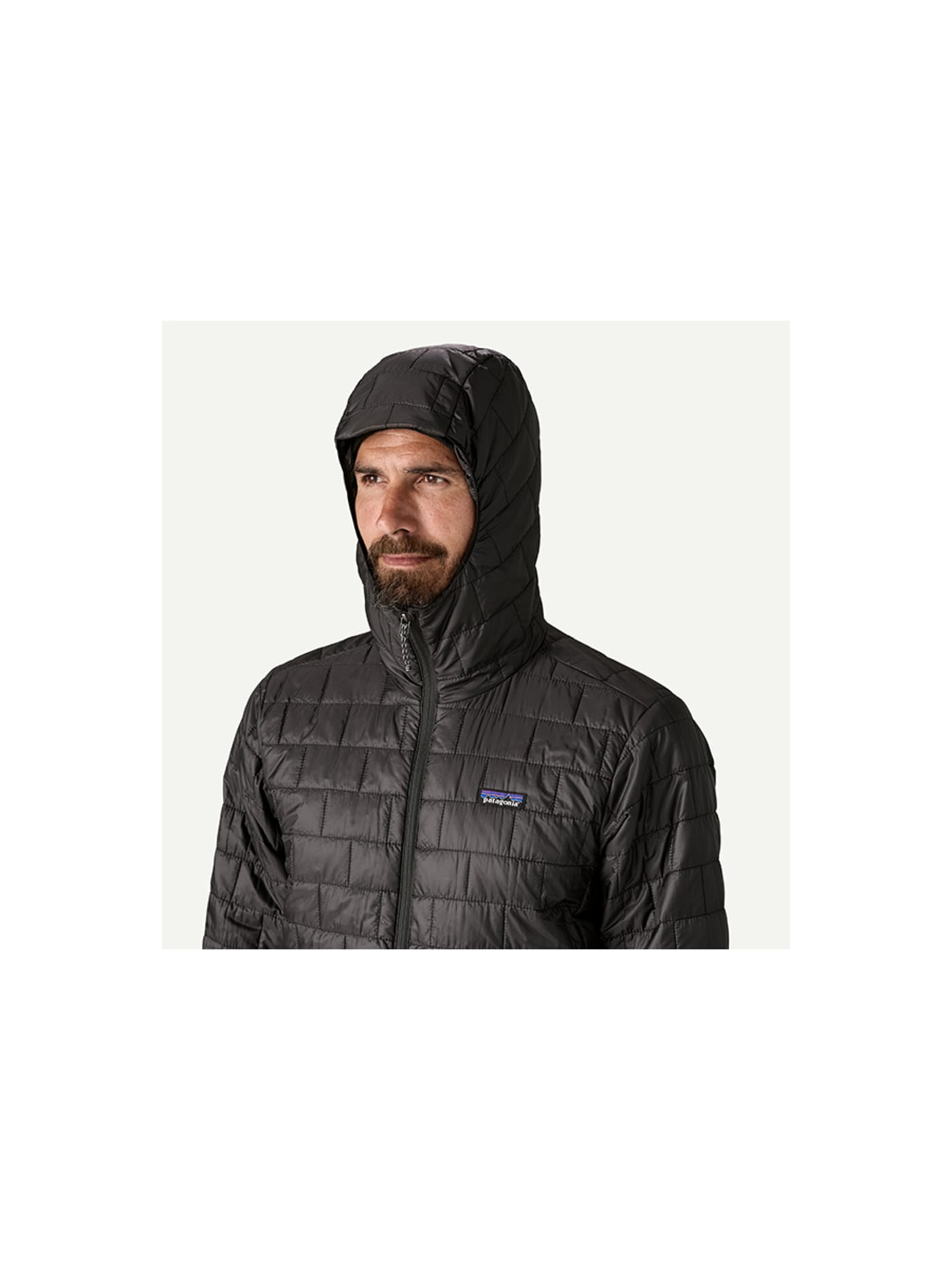

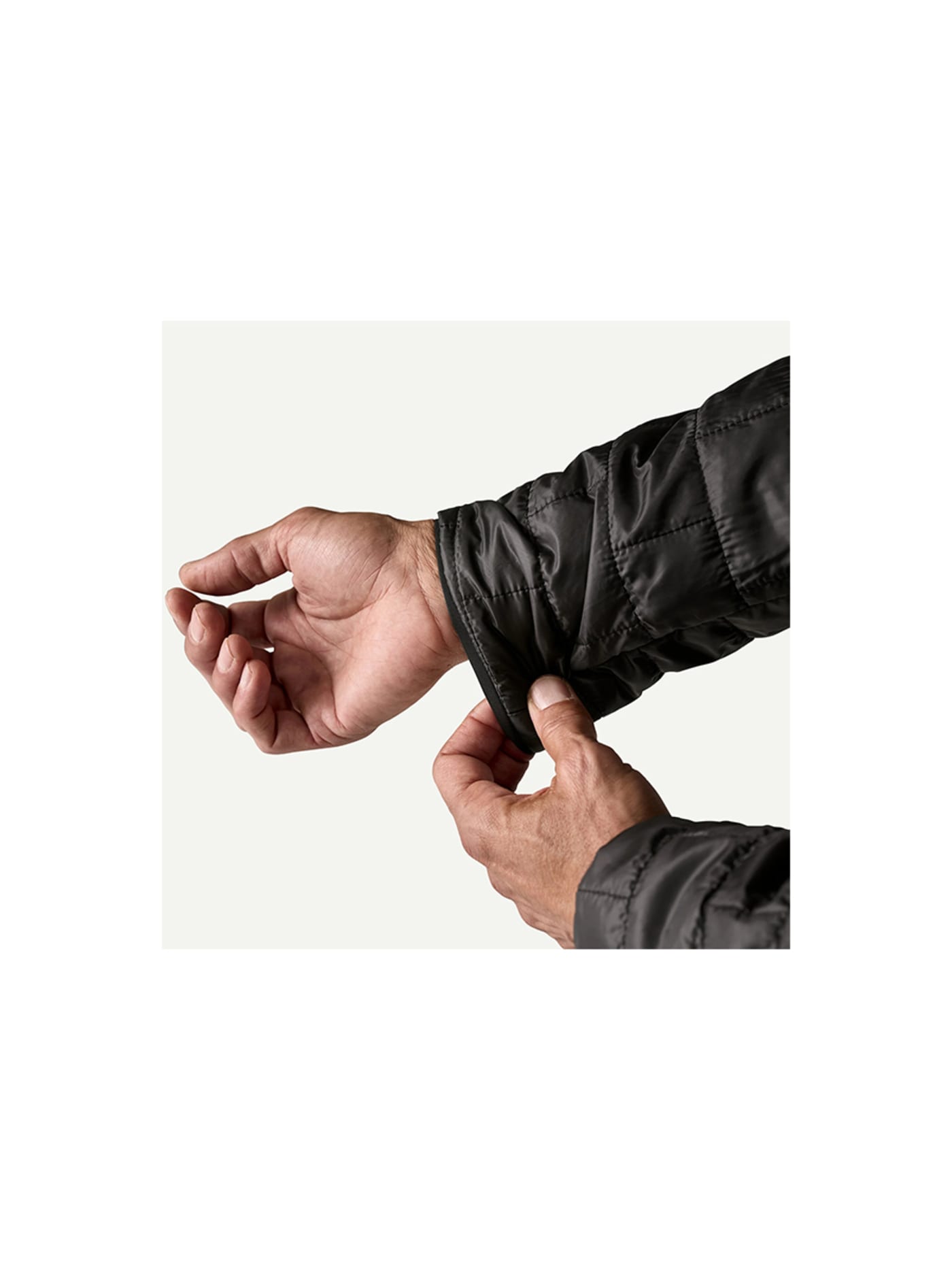
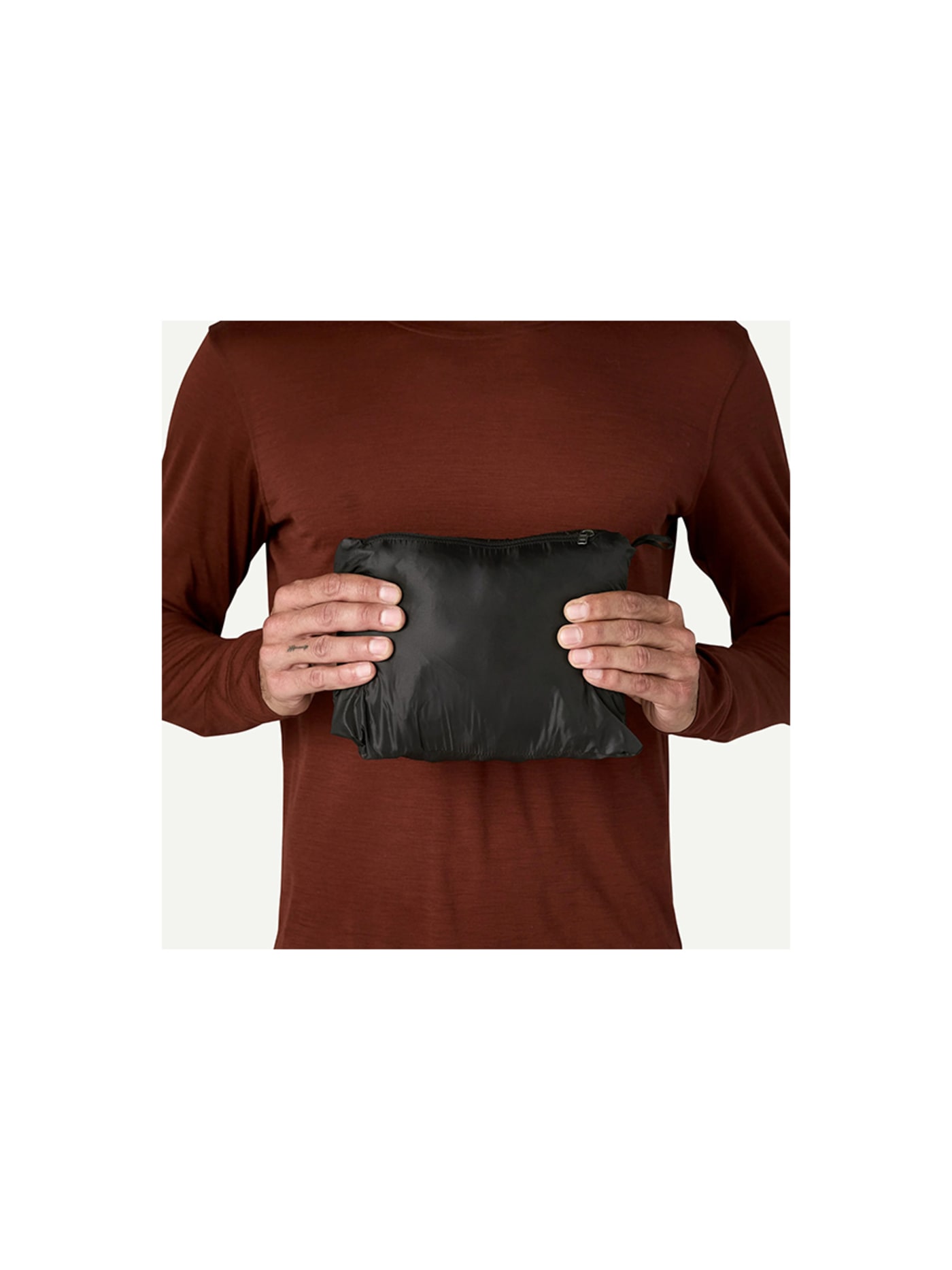
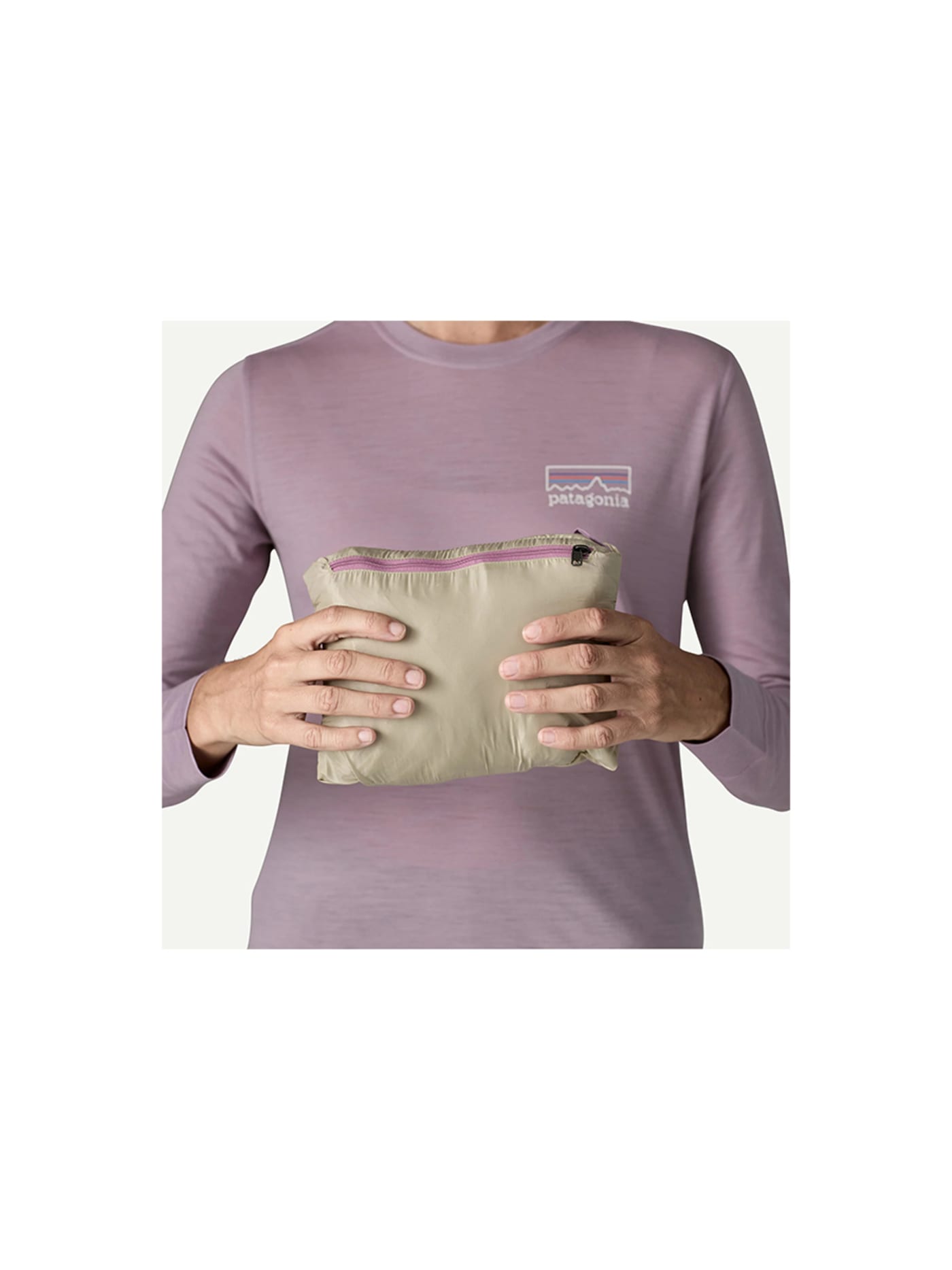
If you carry one jacket out of one bag, it should do the most for its packed size, and this is built for exactly that. Synthetic fill keeps its warmth even when damp, which down does not, so it works as a jacket in cool weather and a mid-layer under a shell when it turns, and it compresses into its own pocket to almost nothing when you do not need it. That packability is why it beats a bulkier, warmer coat for this job. What it is not is a rain jacket. Its finish sheds a shower, not a downpour, so for genuinely wet trips the Houdini is the shell to pack instead: near weightless, good against wind and light rain, with almost no warmth. Different jobs. Pick for the climate you are actually going to.
Design intent
- Choosing synthetic PrimaLoft over down is the defining decision: it retains most of its warmth when wet and dries fast, trading down's better warmth-for-weight for reliability in damp, unpredictable conditions, which is what makes it a genuine all-rounder.
- The construction is built to last and to layer: brick quilting with abrasion-resistant thread stabilises the fill so it does not migrate, keeps bulk low enough to wear under a shell, and the fully recycled shell, lining and insulation with PFAS-free DWR carry Patagonia's environmental position through the whole garment.
Trade-offs
- At around 14 ounces its warmth is not especially competitive for the weight against modern down or newer active insulation, so it is a versatile midweight layer rather than the warmest or the lightest option.
- The insulated construction does not breathe well during high exertion, and the light face fabric wets out in sustained rain, so it needs a shell over it once real weather sets in.
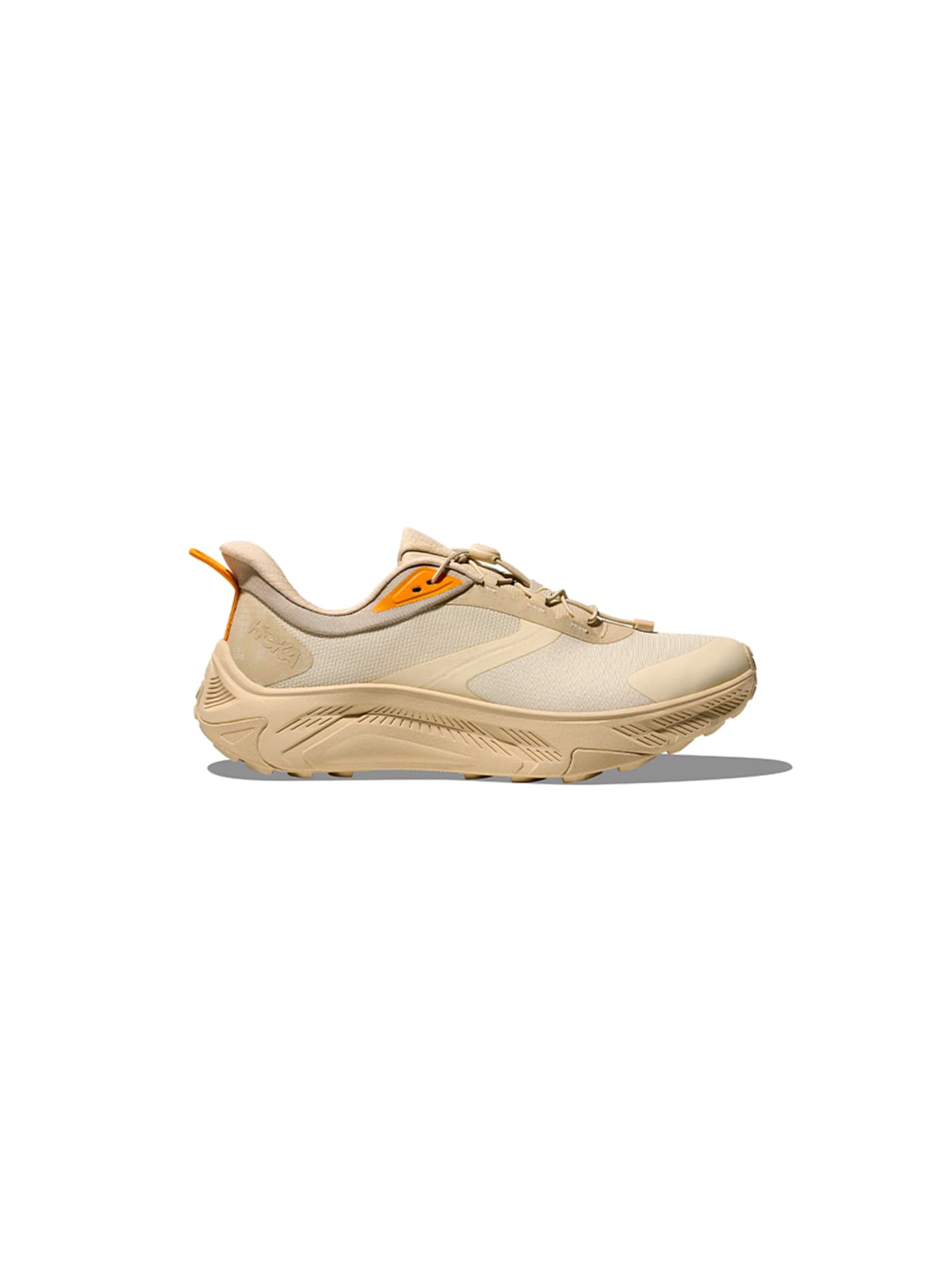
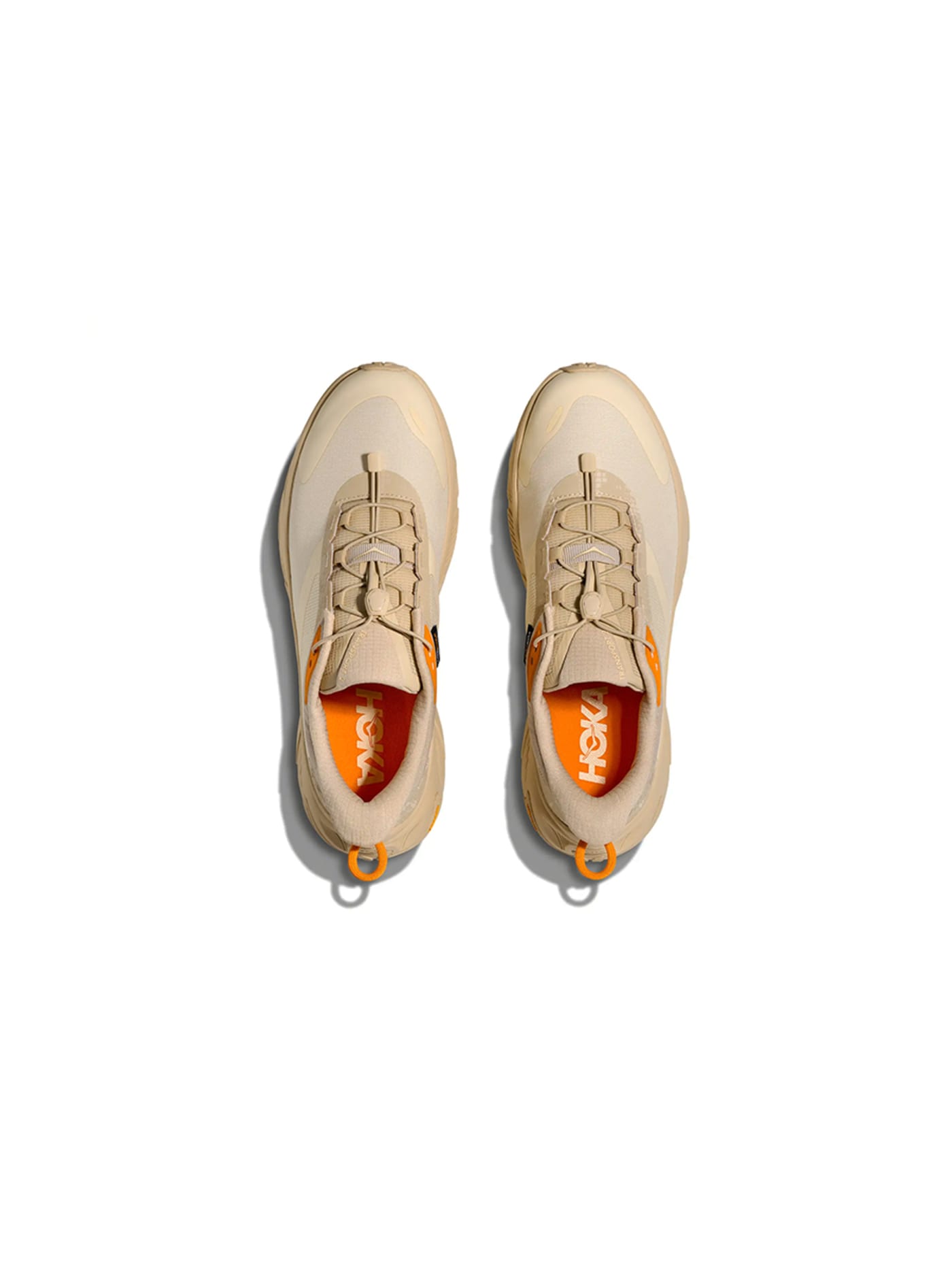
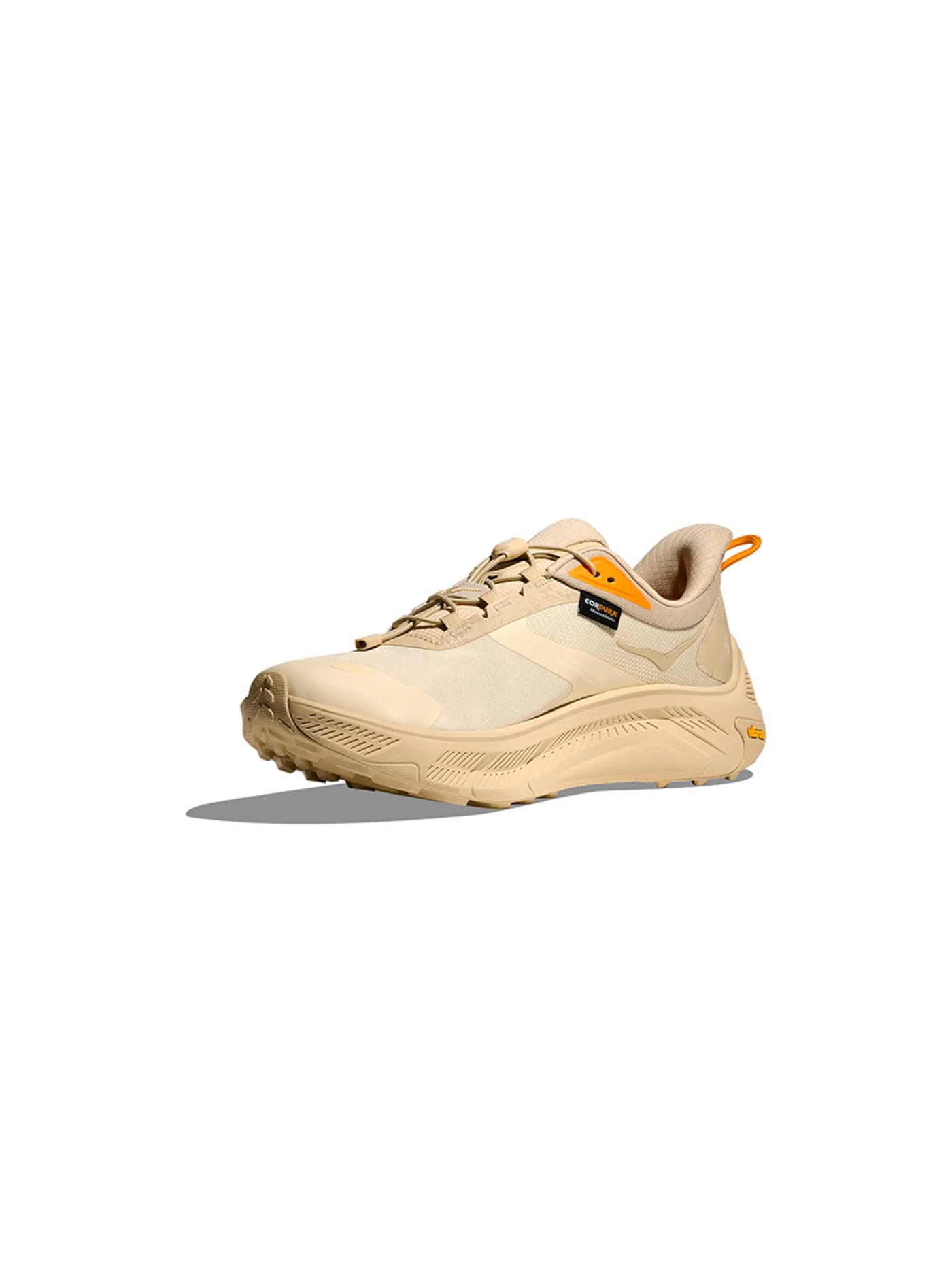
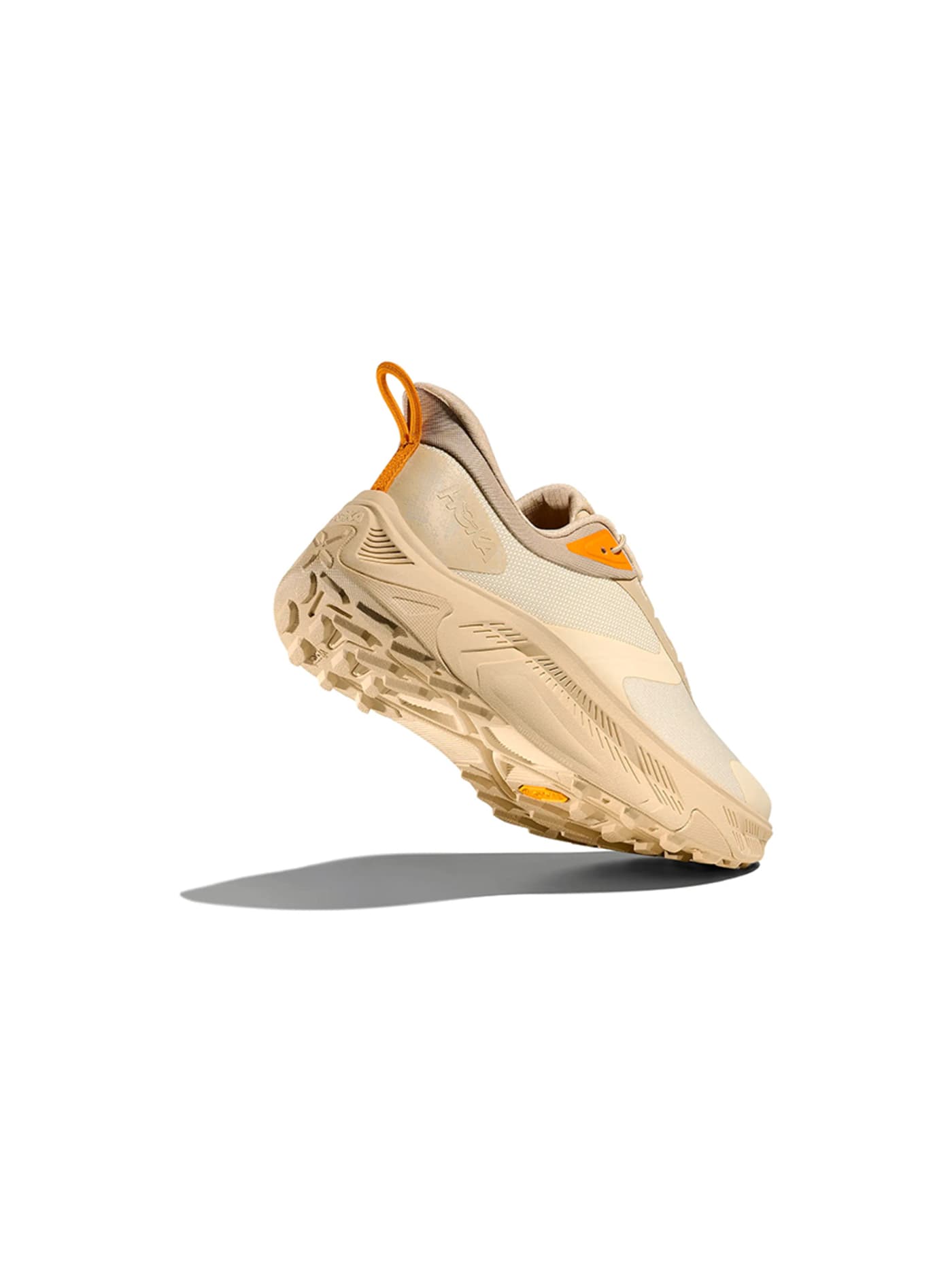
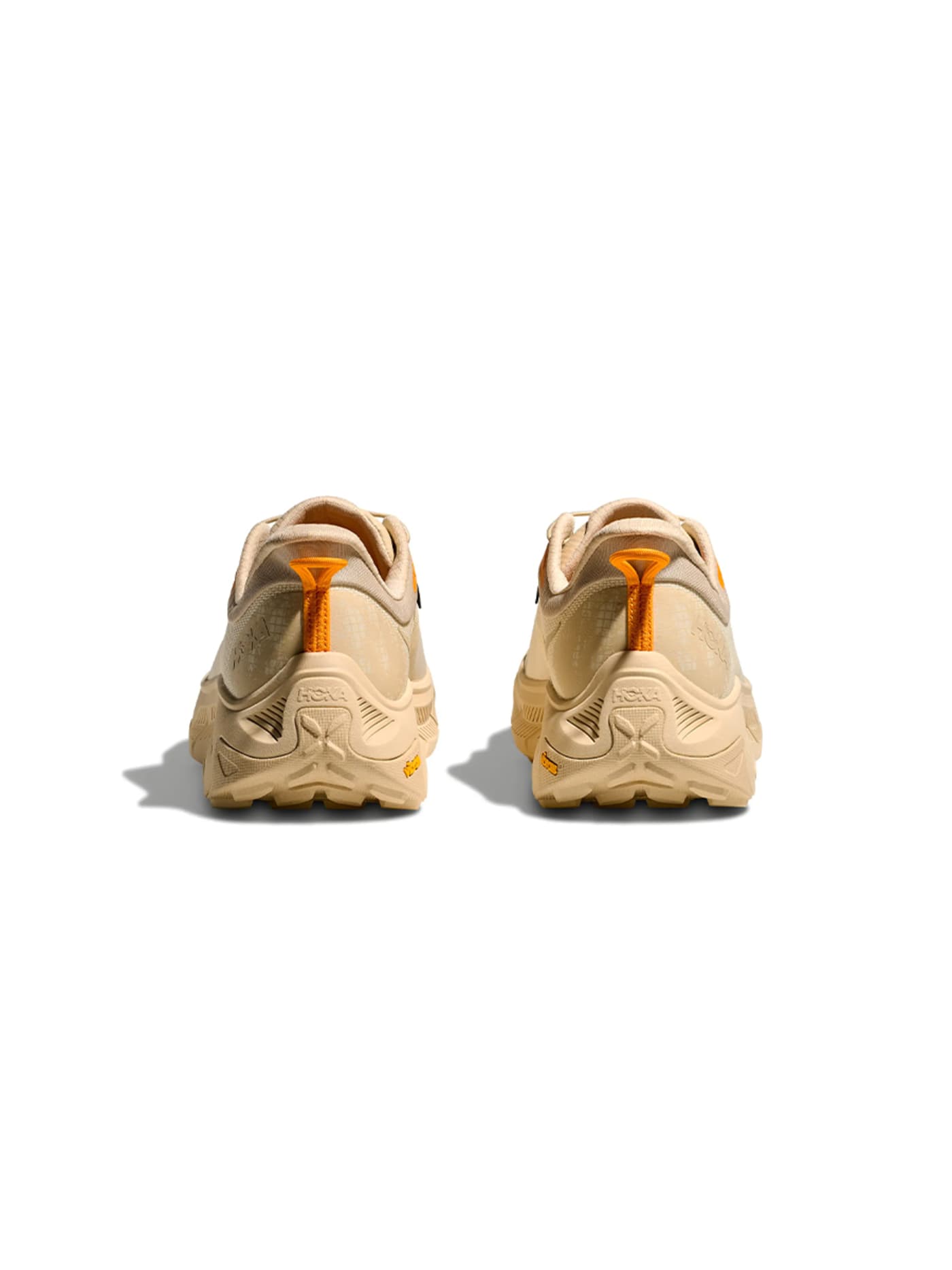
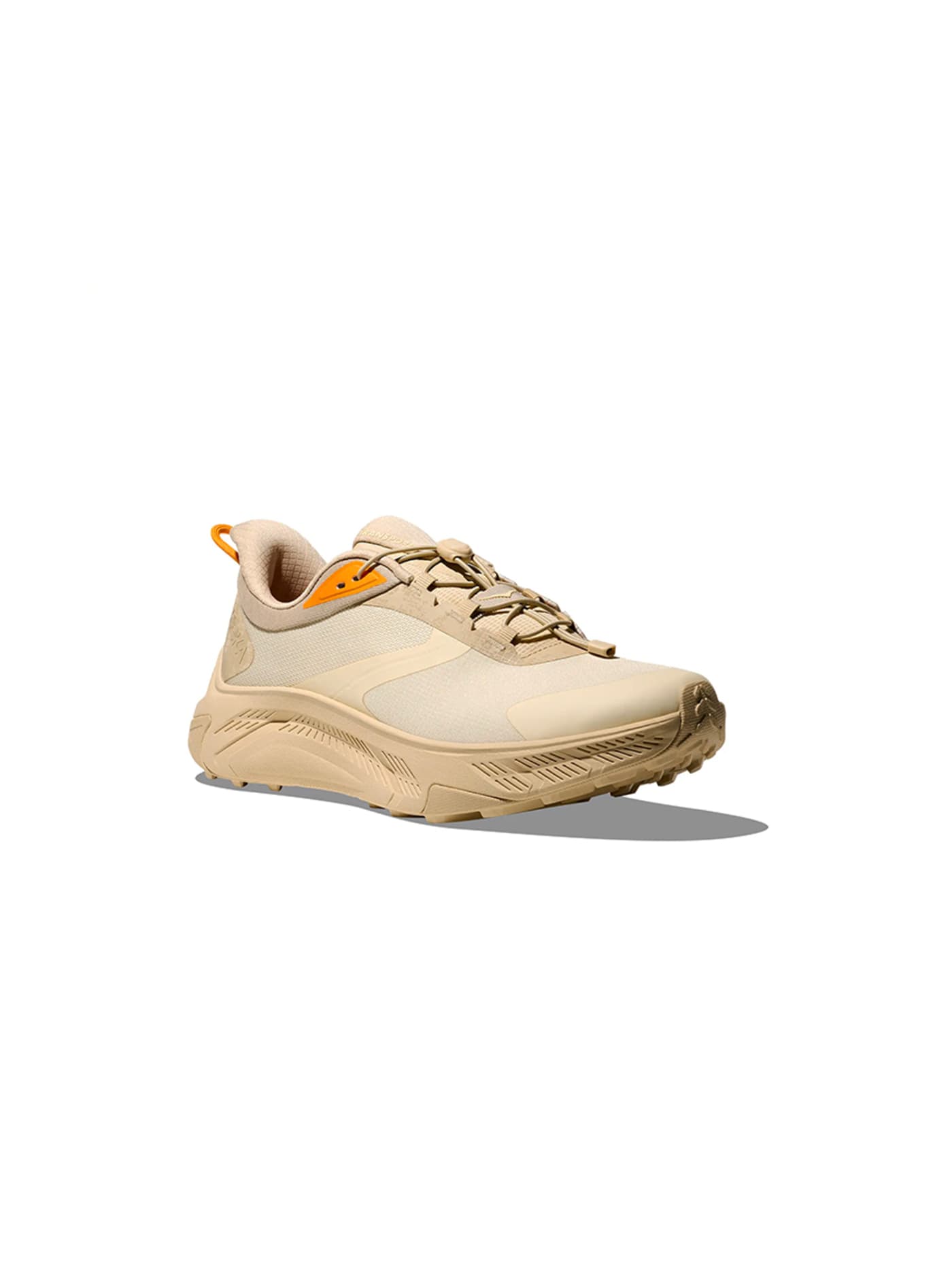
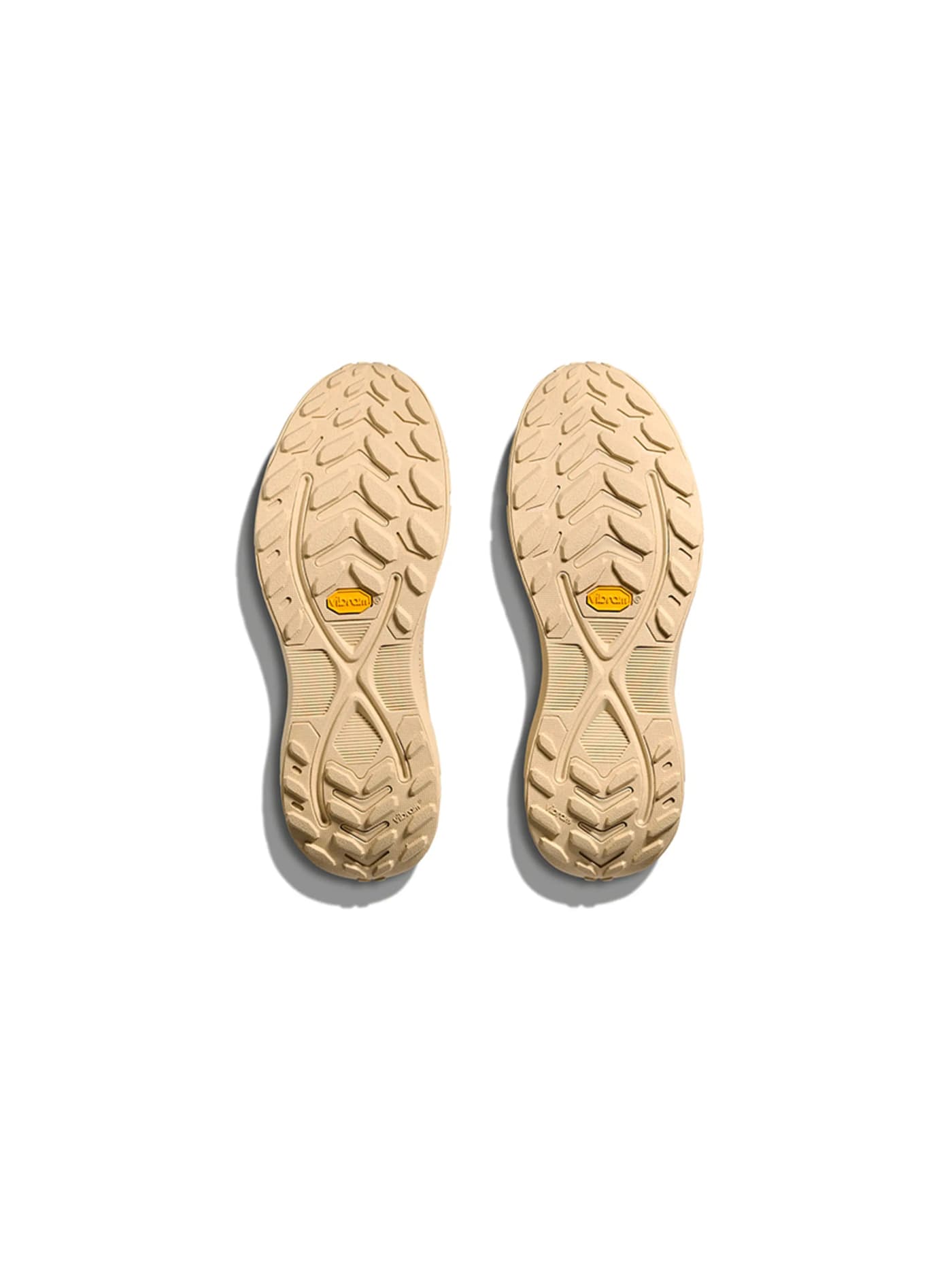
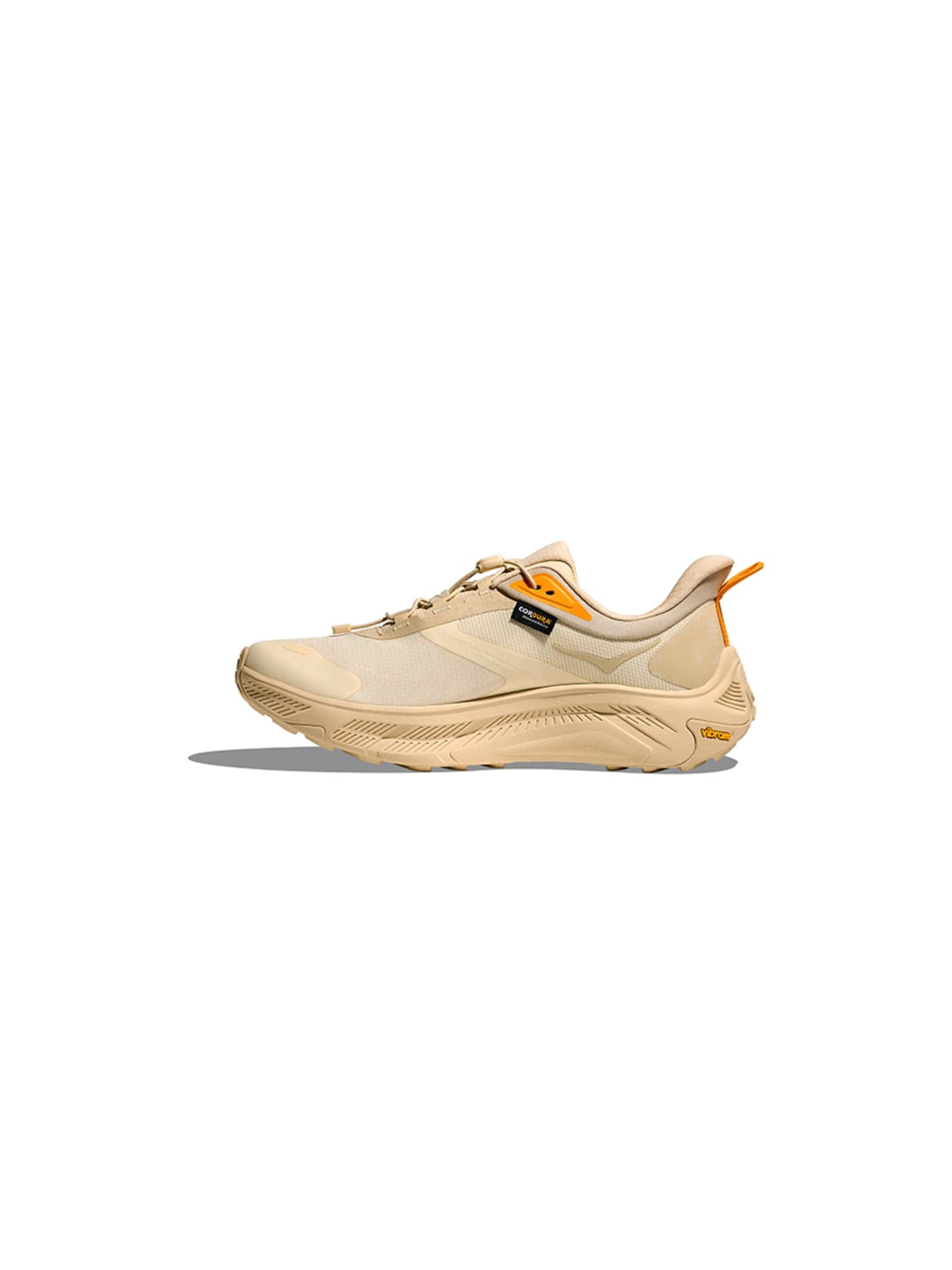
Footwear is the most personal thing you pack, and the choice most tied to the specific trip, so treat this as an example of a principle rather than a fixed pick. The principle is simple: one comfortable, weatherproof pair you can wear all day, so you are not carrying a second pair you will barely touch. The Transport 2 is a good answer to that because it refuses to specialise. Hoka took the cushioning it is known for in running shoes, firmed it up and set it on a wider, flatter base, so it is built for standing, walking and being on your feet all day rather than for pace. The upper is a water-resistant recycled ripstop with a gusseted tongue that keeps grit out and reflective trim for walking home after dark, and the rubber wraps up over the toe and heel to survive kerbs and knocks. It reads plainly enough to wear with jeans and holds up on a long day of sightseeing in changeable weather. The trade is the one every all-rounder makes: it is a specialist at nothing. It is not as cushioned as a running Hoka, not as supportive as a walking boot, and not as smart as a proper shoe, so if your trip is really about one of those things, pack for that instead. For the ordinary mix of walking, standing and weather that most trips actually involve, one pair like this covers the ground.
Design intent
- The defining decision is to redirect Hoka's cushioning from running to commuting: a firmer, more stable version of the brand's foam on a wide, flat base prioritises all-day standing and walking comfort over propulsion, which is a different job from the running shoes it is known for.
- The details are built around the commute specifically: a water-resistant recycled upper, reflective accents for low light, a gusseted tongue against road grit and wrapped rubber for kerb and pedal wear, so the shoe is designed for the journey rather than the run or the gym.
Trade-offs
- Being a genuine all-rounder means it is a specialist at nothing: it is not as cushioned as Hoka's running shoes, not as supportive as a dedicated walking boot, and not as grippy as a cycling shoe, so committed users of any one may want the specialist.
- The moderated foam and sturdier build make it heavier and less lively than a running Hoka, so anyone expecting the brand's signature soft, springy ride will find this a deliberately more grounded, utilitarian shoe.
Final thoughts
Packed together, none of these objects is remarkable on its own. That is rather the point. The core of a good travel kit is not the clever gadget or the standout bag; it is a small set of unremarkable things that each earn their place and then get out of the way, so the bag stays light and you stop thinking about your luggage and start paying attention to where you are.
What ties them together is a single test, applied to each one: does this earn the space it takes on any trip. The objects that pass are the ones you carry without deciding, trip after trip. Everything beyond them belongs to the specific journey, and that is where a more focused list picks up.
Fill these roles well and the one-bag argument stops being an argument. It just becomes how you pack.