
Blip Spoon Rest / Alessi
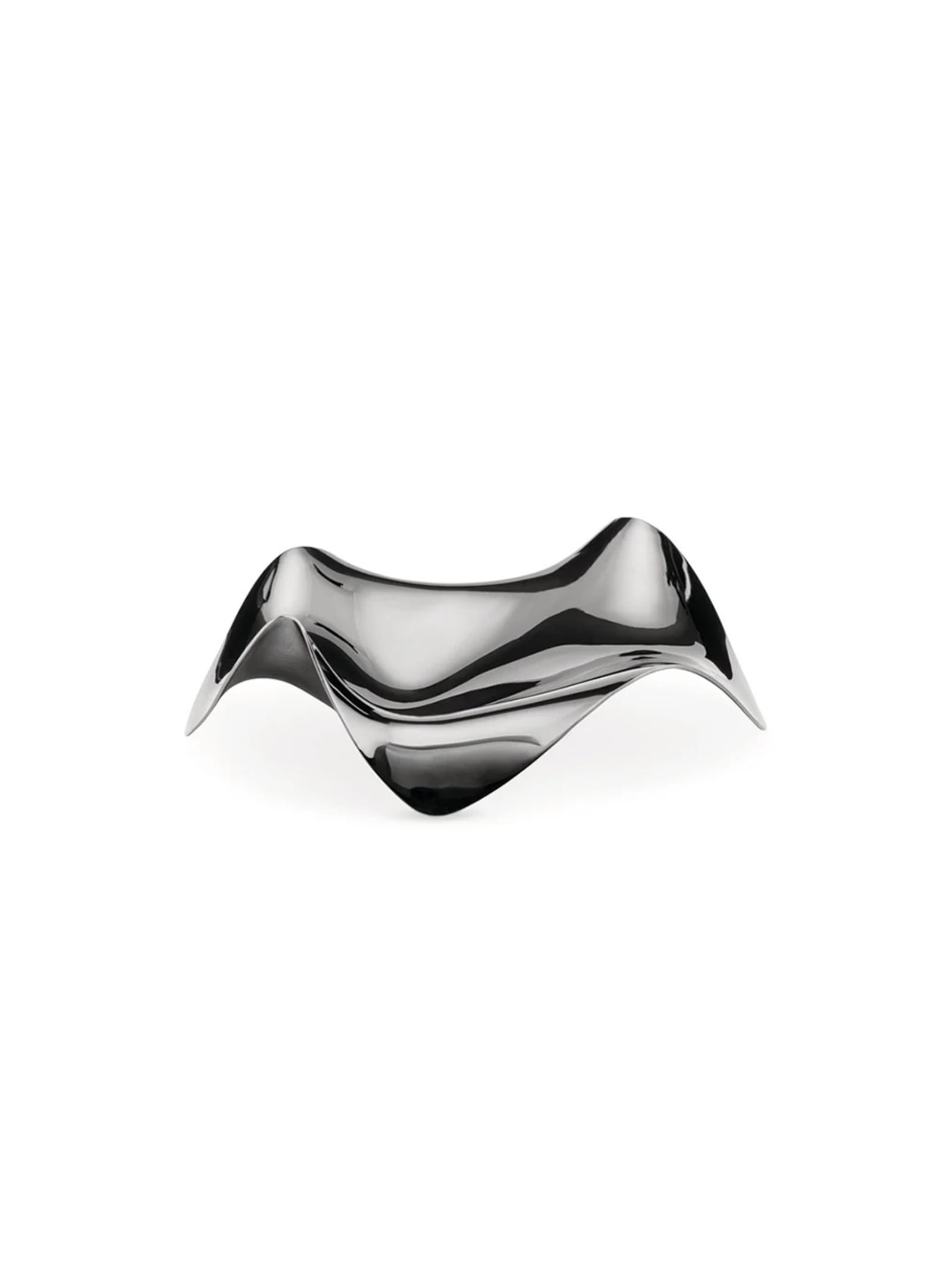
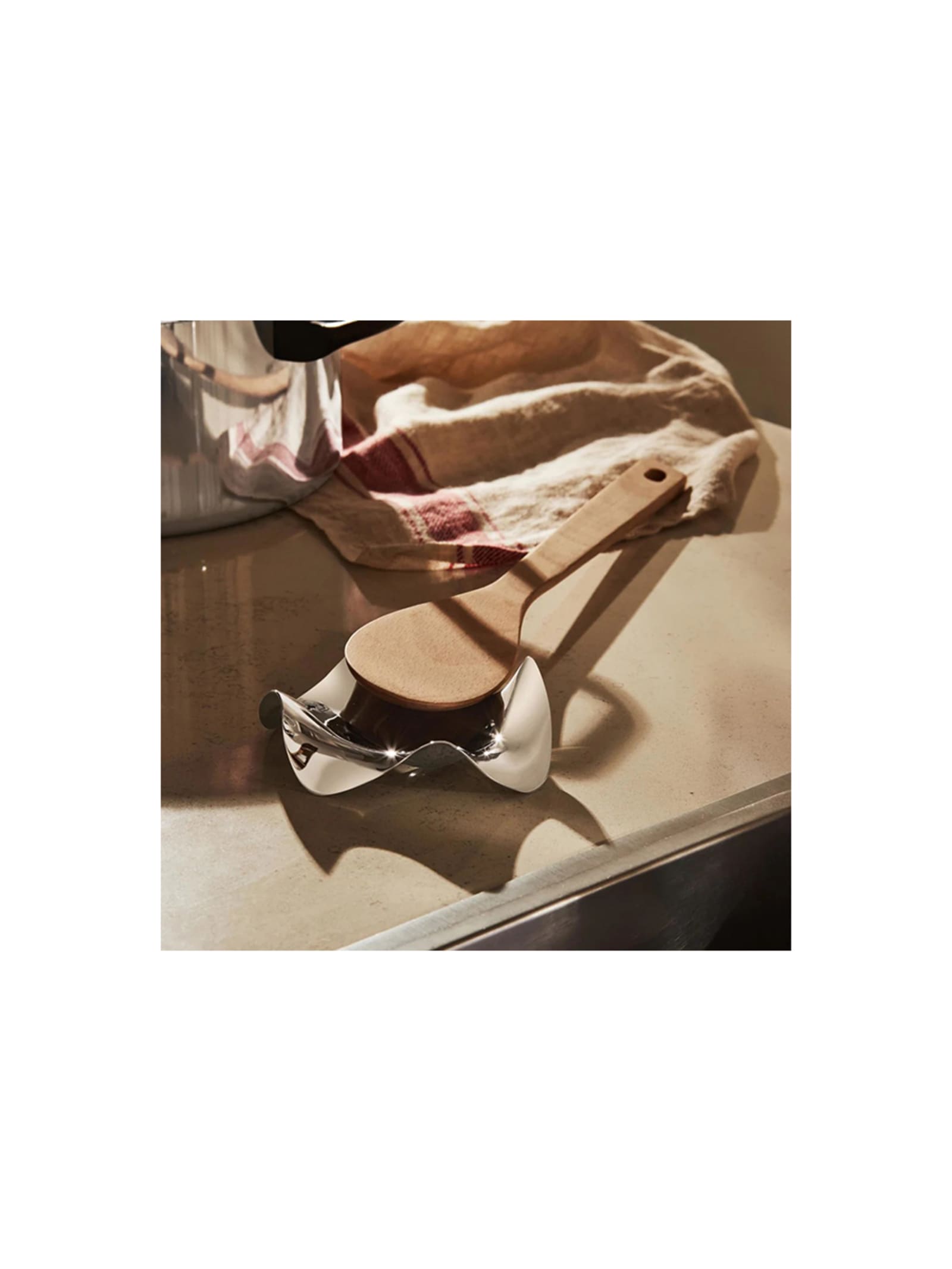
The Blip is what happens when a company known for design turns its attention to one of the least considered objects on a worktop. It was the first spoon rest to enter Alessi's catalogue, designed by LPWK with Paolo Gerosa as a single curved sheet of 18/10 stainless steel, mirror-polished, with a sinuous form that reads as a ripple held in metal. The name is onomatopoeic, the sound of a drop hitting water, and the shape follows that idea literally. Beneath the styling it does the job plainly: the dished curve cradles spoons and ladles of different sizes and catches what runs off them. It is light, thin and easy to store, and being solid steel it goes in the dishwasher without complaint.
Design intent
- +The form is pressed from a single thin sheet rather than cast or assembled, which is why it stays light and visually quiet despite being solid metal.
- +The wave geometry is functional, not decorative: the dips hold utensils of different lengths in place and contain drips, so the styling and the job are the same gesture.
Trade-offs
- -It is sized for one utensil at a time. A second spoon, or a large serving implement, has nowhere settled to sit.
- -Mirror-polished steel shows water spots and fine scratches with use, the cost of a finish chosen for shine rather than concealment.
Related products






The Blip is what happens when a company known for design turns its attention to one of the least considered objects on a worktop. It was the first spoon rest to enter Alessi's catalogue, designed by LPWK with Paolo Gerosa as a single curved sheet of 18/10 stainless steel, mirror-polished, with a sinuous form that reads as a ripple held in metal. The name is onomatopoeic, the sound of a drop hitting water, and the shape follows that idea literally. Beneath the styling it does the job plainly: the dished curve cradles spoons and ladles of different sizes and catches what runs off them. It is light, thin and easy to store, and being solid steel it goes in the dishwasher without complaint.
Design intent
- +The form is pressed from a single thin sheet rather than cast or assembled, which is why it stays light and visually quiet despite being solid metal.
- +The wave geometry is functional, not decorative: the dips hold utensils of different lengths in place and contain drips, so the styling and the job are the same gesture.
Trade-offs
- -It is sized for one utensil at a time. A second spoon, or a large serving implement, has nowhere settled to sit.
- -Mirror-polished steel shows water spots and fine scratches with use, the cost of a finish chosen for shine rather than concealment.