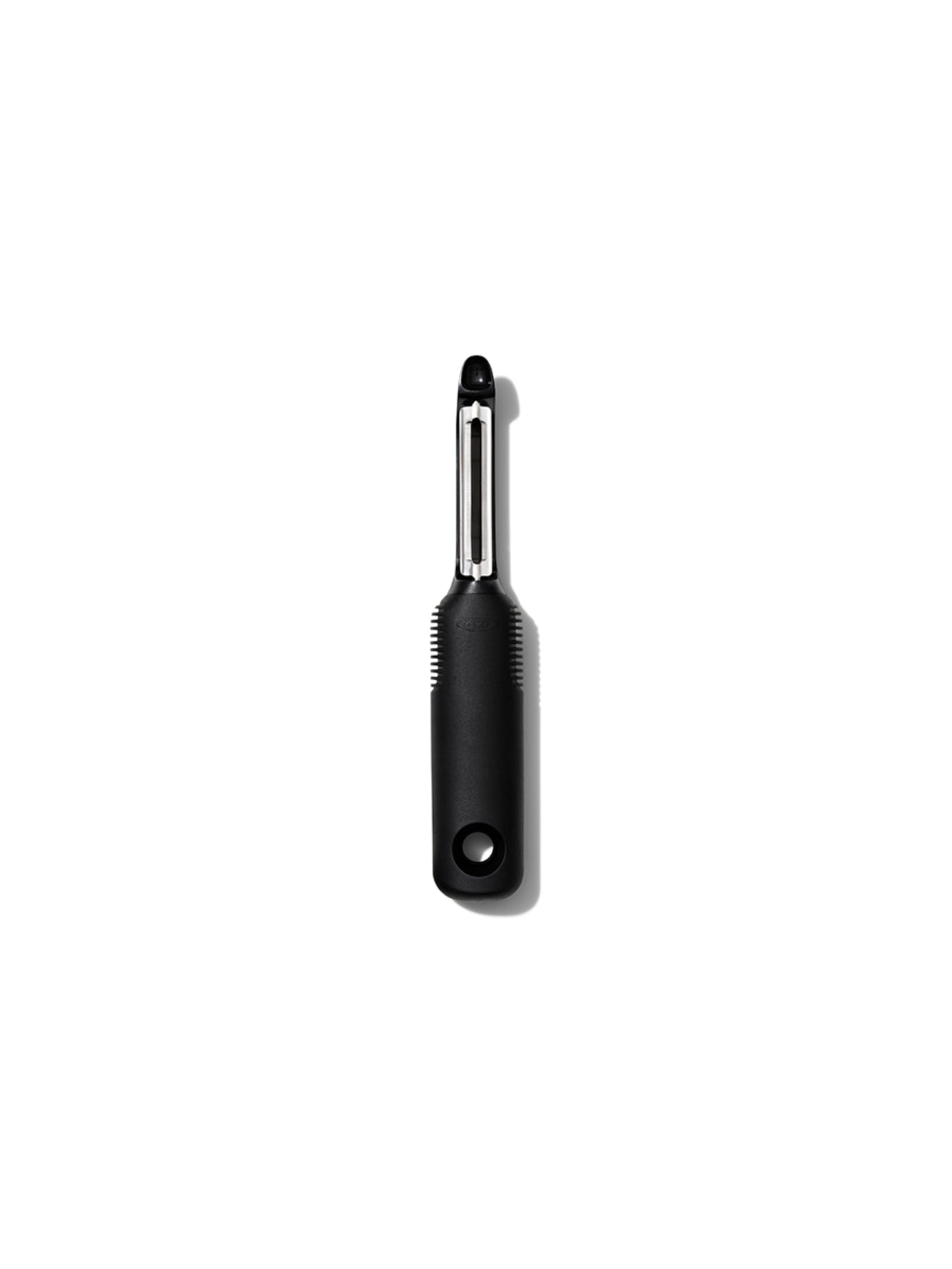


Good Grips Swivel Peeler / OXO
/ / /
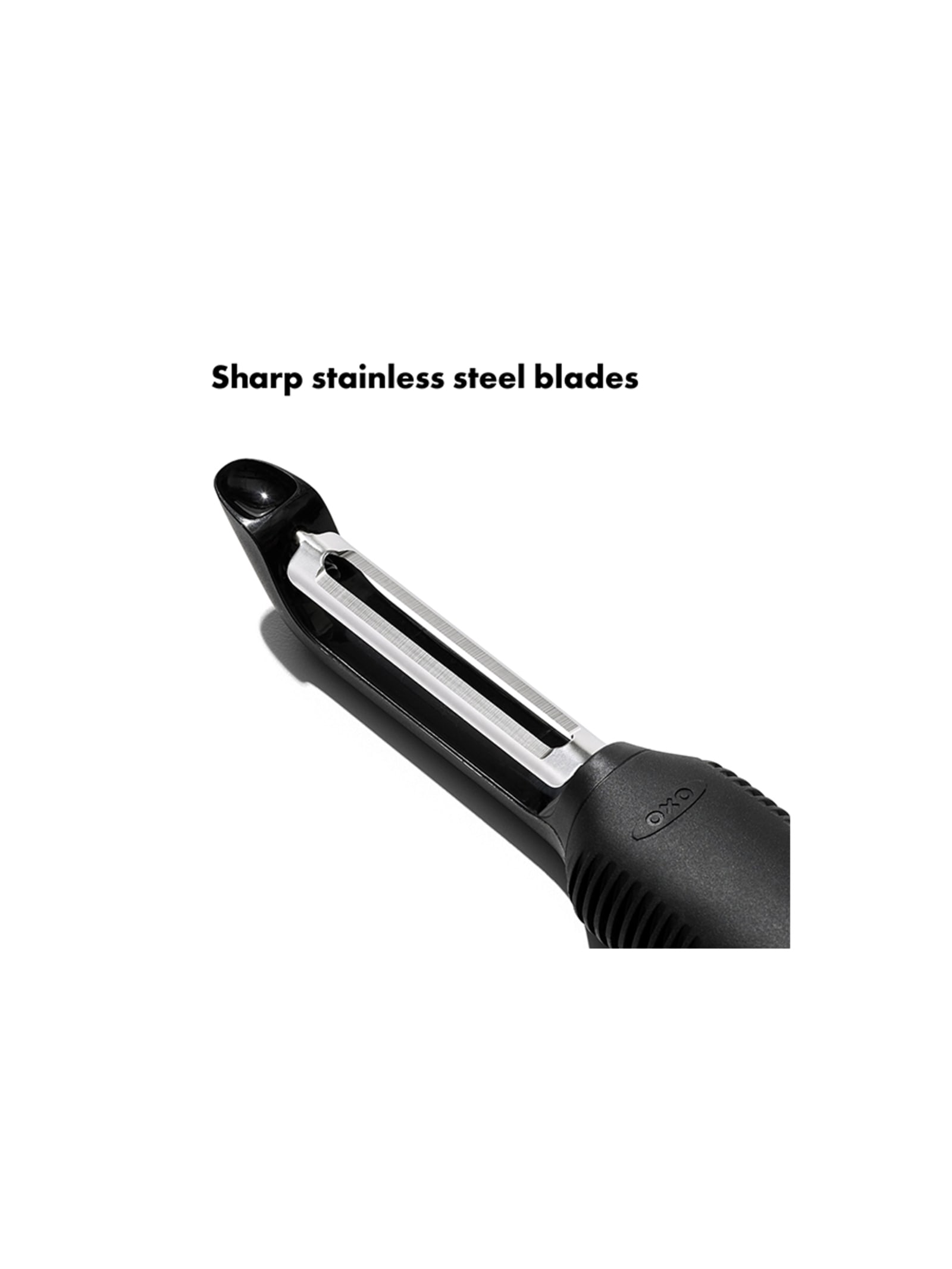
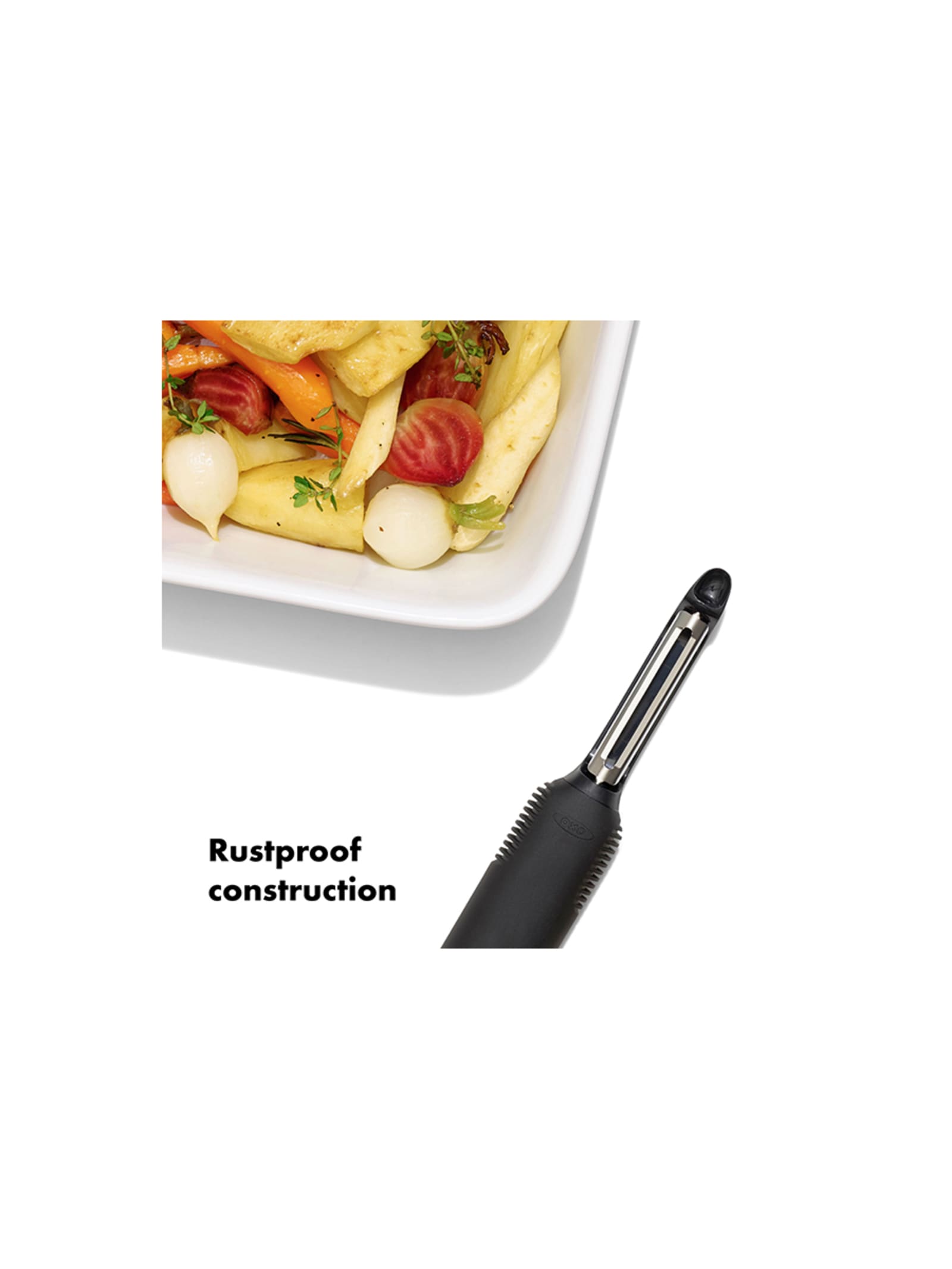
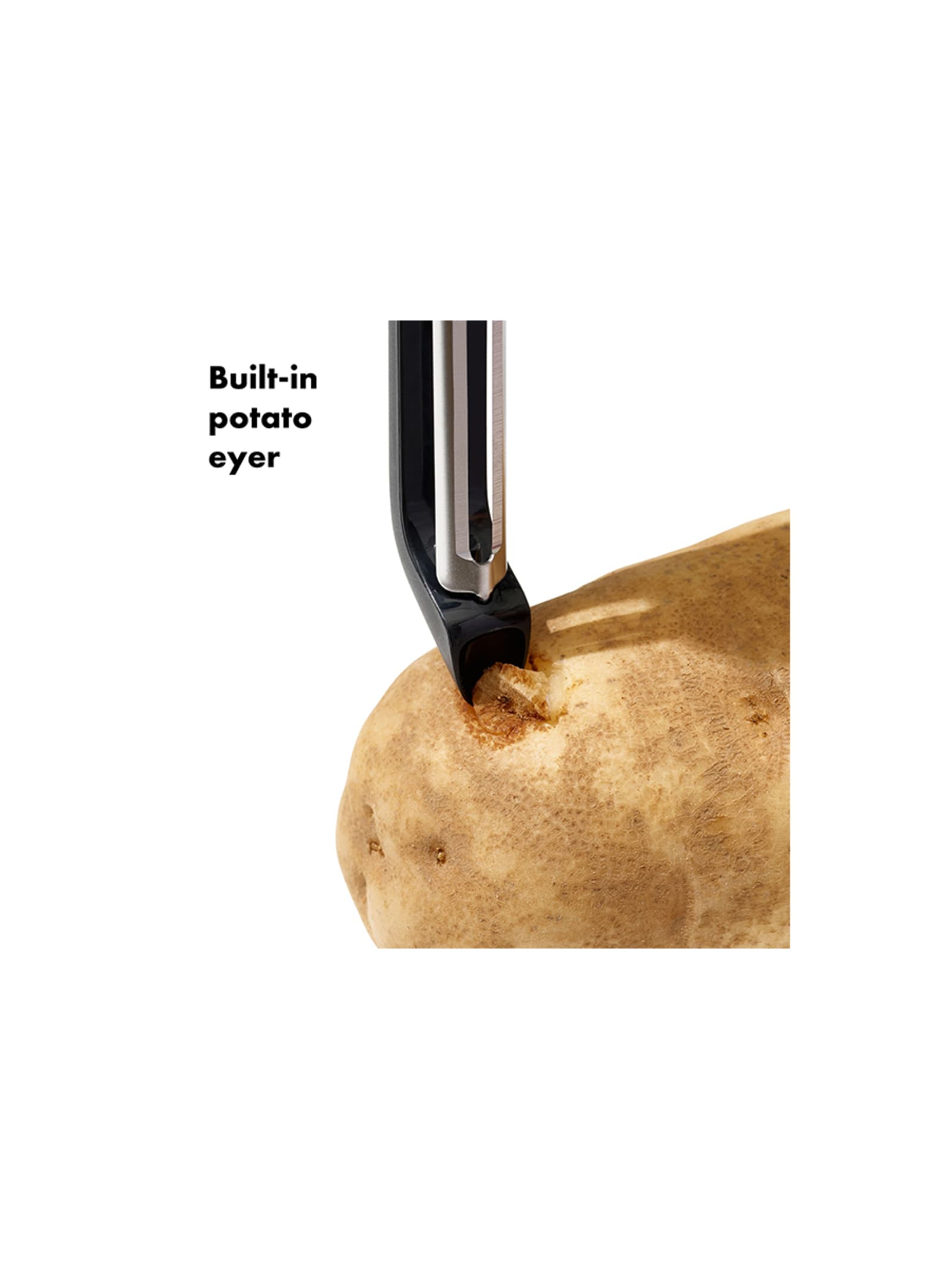
The OXO Good Grips swivel peeler is the object that proves designing for the few improves the tool for everyone. When Sam Farber watched his wife Betsey, who had arthritis, struggle with a thin metal peeler, he and the studio Smart Design set out to fix the handle. Their answer was Santoprene, a soft rubber then unused in kitchens, moulded into a fat oval grip with flexible fins that give under a thumb and hold fast when wet. The blade is an ordinary swivelling stainless one; the design is all in the handle. Comfortable for weak hands, it proved better for every hand, and launched a whole line and a design movement. Held by MoMA, it suits anyone who wants a cheap tool that is simply more comfortable to use, and accepts that the blade, not the grip, is the part that eventually wears.
Design intent
- The defining decision was to design for the extreme: built for a user with arthritis, the fat Santoprene handle with its flexible fins gives grip and comfort that happen to make the peeler better for every hand, wet or dry, weak or strong, the founding example of inclusive design.
- The innovation is concentrated entirely in the handle, leaving the humble swivelling stainless blade unchanged, so an ordinary, inexpensive tool is transformed by rethinking only the part that meets the hand rather than reinventing the whole object.
Trade-offs
- The swivel blade is fixed and not meant to be replaced, so when it dulls after years the tool is renewed rather than resharpened, which suits its low price but makes it a long-life consumable rather than an heirloom.
- The soft grip that defines it is a synthetic rubber that can, over many years and with heat or oils, eventually degrade or grow tacky, the one part whose ageing is less graceful than the steel it is paired with.
- Source
- Year
- Category
- /
- Colour
- Material
- ,
- Indexed
- 4 Sept 2025