341 Usb C Hub 7 In 1 / Anker
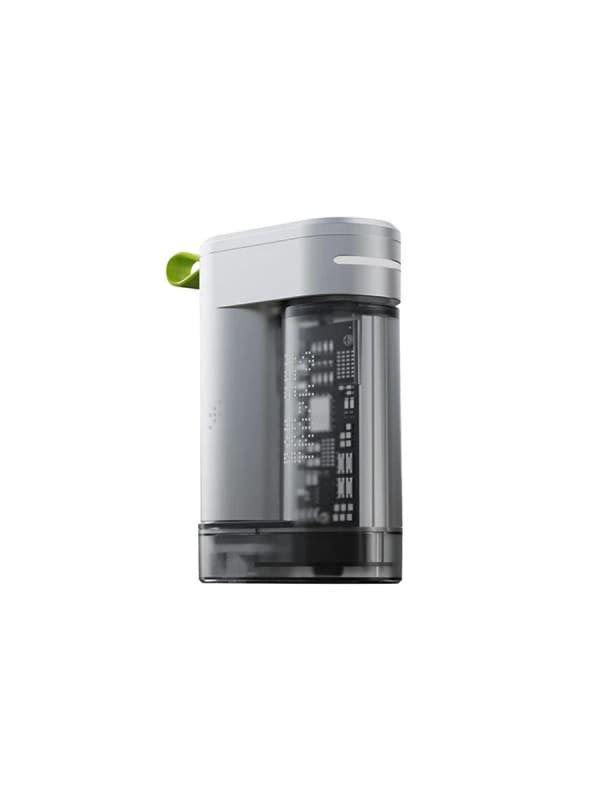
The 341 is a study in what a laptop hub actually needs to be. Modern thin laptops have deleted almost every port; this palm-sized block gives seven back through a single USB-C connection: two USB-A ports, a USB-C data port, HDMI for an external screen, and full-size SD and microSD card slots for a camera. It also passes power through, taking up to 100 watts from a charger and delivering 85 of it to the laptop, so the one port it occupies is not a port it costs you. It is unbranded in any loud way, sized to sit unnoticed beside a machine, and priced as infrastructure rather than a statement. It suits the photographer or laptop worker who wants their ports back without a desktop dock.
Design intent
- +Power pass-through is the decision that makes the object coherent: by accepting a charger and feeding the laptop while occupying its only USB-C port, the hub gives back seven connections without taking away the one it needs, which is what separates a usable hub from a compromise.
- +The port selection is chosen rather than maximised: full-size SD alongside microSD, HDMI and both USB standards cover what people actually plug in, on the reasoning that a hub is judged by whether the port you reach for is there, not by the count on the box.
Trade-offs
- -The hub consumes 15 watts of the 100 it accepts, so a 100W charger delivers 85W to the laptop, and the HDMI output is limited to 4K at 30Hz, which is fine for productivity but visibly less smooth than 60Hz for video or motion.
- -Video is available only through HDMI, not through the USB-C ports, so a USB-C monitor cable will not drive a display, and the compact aluminium body runs noticeably warm under sustained charging and data transfer.
Featured in / Collections
View allFeatured in / Editorials
View allThe 341 is a study in what a laptop hub actually needs to be. Modern thin laptops have deleted almost every port; this palm-sized block gives seven back through a single USB-C connection: two USB-A ports, a USB-C data port, HDMI for an external screen, and full-size SD and microSD card slots for a camera. It also passes power through, taking up to 100 watts from a charger and delivering 85 of it to the laptop, so the one port it occupies is not a port it costs you. It is unbranded in any loud way, sized to sit unnoticed beside a machine, and priced as infrastructure rather than a statement. It suits the photographer or laptop worker who wants their ports back without a desktop dock.
Design intent
- +Power pass-through is the decision that makes the object coherent: by accepting a charger and feeding the laptop while occupying its only USB-C port, the hub gives back seven connections without taking away the one it needs, which is what separates a usable hub from a compromise.
- +The port selection is chosen rather than maximised: full-size SD alongside microSD, HDMI and both USB standards cover what people actually plug in, on the reasoning that a hub is judged by whether the port you reach for is there, not by the count on the box.
Trade-offs
- -The hub consumes 15 watts of the 100 it accepts, so a 100W charger delivers 85W to the laptop, and the HDMI output is limited to 4K at 30Hz, which is fine for productivity but visibly less smooth than 60Hz for video or motion.
- -Video is available only through HDMI, not through the USB-C ports, so a USB-C monitor cable will not drive a display, and the compact aluminium body runs noticeably warm under sustained charging and data transfer.