

Enamel Mug / Falcon
/ / /
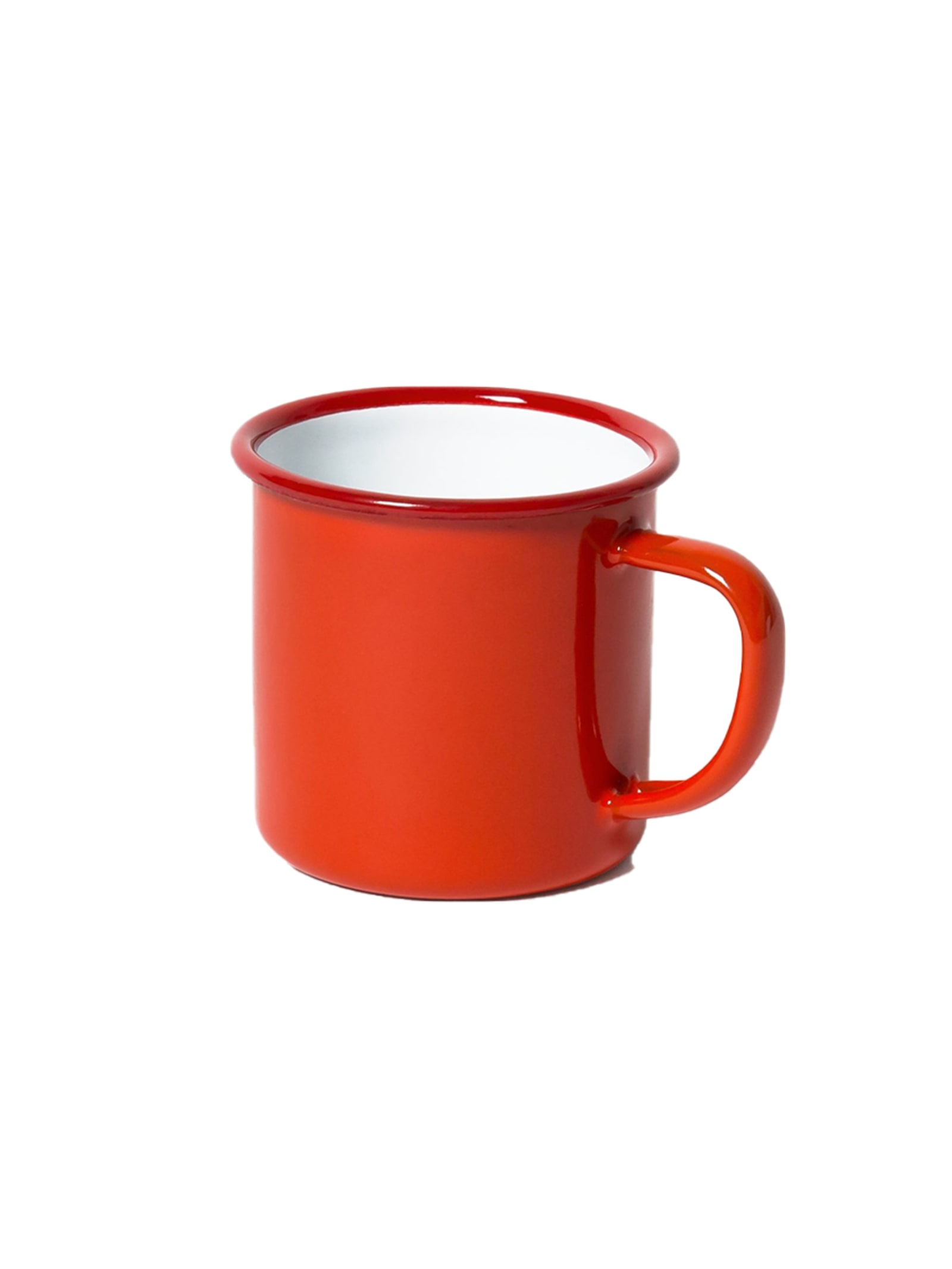
The Falcon mug is a piece of British domestic history: the ice-white enamel mug with the blue rim, in production in one form since the 1920s. Enamelware is a genuinely honest material, porcelain fused to heavy-gauge steel, and the mug wears its construction openly. It cannot burn, shrugs off heat from a hob or campfire, and if dropped it will chip rather than shatter, and that chip, usually at the blue rim, becomes part of its character rather than the end of its life. The 2011 revival thickened the steel of the classic mug for durability. It is inexpensive, stackable and effectively inert: glass, clay and steel, with no plastic. It suits someone who wants a mug for the kitchen, the campsite or the studio that ages into something better used, and accepts the chips as the record of that use.
Design intent
- The material is the whole argument: vitreous enamel fused onto heavy-gauge steel gives a mug that cannot burn, is chemically inert and takes heat from a hob or open fire, so a cheap object behaves like serious equipment rather than fragile crockery.
- The design treats wear as character rather than failure: the signature blue rim is where the enamel will eventually chip, and the mug is built to keep working, and looking right, once it does, so its life is measured in decades of use rather than a pristine surface.
Trade-offs
- Enamel on steel will chip if knocked hard enough, exposing the steel beneath, which can then mark, so the honesty of the material comes with visible ageing that some will read as damage rather than patina.
- As bare metal it conducts heat, so a hot drink warms the rim and body more than a ceramic mug would, and the heritage now sits alongside manufacture that has moved abroad, a shift from its Black Country origins.
- Source
- Year
- Category
- /
- Colour
- Material
- Indexed
- 4 Jul 2025