Embody Office Chair / Herman Miller
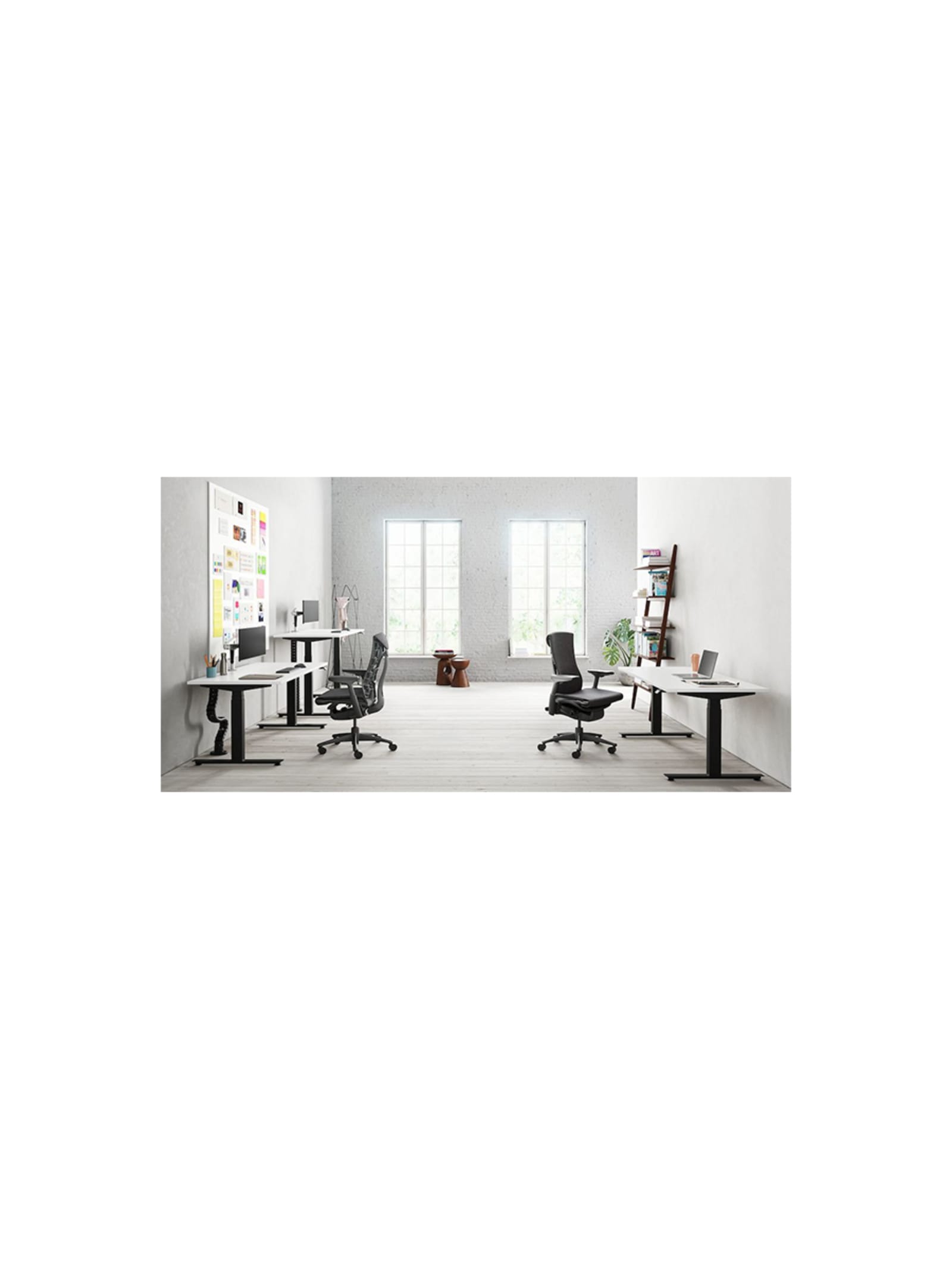
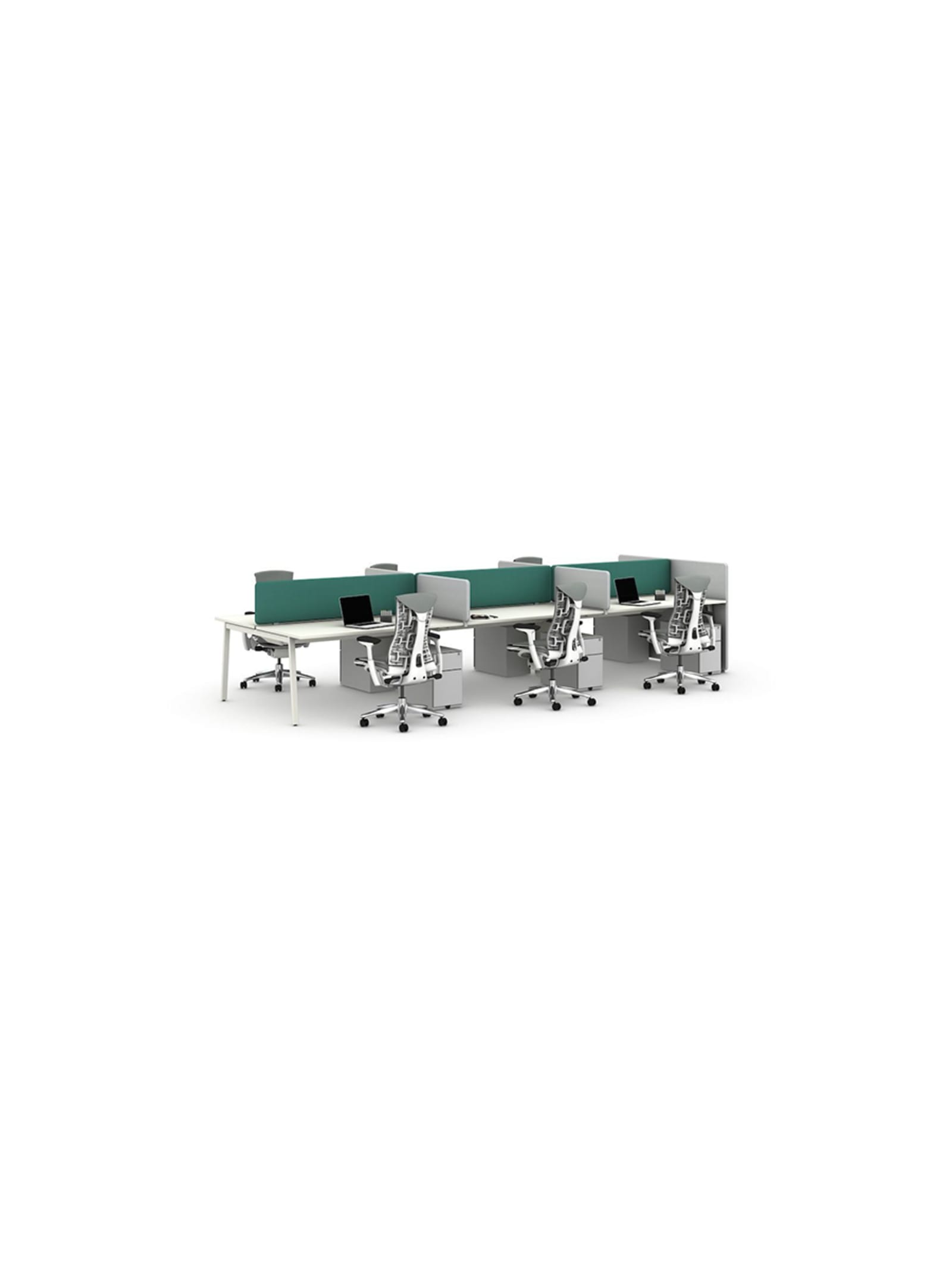
The Embody was Bill Stumpf's last design, completed with Jeff Weber in 2008, and where his earlier Aeron suspends you on taut mesh, the Embody sets out to support you in motion. Its back is built like a spine: a central column with flexible ribs, tuned by a BackFit adjustment to match your own curve. Beneath you, Pixelated Support, a matrix of independent pixels across seat and back, conforms to every micro-movement and spreads weight evenly, developed with more than twenty physicians to turn the strain of long sitting into something closer to healthy movement. Four seat layers add airflow and give. It rests on a die-cast aluminium frame, is largely recycled and recyclable, and is backed for twelve years. It suits the person at a desk for long hours who wants a chair built around the body's health, and accepts the cost and the assertive, technical look.
Design intent
- +The defining idea is a back modelled on the human spine: a central column with flexible ribs and a BackFit adjustment that aligns the chair's curve to the sitter's, so the backrest moves with the body and holds a neutral posture rather than bracing it in one fixed position.
- +Pixelated Support, a dense matrix of independent pixels across seat and back, is designed to conform to constant micro-movements and distribute weight evenly, an attempt, guided by physicians and biomechanists, to make long sitting actively healthier rather than merely tolerable.
The Embody was Bill Stumpf's last design, completed with Jeff Weber in 2008, and where his earlier Aeron suspends you on taut mesh, the Embody sets out to support you in motion. Its back is built like a spine: a central column with flexible ribs, tuned by a BackFit adjustment to match your own curve. Beneath you, Pixelated Support, a matrix of independent pixels across seat and back, conforms to every micro-movement and spreads weight evenly, developed with more than twenty physicians to turn the strain of long sitting into something closer to healthy movement. Four seat layers add airflow and give. It rests on a die-cast aluminium frame, is largely recycled and recyclable, and is backed for twelve years. It suits the person at a desk for long hours who wants a chair built around the body's health, and accepts the cost and the assertive, technical look.
Design intent
- +The defining idea is a back modelled on the human spine: a central column with flexible ribs and a BackFit adjustment that aligns the chair's curve to the sitter's, so the backrest moves with the body and holds a neutral posture rather than bracing it in one fixed position.
- +Pixelated Support, a dense matrix of independent pixels across seat and back, is designed to conform to constant micro-movements and distribute weight evenly, an attempt, guided by physicians and biomechanists, to make long sitting actively healthier rather than merely tolerable.
Trade-offs
- -It is expensive and offers fewer manual adjustments than some rivals, with a 300-pound weight rating below the most accommodating task chairs, so its appeal rests on the support system rather than on sheer configurability.
- -The visible, technical look, with its exposed spine and pixel matrix, is a deliberate aesthetic that reads as clinical to some eyes, so the chair commits to showing its engineering rather than concealing it.