Phone 3 / Nothing
/ / /
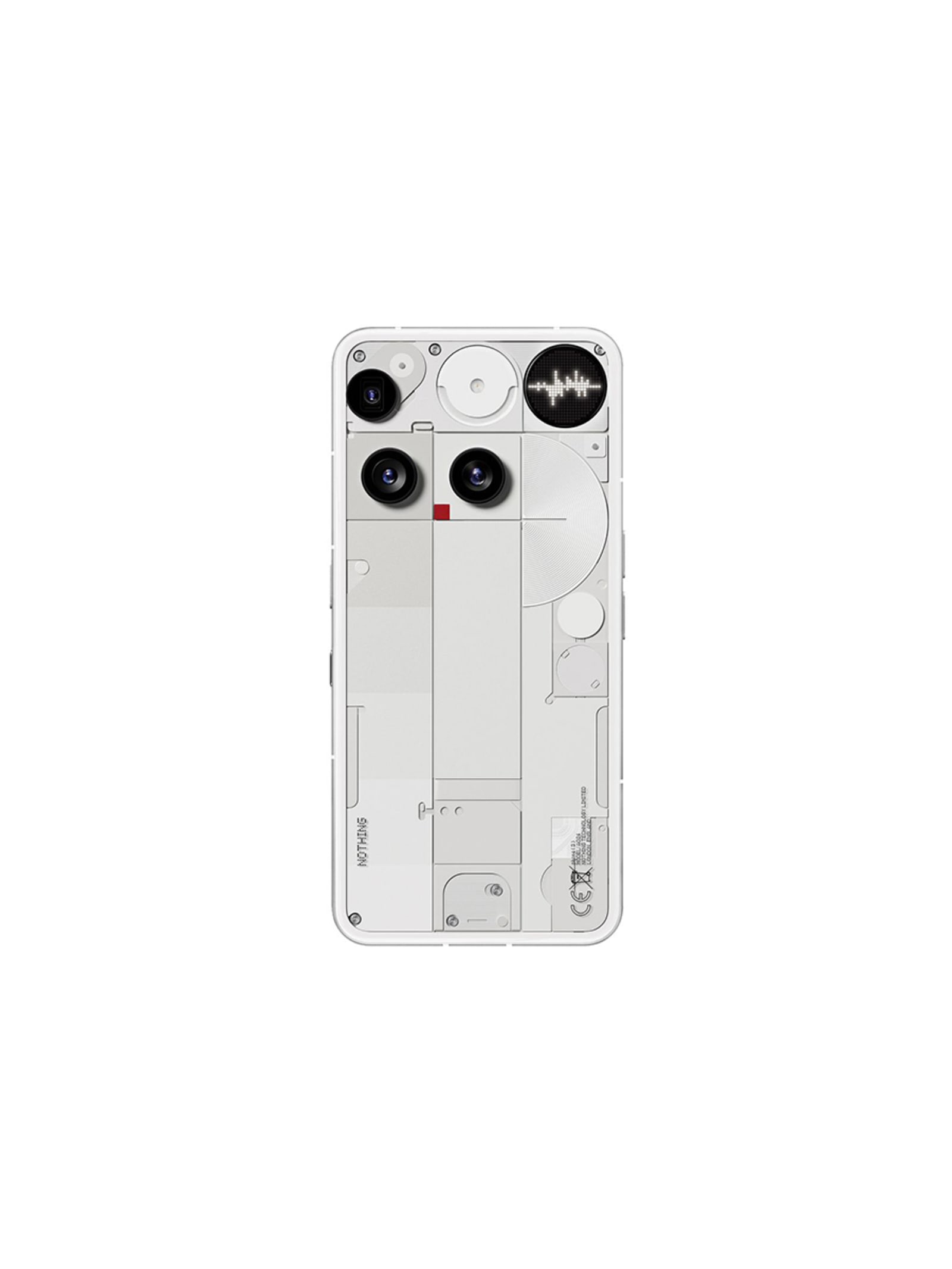
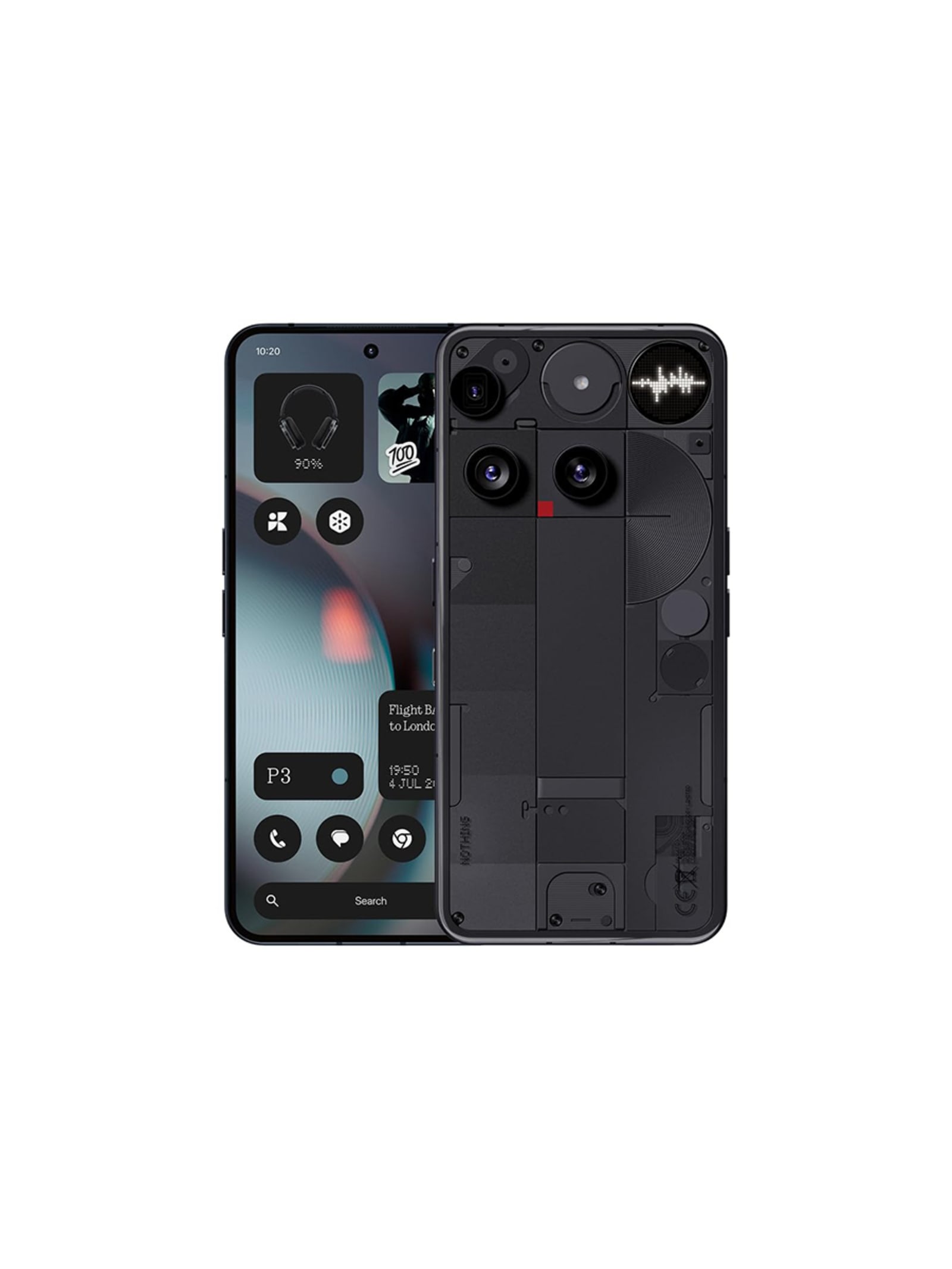
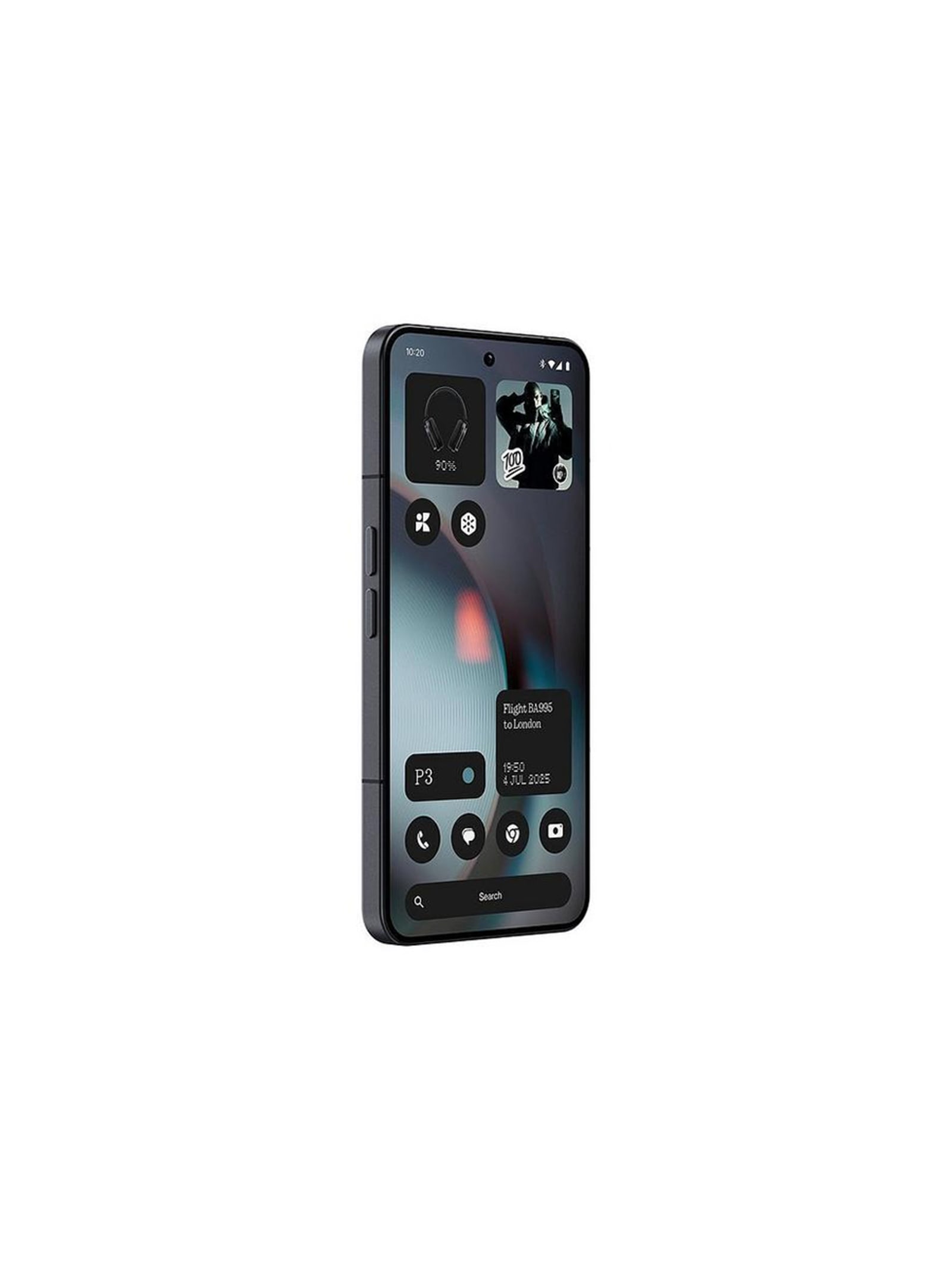
The Phone 3 is Nothing's first self-described true flagship, and its signature is on the back: the Glyph Matrix, a circular dot-matrix display of 489 individually-lit LEDs in the top corner, operated by a dedicated rear button. It shows caller ID, notifications and status, and runs small Glyph Toys such as a clock or stopwatch, the argument being that glancing at the back is less intrusive than turning the screen on. The hardware is upper-midrange dressed as flagship: a Snapdragon 8s Gen 4, a 6.67-inch 120Hz AMOLED, a triple 50-megapixel rear camera and an IP68 rating, with Nothing's transparent rear panel arranged in a deliberate tri-column geometry. Nothing OS strips back the visual clutter and default layers that accumulate in stock Android; the interface decisions feel authored rather than incidental.
Design intent
- The Glyph Matrix adds a second, low-key display surface on the back that communicates without lighting the main screen, and the dot-matrix format earns the idea in daily use rather than as novelty.
- Nothing OS removes notification layers and visual defaults that pile up in Android distributions; the choices are editorial, not merely cosmetic.
Trade-offs
- The Glyph Matrix only helps when the phone is face-down or held a certain way; in a pocket or bag its value drops to near zero.
- Nothing promises five years of OS and seven of security updates, strong on paper, but as a younger company its long-term track record is shorter than Samsung's or Google's.
- Source
- Year
- Category
- /
- Colour
- Material
- ,
- Indexed
- 4 Aug 2025