)
)
)


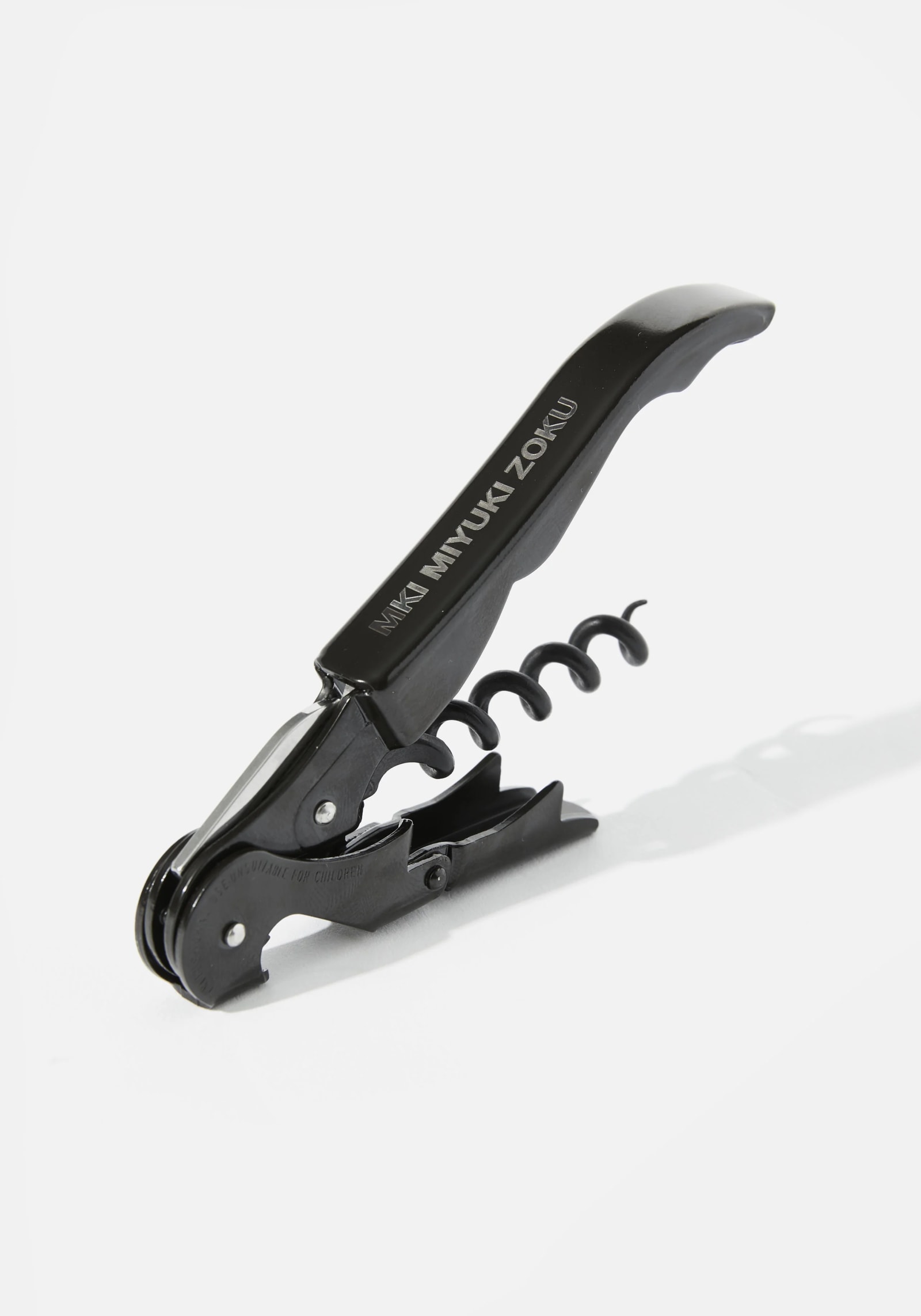
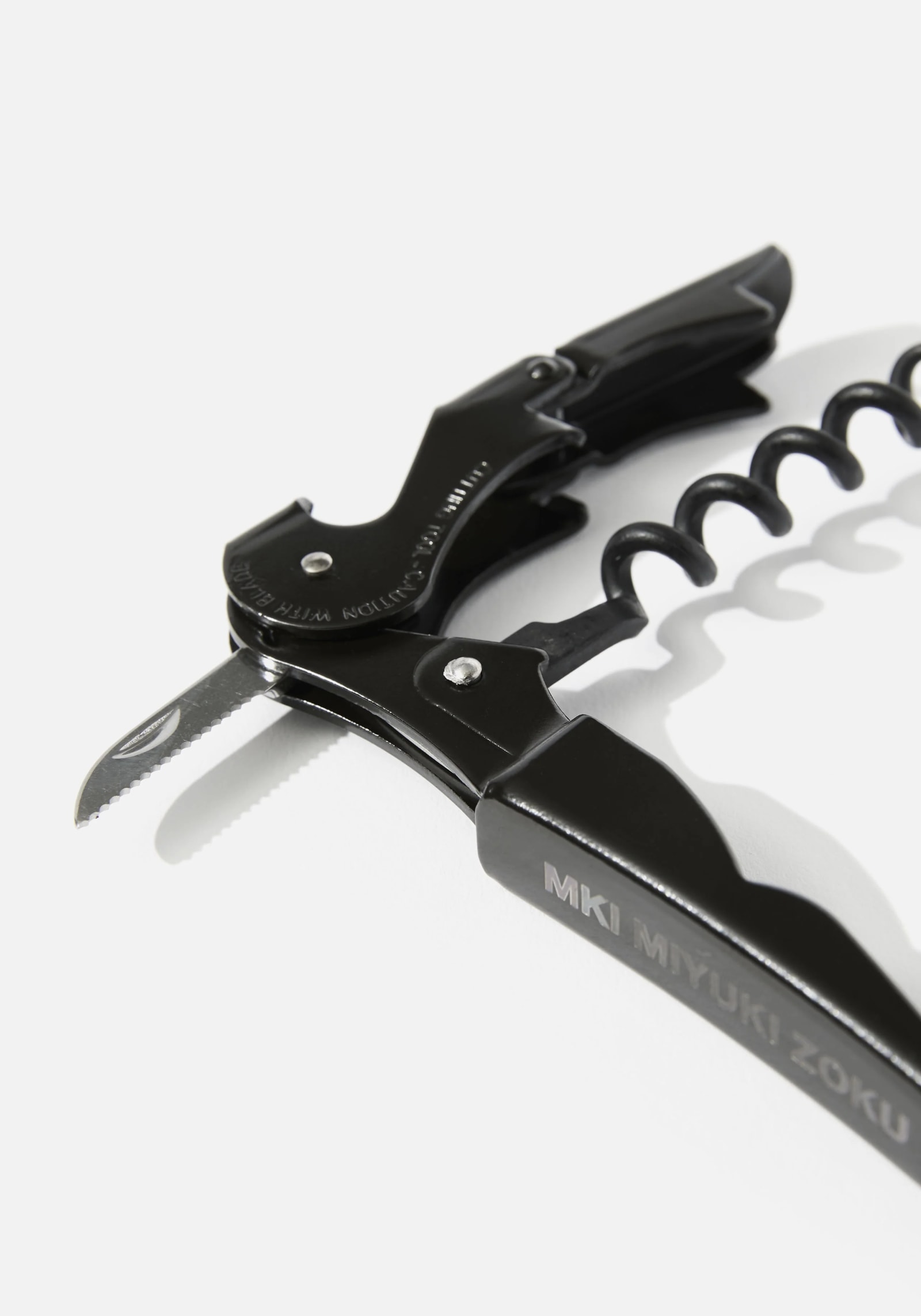
Classic 500 Corkscrew / Pulltap's
/ / /
The Classic 500 is the corkscrew that introduced the double-hinged lever, patented in Barcelona in 1995 as the first of its kind. A standard waiter's friend pivots on one notch and has to be repositioned partway through a long cork; the Classic 500's two-step fulcrum lets the cork come out in two controlled pulls without lifting the tool from the bottle, which keeps the force low and the cork intact. The worm is Teflon-coated so it threads through natural or synthetic corks with little resistance, and the foil is handled by a micro-serrated articulated blade that returns to its housing on its own. The handle is metal, the build is made in Spain, and the whole thing has stayed in professional service largely unchanged for decades.
Design intent
- The double-hinged fulcrum turns extraction into two short, leverage-efficient pulls one hand can manage while the other steadies the bottle: a real mechanical gain over the single-notch waiter's key, not a styling difference.
- The Teflon-coated worm is a deliberate choice for a tool opened dozens of times a shift, lowering insertion resistance and the fragmentation that breaks corks.
Trade-offs
- The second hinge adds a pivot that eventually works loose under heavy daily use, the Classic 500's usual point of failure over years of service.
- The two-stroke sequence is unforgiving for an occasional user who does not know it; the first few openings can feel awkward before the rhythm sets in.
- Source
- Year
- Category
- /
- Colour
- Material
- Indexed
- 28 Aug 2023