G-Shock 5600 Series / Casio
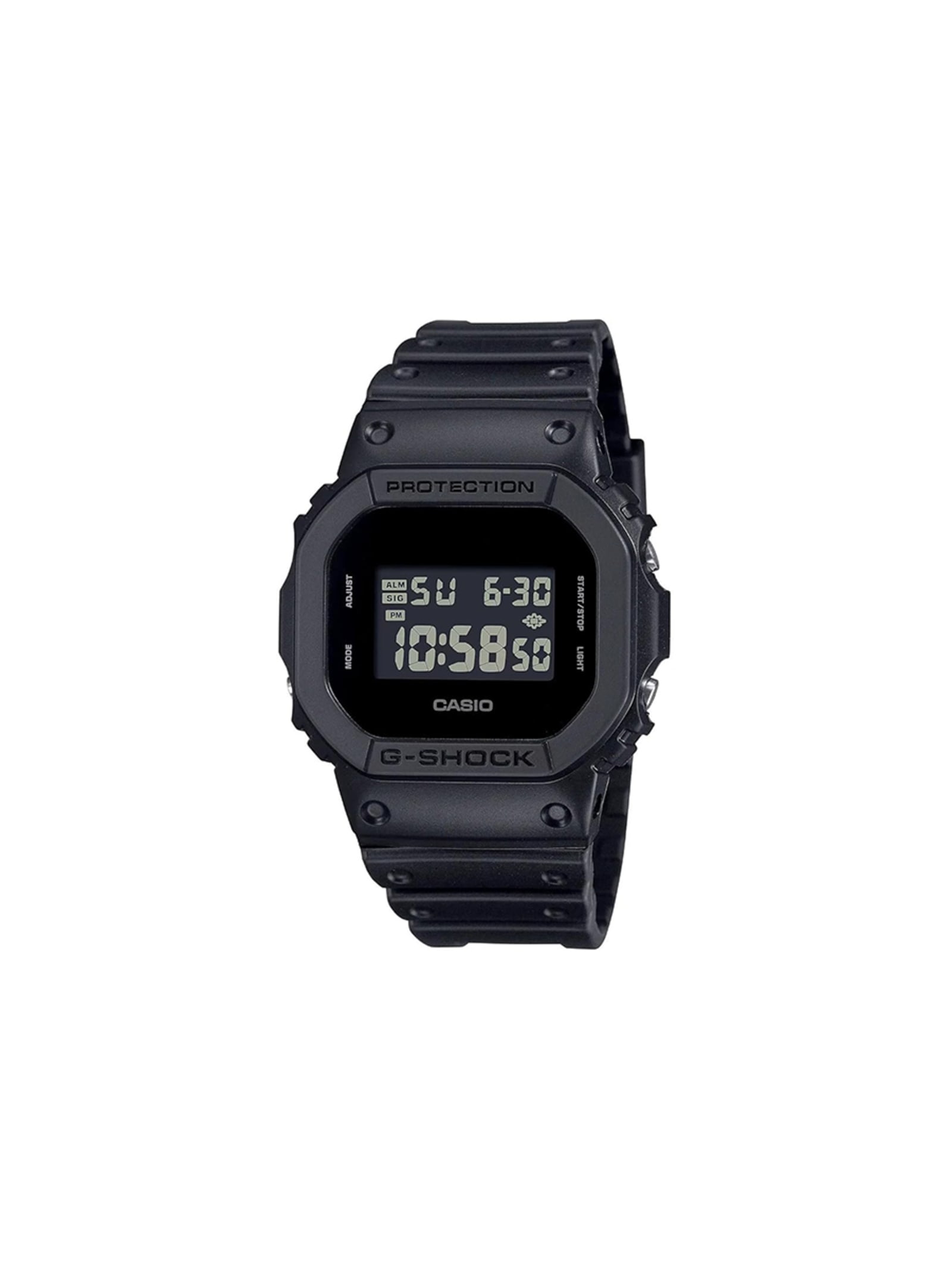
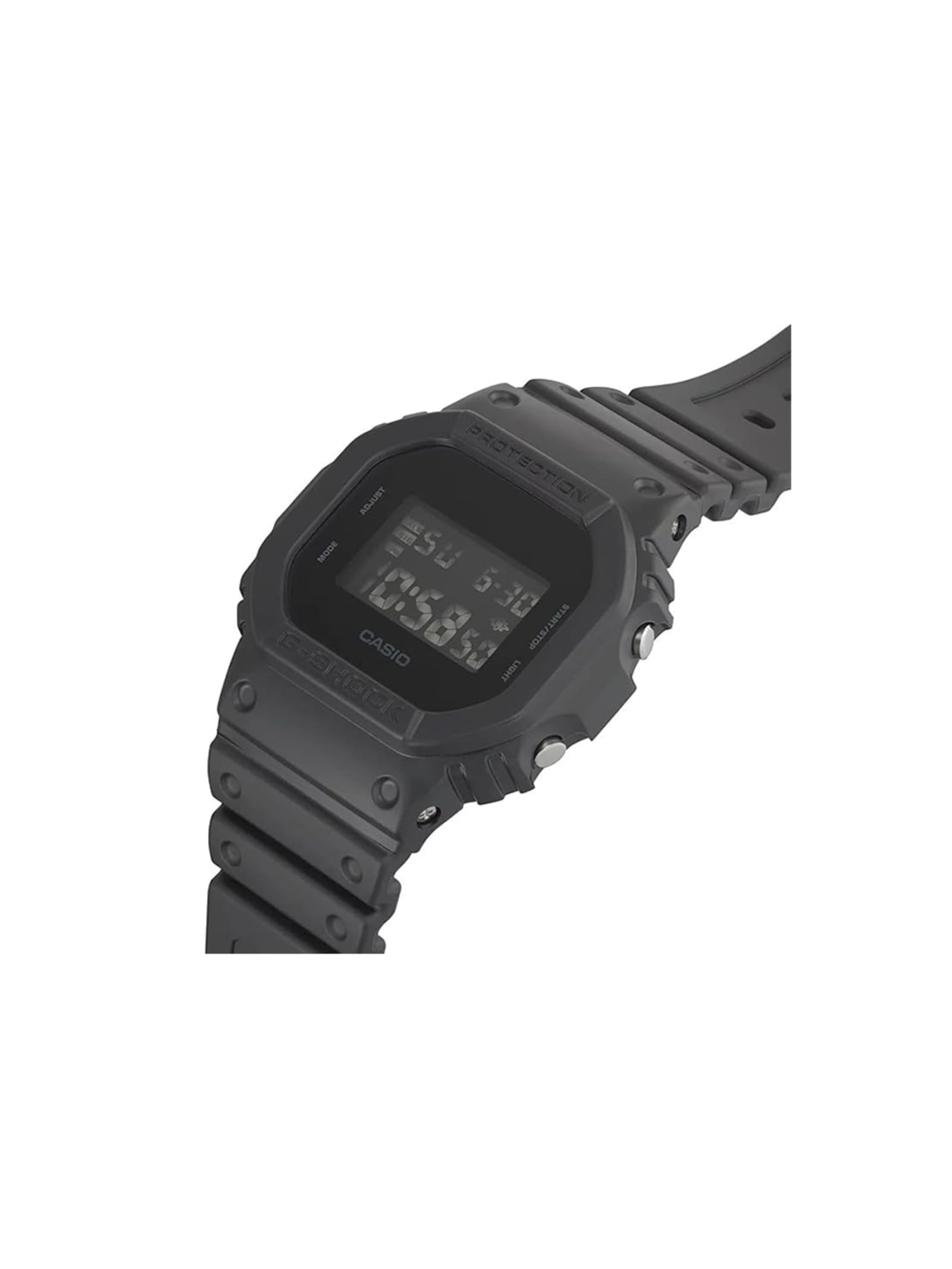
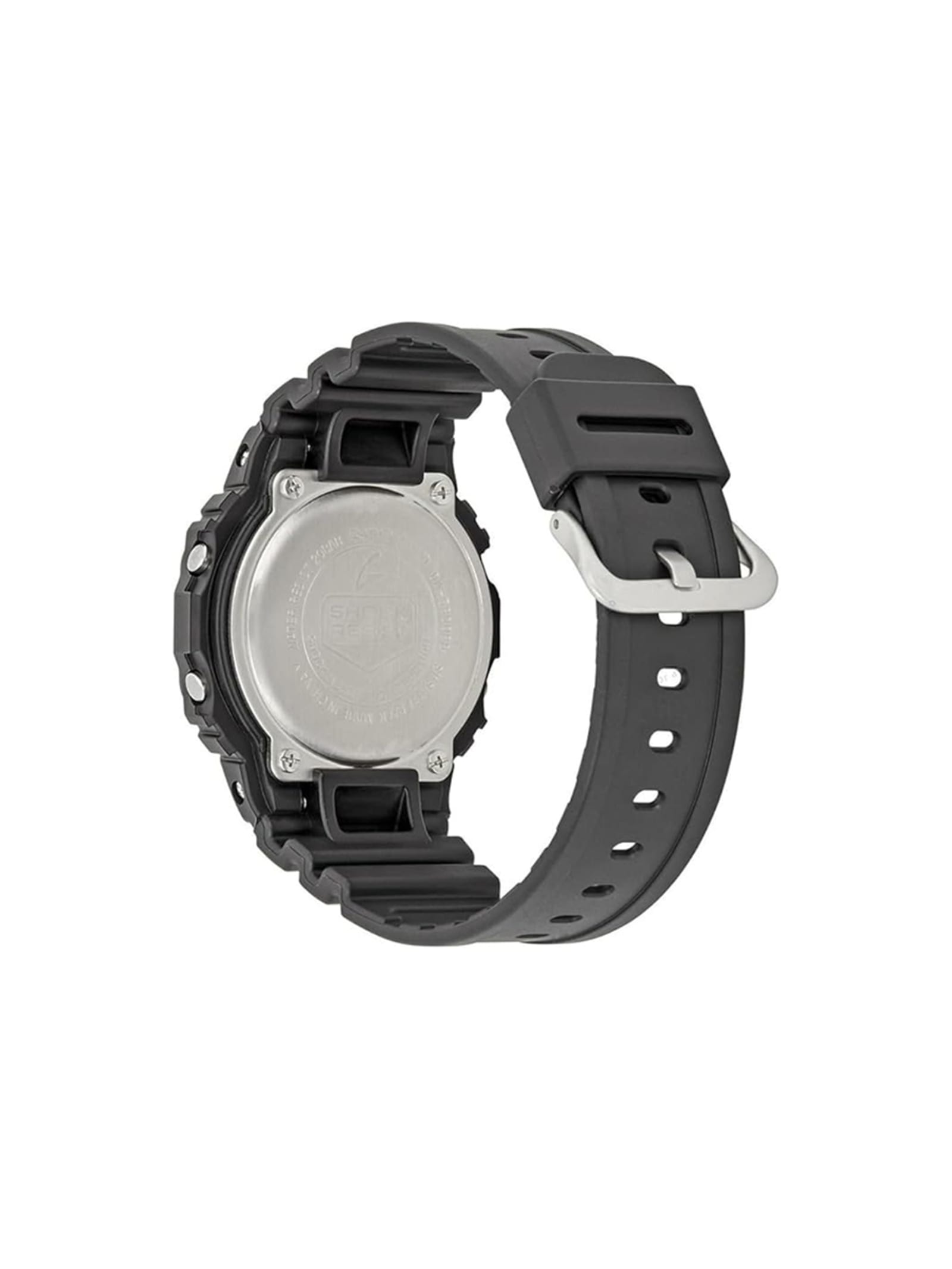
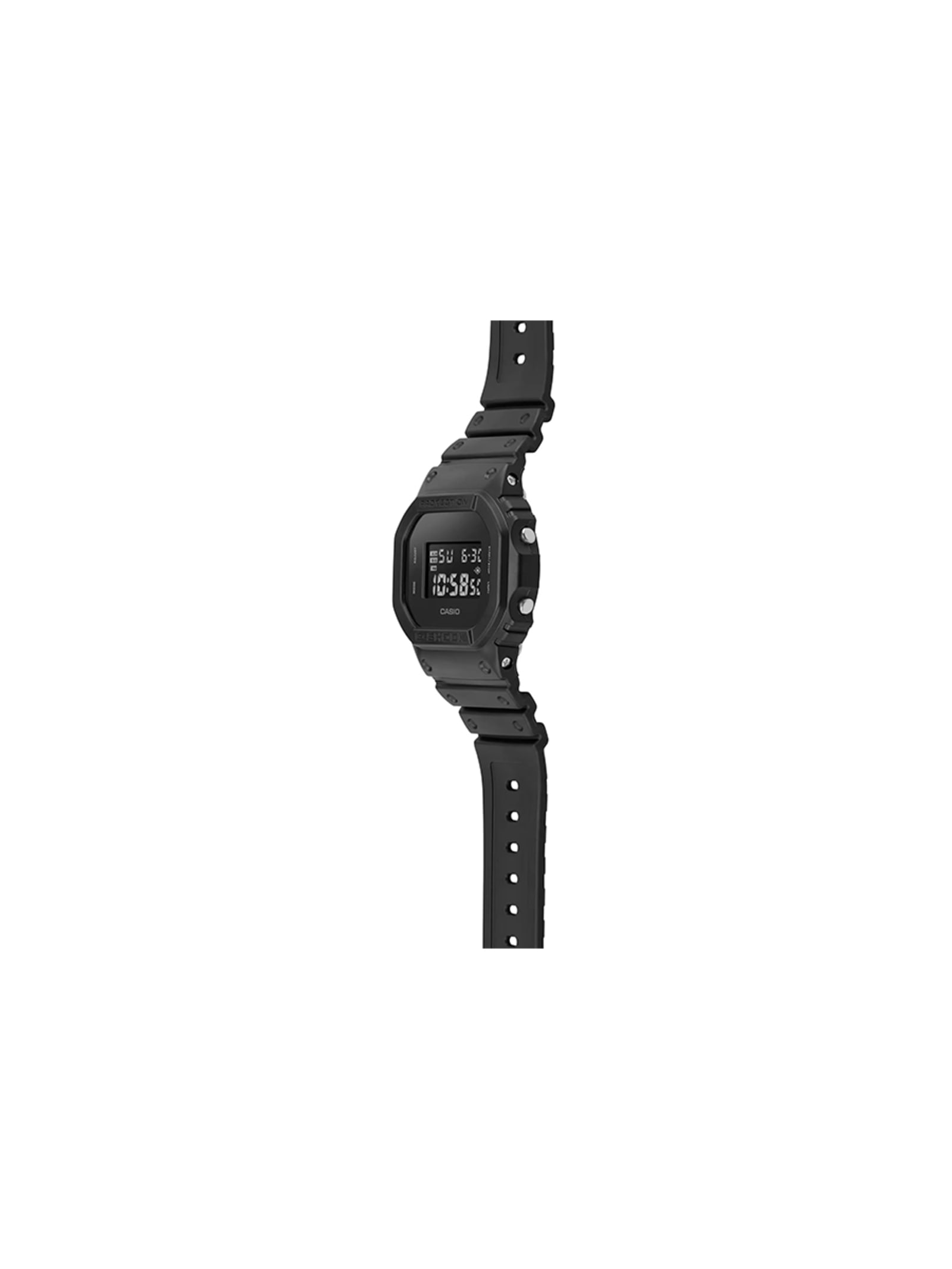
The 5600 is the closest descendant of the original 1983 G-Shock, the watch Casio engineer Kikuo Ibe built after his father's watch shattered on a pavement. His brief was the Triple 10: survive a ten-metre drop, ten bars of water pressure, and run ten years on a battery, a goal that took some two hundred prototypes and the insight that a module suspended inside the case, touching it at as few points as possible, absorbs shock before it reaches the electronics. That floating construction is still here. At 42.8mm wide and around 53 grams it is one of the smaller, lighter G-Shocks, with a raised resin bezel guarding the crystal and recessed buttons. Production models now carry 200m water resistance. The square case has become the archetype for a digital tool watch.
Design intent
- +Shock resistance is the organising principle: the module floats inside a hollow resin case on minimal contact points, so impact is absorbed by the structure before it reaches the electronics.
- +The raised bezel protects the crystal and the buttons sit recessed against accidental presses, with the square silhouette kept largely unchanged across decades as a form treated as already resolved.
Trade-offs
- -The recessed buttons and dated menu logic make setting functions fiddly compared with a modern interface.
- -The mineral crystal scratches more readily than sapphire, and the integrated strap limits aftermarket options without adapters.
The 5600 is the closest descendant of the original 1983 G-Shock, the watch Casio engineer Kikuo Ibe built after his father's watch shattered on a pavement. His brief was the Triple 10: survive a ten-metre drop, ten bars of water pressure, and run ten years on a battery, a goal that took some two hundred prototypes and the insight that a module suspended inside the case, touching it at as few points as possible, absorbs shock before it reaches the electronics. That floating construction is still here. At 42.8mm wide and around 53 grams it is one of the smaller, lighter G-Shocks, with a raised resin bezel guarding the crystal and recessed buttons. Production models now carry 200m water resistance. The square case has become the archetype for a digital tool watch.
Design intent
- +Shock resistance is the organising principle: the module floats inside a hollow resin case on minimal contact points, so impact is absorbed by the structure before it reaches the electronics.
- +The raised bezel protects the crystal and the buttons sit recessed against accidental presses, with the square silhouette kept largely unchanged across decades as a form treated as already resolved.
Trade-offs
- -The recessed buttons and dated menu logic make setting functions fiddly compared with a modern interface.
- -The mineral crystal scratches more readily than sapphire, and the integrated strap limits aftermarket options without adapters.