Swiss Railways Essence Solar / Mondaine
/ / / /
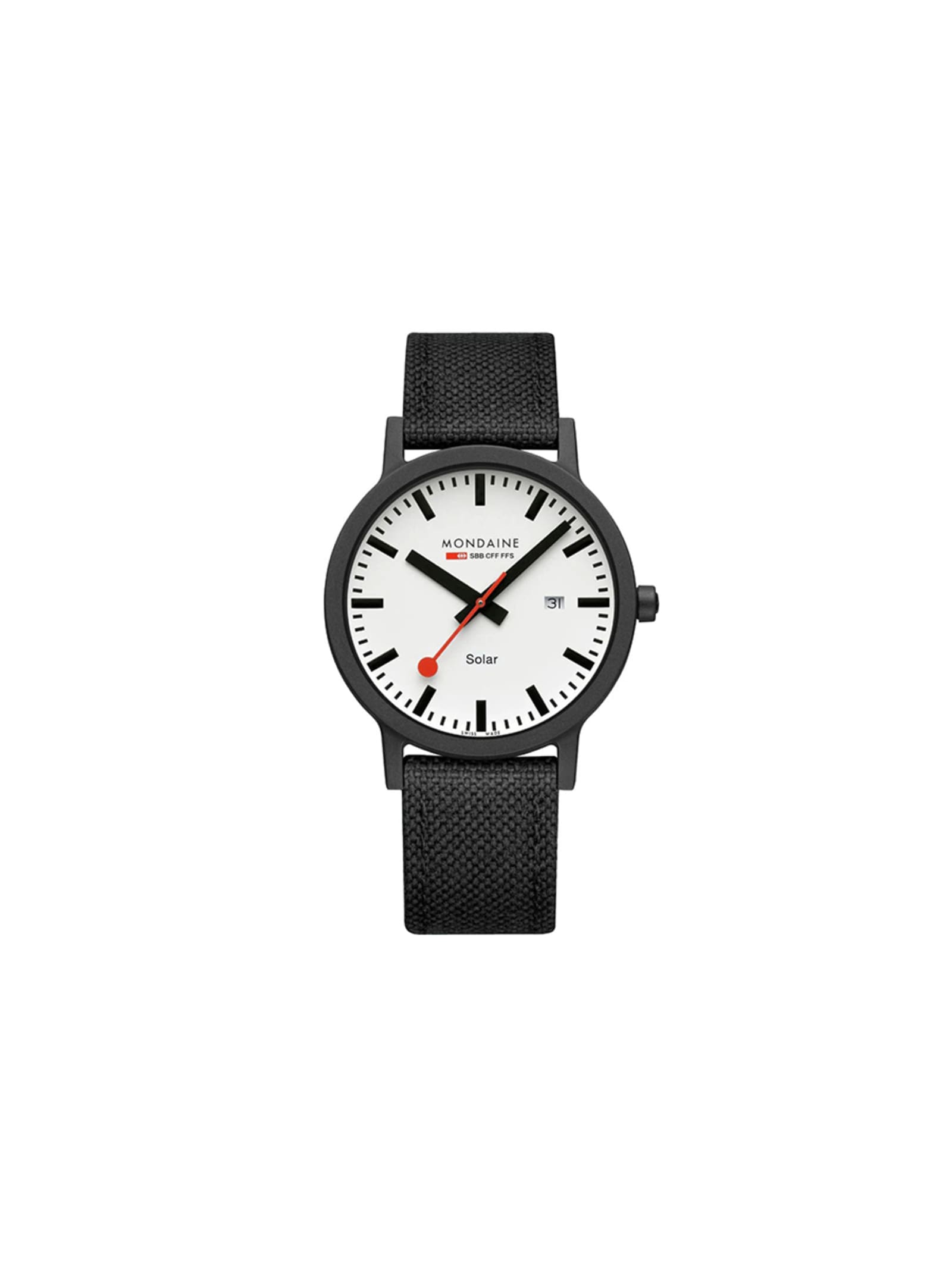
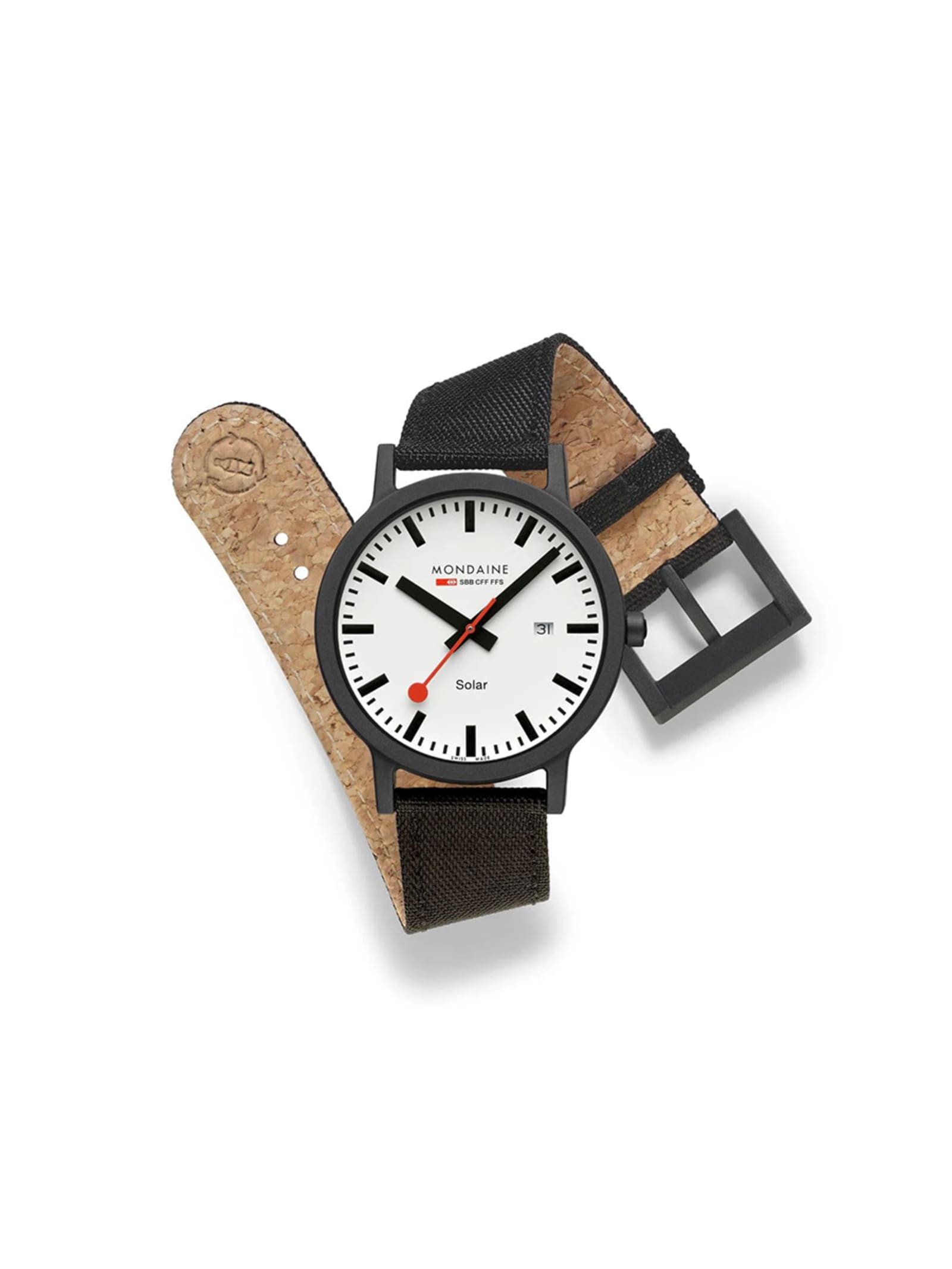
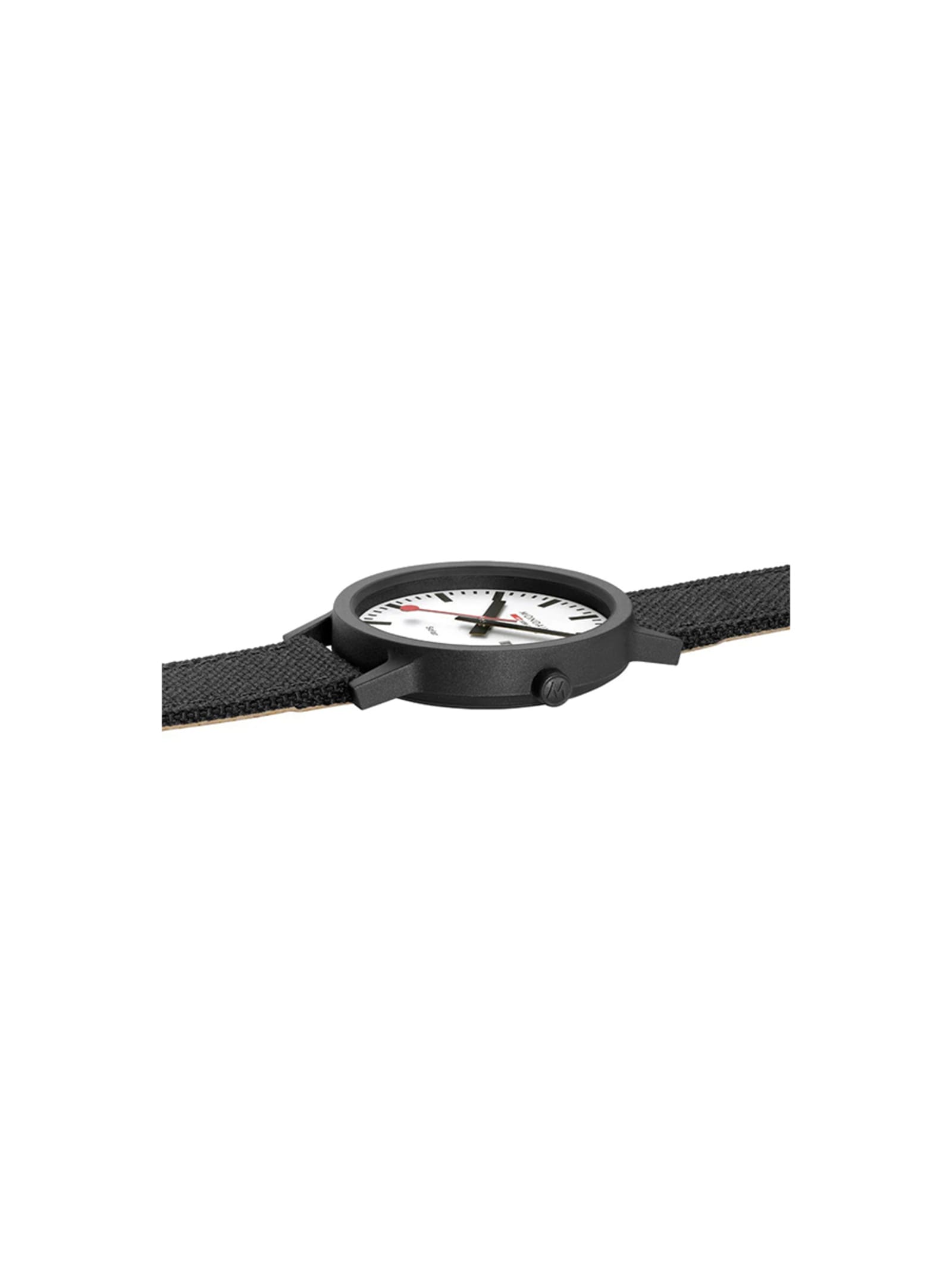
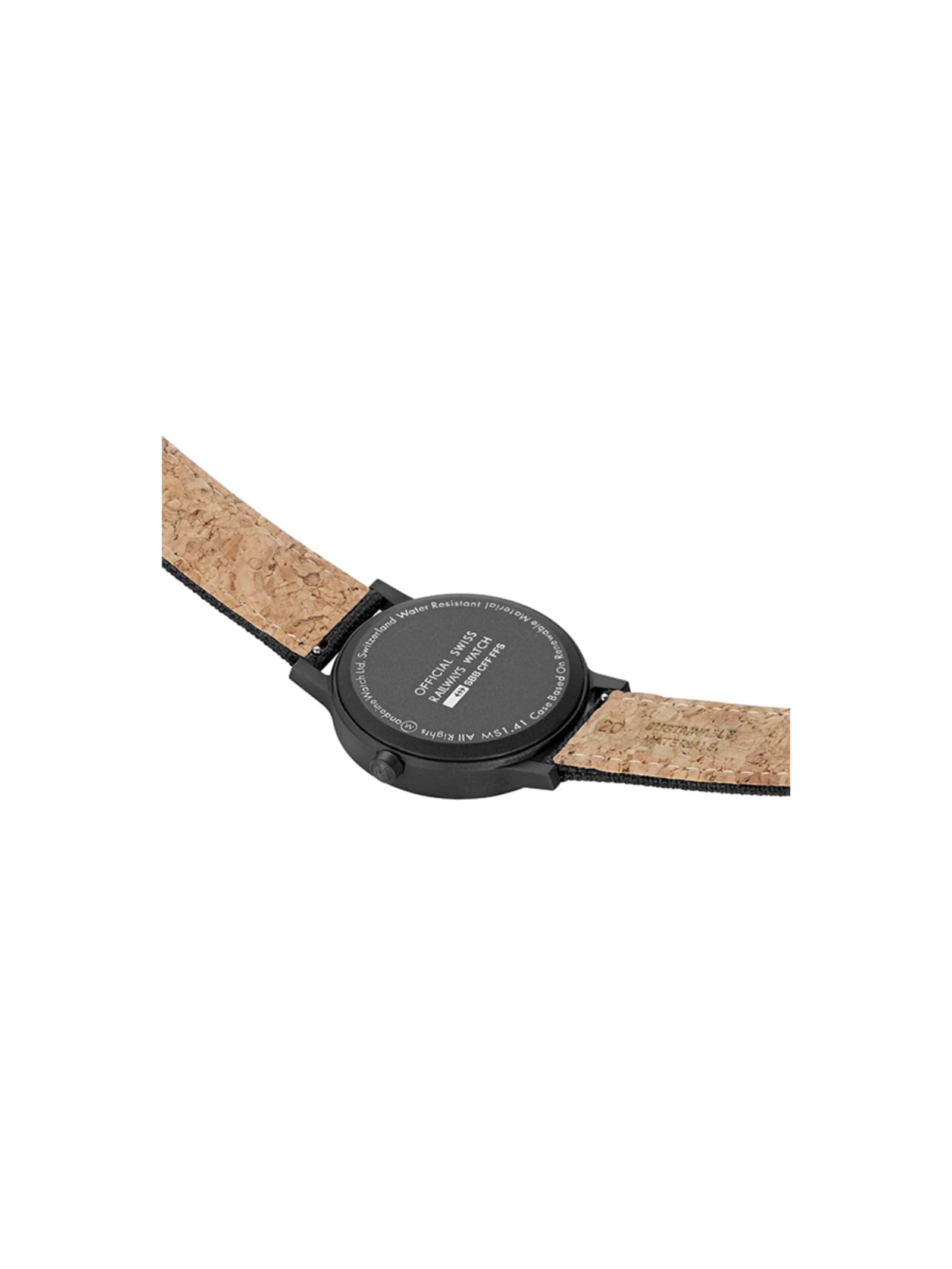
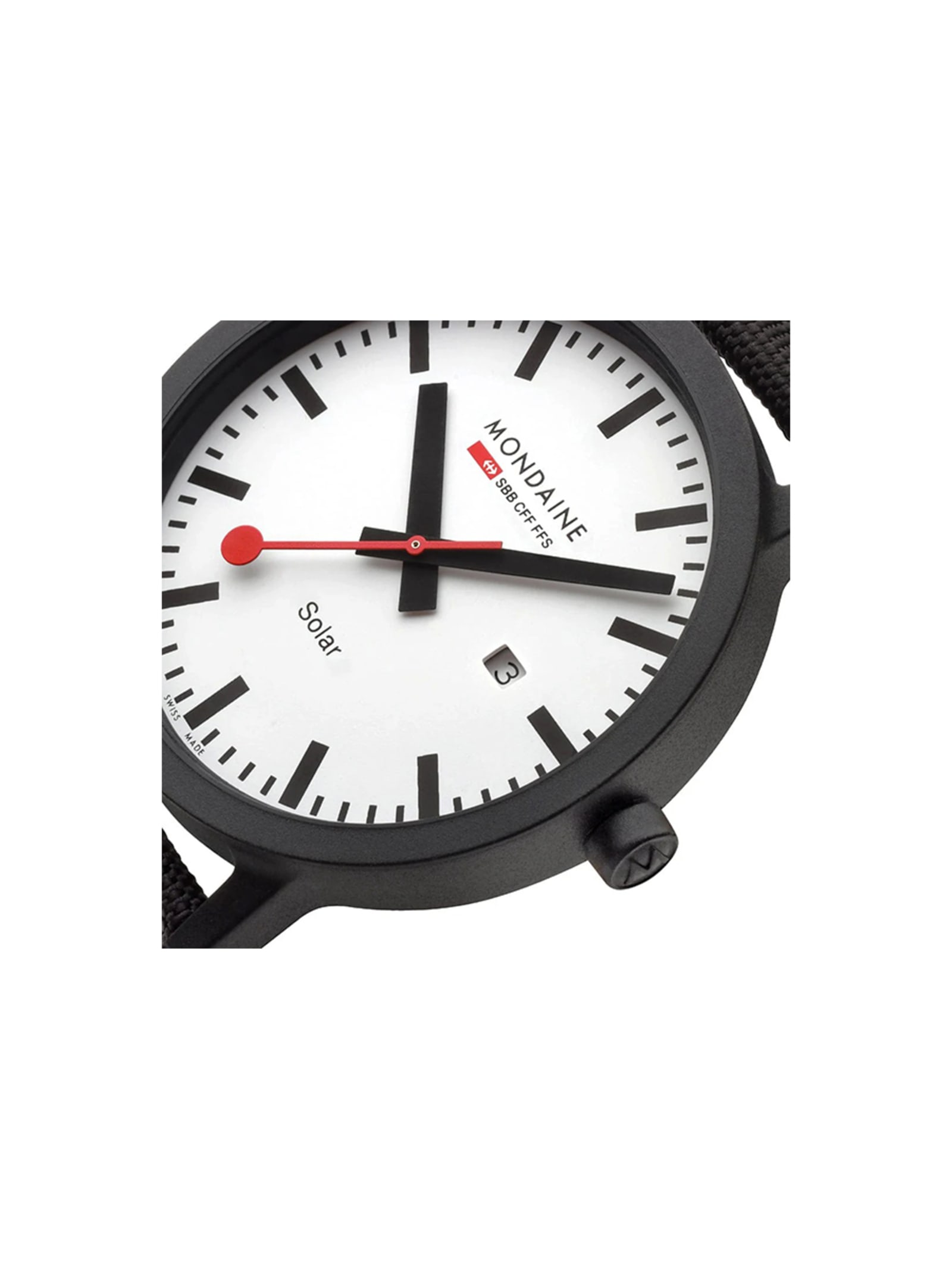
The Essence Solar carries Hans Hilfiker's 1944 Swiss Federal Railways station-clock dial, bold black markers and the red disc seconds hand and all, onto a solar-powered wrist. The 41mm case is moulded from a castor-oil bio-composite, roughly 40% castor oil, 30% glass fibre, 28% fossil plastic and 2% colour pigment, which makes it noticeably light on the wrist. A Swiss-made Ronda solar movement charges from any light source and holds up to eight months of running in darkness, so there is no battery to replace. The strap, recycled PET textile on the white version, is lined with natural cork. Mondaine assembles it in a Swiss factory run largely on solar and hydroelectric power. It is a piece of public-infrastructure design translated to the wrist without altering its graphic identity.
Design intent
- It carries a public design icon onto the wrist intact, keeping the station clock's exact graphic identity rather than reinterpreting it.
- Renewable and recycled materials run through case, strap and packaging, and solar power removes battery replacement entirely, while the original dial legibility is preserved.
Trade-offs
- The bio-composite case looks and feels like the plastic it largely is, which may read as less premium despite the environmental logic.
- Water resistance is a modest 30 metres, and the mineral crystal scratches more easily than sapphire.
- Source
- Year
- Category
- / /
- Colour
- Material
- Indexed
- 29 Jan 2024