



Laptop 13 / Framework
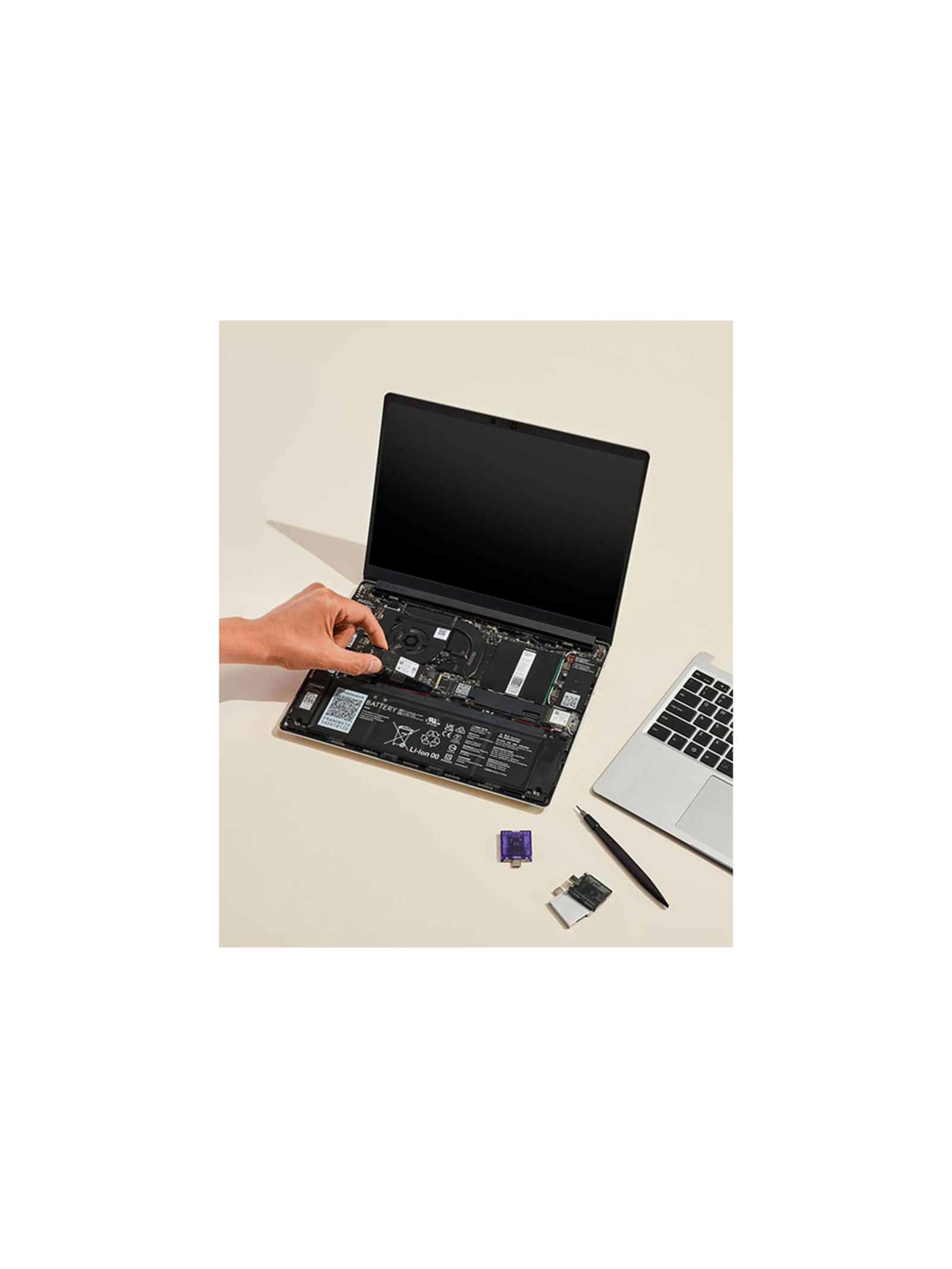
The Framework Laptop 13 is a thin-and-light notebook built against planned obsolescence. Almost every part is meant to be replaced or upgraded by the owner with a single included tool: the memory, the storage, the battery, the keyboard, the screen, even the mainboard, which swaps for a newer processor generation rather than forcing a whole new machine. Its signature is the Expansion Card system, small modules that slot into the sides so you choose which ports you want and where. QR codes on the components link to repair guides, and it ships either pre-built or as a DIY kit you assemble and load with your own operating system, Linux included. It suits anyone who treats a laptop as a long-term, fixable platform rather than a sealed appliance, and accepts that the openness costs some thinness and battery life against the most refined rivals.
Design intent
- +The whole machine is engineered around repair and upgrade as the default: standardised, labelled, owner-replaceable parts and a swappable mainboard mean the laptop is designed to be opened and kept rather than sealed and discarded, directly attacking the throwaway model of most computers.
- +The Expansion Card system turns ports into user choices: rather than fixing a port layout at the factory, small slot-in modules let each owner configure the connectivity they need, and change it later, a genuinely different answer to a problem every other laptop settles at manufacture.
The Framework Laptop 13 is a thin-and-light notebook built against planned obsolescence. Almost every part is meant to be replaced or upgraded by the owner with a single included tool: the memory, the storage, the battery, the keyboard, the screen, even the mainboard, which swaps for a newer processor generation rather than forcing a whole new machine. Its signature is the Expansion Card system, small modules that slot into the sides so you choose which ports you want and where. QR codes on the components link to repair guides, and it ships either pre-built or as a DIY kit you assemble and load with your own operating system, Linux included. It suits anyone who treats a laptop as a long-term, fixable platform rather than a sealed appliance, and accepts that the openness costs some thinness and battery life against the most refined rivals.
Design intent
- +The whole machine is engineered around repair and upgrade as the default: standardised, labelled, owner-replaceable parts and a swappable mainboard mean the laptop is designed to be opened and kept rather than sealed and discarded, directly attacking the throwaway model of most computers.
- +The Expansion Card system turns ports into user choices: rather than fixing a port layout at the factory, small slot-in modules let each owner configure the connectivity they need, and change it later, a genuinely different answer to a problem every other laptop settles at manufacture.
Trade-offs
- -Designing for modularity costs some of the refinement of a sealed machine: against the thinnest, longest-lasting ultraportables the Framework gives up a little on battery life and outright polish in exchange for openness.
- -The platform's value is realised over time, through later upgrades and repairs, so a buyer comparing it on day-one specification and price alone against a conventional laptop may not see the point until the second or third generation of parts.